Triangle Necklace Meaning: Symbolism & Pendant Troubleshooting
Discover the true triangle necklace meaning based on orientation, plus expert troubleshooting tips to stop your meaningful pendant from flipping.

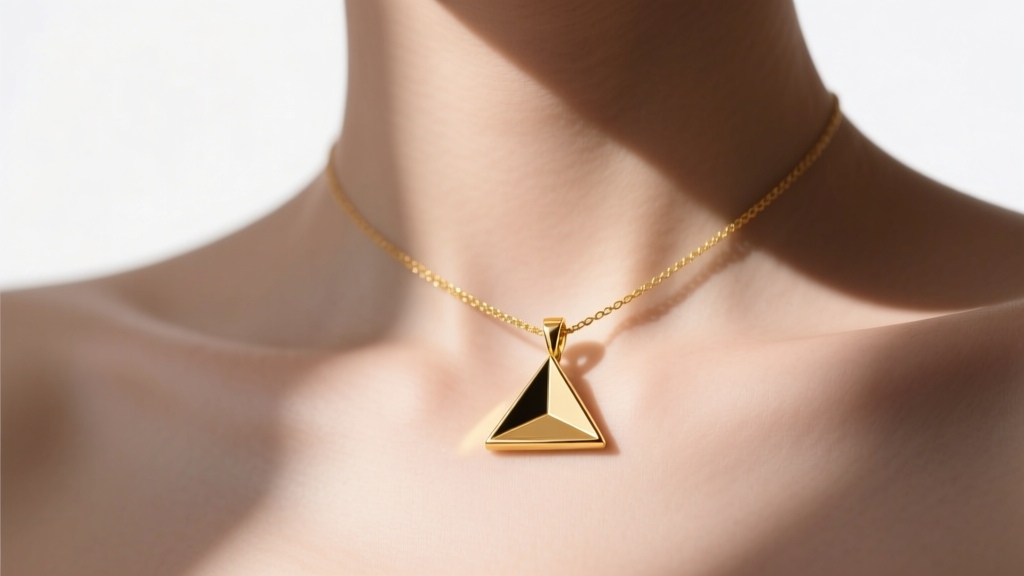
The triangle is one of the most potent and universally recognized geometric symbols in human history. When worn close to the heart as a pendant, it transforms from a simple mathematical shape into a deeply personal talisman. However, understanding the triangle necklace meaning is only half the battle for jewelry enthusiasts. The physical realities of wearing a geometric pendant—such as the annoying tendency for the piece to flip upside down, the sharp points catching on layered chains, and the risk of cheap metals tarnishing a meaningful symbol—require practical troubleshooting.
In this comprehensive guide, we decode the esoteric and cultural symbolism of the triangle based on its orientation, and then pivot into expert-level jewelry troubleshooting to ensure your pendant sits perfectly, lasts a lifetime, and layers without tangling.
The Core Triangle Necklace Meaning: Orientation Matters
The fundamental meaning of a triangle necklace shifts dramatically depending on which way the apex points. In alchemical and esoteric traditions, the triangle is the building block of elemental symbolism. Before you purchase or gift a triangle pendant, you must decide which energetic signature aligns with the wearer's intent.
Upward-Pointing Triangles (The Blade)
An upward-pointing triangle represents fire, masculine energy, aspiration, and the divine reaching toward the heavens. It is a symbol of ambition, stability, and upward mobility. In Norse mythology, the interlocking upward triangles form the Valknut, a symbol associated with Odin and the transition to Valhalla. For modern wearers, an upward triangle is often chosen as a talisman for career growth, personal empowerment, and overcoming obstacles.
Downward-Pointing Triangles (The Chalice)
Conversely, a downward-pointing triangle symbolizes water, feminine energy, receptivity, and the descent of divine illumination into the physical realm. It represents intuition, emotional depth, and the womb. According to Britannica's historical archives on geometry and symbolism, the downward triangle has long been associated with the lunar cycle and the nurturing aspects of nature. It is the ideal pendant for those seeking grounding, emotional healing, or creative inspiration.
| Feature | Upward Triangle (Fire) | Downward Triangle (Water) |
|---|---|---|
| Core Energy | Active, ambitious, assertive | Receptive, intuitive, nurturing |
| Elemental Tie | Fire / Air | Water / Earth |
| Best Worn For | Job interviews, leadership roles | Meditation, creative work, healing |
| Visual Weight | Top-heavy, draws eye upward | Bottom-heavy, anchors the neckline |
Troubleshooting the "Flipping Triangle" Problem
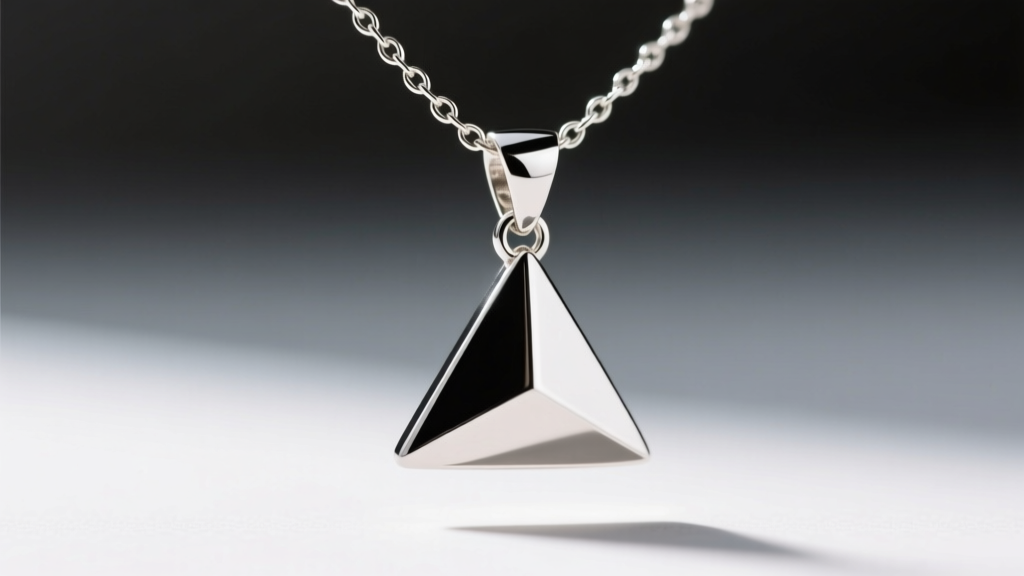
The most common complaint among triangle pendant wearers is the "pendant flip." Because a triangle's center of mass is located closer to its wider base, suspending it from the top vertex creates a top-heavy pendulum effect. As you walk, the pendant slides slightly off-center on the chain, and gravity forces the heavier base to swing upward, leaving you with an upside-down talisman.
Solution 1: Bail Placement and Soldering
If you are having a custom triangle pendant made, or modifying an existing one, the placement of the bail (the loop that connects the pendant to the chain) is critical. Instead of placing the bail at the absolute sharpest tip of the vertex, a jeweler should place the soldered jump ring roughly 2 millimeters down the edge of the triangle. This slightly lowers the pivot point, drastically reducing the kinetic energy required to flip the piece. For existing pieces, a jeweler can solder a small, weighted gold or silver bead to the back of the top vertex to act as a counterbalance.
Solution 2: Chain Thickness and Friction
A thin 1mm cable chain offers almost zero friction against a standard 18-gauge wire bail. To stop the sliding that precedes the flip, upgrade to a chain with a textured surface. A 2.0mm to 2.5mm rope chain or a wheat chain creates microscopic friction points that grip the bail, keeping the triangle centered on your chest.
Material Troubleshooting: Protecting Your Talisman
A necklace imbued with deep personal meaning should not turn your skin green or tarnish into an unrecognizable dark lump. The material grade of your triangle pendant dictates its longevity. Here is how to troubleshoot material failures based on your lifestyle.
- 316L Surgical Stainless Steel: The ultimate troubleshooting choice for active wearers. It contains molybdenum, which prevents chloride corrosion (sweat and saltwater). It is heavy, hypoallergenic, and will never tarnish, though it cannot be easily resized or soldered by a standard bench jeweler.
- 925 Sterling Silver: Composed of 92.5% pure silver and 7.5% copper. The copper is the culprit behind tarnishing and occasional green skin reactions. Troubleshooting fix: Ensure your silver triangle is plated with a thick layer of rhodium, or commit to wiping it down weekly with a treated jeweler's polishing cloth to remove sulfur compounds from the surface.
- 14k Solid Gold: Containing 58.5% pure gold alloyed with metals like copper, zinc, and silver. It is the gold standard for heirloom talismans. According to the Gemological Institute of America (GIA), 14k gold offers the perfect balance of rich color and structural durability, resisting the bending and warping that plagues softer 24k or 18k gold pendants.
Layering a Triangle Pendant Without Tangling
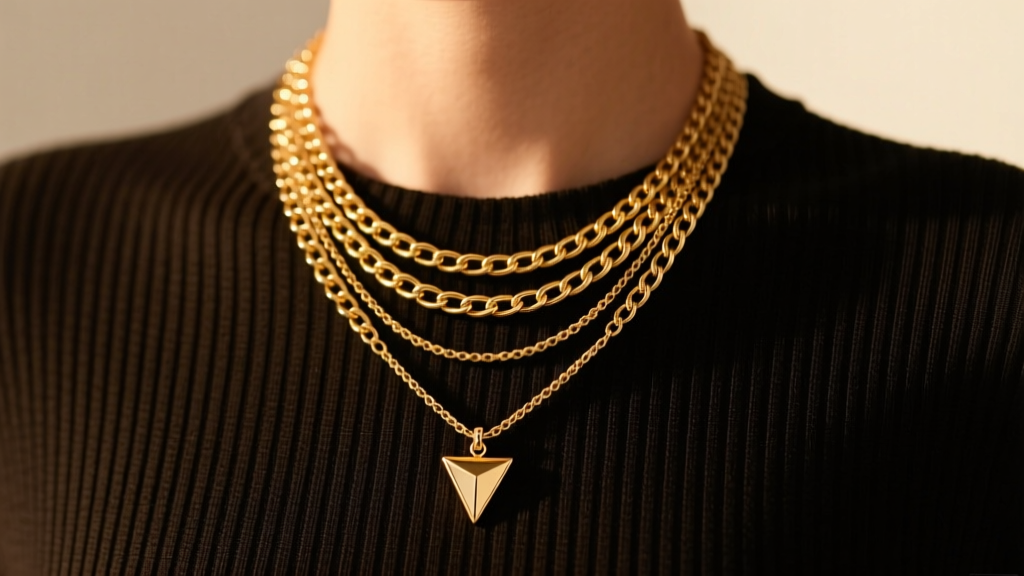
Geometric jewelry presents a unique structural hazard when layered: the sharp vertices act as natural hooks. If you layer a triangle pendant with other delicate chains, the bottom corners of the triangle will inevitably catch the links of the adjacent necklaces, resulting in a frustrating, tangled knot.
The 2-Inch Staggering Rule
To troubleshoot tangling, you must eliminate the physical intersection of the pendant's vertices with other chains. Adopt a strict 2-inch staggering rule for your layering. If your triangle pendant hangs on an 18-inch chain, your accompanying layers must be exactly 16 inches and 20 inches. This ensures the sharp points of the triangle rest in empty space rather than overlapping with the links of a 17-inch chain.
Adding Clasp Weights
Tangling often occurs because lightweight chains shift around the neck, bringing the back clasps to the front where they catch on the triangle. Solder a small, decorative gold or silver "tag" or weight to the clasp of every chain in your stack. This weight anchors the clasp at the nape of your neck, keeping the front pendants perfectly aligned and separated.
Quick Reference: Triangle Symbolism Across Cultures
When troubleshooting the narrative of your jewelry, it helps to understand the global footprint of the triangle. Here is a quick reference guide to the shape's historical weight:
The Holy Trinity (Christianity): The equilateral triangle represents the Father, Son, and Holy Spirit—three distinct entities sharing one unified essence. Often depicted with an all-seeing eye in the center.
Shatkona (Hinduism): Two interlocking triangles (one pointing up, one down) form a hexagram representing the union of the divine masculine (Shiva) and divine feminine (Shakti), creating perfect cosmic balance.
Delta Symbol (Greek): The uppercase delta (Δ) signifies change, difference, and transition. A highly popular choice for graduates, entrepreneurs, and individuals navigating major life pivots.
Final Thoughts on Wearing the Triangle
The triangle necklace meaning is ultimately defined by the wearer's intent, but the physical execution of the jewelry requires a keen eye for detail. By understanding the physics of the pendant flip, selecting the correct metal grade for your skin chemistry, and applying strict staggering rules for layering, you ensure that your geometric talisman remains a flawless, uninterrupted reflection of your personal journey.


