How to Clean and Care for Your Chrysoprase Bead Necklace
Discover expert cleaning, storage, and maintenance tips to protect your chrysoprase bead necklace from fading, cracking, and thread damage.

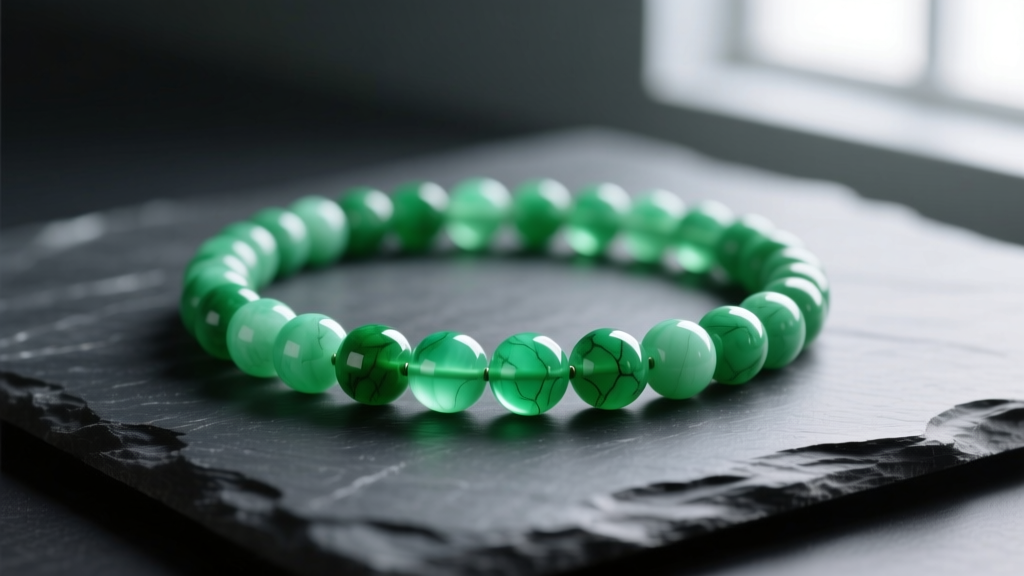
Understanding Chrysoprase: Why It Demands Special Care
Chrysoprase is widely celebrated as the rarest and most valuable variety of chalcedony. Its striking, apple-green hue is not the result of standard chromium or vanadium inclusions found in gems like emerald, but rather microscopic inclusions of nickel silicate. While this cryptocrystalline quartz boasts a respectable Mohs hardness of 6.5 to 7, its unique chemical composition and micro-porous structure make a chrysoprase bead necklace surprisingly vulnerable to improper care. According to gemological data from the Gemological Institute of America (GIA), the very elements that give chrysoprase its vivid color are also its greatest weakness when exposed to harsh environments. Unlike single-crystal quartz (like amethyst or citrine), the tightly packed microscopic fibers of chalcedony can trap chemicals, oils, and moisture, leading to long-term degradation if not maintained correctly.
The Dangers of Sunlight, Heat, and Dehydration
The most common failure mode for chrysoprase jewelry is irreversible color fading. The nickel inclusions responsible for the stone's green color are highly photosensitive. Prolonged exposure to direct ultraviolet (UV) sunlight or intense heat sources (like halogen jewelry display lights) will cause the vibrant green to bleach into a dull, lifeless gray or pale yellow. Once this fading occurs, it cannot be reversed by polishing or oiling.
Furthermore, chrysoprase contains trace amounts of structural water. When subjected to extreme heat or excessively dry environments (such as being stored near a radiator or in an unhumidified safe during winter), the stone can dehydrate. This dehydration leads to "crazing"—a network of microscopic surface cracks that ruin the bead's polish and structural integrity. To preserve your necklace, always remove it before sunbathing, using a sauna, or sitting under intense stage lighting.
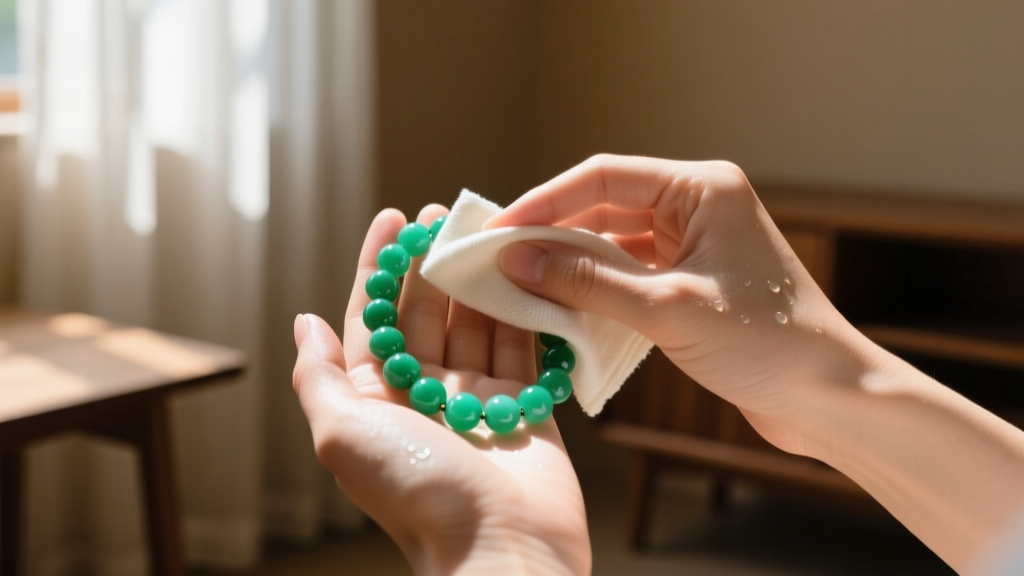
Step-by-Step Cleaning Guide for Chrysoprase Beads
Because a bead necklace incorporates both delicate gemstones and a vulnerable threading material, you cannot simply submerge it in a bowl of soapy water. The goal is to clean the surface of the beads without saturating the interior thread. Never use ultrasonic or steam cleaners; the high-frequency cavitation bubbles in an ultrasonic bath can shatter the micro-inclusions within the chalcedony, while steam will instantly degrade silk threading and risk thermal shock to the beads.
What You Need
- Distilled water (tap water contains chlorine and hard minerals that leave a cloudy film on cryptocrystalline surfaces)
- Mild, pH-neutral liquid Castile soap (avoid harsh dish detergents or anything containing ammonia)
- Two ultra-soft microfiber cloths
- A clean, extra-soft baby toothbrush
- A wooden toothpick
The Cleaning Process
- Prepare the Solution: Mix exactly one drop of Castile soap into 8 ounces of lukewarm distilled water. The water should be room temperature to prevent thermal shock.
- Dampen, Don't Soak: Dip the microfiber cloth into the solution and wring it out until it is barely damp. Never submerge the necklace.
- Wipe the Beads: Gently wipe each chrysoprase bead individually, supporting the bead from underneath with your fingers to avoid putting stress on the thread.
- Detail the Drill Holes: Dirt and skin oils accumulate heavily around the drill holes. Dip the wooden toothpick into the damp cloth to transfer a tiny amount of moisture, and gently pick away debris from the edges of the drill holes. Avoid using metal needles, which can scratch the interior of the bead and weaken the thread.
- Rinse the Surface: Wipe the beads down with a second cloth dampened only with pure distilled water to remove any soap residue.
- Dry Immediately: Pat the necklace completely dry with a clean, soft microfiber cloth. Lay it flat on a dry towel in a shaded, well-ventilated area for 24 hours before storing to ensure all moisture near the drill holes has evaporated.
Maintaining the Necklace Thread and Clasp Hardware
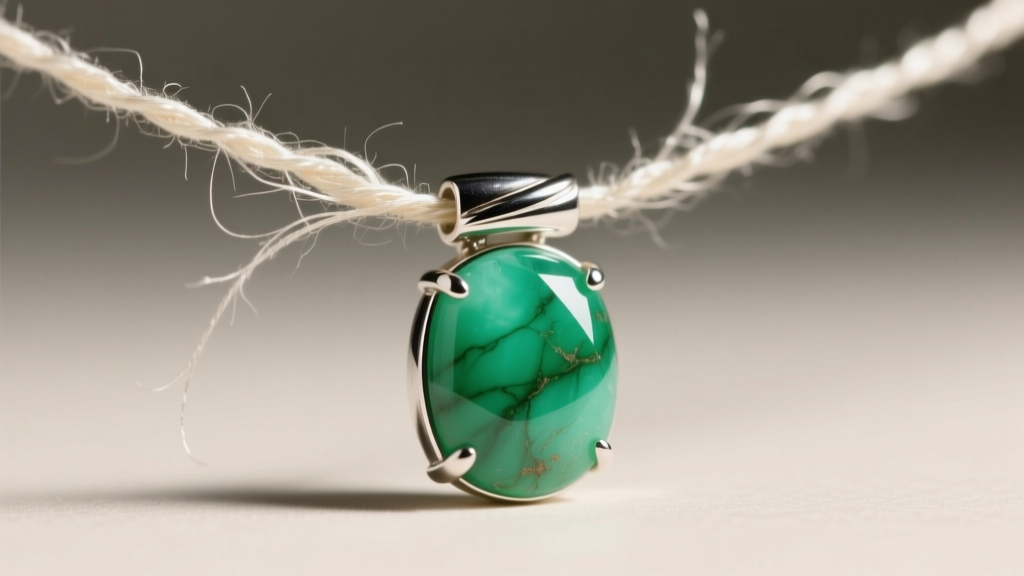
The longevity of your chrysoprase bead necklace relies just as much on the stringing material as the stones themselves. High-end necklaces are typically strung on natural silk or high-tech synthetic nylon. Silk offers a beautiful, fluid drape that allows the beads to sit elegantly on the collarbone, but it is highly susceptible to acidic human sweat (which typically has a pH between 4.5 and 6.0). Over time, sweat will cause silk to rot, stretch, and eventually snap. If you wear your necklace frequently in warm weather, you must wipe the thread near the clasp with a dry cloth after every use.
Nylon threads (like Beadalon) are impervious to sweat and acids, making them highly durable, but they lack the luxurious drape of silk and can permanently stretch under the heavy weight of large (8mm+) chrysoprase beads. Regardless of the material, inspect the "French wire" (also known as gimp)—the tiny coiled metal wire that wraps the thread where it enters the clasp. If this wire is frayed or missing, the metal clasp will act like a saw blade against your thread, leading to catastrophic failure and lost beads.
Safe vs. Unsafe Cleaning Agents
Using the wrong chemical agent can strip the polish from your chrysoprase or react violently with the nickel inclusions. Refer to this quick reference chart before attempting to clean your jewelry:
| Agent / Method | Safety Status | Reasoning & Risk Factors |
|---|---|---|
| Mild Castile Soap | ✅ Safe | pH-neutral, effectively lifts oils without damaging the cryptocrystalline surface or thread. |
| Distilled Water | ✅ Safe | Free of chlorine and calcium; prevents mineral buildup in the bead drill holes. |
| Ultrasonic Cleaners | ❌ Unsafe | Cavitation can fracture internal nickel inclusions and shatter the beads. |
| Steam Cleaners | ❌ Unsafe | Thermal shock causes crazing; heat destroys silk threading and fades the green color. |
| Ammonia / Bleach | ❌ Unsafe | Harsh alkalines strip the polish and chemically react with nickel, causing permanent graying. |
| Jewelry Polishing Cloths | ⚠️ Caution | Cloths infused with rouge or abrasives will wear down the bead finish over time. |
Optimal Storage Solutions for Longevity
Proper storage is the final pillar of chrysoprase maintenance. Because the stones are sensitive to both extreme dryness and excessive moisture, your storage environment must be climate-controlled. Never store your necklace in a plastic ziplock bag; plastic traps ambient moisture, which can lead to mildew on silk threads and a cloudy film on the beads. Instead, wrap the necklace in a soft, breathable, untreated cotton or flannel pouch.
Always store the necklace flat or loosely coiled. Hanging a heavy bead necklace on a jewelry tree for months at a time will cause gravity to permanently stretch the thread, creating unsightly gaps between the beads. Furthermore, keep the pouch in a dark drawer or jewelry box to guarantee zero UV exposure. If you live in an extremely arid climate, placing a small, specialized jewelry humidification packet (like those used for acoustic guitars or wooden instruments) in the outer drawer can prevent the chalcedony from dehydrating and cracking.
When to Seek Professional Re-stringing
Even with meticulous care, the physical stress of wearing a bead necklace eventually degrades the thread. As a general rule, a frequently worn chrysoprase bead necklace should be professionally re-strung every 18 to 24 months. You can expect to pay between $3.00 and $6.00 per inch for high-quality, hand-knotted restringing by a professional bench jeweler.
Do not wait for the thread to break. Inspect your necklace closely under a bright light. If you notice the thread looking "fuzzy" or frayed near the clasp, if there are visible gaps between the beads when the necklace is laid flat, or if the silk has taken on a dark, discolored appearance from absorbed oils, it is time for immediate restringing. Always insist that the jeweler uses a "French knot" technique, tying a secure knot between every single bead. While this uses more silk and increases the cost, it ensures that if the thread ever does snap, you will only lose a single bead rather than watching your entire collection scatter across the floor.
Expert Tip: When taking your necklace to a jeweler, specifically request that they use high-quality Griffin silk or premium nylon, and ask them to replace the French wire (gimp) at the clasp attachment points. This small detail adds years of life to the stringing job.
By understanding the unique gemological properties outlined by authorities like Mindat.org and adhering to these strict maintenance protocols, your chrysoprase bead necklace will retain its brilliant, apple-green luster and structural integrity for decades to come.


