Analyzing Expensive Necklace Brands: 2026 High Jewelry Trends
Discover how expensive necklace brands are redefining high jewelry in 2026 with Type IIa diamonds, transformable designs, and archival value.

The 2026 Paradigm Shift in Haute Joaillerie
The landscape of the most expensive necklace brands has undergone a radical transformation as we navigate 2026. Ultra-high-net-worth individuals (UHNWIs) are no longer satisfied with mere brand recognition or mass-produced commercial luxury. Today, the apex of the jewelry market is defined by Haute Joaillerie—one-of-a-kind (OOAK) masterpieces that blend archival heritage, extreme material rarity, and mechanical ingenuity. According to recent market analyses by Bain & Company, the high jewelry sector has consistently outpaced commercial luxury in growth, driven by a collector mindset that views these pieces as alternative asset classes rather than mere accessories.
For style analysts and serious collectors, understanding what separates a $15,000 commercial diamond pendant from a $1.5 million high jewelry collar requires a deep dive into gemological benchmarks, structural engineering, and the specific design philosophies of legacy maisons. In 2026, the most expensive necklace brands are competing not just on carat weight, but on provenance, articulation, and the integration of museum-grade gemstones.
Material Benchmarking: What Justifies a Six-Figure Price Tag?
When analyzing top-tier necklaces, the materials used are not simply "gold and diamonds." The most expensive necklace brands operate in a realm of extreme gemological rarity, where minute chemical differences dictate millions of dollars in valuation.
Type IIa Diamonds vs. Standard Gemological Grades
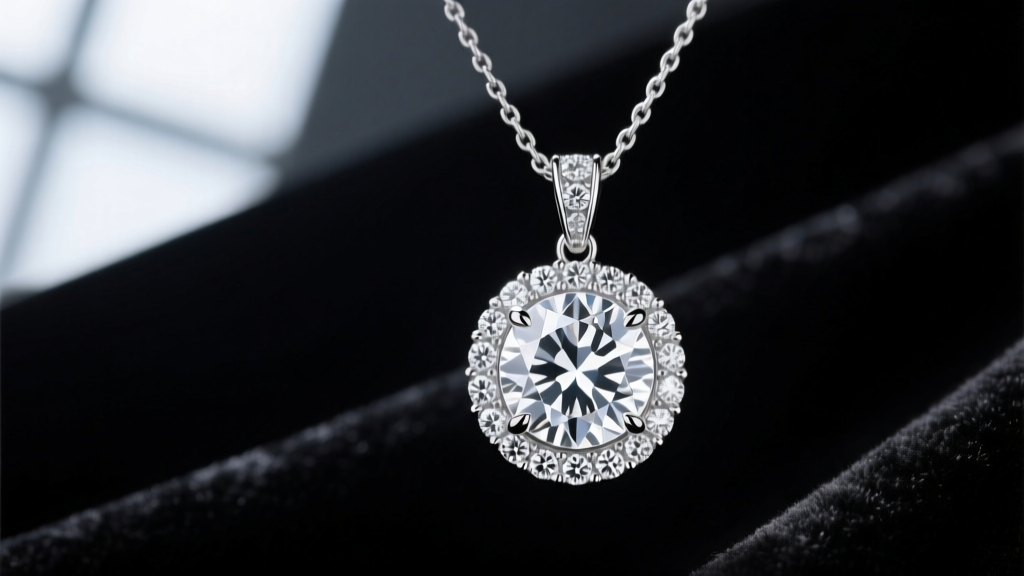
In the upper echelons of high jewelry, standard D-color VVS diamonds are considered baseline. The true differentiator in 2026 is the use of Type IIa diamonds. Representing less than 2% of all natural diamonds, Type IIa stones lack measurable nitrogen or boron impurities in their crystal lattice, resulting in unparalleled optical transparency and brilliance. According to the Gemological Institute of America (GIA), Type IIa diamonds are historically associated with the most legendary gems, such as the Cullinan and the Koh-i-Noor. When a brand like Graff or Harry Winston features a 50-carat Type IIa pear-shaped diamond in a necklace pendant, the price per carat scales exponentially compared to a Type Ia stone of identical visual grade.
The Rarity of Untreated Corundum
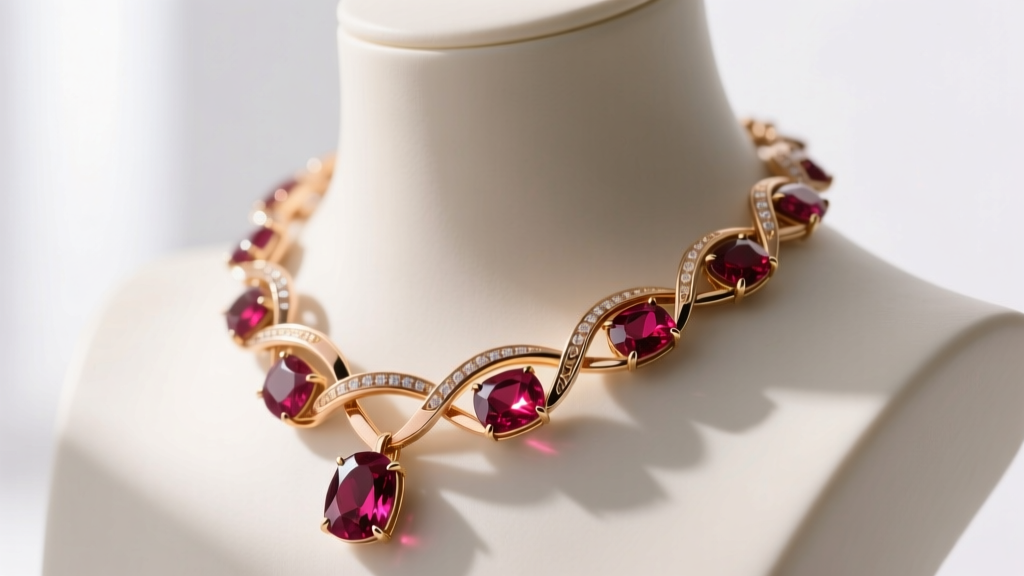
For colored gemstone necklaces, the focus has shifted entirely to untreated, unheated corundum (rubies and sapphires). A high jewelry ruby necklace featuring "Pigeon's Blood" designation from a lab like GRS or Gübelin commands a massive premium. However, origin is the ultimate multiplier. A 10-carat unheated Burmese (Mogok) ruby will command upwards of $1 million per carat at auction, whereas a visually identical Mozambican ruby might fetch $50,000 per carat. The most expensive necklace brands now provide full blockchain-backed provenance tracing to verify both the geographic origin and the lack of thermal treatment.
Architectural Engineering in High Jewelry Necklaces
A critical, often overlooked aspect of expensive necklace brands is the mechanical engineering required to support massive carat weights. A high jewelry collar featuring 300 carats of diamonds and 150 grams of 18k gold can easily weigh over half a pound. If poorly engineered, the necklace will pull uncomfortably on the wearer's neck, warp the metal, or suffer catastrophic clasp failure.
- Articulated Vertebrae: Brands like Bvlgari and Cartier utilize complex, multi-hinged articulation in their collars. This allows the rigid metal to drape fluidly over the clavicle, mimicking the movement of fabric rather than metal.
- En Tremblant Settings: Revived from the 18th century, this technique mounts diamonds on tiny metal springs. As the wearer moves, the stones tremble, catching light from multiple angles and creating a dynamic, living sparkle.
- Reinforced Clasps: A standard lobster clasp is entirely insufficient for a $2 million necklace. High jewelry relies on reinforced double-box clasps with dual figure-eight safety catches, often hidden seamlessly within the design motif (e.g., disguised as a flower petal or geometric link).
Investment Metrics: High Jewelry vs. Commercial Luxury
To understand the market positioning of these brands, it is essential to compare the structural and economic differences between commercial luxury offerings and true haute joaillerie.
| Metric | Commercial Luxury ($5k - $30k) | High Jewelry ($150k - $2M+) | Archival / Historical ($2M+) |
|---|---|---|---|
| Production | Batch-produced, standardized molds | One-of-a-kind (OOAK), bespoke | Historical provenance, royal ownership |
| Gemstone Grade | Commercial to Fine (Type Ia, heated) | Exceptional (Type IIa, unheated) | Museum-grade, historically documented |
| Craftsmanship | 50 - 200 hours | 1,500 - 4,000+ hours | N/A (Historical artifact) |
| Resale Retention | 20% - 40% of retail value | 70% - 110% (Appreciates at auction) | 200%+ (Driven by collector bidding) |
| Transformability | Fixed design | Modular (Necklace to tiara/brooch) | Fixed, preservation required |
Brand Spotlights: The Apex Predators of High Jewelry
When discussing the most expensive necklace brands in 2026, three maisons consistently dominate the high jewelry conversation, each with a distinct architectural and stylistic signature.
Graff: The Master of Diamond Articulation
Graff is synonymous with extreme carat weights and flawless white diamonds. Their high jewelry necklaces often feature the "Secret Setting," a proprietary technique where the metal mount is virtually invisible, allowing the diamonds to appear as if they are floating against the skin. Graff's articulation is so precise that a multi-million dollar diamond collar moves with the fluidity of silk.
Van Cleef & Arpels: Transformable Mastery
Van Cleef & Arpels approaches necklaces with a focus on modularity and the Serti Mystérieux (Mystery Set). Their most expensive pieces are often transformable; a grand diamond and sapphire collar can be disassembled into a pair of bracelets, a brooch, and a shorter choker. This versatility is highly prized by UHNW collectors who demand functional utility alongside extreme beauty.
Cartier: Architectural Provenance
Cartier's Sur Naturel and Beautés du Monde high jewelry collections focus on abstract interpretations of nature and global architecture. Cartier excels in mixing unconventional materials—such as carved emeralds, rock crystal, and onyx—with brilliant-cut diamonds, creating high-contrast, sculptural necklaces that function as wearable art.
Securing and Insuring Archival Necklaces
Owning a necklace from the upper echelons of expensive necklace brands requires rigorous security protocols. Standard homeowner's insurance policies cap jewelry payouts at a fraction of a high jewelry piece's value. Collectors must utilize specialized fine art and jewelry insurers, such as Chubb or AXA Art, which offer agreed-value policies based on annual reappraisals.
Furthermore, the physical storage of these pieces requires climate-controlled, vault-grade safes with interior humidity regulation to prevent the degradation of organic accents (like natural pearls or antique enamel) and to protect the integrity of the metal alloys. When traveling, collectors employ specialized security logistics firms, as the sheer value and auction liquidity of a Type IIa diamond necklace make it a high-risk asset. As noted by the jewelry department at Sotheby's, proper documentation, including original high-resolution macro photography and laser-inscribed girdle numbers, is mandatory for both insurance underwriting and eventual auction consignment.
Conclusion: The Future of High Jewelry
In 2026, the most expensive necklace brands are not merely selling jewelry; they are curating geological miracles and engineering marvels. The shift toward Type IIa diamonds, untreated heritage corundum, and transformable, mechanically complex designs reflects a market that values permanence, rarity, and structural genius. For the serious collector, these necklaces represent the ultimate intersection of art, science, and enduring financial value.


