How to Fix a Sterling Silver Heart Toggle Necklace Clasp & Tarnish
Is your sterling silver heart toggle necklace slipping or tarnishing? Learn expert troubleshooting for loose clasps, flipping pendants, and silver care.

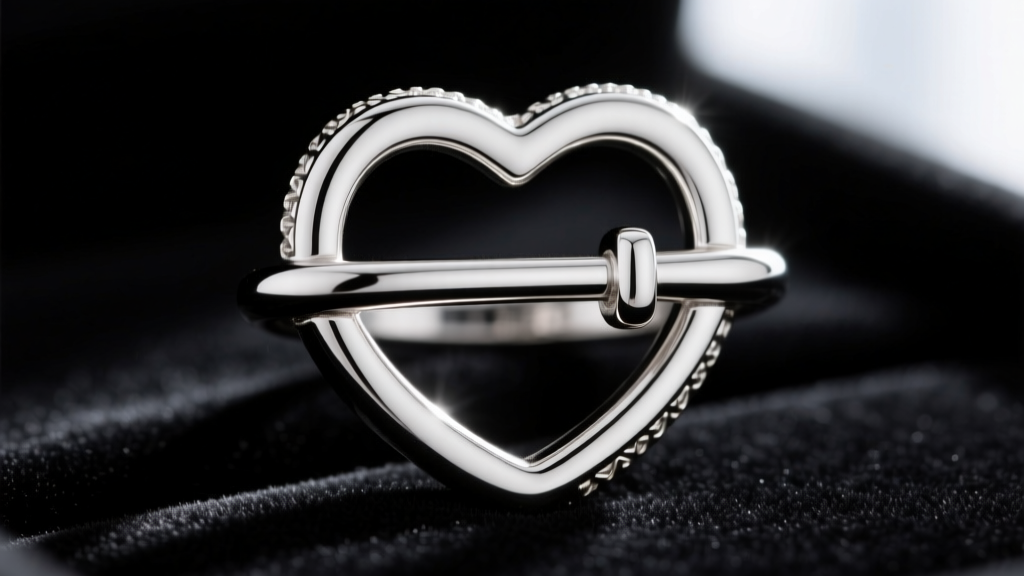
The Biomechanics of Toggle Clasp Failures
The sterling silver heart toggle necklace is a staple of modern jewelry design, celebrated for its elegant drape and the romantic symbolism of its centerpiece. However, from a mechanical engineering perspective, the toggle clasp is inherently prone to failure if not manufactured or maintained to precise tolerances. Unlike spring rings or lobster clasps that rely on internal spring tension, a toggle clasp operates on gravity and geometric interference. The T-bar must pass through the circular ring and rest horizontally, held in place by the downward pull of the necklace's weight.
When owners experience a slipping clasp, the issue almost always traces back to a violation of the 1.5x ratio rule: the T-bar must be at least 1.5 times the inner diameter of the receiving ring. If a manufacturer cuts costs by using a shorter bar, or if the ring has been stretched over time, the necklace will inevitably unfasten. Furthermore, because 925 sterling silver is an alloy composed of 92.5% pure silver and 7.5% copper, it is subject to work hardening and environmental tarnishing, introducing a secondary layer of maintenance challenges that require specific troubleshooting protocols.
Troubleshooting the T-Bar Slip: Sizing and Tension Fixes
If your T-bar is slipping out of the ring during normal wear, the first step is to diagnose the point of failure. Lay the necklace flat on a table and fasten the clasp. If the T-bar does not sit completely flush and horizontal against the ring, the chain may be too short, creating an upward angle of tension that forces the bar out of its seat. In this case, adding a 1-inch silver extender chain to the jump ring opposite the clasp will alter the drape and allow gravity to lock the mechanism properly.
If the chain length is adequate but the clasp still slips, the receiving ring has likely stretched into an oval shape, or the T-bar has bent. Sterling silver is a malleable metal, and repeated stress on the jump rings connecting the clasp to the chain can cause them to pull open.
The Pliers Technique for Tension Adjustment
A common DIY mistake is using standard steel-jawed pliers to squeeze the receiving ring back into a perfect circle or to bend the T-bar. Steel jaws will mar the high-polish finish of the silver and, more dangerously, introduce micro-fractures due to rapid work hardening. When 925 silver is bent aggressively without annealing, it becomes brittle and will snap.
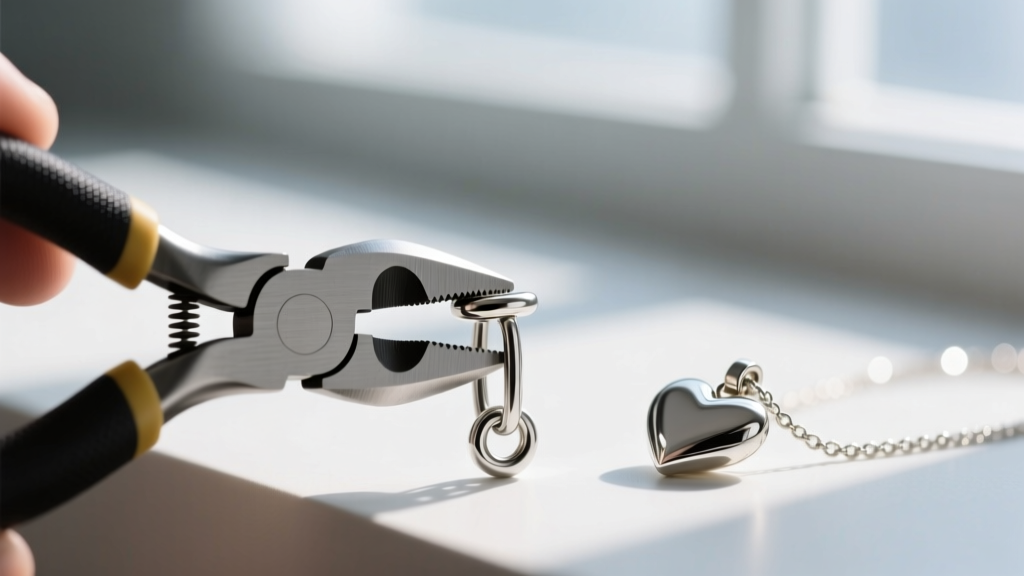
To safely adjust the tension, you must use nylon-jaw pliers. Gently grip the T-bar at its center and apply microscopic pressure to widen it, ensuring it remains perfectly straight. If the receiving ring is stretched, use the nylon jaws to gently compress the longer axis of the oval back into a circle. If the metal resists or shows white stress lines, stop immediately; the piece requires professional annealing and soldering.
Solving the 'Flipping Heart' Pendant Problem
A frequent aesthetic complaint with the sterling silver heart toggle necklace is the pendant constantly flipping upside down, displaying the back of the heart and the soldered bail rather than the decorative face. This is a physics problem related to the pendant's center of gravity and the tolerances of the bail (the loop that threads the chain).
Heart-shaped pendants are inherently bottom-heavy. If the inner diameter of the bail is significantly wider than the thickness of the chain (for example, a 4mm bail on a 1.5mm cable chain), the pendant has too much rotational freedom. It will naturally seek the path of least resistance, which often results in it spinning backward.
Troubleshooting Solutions:
- The Friction Stop (DIY): Slide a tiny, clear silicone earring back or a 2mm rubber O-ring onto the chain, positioning it directly behind the pendant's bail. This creates a soft friction barrier that prevents the pendant from spinning while remaining virtually invisible.
- The Bail Bead (Professional): A bench jeweler can solder a microscopic silver bead inside the top curve of the bail. This reduces the internal clearance, forcing the pendant to sit flush against the chain links and preventing rotation.
- Chain Upsizing: Swap the delicate chain for a heavier 2.5mm or 3.0mm rolo or curb chain. The increased bulk of the chain fills the bail, naturally stabilizing the pendant's orientation.
Sterling Silver Tarnish: Chemical Culprits and Reversal
Pure silver is highly resistant to tarnish, but the 7.5% copper added to create 925 sterling silver is highly reactive. When copper is exposed to hydrogen sulfide in the air, moisture, and acidic skin pH, it undergoes a chemical reaction that forms silver sulfide—a black or yellowish film that dulls the necklace's luster. According to the Gemological Institute of America (GIA), environmental factors such as humidity, wool clothing, and even certain cosmetics can accelerate this process exponentially.
Reversing tarnish requires either chemical reduction or mechanical abrasion. Choosing the wrong method can strip the silver layer entirely or ruin the high-polish finish of the heart pendant.
| Removal Method | Mechanism of Action | Risk to 925 Silver | Best Application |
|---|---|---|---|
| Aluminum Foil & Baking Soda | Electrochemical ion transfer (reverses silver sulfide back to silver) | Low (if rinsed and dried thoroughly) | Heavy, uniform black tarnish on chain links |
| Commercial Silver Dips | Thiourea acid stripping | High (removes patina, toxic, causes rapid re-tarnishing) | Severe neglect on non-porous pieces without gemstones |
| Micro-Abrasive Polishing Cloths | Physical removal of the tarnished surface layer | Medium (removes microscopic layers of silver over time) | Light tarnish, routine maintenance, and the heart pendant face |
For a sterling silver heart toggle necklace, the micro-abrasive polishing cloth is generally the safest daily intervention. However, if the intricate links of the chain have turned black, the aluminum foil and baking soda electrochemical bath is the most effective way to reach the crevices without scrubbing away the silver. Never use commercial dips on necklaces featuring porous gemstones like turquoise or pearls, as the acid will permanently etch the stones.
Preventative Maintenance and Storage Protocols
Preventing tarnish is vastly superior to removing it. The Silver Institute emphasizes that controlling the micro-environment where the jewelry is stored is the most effective way to halt the copper oxidation process.
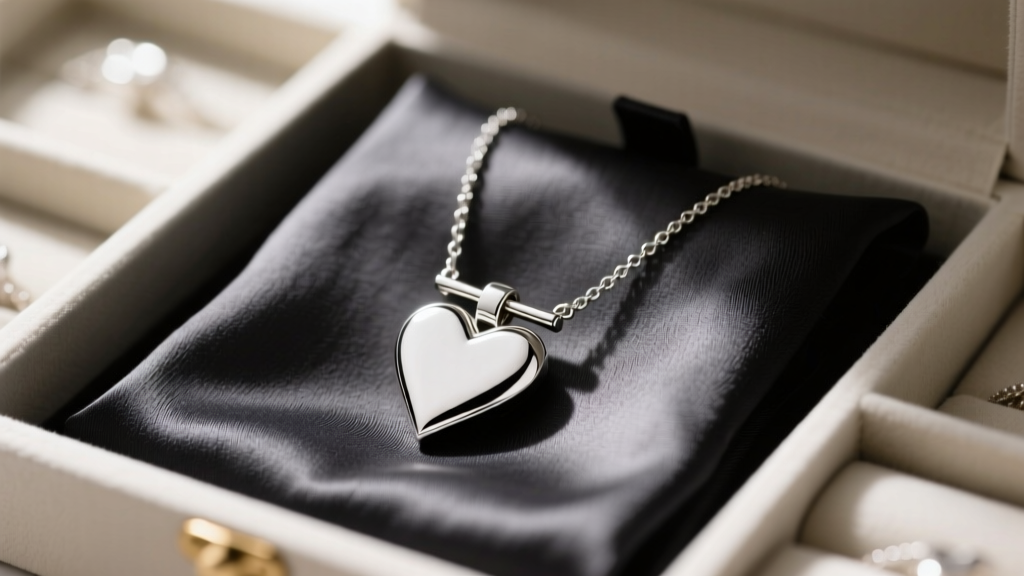
Many consumers mistakenly store their silver in the plastic ziplock bags it was shipped in. Standard polyethylene plastic traps ambient moisture and can actually off-gas sulfur compounds, accelerating tarnish. Instead, store your necklace in a breathable, untreated cotton pouch or a specialized anti-tarnish flannel bag infused with silver nitrate, which absorbs sulfur gases before they reach the metal.
Additionally, placing a 3M anti-tarnish strip and a small silica gel desiccant packet inside your jewelry box will neutralize airborne pollutants and control humidity. Always put your necklace on after applying perfumes, lotions, and hairsprays, and remove it before swimming in chlorinated pools, as chlorine reacts violently with the copper in sterling silver, causing irreversible structural weakening and a permanent bronze discoloration.
When to Seek Professional Jeweler Intervention
While minor tension adjustments and polishing can be handled at home, certain failure modes require a professional bench jeweler. If the jump ring connecting the T-bar to the chain has pulled open and the metal appears thin or cracked, do not simply squeeze it shut. A compromised jump ring will inevitably fail again, resulting in the loss of the necklace.
A professional jeweler will use a laser welder to fuse the seam of the jump ring shut without heating the surrounding silver, preserving the integrity of the clasp. Furthermore, if the heart pendant's bail has worn completely through due to friction against the chain, a jeweler can solder a new, heavier-gauge bail onto the piece. By understanding the mechanical and chemical vulnerabilities of your sterling silver heart toggle necklace, you can implement targeted troubleshooting strategies that ensure the piece remains secure, brilliant, and structurally sound for decades.


