How to Clean and Maintain Chunky Layering Necklaces
Learn expert techniques to clean, untangle, and maintain chunky layering necklaces. Preserve metals, prevent tarnish, and keep stacks pristine.


The Unique Challenges of Chunky Layering Necklaces
Chunky layering necklaces have dominated the jewelry landscape, offering a bold, textured aesthetic that elevates everything from casual streetwear to evening attire. However, stacking heavy chains—such as 5mm to 12mm Cuban links, Figaros, and rope chains—introduces a specific set of maintenance challenges that delicate pendants simply do not face. When you layer multiple heavy-gauge chains, you are dealing with increased surface area for tarnish, compounded friction between interlocking links, and a significantly higher risk of complex tangling.
Unlike a single, lightweight 18-inch cable chain, a stack of three chunky necklaces can weigh upwards of 150 grams. This weight means the chains are constantly pulling against one another, grinding microscopic layers of metal dust and trapping skin oils, lotions, and environmental pollutants deep within the crevices of the links. According to the Gemological Institute of America (GIA), the accumulation of these everyday substances not only dulls the reflective surface of precious metals but can also accelerate chemical reactions that lead to severe tarnishing, particularly in sterling silver and brass alloys.
Daily Wear & Prevention: Stopping Tarnish and Tangles
The most effective way to maintain your chunky layering necklaces is to minimize the need for deep cleaning in the first place. Implementing a few strict habits will drastically extend the time between necessary washes and preserve the structural integrity of your clasps.
The "Last On, First Off" Rule
Chunky chains should always be the last items you put on when getting dressed and the first items you take off. Hairspray, perfume, and body lotions contain alcohols and aerosolized chemicals that can strip the protective rhodium plating off white gold and degrade the 2.5-micron gold layer on vermeil pieces. By putting your heavy chains on after your beauty routine has fully dried and settled, you prevent chemical buildup in the tight crevices of rope and box chains.
Anti-Tarnish Storage Solutions
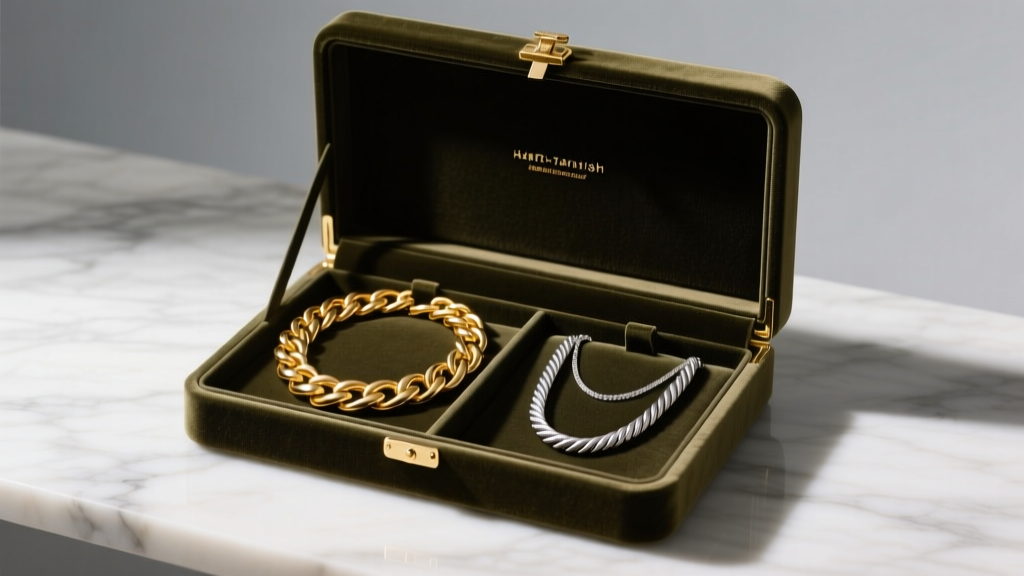
Never throw multiple chunky necklaces into a single drawer or jewelry box compartment. The friction from heavy links rubbing together will cause micro-scratches, and the shared air space accelerates oxidation. Store each chain individually in an airtight, anti-tarnish ziplock bag or a lined jewelry roll. For sterling silver (925), include a small silica gel packet or a 3M anti-tarnish strip in the bag to absorb ambient moisture and neutralize sulfur compounds in the air that cause silver sulfide (black tarnish) to form.
Step-by-Step Cleaning Protocols by Material
Because chunky layering necklaces are frequently crafted from a variety of metals to achieve a mixed-metal aesthetic, you must tailor your cleaning approach to the specific material. Using the wrong chemical agent can permanently strip plating or alter the patina of oxidized details.
| Material | Recommended Cleaning Agent | Tools Required | What to Avoid |
|---|---|---|---|
| Solid 14k/18k Gold | Mild dish soap (e.g., Dawn) & warm water | Soft baby toothbrush, microfiber cloth | Harsh bleach, chlorine |
| 925 Sterling Silver | Silver dip (for heavy tarnish) or soap/water | Sunshine polishing cloth, cotton swabs | Toothpaste (too abrasive) |
| Gold Vermeil (Plated) | Lukewarm water & single drop of mild soap | Ultra-soft makeup brush, lint-free cloth | Ultrasonic cleaners, polishing cloths |
| 316L Stainless Steel | Glass cleaner or soapy water | Microfiber cloth, soft bristle brush | Abrasive steel wool |
| Raw Brass / Bronze | Lemon juice & baking soda paste | Soft cloth, warm water rinse | Commercial silver polishes |
Cleaning Heavy Chains (Cuban, Figaro, Rope)
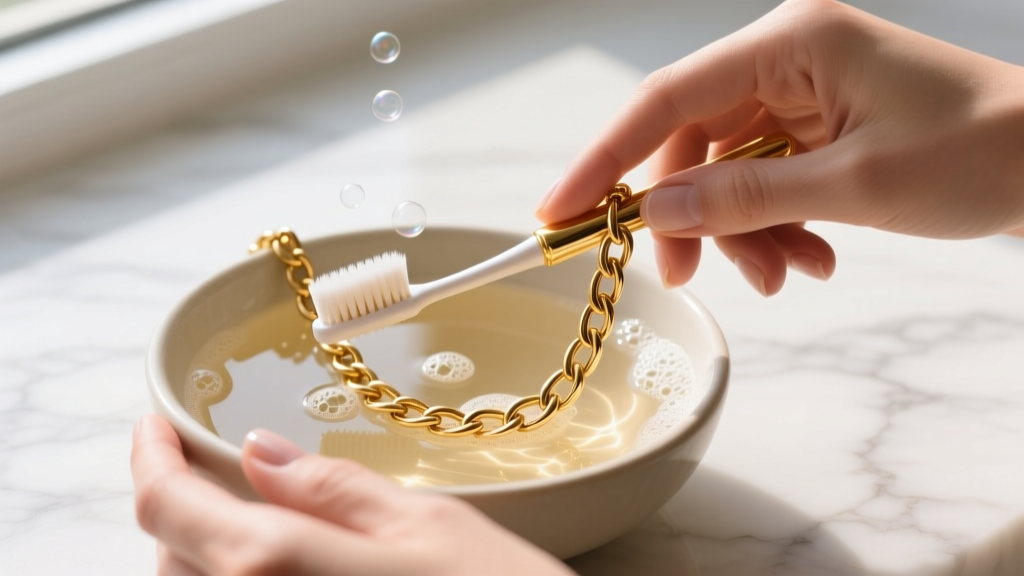
For solid gold and stainless steel chunky chains, the crevices are where grime hides. Fill a ceramic bowl with lukewarm water and a few drops of grease-cutting dish soap. Let the chain soak for exactly 10 to 15 minutes—no longer, especially if the chain features any resin or enamel accents. Use a soft-bristled baby toothbrush to gently agitate the links. Brush in the direction of the chain's weave to avoid bending delicate inner wires. Rinse thoroughly under distilled water to prevent hard water spots, and dry immediately with a blower or a lint-free microfiber cloth.
The Danger of Ultrasonic Cleaners
While ultrasonic cleaners are fantastic for solid diamond and platinum jewelry, they are highly dangerous for chunky layering necklaces that feature gold vermeil, oxidized silver, or hollow links. The high-frequency sound waves (typically 40-45 kHz) create microscopic cavitation bubbles that implode with intense localized heat and pressure. This process can easily blister and peel thin gold plating and will completely strip away the intentional dark oxidation in the grooves of a sterling silver rope chain, ruining its contrast and depth.
Untangling Heavy Gauge Chains Without Breaking Links
When a 6mm Cuban link chain tangles with a 4mm herringbone chain, the resulting knot can seem impossible to undo. Pulling at heavy chains only tightens the links, potentially warping the metal or snapping the soldered joints at the clasp.
To safely detangle chunky layering necklaces, lay the knotted mass flat on a clean, hard surface. Apply a generous dusting of baby powder or cornstarch directly onto the knot; this acts as a dry lubricant, reducing the friction between the metal links. Using two T-pins or sewing needles, gently work the pins into the center of the knot to loosen the tension. Never pull the ends of the chains outward. Instead, push the links inward toward the center of the tangle to create slack. Once the primary knot loosens, carefully tease the individual chains apart. If the chains are heavily soiled, the grime may be acting like glue; a quick soak in soapy water before applying the baby powder can help dissolve the binding oils.
When to Seek Professional Jeweler Maintenance
Even with meticulous at-home care, chunky necklaces endure significant mechanical stress. The heavy weight of the chain puts constant strain on the lobster clasps, jump rings, and soldered end caps.
"For heavy chains exceeding 50 grams, the clasp mechanism and the single jump ring connecting it to the chain are the most critical failure points. Annual professional inspections are not just a recommendation; they are a structural necessity."
According to Jewelers of America, you should take your heavy layering stacks to a professional bench jeweler once a year. The jeweler will use a magnifying loupe to inspect the solder joints on the links, check the tension of the clasp springs, and ensure that any gemstone settings integrated into the chunky pendants are secure. They can also perform professional steam cleaning and, if necessary, re-plate your vermeil pieces to restore their original factory finish. By combining mindful daily habits with targeted cleaning protocols and professional oversight, your chunky layering necklaces will maintain their heavy-hitting brilliance for decades.