Ultimate Care Guide for Your Gold Pearl Pendant Necklace
Learn expert cleaning, storage, and maintenance tips to protect the nacre and gold settings of your gold pearl pendant necklace.

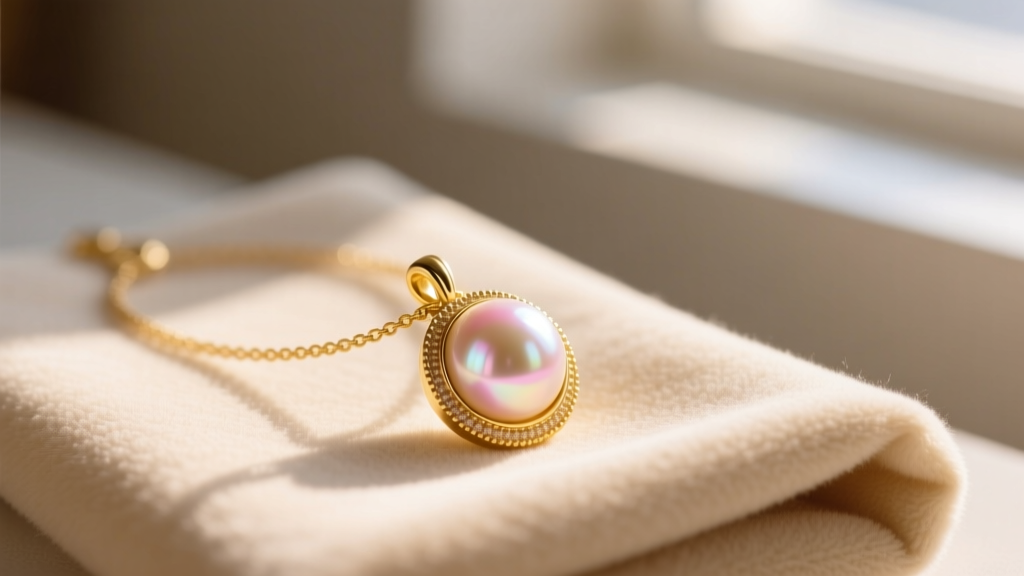
The Material Science Conflict: Gold vs. Nacre
A gold pearl pendant necklace represents a fascinating intersection of metallurgy and organic gemology. To properly care for this piece, you must first understand the inherent material conflict between its two primary components. Gold, particularly in 14k or 18k alloys, is a highly stable, non-reactive metal with a Mohs hardness ranging from 2.5 to 3. However, the pearl is an organic gemstone composed of approximately 92% calcium carbonate (aragonite), 4% water, and 4% conchiolin (an organic protein).
With a Mohs hardness of just 2.5 to 4.5, pearl nacre is exceptionally vulnerable to micro-scratches, acidic degradation, and dehydration. While the gold bail and chain can withstand rigorous polishing and ultrasonic cleaning, subjecting the pearl to these same processes will permanently destroy its orient (the subtle play of light) and dissolve the nacre layers. According to the Gemological Institute of America (GIA), pearls require a drastically different maintenance protocol than traditional faceted gemstones or plain gold jewelry.
The Only Safe Cleaning Protocol for a Gold Pearl Pendant Necklace
Forget commercial jewelry dips, baking soda pastes, and ultrasonic machines. Cleaning a gold pearl pendant necklace requires a gentle, pH-neutral approach that lifts sebum and cosmetic residue without stripping the pearl's natural moisture or tarnishing the gold alloy.
Step 1: Preparation and Solution Mixing
Never use tap water, as municipal water supplies often contain trace amounts of chlorine and fluoride that can etch the nacre over time. Instead, mix one cup of distilled water with two drops of pH-neutral baby shampoo or a specialized, ammonia-free pearl cleaner. The pH level of your solution should sit exactly at 7.0. Avoid any dish soaps containing degreasers or citrus extracts, as the mild acids will eat away at the calcium carbonate.
Step 2: Targeted Gold Cleaning
Dip a soft-bristled, clean makeup brush (like a sable eyeshadow brush) into the solution. Gently agitate the bristles around the gold bail, the jump ring, and the chain links. This area accumulates dead skin cells and lotion, which can cause 14k gold (which contains copper and silver) to oxidize and darken. Do not let the brush touch the pearl itself.
Step 3: Gentle Pearl Wiping
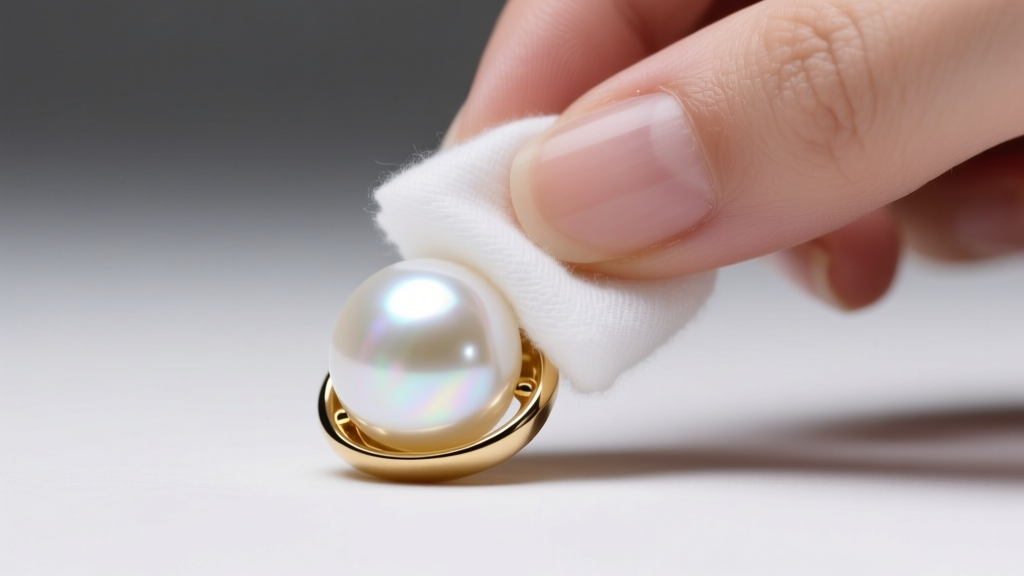
To clean the pearl, do not submerge it. Submerging can allow water to seep into the drill hole or the adhesive bonding the pearl to the gold post, leading to internal rot or detachment. Instead, dampen a lint-free microfiber cloth or a 100% cotton swab in the distilled water solution, wring it out until it is barely damp, and gently wipe the surface of the pearl. Follow the curvature of the sphere to ensure you lift oils from the entire surface.
Step 4: Drying and Polishing
Lay the necklace flat on a dry microfiber towel. Never use a hairdryer or place the necklace in direct sunlight to speed up drying; heat will dehydrate the conchiolin, leading to microscopic cracking (crazing). Once completely air-dried, buff the gold chain with a dry jeweler's polishing cloth, ensuring the cloth's embedded rouge does not transfer onto the pearl.
Chemical Hazard Matrix: What Destroys Your Necklace
The American Gem Society consistently warns against exposing organic gems to household chemicals. Below is a breakdown of how common substances interact with the specific materials of your necklace.
| Chemical Agent | Effect on Gold Alloy (14k/18k) | Effect on Pearl Nacre | Verdict |
|---|---|---|---|
| Chlorine (Bleach/Pools) | Causes stress corrosion cracking in copper alloys | Dissolves calcium carbonate, permanently ruins luster | NEVER USE |
| Ammonia | Safe for plain gold, strips rhodium plating | Eats away organic conchiolin, causes peeling | NEVER USE |
| Baking Soda | Mildly abrasive, causes micro-scratches | Highly alkaline (pH 9), dulls surface orient | NEVER USE |
| Perfume/Hairspray | Accelerates oxidation in lower-karat gold | Alcohol content dehydrates and cracks nacre | AVOID |
| pH-Neutral Soap | Safe, lifts oils gently | Safe, preserves natural moisture barrier | APPROVED |
Identifying Early Signs of Nacre and Gold Degradation
Catching damage early can save a gold pearl pendant necklace from irreversible ruin. Inspect your piece monthly under bright, diffuse lighting for the following failure modes:
- Chalking: If the pearl loses its mirror-like luster and appears matte or chalky, it has suffered acid erosion from skin pH or cosmetics. This requires professional repolishing by a lapidary.
- Nacre Peeling: Often seen in thin-nacre freshwater pearls (under 0.5mm thick), peeling looks like flaking skin. This is caused by extreme dehydration or impact damage and cannot be reversed.
- Bail Wear: Check the gold loop (bail) where the chain threads through. Friction from the chain can wear down the gold over 5-10 years, eventually leading to the pendant snapping off and being lost.
- Post Loosening: If the pearl is glued to a gold post rather than drilled and wire-wrapped, gently test for lateral movement. If it wiggles, the adhesive has failed and must be re-seated with jeweler's epoxy.
Advanced Storage and Environmental Controls
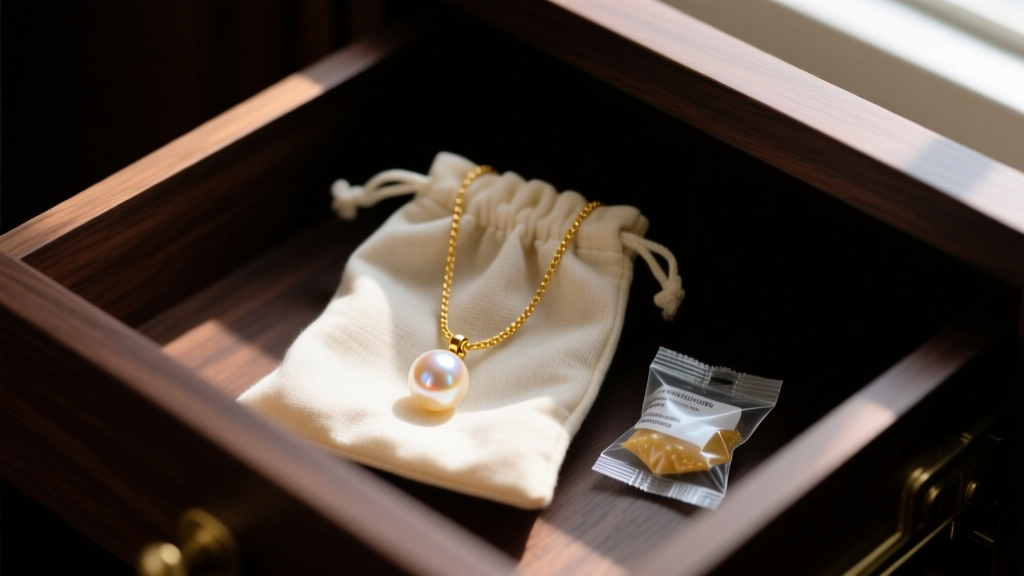
How you store your gold pearl pendant necklace is just as critical as how you clean it. The most common storage mistake is sealing pearls in airtight plastic bags or bank safety deposit boxes for extended periods. Pearls require a baseline level of ambient humidity (ideally between 40% and 60%) to prevent the water content within the nacre from evaporating.
Store the necklace in a breathable, unbleached cotton or linen pouch. Keep it strictly separated from diamond, sapphire, or topaz jewelry, as these harder stones (Mohs 8-10) will effortlessly scratch the pearl's surface if they rub together in a jewelry box. Additionally, practice the golden rule of jewelry wear: last on, first off. Put your pearl pendant on only after applying makeup, perfume, and hairspray, and remove it immediately upon returning home to prevent prolonged exposure to acidic skin oils.
Professional Maintenance Intervals
Even with meticulous home care, a gold pearl pendant necklace requires professional attention. Every 18 to 24 months, take the piece to a certified bench jeweler. They will use a microscope to inspect the structural integrity of the gold bail, the jump ring, and the pearl's mounting. If the necklace features a silk cord rather than a gold chain, be aware that silk degrades, stretches, and rots from skin oils. A professional re-stringing is required every 2 to 3 years if the piece is worn weekly, ensuring the pearl remains securely anchored to its findings.