How to Clean and Maintain a Hawaiian Necklace Flower Pendant
Discover expert tips to clean, polish, and store your Hawaiian necklace flower. Learn safe methods for gold, silver, enamel, and resin plumeria pendants.

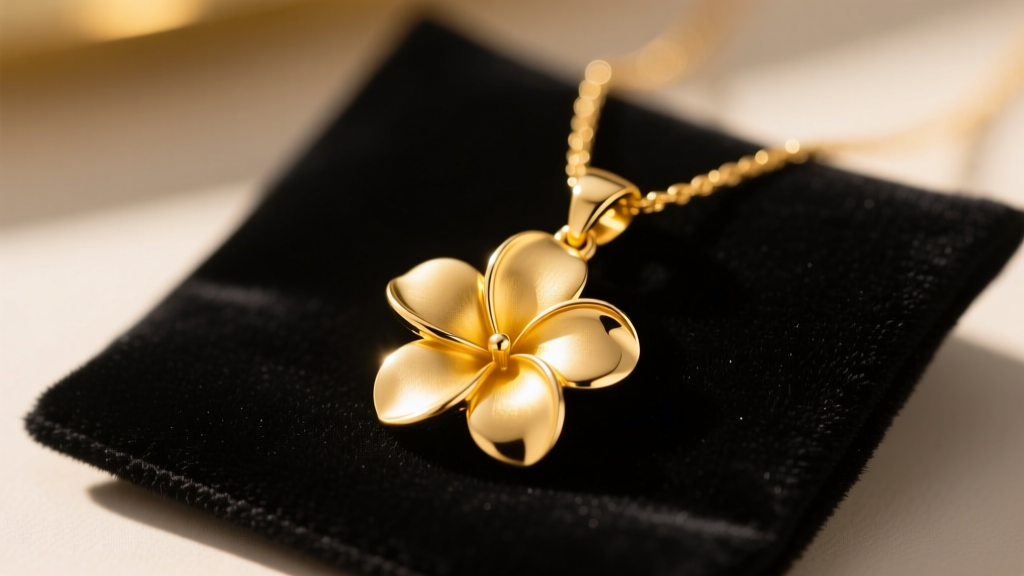
A hawaiian necklace flower is more than just a piece of jewelry; it is a wearable symbol of aloha, often featuring intricate plumeria, hibiscus, or orchid motifs. Whether you possess a vintage 14k gold heirloom piece, a sterling silver pendant with black enamel inlay, or a modern resin-cast design, these intricate floral pendants require specialized care. The deep grooves, textured petals, and delicate material combinations make them prone to trapping lotions, skin oils, and environmental pollutants. According to the Gemological Institute of America (GIA), improper cleaning techniques are the leading cause of irreversible damage to textured and multi-material jewelry. This comprehensive guide will teach you how to safely clean, maintain, and store your Hawaiian flower pendant to ensure it remains vibrant for generations.
Understanding Your Hawaiian Flower Jewelry Materials
Before applying any cleaning solution, you must identify the exact materials of your pendant. A hawaiian necklace flower is rarely made of just one substance. The cleaning protocol for bare metal will destroy delicate inlays, so accurate material identification is your first line of defense.
Solid Gold and Sterling Silver Bases
High-quality Hawaiian pendants are typically cast in 14k or 18k gold, or 925 sterling silver. Gold is highly resistant to tarnish but easily dulled by the accumulation of sebum (skin oils) and cosmetic residues. Sterling silver, however, reacts with sulfur in the air to form silver sulfide, resulting in a dark, unsightly tarnish that aggressively clings to the deep crevices of carved flower petals. When dealing with silver, you must be cautious not to use abrasive pastes that can wear away the oxidized or enameled details intentionally placed in the grooves to provide contrast.
Enamel and Resin Inlays
Many traditional and contemporary Hawaiian necklaces incorporate color through vitreous enamel (fused glass) or cold enamel/epoxy resin. Vitreous enamel has a Mohs hardness of around 5.5 to 7.0, making it relatively scratch-resistant but highly susceptible to thermal shock and impact. Cold enamel and epoxy resins are much softer (Mohs 2.0 to 3.0) and can be easily scratched by standard jewelry polishing cloths. Furthermore, resins are highly reactive to alcohols, acetones, and harsh detergents, which can cause them to cloud, craze, or peel away from the metal backing.
The Step-by-Step Cleaning Protocol
For standard metal pendants without porous gemstones or fragile resin, follow this gentle yet highly effective cleaning method recommended by the Jewelers of America. This process safely lifts debris from the intricate petal grooves without scratching the finish.
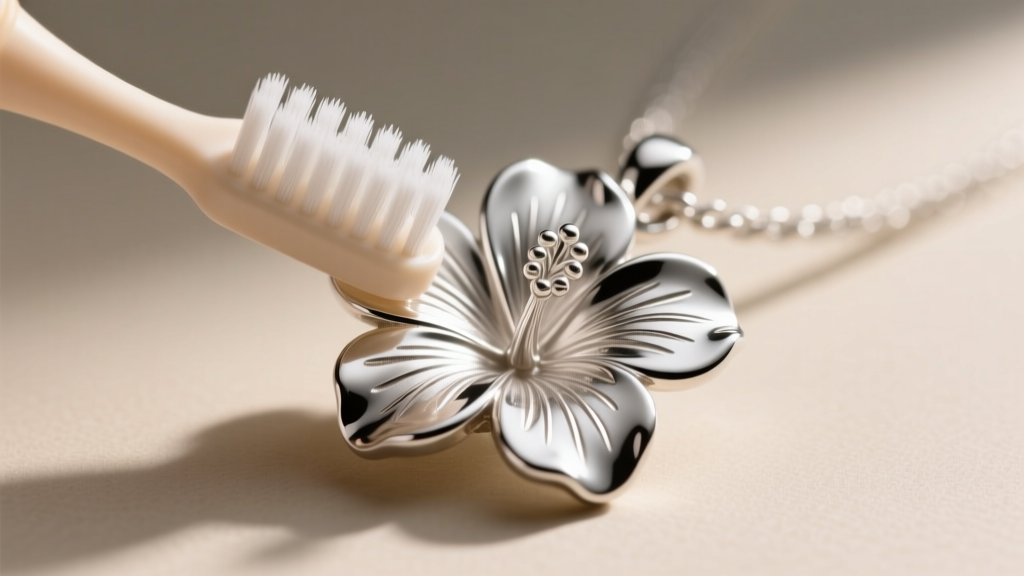
- Prepare the Solution: Mix three drops of phosphate-free, pH-neutral dish soap (such as Dawn) into one cup of lukewarm distilled water. Avoid tap water, as the chlorine and hard minerals can leave microscopic water spots on high-polish gold.
- The Brief Soak: Submerge your hawaiian necklace flower pendant in the solution for exactly three to five minutes. This allows the surfactants to break down the lipid bonds of skin oils trapped in the floral engravings. Never soak resin or glued components for longer than a minute.
- Gentle Agitation: Using an ultra-soft baby toothbrush or a specialized jewelry brush with natural bristles, gently sweep the bristles along the grain of the metal and into the petal grooves. Use a wooden toothpick—never a metal pin or needle—to carefully dislodge stubborn debris from the deepest crevices of the flower's center.
- The Distilled Rinse: Rinse the pendant thoroughly under a gentle stream of lukewarm distilled water to wash away the suspended dirt and soap residue.
- Pat Dry and Air Cure: Blot the necklace gently with a clean, lint-free microfiber cloth. Use a hairdryer on the "cool" setting to blow moisture out of the deep floral engravings, preventing hidden water spots or accelerated tarnishing in the recessed areas.
Chain Maintenance: Rope vs. Box Chains
The chain holding your Hawaiian pendant requires its own maintenance strategy. Traditional Hawaiian jewelry often features rope chains, which are notorious for trapping dirt and dead skin cells within their twisted links. To clean a rope chain, lay it flat on a microfiber towel, apply a small amount of your soapy solution, and gently roll the chain back and forth. Avoid pulling or stretching the chain while wet. Box chains, while easier to wipe clean, can suffer from kinking; always store them hanging or laid perfectly flat to maintain their structural integrity.
What to Avoid: Common Cleaning Mistakes
When caring for a detailed hawaiian necklace flower, what you don't do is just as important as what you do. Many well-intentioned owners ruin their pieces by using modern jewelry cleaning gadgets that are incompatible with floral textures and inlays.
| Material / Feature | Primary Hazard | Why It Causes Damage |
|---|---|---|
| Ultrasonic Cleaners | Cavitation & Vibrations | High-frequency sound waves create microscopic bubbles that implode, shattering vitreous enamel and shaking resin inlays loose from their metal bezels. |
| Steam Cleaners | Thermal Shock & Heat | Sudden temperature changes cause enamel to crack (craze). High heat can melt or warp epoxy resins and weaken jewelry adhesives. |
| Silver Dip Liquids | Chemical Stripping | Harsh acids strip away intentional oxidation (blackening) in the flower grooves, leaving the pendant looking flat and washing out the 3D contrast. |
| Paper Towels | Micro-Scratching | Wood pulp fibers in paper towels are abrasive enough to leave microscopic swirl marks on high-polish gold and soft resin surfaces. |
Long-Term Storage and Environmental Control
Proper storage is the cornerstone of jewelry preservation. Sterling silver Hawaiian flower pendants are particularly vulnerable to humidity and airborne sulfur compounds. To prevent heavy tarnishing, store your necklace in an airtight polyethylene zip-lock bag. Avoid PVC plastics, which can emit gases that accelerate tarnishing and degrade certain resins over time.
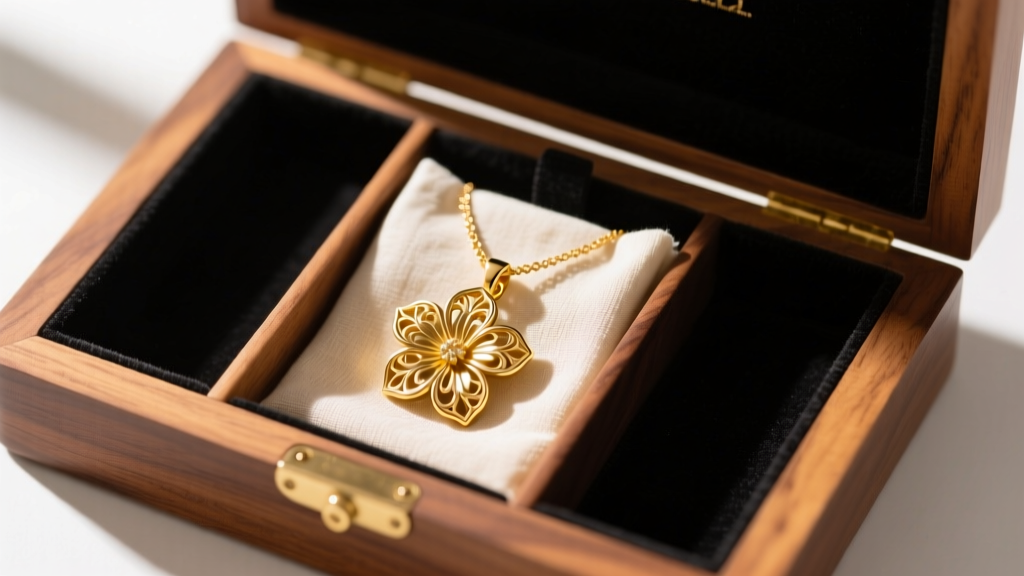
Place a 3M anti-tarnish strip and a small silica gel desiccant packet inside the bag to absorb moisture and neutralize sulfur gases. Keep the relative humidity of your storage environment below 50%. Never store your necklace in a bathroom, where the fluctuating humidity and aerosolized cosmetics will rapidly degrade both the metal finish and any organic or resin components. Always fasten the clasp before storage to prevent the chain from tangling around the delicate petals of the pendant.
When to Seek Professional Jeweler Help
While routine cleaning can be managed at home, certain maintenance tasks require a professional bench jeweler. If your hawaiian necklace flower features a diamond or gemstone set in the center of the plumeria or hibiscus, have the prongs inspected every six months. The intricate scrollwork and floral prongs can easily catch on clothing, slowly bending and loosening the stone over time. Additionally, if your enamel inlay has chipped or your resin has yellowed due to UV exposure, a professional jeweler can re-fire vitreous enamel or carefully remove and replace cold enamel to restore the pendant to its original, vibrant glory.


