Spanish Coin Necklace Guide: History, Styling & Care
Discover everything about the Spanish coin necklace. Learn its rich history, how to authenticate vintage pieces, and expert layering tips for daily wear.

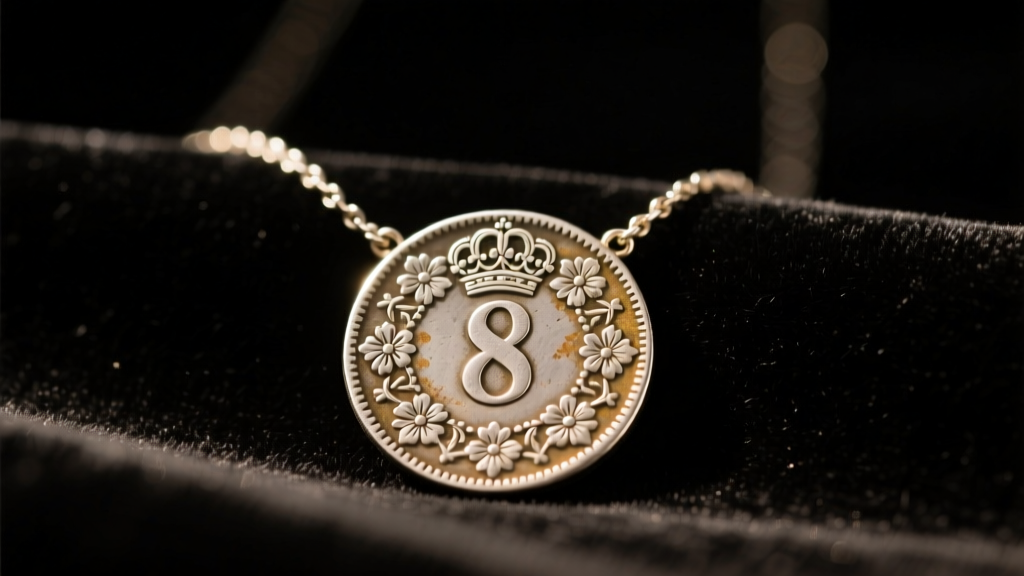
Introduction to the Spanish Coin Necklace
If you have ever been drawn to jewelry that carries the weight of history, the spanish coin necklace is likely on your radar. Far from being a mere fashion trend, these pendants are wearable artifacts. Whether you are looking at a rugged, sea-salvaged silver piece from a 17th-century shipwreck or a pristine, gold-encased 19th-century peseta, coin jewelry bridges the gap between numismatics (coin collecting) and personal adornment. However, stepping into the world of historical coin jewelry can be intimidating for beginners. How do you know if a coin is authentic? Will wearing it ruin its value? What chain can actually support a solid ounce of silver? In this comprehensive guide, we will break down everything you need to know about selecting, mounting, and styling a spanish coin necklace, ensuring you make an informed and stylish investment.
The Numismatic Roots: Beyond Just a Pendant
When jewelers and collectors refer to a spanish coin necklace, they are usually talking about one of two historical categories: the legendary Real de a Ocho (the 8 Reales or 'Piece of Eight') or the later 19th and 20th-century Peseta coins. The 8 Reales was the first truly global currency, minted across the Spanish Empire from the late 15th century through the 19th century. These coins were struck in mints located in Mexico City, Potosí (modern-day Bolivia), and Lima. According to the Professional Coin Grading Service (PCGS), these coins were so universally trusted that they were legal tender in the United States until 1857. Wearing one today is a direct connection to the golden age of maritime trade.
On the other hand, later Peseta coins (introduced in 1868) often feature intricate portraits of Spanish monarchs like Alfonso XII or Alfonso XIII. These are generally smaller, more delicate, and highly favored for minimalist, everyday jewelry stacks. Understanding which era your coin belongs to is the first step in appreciating your necklace's unique narrative.
Decoding the Metals and Mint Marks
Not all Spanish coins were created equal, and their metal composition dictates both their value and how they age on your skin. Here is a breakdown of what you are actually wearing:
| Coin Era / Type | Typical Metal | Purity | Approx. Weight | Market Value (Mounted) |
|---|---|---|---|---|
| 8 Reales (1732-1772) | Silver | .900 to .917 | ~27.07 grams | $250 - $800+ |
| 1 Escudo (18th Century) | Gold | .917 (22k) | ~6.76 grams | $1,200 - $3,000+ |
| Peseta (Late 19th C.) | Silver | .835 to .900 | ~5.00 grams | $80 - $200 |
| Modern Replicas | Brass / .925 | Varies | Varies | $30 - $90 |
For beginners, the .900 silver 8 Reales is the most iconic entry point. Because these coins were hammered or early-milled by hand, no two are perfectly round. Look for the mint mark—such as an 'Mo' for Mexico City or a 'P' for Potosí—usually located on the reverse side near the shield or pillars. The Numismatic Guaranty Company (NGC) provides excellent visual guides on their database for identifying these specific mint marks, which is crucial for verifying authenticity before you buy.
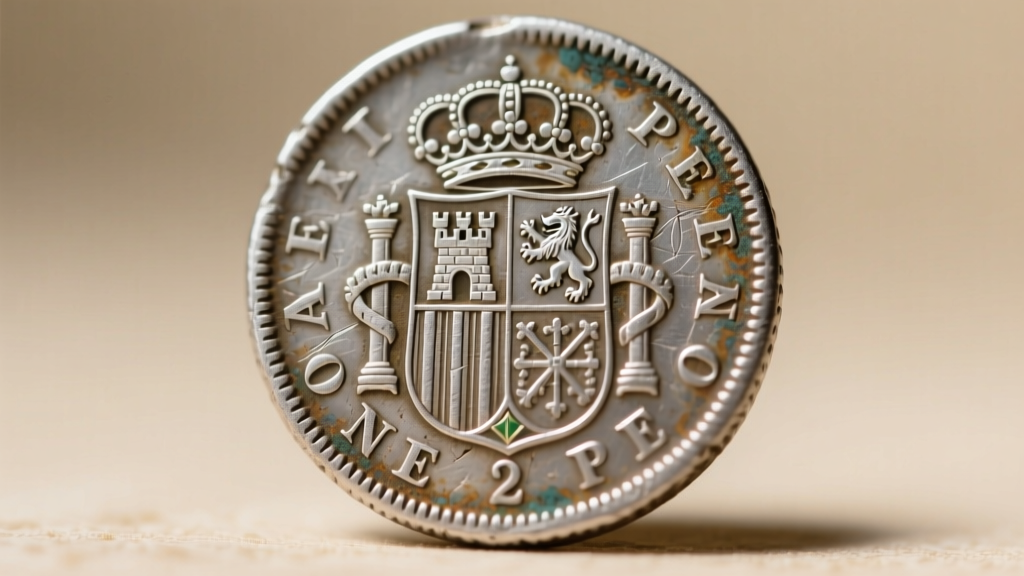
The Mounting Dilemma: Drilled vs. Bezel Set
This is the most critical decision you will make when buying or commissioning a spanish coin necklace. How the coin is attached to the chain drastically affects its numismatic value and structural integrity.
1. The Drilled Hole (Avoid for Valuable Coins)
Historically, sailors and merchants would simply drill a hole through the top of a coin to thread a leather cord or chain through it. While this adds a rugged, pirate-esque charm, drilling permanently destroys a coin's numismatic grade. If you are buying a rare, high-grade 8 Reales, never allow it to be drilled. However, for common-date, heavily worn, or sea-salvaged coins that already lack collector premium, a drilled hole is an acceptable and affordable mounting choice.
2. The Bezel Setting (The Expert's Choice)
A bezel setting involves a custom-fitted metal ring (usually 14k gold or sterling silver) that wraps snugly around the outer edge of the coin, securing it without altering the surface. A high-quality custom bezel will cost between $150 and $350 from a skilled jeweler, but it protects the coin's edge from wear and preserves its collectible value. Some bezels are 'snap-in' or tension-set, allowing you to remove the coin for appraisal or safe storage.
3. The Soldered Bail
A small loop (bail) is soldered directly to the top edge of the coin. This is less invasive than drilling but still involves applying heat and solder to a historical artifact. It is a middle-ground option for moderately valuable coins.
Choosing the Right Chain Gauge for Heavy Coins
A genuine silver 8 Reales weighs over 27 grams (nearly one full ounce). Suspending this weight from a delicate, mass-market chain is a recipe for disaster. The clasp will fail, or the links will stretch and snap. When selecting a chain for a heavy spanish coin necklace, adhere to these structural guidelines:
- Chain Thickness (Gauge): Opt for a minimum of 2.0mm to 3.0mm in thickness. Anything under 1.5mm will eventually pull apart under the pendulum swing of a heavy coin.
- Chain Styles: Rope chains, Figaro chains, and solid box chains offer the highest tensile strength. Avoid hollow-cored chains or delicate cable chains at all costs.
- Clasp Quality: Ensure the chain features a heavy-duty lobster clasp or a secure toggle. Spring-ring clasps are too weak for coins weighing over 15 grams.
- The Bail Size: Ensure the inner diameter of the coin's bail or bezel loop is wide enough to slide over a 3.0mm chain without forcing it, which can scratch the metal.
The Art of the Stack: Layering Formulas
The beauty of the spanish coin necklace lies in its versatility. It can be worn as a solitary statement piece, but it truly shines when integrated into a curated layering stack. Here is a foolproof, three-piece layering formula that balances proportions and prevents tangling.
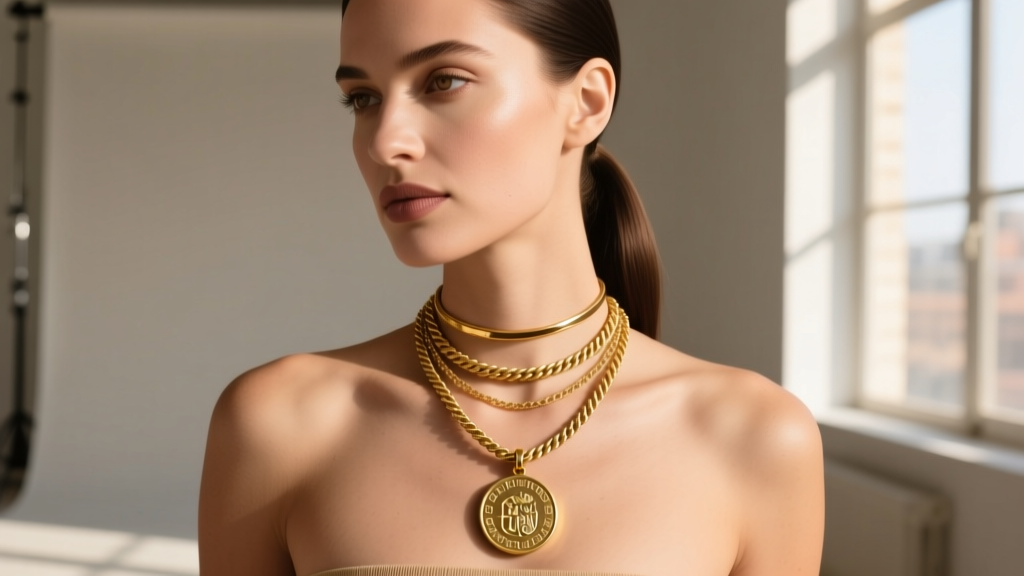
The 'Maritime Explorer' Stack
- The Base (14-16 inches): Start with a delicate 1.5mm gold or silver herringbone choker, or a simple velvet ribbon. This draws the eye upward and frames the collarbone.
- The Anchor (20-22 inches): This is where your spanish coin necklace lives. A 20-inch length allows a heavy 8 Reales to rest comfortably on the sternum without bouncing uncomfortably against your collarbone when you walk.
- The Accent (26-28 inches): Finish with a long, lightweight chain featuring a small, complementary pendant—such as a tiny compass rose, a pearl, or a simple gold bead. This elongates the torso and adds depth to the stack.
Pro-Tip: To prevent your chains from twisting into a tangled mess, use a magnetic necklace spacer clasp at the back of your neck. This keeps the chains perfectly parallel and spaced exactly two inches apart.
Preservation: Cleaning Without Destroying Value
The most common mistake beginners make is aggressively polishing their vintage coin jewelry. In the numismatic world, the dark, colorful oxidation that forms on old silver is called toning or patina. This toning is highly prized by collectors and serves as a protective barrier for the metal.
Never use chemical silver dips (like Tarn-X) on a historical coin. These harsh acids strip the patina instantly, leaving the coin with an unnatural, blindingly white, and porous surface. This immediately slashes the coin's collector value by up to 50%. Instead, clean your necklace using only warm water, a drop of mild dish soap, and a soft-bristled baby toothbrush. Gently clean the bezel and the chain, but avoid scrubbing the face of the coin. Dry it thoroughly with a microfiber cloth to prevent water spots. If the coin is set in a bezel, you can safely polish the outer gold or silver frame with a jewelry cloth without touching the coin itself.
Final Thoughts on Building Your Collection
A spanish coin necklace is more than an accessory; it is a conversation starter, a piece of global history, and a timeless style staple. By understanding the differences between eras, insisting on proper bezel mounting, selecting a structurally sound chain, and respecting the coin's natural patina, you ensure your piece will last for generations. Whether you are hunting for a sea-worn Piece of Eight or a delicate royal Peseta, approaching your purchase with a numismatist's eye and a stylist's flair will guarantee a necklace you will treasure forever.


