Necklace Witchcraft: 2026 Buying Guide for Mystic Pendants
Discover the ultimate 2026 necklace witchcraft buying guide. Learn how to choose metals, crystals, and chains for your mystical pendants and amulets.

The Intersection of Adornment and Intention
In the modern esoteric landscape, necklace witchcraft transcends mere aesthetic appeal. It is the deliberate practice of wearing talismans, amulets, and crystal pendulums that serve as focal points for energy work, protection, and manifestation. As we move through 2026, the demand for intentional jewelry has surged, blending ancient metaphysical traditions with contemporary metallurgy and gemology. However, navigating the market requires more than just an eye for beautiful designs; it demands a rigorous understanding of material science, structural durability, and energetic correspondences.
Whether you are a seasoned practitioner looking to commission a bespoke warding amulet or a beginner seeking your first quartz pendulum, understanding the physical properties of your jewelry is paramount. A pendant that degrades in water or a chain that snaps during a ritual can disrupt your practice and damage rare specimens. This comprehensive buying guide will equip you with the technical knowledge required to select, evaluate, and maintain high-quality mystical necklaces.
Choosing the Right Metal for Your Practice
In necklace witchcraft, the metal setting is not just a vessel for the stone; it is an active conductor of energy. Different metals carry distinct historical and elemental associations, but they also possess unique chemical vulnerabilities that buyers must consider.
- Sterling Silver (.925): Traditionally associated with lunar energy, intuition, and psychic protection. However, standard sterling silver contains 7.5% copper, which reacts with sulfur in the air (and in cleansing herbs like sage or cedar) to form black silver sulfide tarnish.
- Argentium Silver (.935): A modern upgrade for practitioners. By replacing some copper with germanium, Argentium is highly tarnish-resistant. If you frequently use smoke cleansing or handle resin-heavy botanicals, Argentium is the superior, low-maintenance choice.
- Copper: Revered for grounding and conducting energy. Buyers often mistake the green oxidation (verdigris) on their skin as a sign of 'negative energy.' In reality, this is a simple chemical reaction between copper and the natural acidity (pH) of human sweat, forming copper chloride. To maintain conductivity without the staining, look for copper pendants sealed with a micro-thin layer of jeweler's resin.
- Iron and Meteoric Iron: Used heavily in protective warding and hex-breaking. Raw iron will rust rapidly when exposed to moisture or salt-water cleansing rituals. Always verify if an iron talisman has been treated with a rust-inhibiting oil or clear coat.
| Metal | Elemental Association | Durability & Failure Modes | Best For |
|---|---|---|---|
| Sterling Silver | Water / Lunar | Prone to sulfur tarnish; soft enough to bend if snagged. | Divination pendulums, moon-phase rituals. |
| Copper | Earth / Grounding | Oxidizes green with skin contact; highly malleable. | Energy channeling, chakra alignment pendants. |
| 14k Gold | Fire / Solar | Highly durable, non-reactive; alloys may cause nickel allergies. | Solar invocations, wealth manifestation. |
| Raw Iron | Earth / Mars | Extremely strong but highly susceptible to moisture rust. | Protection amulets, boundary setting. |
Crystal and Gemstone Pendulums: Hardness and Energetics
The most critical mistake buyers make in necklace witchcraft is ignoring the Mohs Hardness Scale when selecting a crystal pendant. A stone's energetic properties are irrelevant if it dissolves or scratches during daily wear or ritual cleansing.
The Danger of Porous and Soft Stones
Stones like Selenite (Mohs 2) and Malachite (Mohs 3.5-4) are incredibly popular in esoteric circles but require specialized care. Selenite is a form of gypsum; it will literally dissolve and turn to mush if submerged in water or exposed to heavy humidity. Never buy a selenite pendant intended for 'water charging' rituals. Malachite, while visually stunning and deeply protective, contains high copper content. It is highly porous and can release toxic dust if chipped or aggressively polished. Always purchase malachite pendants that are fully tumbled, polished, or sealed, and never cleanse them with salt water, which will degrade the surface and cause structural pitting.
Durable Stones for Daily Talismanic Wear
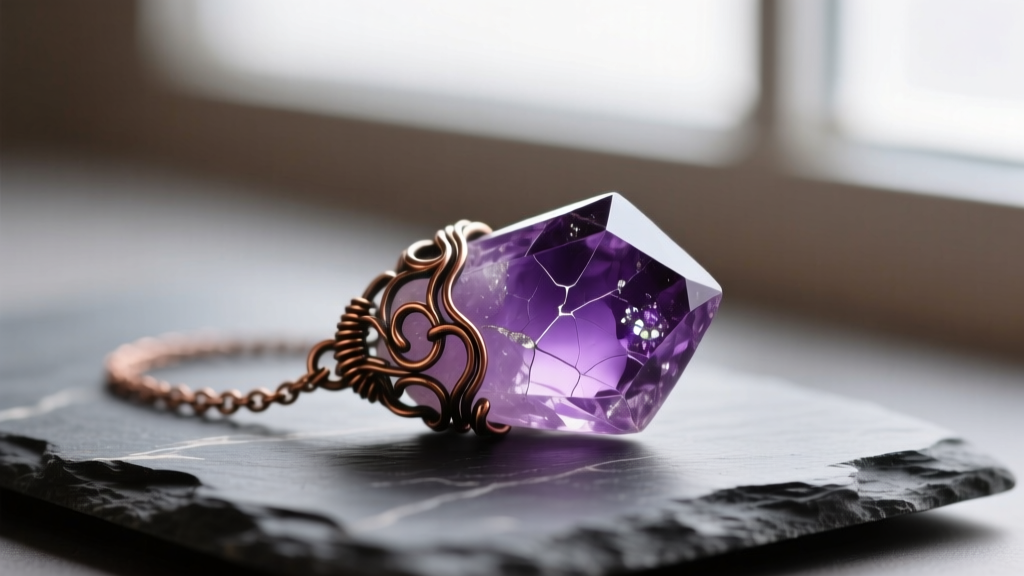
For practitioners who wear their amulets 24/7, stick to stones with a Mohs rating of 7 or higher. Clear Quartz, Amethyst, Citrine, and Obsidian are structurally robust enough to withstand accidental bumps, sweat, and traditional salt-water cleansing methods without degrading. According to gemological standards outlined by the Gemological Institute of America (GIA), quartz-family gems offer the best intersection of optical clarity, structural integrity, and metaphysical versatility.
Sacred Geometry and Symbolic Pendants
Beyond raw crystals, the geometry of a metal pendant dictates its energetic flow. When buying symbolic jewelry, pay close attention to the precision of the casting.
- The Pentacle: Ensure the five points are perfectly symmetrical. In traditional Wiccan and ceremonial magic, a distorted pentacle represents an imbalance of the five elements. Look for castings where the inner star lines intersect cleanly without excess metal pooling.
- Sacred Geometry (Seed of Life, Metatron's Cube): These designs require intricate, multi-layered wirework or high-precision 3D wax casting. Avoid cheap, stamped sheet-metal versions, as the lines are often shallow and lack the three-dimensional depth required to cast proper shadows and hold energetic resonance.
- Hekate's Wheel (Strophalos): A complex symbol featuring a labyrinthine serpent. Because of the deep recesses in this design, buyers should check that the jeweler has properly polished the interior grooves, as trapped polishing compound can turn black and mimic tarnish.
Chain Selection: Durability for Heavy Talismans
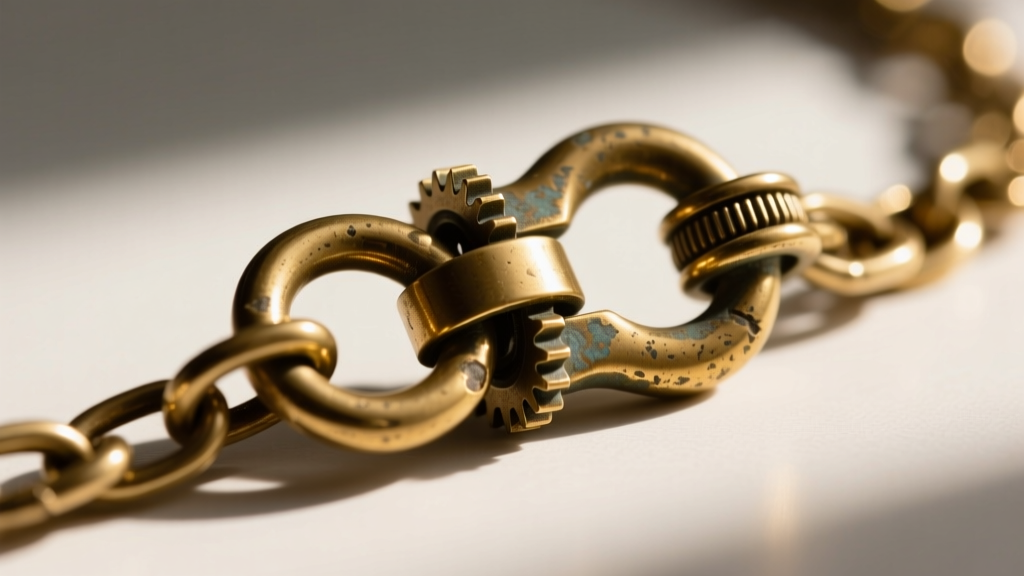
A common point of failure in necklace witchcraft is the chain. Heavy brass, bronze, or large crystal pendulums act as pendulums, generating kinetic stress on the chain links and clasp. According to historical analyses of amulets and talismans, the suspension method was always designed to match the weight of the ward.
Wire Gauge and Link Styles
Do not pair a 30-gram bronze talisman with a delicate 0.8mm cable chain; it will inevitably snap at the soldered jump ring. For heavy pendants, look for the following specifications:
- Rolo or Box Chains (1.5mm to 2.5mm): These feature interlocking, uniform links that distribute weight evenly and resist kinking. They are the gold standard for heavy pendulums.
- Wheat (Spiga) Chains: Excellent for medium-weight pendants, offering a woven, rope-like texture that is highly resistant to pulling forces.
- Jump Rings: Inspect the jump ring connecting the pendant to the chain. It must be soldered closed or made of heavy-gauge wire (at least 18-gauge). An unsoldered, thin jump ring will pull apart under the swinging weight of a crystal point.
Clasp Mechanics
Standard spring-ring clasps are notoriously difficult to operate with one hand and feature weak internal springs that fail over time. Upgrade to lobster clasps for secure, one-handed fastening. For very heavy, oversized amulets, a toggle clasp is superior; the gravitational pull of the heavy pendant actually helps lock the T-bar securely through the O-ring, making it both safer and easier to put on.
Cleansing and Charging Your Necklace
Proper maintenance ensures your mystical necklace remains a viable tool for decades. The method of cleansing must be tailored to the materials present in the piece.
- Smoke and Sound: Using palo santo, cedar smoke, or singing bowls is universally safe for all metals, crystals, and delicate wire-wrappings. This is the recommended baseline for porous stones like turquoise, lapis lazuli, and selenite.
- Lunar Charging: Leaving silver and moon-associated stones on a windowsill is effective, but be wary of morning dew or sudden temperature drops, which can cause thermal shock and fracture internal inclusions in gems like emerald or opal.
- Salt Water Avoidance: While popular in lore, submerging jewelry in salt water is highly destructive. Salt accelerates the galvanic corrosion of silver and copper alloys and will permanently etch the surface of calcite-based stones. If you must use earth elements for cleansing, bury the pendant in dry, clean soil or a bowl of dry brown rice instead.
By prioritizing material science alongside metaphysical intent, you ensure that your necklace witchcraft practice is supported by jewelry that is as resilient and enduring as the energy you channel through it.