Stained Glass Cross Necklace: 2026 Pricing & Value Guide
Discover the true value of a stained glass cross necklace in 2026. We break down pricing tiers, glass types, and soldering quality to help you buy smart.

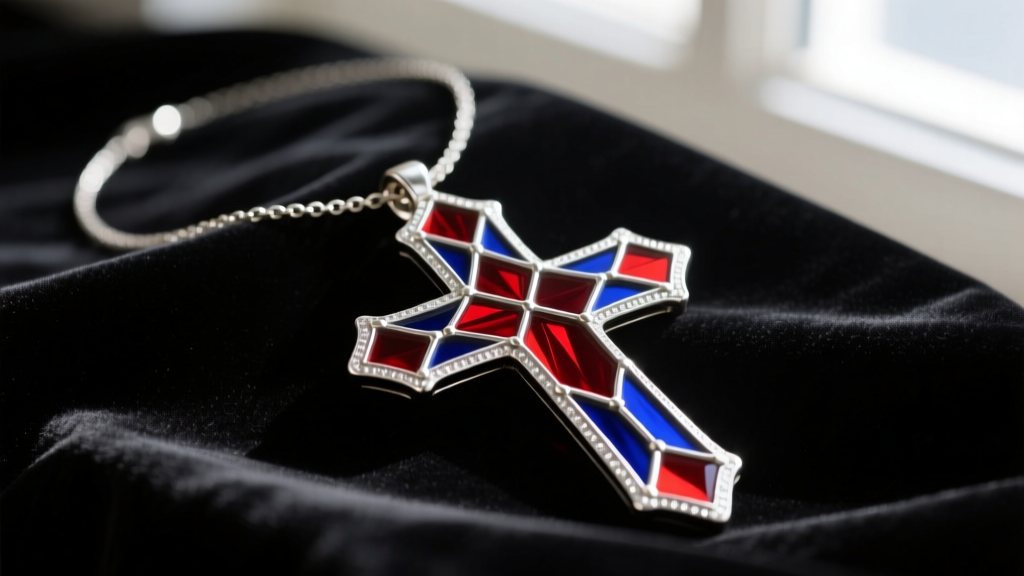
The market for artisan jewelry has evolved significantly, and the stained glass cross necklace has transitioned from a simple souvenir trinket to a highly sought-after piece of wearable art. As we navigate the 2026 jewelry market, consumers are increasingly prioritizing craftsmanship, material transparency, and long-term durability over fast-fashion accessories. However, assessing the true value of a stained glass pendant requires a trained eye. Unlike solid gemstones or precious metals, the value of glass jewelry is rooted in the artisan's technique, the grade of the glass, and the structural integrity of the metal framework.
In this comprehensive value assessment, we will deconstruct the pricing tiers of stained glass cross necklaces, examine the metallurgy of the soldering process, and provide a practical framework to ensure you are paying a fair price for genuine craftsmanship.
The Anatomy of a Stained Glass Cross Pendant
To accurately assess a necklace's budget and value, you must first understand how it is constructed. High-quality stained glass jewelry is crafted using the copper-foil method, a technique popularized by Louis Comfort Tiffany in the late 19th century. The artisan cuts the glass, grinds the edges for precision, wraps each piece in adhesive-backed copper tape, and then solders the seams together. This labor-intensive process is the primary driver of cost in the artisan tier.
Conversely, low-value, mass-produced pendants often rely on cheap zinc-alloy bezels or, worse, clear epoxy resin printed with a stained glass pattern. According to the Federal Trade Commission Jewelry Guides, sellers must accurately disclose the materials used in their products, yet the online marketplace remains flooded with mislabeled resin pendants marketed as glass. Knowing the difference is your first line of defense in protecting your budget.
Glass Grades: Cathedral vs. Opalescent vs. Dichroic
The type of glass used heavily influences both the aesthetic appeal and the baseline material cost. The Corning Museum of Glass categorizes art glass by its light-transmission properties and manufacturing process, which directly correlates to retail pricing.
- Cathedral Glass: Transparent and single-colored. It relies on light passing directly through it. It is the most affordable option, often used in beginner artisan pieces or budget-friendly collections ($15–$35).
- Opalescent Glass: Contains milky, opaque streaks that scatter light, creating a multi-dimensional, marbled effect. It requires higher kiln temperatures and specific mineral additives, raising the material cost ($40–$75).
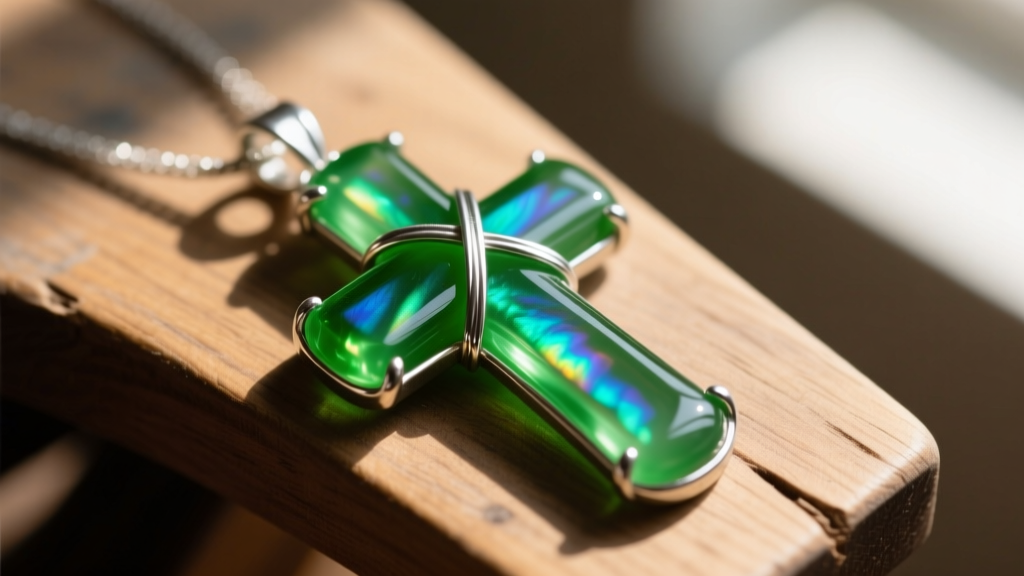
- Dichroic Glass: Originally developed for aerospace, this glass features micro-layers of metal oxides that reflect brilliant, iridescent colors depending on the viewing angle. Kiln-fired dichroic crosses command a premium due to the specialized equipment required ($85–$150+).
2026 Market Pricing Tiers: What Should You Pay?
When shopping for a stained glass cross necklace, it is crucial to align your budget with the appropriate market tier. Below is a structured breakdown of what you should expect to pay in 2026, factoring in inflation, material costs, and artisan labor rates.
| Market Tier | Materials & Construction | Estimated Price Range | Value Proposition |
|---|---|---|---|
| Mass-Market / Import | Resin or stamped glass, zinc alloy frames, glued bails, thin plated chains. | $12 – $25 | Low upfront cost, but high failure rate. Poor long-term value. |
| Artisan Handcrafted | Genuine cathedral/opalescent glass, copper-foil method, lead-free solder, sterling silver chain. | $45 – $95 | Excellent cost-to-durability ratio. Supports independent makers. |
| Masterwork / Kiln-Fired | Dichroic or custom-fused glass, 97/3 silver-bearing solder, heavy-gauge precious metal chains. | $120 – $250+ | Investment-grade wearable art. Unique, one-of-a-kind pieces. |
Evaluating Craftsmanship: Solder, Foil, and Framing
The metal framework holding the glass together is just as critical as the glass itself. In budget assessment, the solder alloy is a massive indicator of quality. Cheap manufacturers use 60/40 solder (60% tin, 40% lead). Not only is lead toxic and unsafe for prolonged skin contact, but it also oxidizes rapidly, turning a dull, chalky gray within months.
Premium artisans use 97/3 silver-bearing solder (97% tin, 3% silver). This lead-free alloy has a higher melting point, creating a structurally superior joint that resists tarnishing and maintains a brilliant, chrome-like shine. Furthermore, the solder should be smoothly beaded (convex) over the copper foil. Flat or concave solder lines indicate a rushed job with insufficient material, leading to weak structural integrity.
Expert Appraisal Tip: Run your fingernail gently along the soldered seams of the cross. The surface should feel completely smooth and glass-like. If you feel sharp ridges, pits, or a gritty texture, the artisan skipped the crucial polishing and waxing stages, meaning the piece will tarnish prematurely.
Chain Pairings and Gauge Recommendations
A common mistake buyers make is undervaluing the chain. Stained glass is remarkably dense; a modest 1.5-inch opalescent cross pendant can easily weigh between 12 and 18 grams. Suspending this weight on a delicate chain is a recipe for disaster.

When assessing the total value of the necklace package, check the chain's gauge and style:
- Box Chains (1.2mm - 1.6mm / 16 to 14 Gauge): The gold standard for heavy pendants. The interlocking square links distribute weight evenly and resist snapping.
- Wheat / Spiga Chains (1.2mm+): Excellent flexibility and high tensile strength, ideal for daily wear.
- Chains to Avoid: Snake chains and herringbone chains. While beautiful, they are prone to permanent kinking and snapping when subjected to the swinging torque of a heavy glass pendant.
- The Bail: Ensure the bail (the loop connecting the pendant to the chain) is a soldered metal ring integrated into the framework. Glued-on bails will inevitably detach when exposed to body heat and moisture.
Red Flags: Spotting Overpriced Mass-Produced Fakes
To protect your budget, you must be able to identify low-value items masquerading as artisan work. Beware of the following red flags when evaluating a stained glass cross necklace:
- The 'Tap' Test: Gently tap the pendant with your fingernail. Real glass produces a sharp, high-pitched 'clink.' Epoxy resin produces a dull, hollow 'thud.' Resin scratches easily and yellows with UV exposure.
- Lead Came Framing: Traditional stained glass windows use 'lead came' (H-shaped lead strips). If a jewelry piece uses thick, bulky lead came instead of the delicate copper-foil solder method, it is likely a cheap, mass-produced import that is both unsafe and structurally clumsy.
- Uniformity in 'Handmade' Claims: If a seller claims a piece is hand-cut but has 500 identical units in stock with perfectly symmetrical, machine-ground edges, you are paying an artisan premium for factory-stamped glass.
Final Verdict: Maximizing Your Investment
In 2026, a fair budget for a genuine, handcrafted stained glass cross necklace falls between $50 and $90. At this price point, you should expect genuine art glass, 97/3 lead-free solder, a securely soldered bail, and a sterling silver or gold-filled chain no thinner than 1.2mm. By focusing on the metallurgy of the solder, the optical properties of the glass, and the tensile strength of the chain, you can confidently navigate the market and acquire a piece of wearable art that offers both profound aesthetic value and lasting structural integrity.


