Troubleshooting Your 18 Necklace Chain: Fit, Tangles, and Breaks
Learn how to fix common issues with your 18 necklace chain. Expert troubleshooting for tangling, breakage, pendant friction, and fit adjustments.

The Anatomy of an 18 Necklace Chain Failure
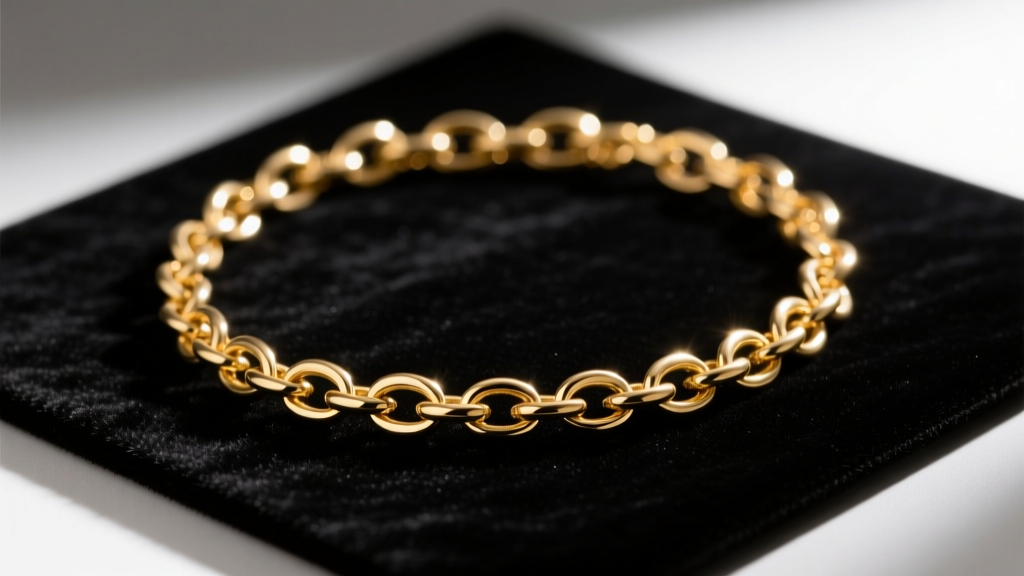
The 18-inch chain (45.72 cm) is the undisputed workhorse of the jewelry industry. It is designed to rest perfectly on the collarbone, making it the default choice for everything from delicate diamond solitaires to heavy gemstone pendants. However, because it sits at the base of the neck—a high-friction, high-mobility zone—an 18 necklace chain is subjected to unique mechanical stresses. From micro-kinks in box chains to stretched links in soft gold alloys, troubleshooting these issues requires an understanding of jewelry metallurgy and structural mechanics.
In this comprehensive guide, we will diagnose the most common failures associated with 18-inch chains and provide actionable, jeweler-grade solutions to restore your pieces to perfect condition.
The Metallurgy of Chain Breakage: Why Your Chain Snaps
When an 18 necklace chain breaks, the culprit is rarely the clasp; it is usually the tensile failure of the links themselves. The root cause often traces back to the karat weight of the gold and the specific link style.
14k vs. 18k Gold Tensile Strength
Pure 24k gold is far too soft for jewelry, so it is alloyed with metals like copper, silver, and zinc. An 18k gold chain contains 75% pure gold, making it noticeably softer and more malleable than 14k gold (58.5% pure gold). If you have an 18-inch chain in 18k gold that is under 1.2mm in width, hanging a pendant heavier than 5 grams will cause the links to slowly stretch and eventually snap at the solder points.
Troubleshooting Fix: If you frequently wear heavy pendants, retire your thin 18k gold chain. Upgrade to a 14k gold or platinum chain of the same length. According to the Gemological Institute of America (GIA), the higher alloy content in 14k gold significantly increases tensile strength and work-hardening resistance, making it vastly superior for supporting weight over an 18-inch span.
Chain Link Style vs. Breakage Risk
Not all links are created equal. The structural integrity of your 18 necklace chain depends heavily on its weave.
| Chain Style | Tensile Strength | Tangle Risk | Best Repair Method |
|---|---|---|---|
| Cable / Link | Moderate | Low | Standard soldering |
| Box | High | Low | Laser welding |
| Snake | Very Low | High | Often unrepairable if kinked |
| Rope | Very High | Moderate | Laser welding / re-weaving |
| Herringbone | Low | High | Flattening and soldering |
Troubleshooting Fit: When 18 Inches Doesn't Measure Up
While 18 inches is the industry standard for a 'collarbone' fit, human anatomy varies wildly. A chain that rests elegantly on the collarbone of a person with a 13-inch neck circumference will feel like a restrictive choker on someone with a 16-inch neck. Conversely, if you have a longer neck or broader shoulders, an 18 necklace chain might dip too low, losing the intended aesthetic.

The Extender Chain Solution
Do not attempt to stretch or pull a chain that feels too tight; this will warp the links and compromise the structural integrity of the metal. Instead, utilize a chain extender.
- For a minor adjustment (1-2 inches): Purchase a 14k gold or sterling silver extender chain featuring a 4mm spring ring clasp on one end and a 5mm lobster clasp on the other. This allows you to adjust the drop dynamically based on the neckline of your shirt.
- For a permanent fix: Take the chain to a bench jeweler and have them solder an additional 2 inches of matching cable link directly into the chain near the clasp. This typically costs between $30 and $50, depending on the metal weight.
For deeper insights into proper necklace sizing and fit, Jewelers of America recommends measuring your neck with a soft tailor's tape and adding exactly 2 to 4 inches to determine your true baseline chain length before purchasing.
Solving the Pendant Bail Friction Matrix
A highly specific and frustrating issue with the 18 necklace chain is the 'pendant flip.' This occurs when your pendant constantly slides around the chain and rests upside down against your chest. This is not a curse; it is a geometric mismatch between the chain width and the pendant bail (the loop the chain passes through).
Diagnosing the Bail-to-Chain Ratio
If you are threading a 1.5mm box chain through a pendant bail that has a 2.0mm inner diameter, the pendant has too much lateral movement. It will slide freely, catch on the clasp, and flip over. Conversely, if the bail is too tight, the chain will experience severe friction, eventually wearing through the bail metal and causing you to lose your gemstone.
The Jump Ring Spacer Fix:
To solve the pendant flip on an 18-inch chain, you need to restrict the pendant's lateral movement without increasing friction. Have a jeweler attach a 4mm to 6mm oval jump ring (made from 20-gauge or 22-gauge wire) to the pendant bail. Thread the 18 necklace chain through this new jump ring instead of the bail itself. The oval shape prevents the chain from bunching up, while the larger diameter allows the pendant to hang perfectly plumb, completely eliminating the flipping issue.
Kink Removal Protocols for Snake and Box Chains
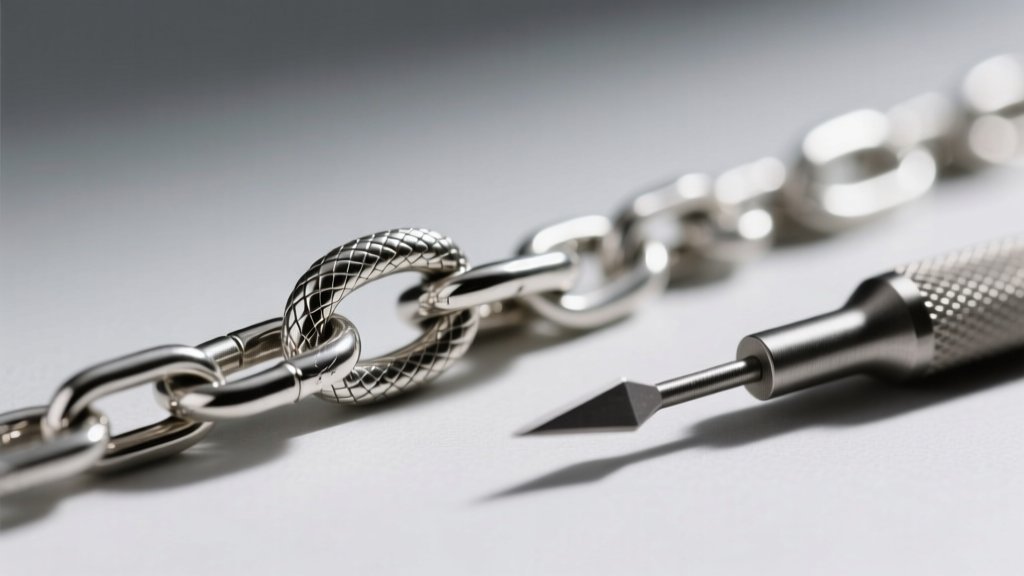
Snake chains and herringbone chains are notorious for developing micro-kinks. Because these chains are constructed from tightly interlocked, flat metal rings, a single sharp bend disrupts the entire structural flow, creating a weak point that will eventually snap.
What NEVER to Do
Never pull a kinked snake chain taut in an attempt to 'snap' the links back into place. This will permanently stretch the metal and ruin the chain. Furthermore, never use standard needle-nose pliers to pinch the kink, as the serrated teeth of the pliers will gouge the soft gold or silver.
The Mandrel Rolling Technique
To safely remove a micro-kink from your 18 necklace chain, you need a smooth, cylindrical surface.
- Lay the chain completely flat on a clean, hard surface.
- Locate the exact center of the kink.
- Take a smooth steel jewelry mandrel, a glass test tube, or even a high-quality metal pen.
- Place the cylinder directly over the kink and apply gentle, downward pressure.
- Roll the cylinder back and forth over the kinked area 10 to 15 times. The compressive force will slowly massage the interlocked links back into their original flat alignment without stretching the metal.
Upgrading Weak Hardware and Jump Rings
The single most common point of failure on an 18 necklace chain is not the chain itself, but the unsoldered jump ring that connects the lobster clasp to the links. Over time, the tension of putting the necklace on and taking it off causes this jump ring to pull apart, leading to lost jewelry.
Soldering vs. Laser Welding
If you notice a gap in the jump ring near your clasp, do not simply push it closed with your fingers. Metal suffers from 'work hardening'—repeatedly bending a jump ring open and closed makes it brittle, and it will eventually snap.
Take the chain to a professional jeweler and request a laser weld. Unlike traditional torch soldering, which requires applying flux and heat that can damage nearby gemstones or alter the temper of the chain, laser welding uses a concentrated pulse of light to fuse the metal instantly. A laser weld on a standard jump ring typically costs between $15 and $25 and creates a bond that is often stronger than the original cast metal. This minor investment guarantees that your hardware will outlast the chain itself.
Final Maintenance and Storage
Proper storage is the ultimate preventative troubleshooting step. Never toss an 18 necklace chain into a jewelry box loose; the microscopic scales on snake and box chains will act like velcro, tangling with other pieces. Always fasten the clasp before storing, and ideally, hang the chain vertically on a jewelry arbor or lay it completely flat in a dedicated, fabric-lined drawer. By understanding the mechanical limits of your jewelry and applying these targeted fixes, your 18-inch chain will remain a secure, elegant staple in your collection for decades.


