Material Properties of Authentic Vintage Pendant Necklaces
Explore the metallurgy, early synthetics, and degradation modes of vintage pendant necklaces. A masterclass in historical jewelry materials.

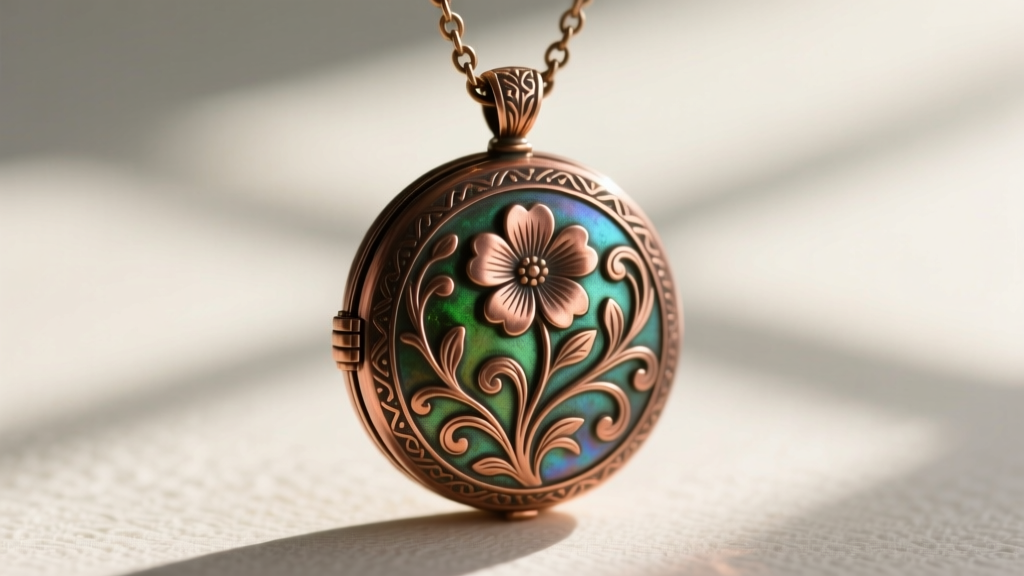
Collecting and wearing vintage pendant necklaces is an exercise in applied history. Unlike modern mass-produced jewelry, which relies on standardized CAD modeling and uniform electroplating, vintage pieces are defined by the distinct metallurgical formulas and early synthetic materials of their respective eras. Understanding the material properties of these necklaces is not merely an academic pursuit; it is essential for authentication, valuation, and long-term conservation. From the precise copper-zinc ratios of Victorian pinchbeck to the volatile off-gassing of Art Deco celluloid, the materials dictate the failure modes, restoration protocols, and ultimate longevity of the piece.
The Metallurgy of Eras: Decoding Historical Alloys
Before the widespread adoption of standardized karat hallmarking laws in the early 20th century, jewelers relied on proprietary alloys to mimic precious metals or achieve specific tensile strengths. The most prominent of these in the realm of vintage pendant necklaces is Pinchbeck. Invented in the 18th century but heavily utilized through the Victorian era, pinchbeck is an alloy of exactly 83% copper and 17% zinc. Unlike modern brass, which can contain lead or tin, true pinchbeck was designed to closely mimic the specific gravity and warm luster of 18k gold. Over time, the zinc oxidizes at a different rate than the copper, creating a distinct, mottled patina that is highly prized by collectors but easily destroyed by harsh commercial polishes.
Moving into the Edwardian and early Art Deco periods, platinum became the dominant metal for high-end pendant settings, particularly for diamond and pearl clusters. However, pure platinum is too malleable for secure stone setting. Historical jewelers alloyed it with 10% iridium (often stamped as '10% Irid-Plat'). This specific ratio increased the Vickers hardness from roughly 56 HV to 130 HV, providing the necessary tensile strength to secure heavy old European cut diamonds in delicate millegrain bezels without the prongs bending during daily wear.
"The transition from silver and gold to platinum in the late 19th century fundamentally changed pendant architecture, allowing for the 'knife-edge' wirework that defines Edwardian jewelry." — Lang Antiques University
Early Synthetics: Bakelite, Celluloid, and Lucite
Not all vintage pendant necklaces are metallic. The 1920s through the 1940s saw the explosion of early synthetic plastics, which were carved into bold, geometric pendant drops and beads. Identifying and preserving these materials requires an understanding of their distinct chemical properties.
Celluloid and the Threat of Nitric Acid
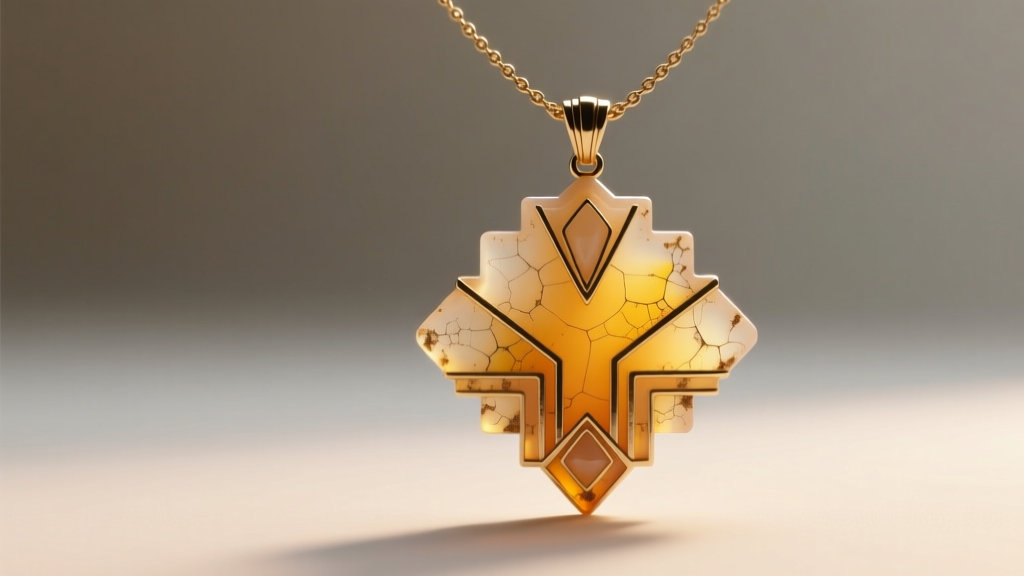
Celluloid, the first thermoplastic, is composed of nitrocellulose and camphor. While it allowed for the mass production of intricately carved cameo pendants and faux-amber drops, it is inherently unstable. As celluloid ages, it undergoes depolymerization, releasing camphor (which causes the distinct medicinal odor when rubbed) and, more dangerously, nitric acid. This off-gassing creates a micro-acidic environment that will actively corrode the adjacent metal findings, chains, and jump rings. If a celluloid pendant exhibits fine 'crazing' (a network of microscopic cracks) or a sticky surface, it is actively degrading and must be isolated from metal components immediately.
Bakelite: The Thermosetting Standard
Unlike celluloid, Bakelite (polyoxybenzylmethylenglycolanhydride) is a thermosetting phenol formaldehyde resin. Once cured, it cannot be melted or reshaped. Bakelite pendants are significantly denser and heavier than later plastics like Lucite (PMMA). Authenticating a Bakelite pendant often involves the 'Simichrome test'—applying a small amount of Simichrome polish to an inconspicuous area; the phenolic resins will cause the polish to turn a distinct mustard yellow, a reaction not seen in later acrylics.
Gold-Filled vs. Gold Vermeil: A Study in Durability
When sourcing mid-century vintage pendant necklaces, buyers frequently encounter the term 'Gold-Filled' (GF). It is a common misconception that gold-filled is a high-quality plating. In reality, vintage gold-filled material is a mechanical bond. By Federal Trade Commission standards established in the mid-20th century, a piece stamped '1/20 14K GF' must contain exactly 5% (1/20th) of its total weight in 14-karat gold, mechanically bonded to a brass core through extreme heat and pressure rolling.
This mechanical bonding results in a gold layer that is typically 50 to 100 times thicker than modern gold vermeil (which is merely electroplated over sterling silver and requires a minimum of 2.5 microns). A well-preserved 1950s 1/20 14K GF pendant can withstand decades of friction and mild abrasion without exposing the base metal, whereas modern vermeil often wears through to the silver substrate within two to three years of daily wear. However, if a vintage gold-filled pendant is deeply scratched or aggressively machine-polished, the brass core will be exposed, leading to rapid dezincification and localized galvanic corrosion.
Comparative Material Properties and Failure Modes
| Material | Primary Era | Composition / Properties | Common Failure Mode | Conservation Protocol |
|---|---|---|---|---|
| Pinchbeck | Victorian | 83% Cu, 17% Zn; High malleability | Stress cracking at bail loops | Dry wipe only; avoid ultrasonic cleaners |
| Celluloid | Art Deco | Nitrocellulose + Camphor; Thermoplastic | Nitric acid off-gassing; crazing | Store in open-air, low humidity; isolate from metals |
| 1/20 14K GF | Mid-Century | Mechanical gold bond; High tensile strength | Brass core exposure via deep abrasion | Mild soap wash; no abrasive polishing cloths |
| Platinum/Iridium | Edwardian | 90% Pt, 10% Ir; High density, work-hardens | Prong fatigue from repeated bending | Annual loupe inspection; laser welding for repairs |
Authentication and Advanced Diagnostics
While visual hallmarks (such as the 'dog-head' stamp for French platinum or the '925' stamp for sterling) provide initial clues, sophisticated collectors and dealers rely on advanced diagnostic tools to verify the material integrity of vintage pendant necklaces. The Gemological Institute of America (GIA) frequently highlights the use of X-Ray Fluorescence (XRF) spectrometry in the trade.
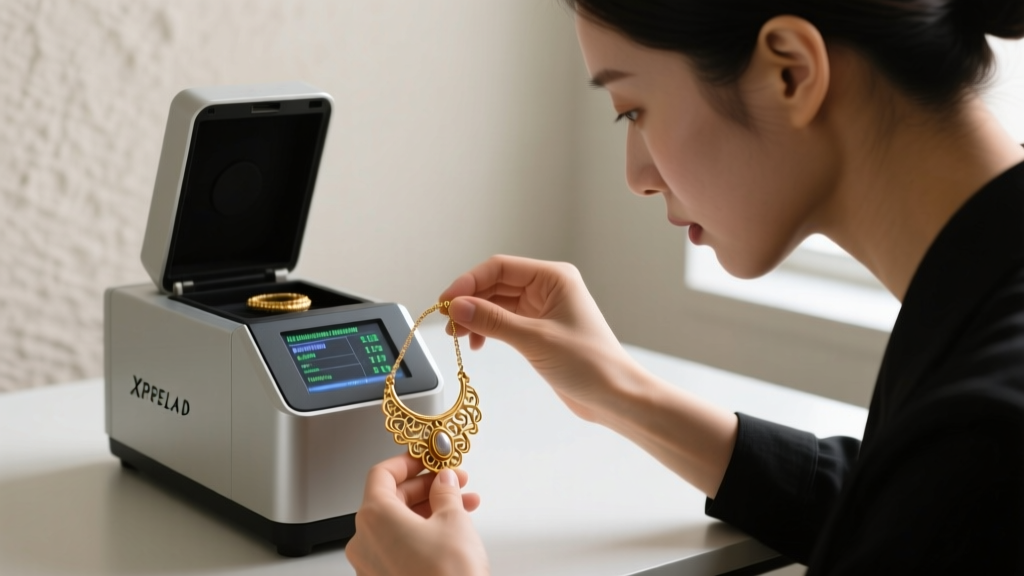
Handheld XRF analyzers allow appraisers to non-destructively blast the surface of a pendant with X-rays, measuring the fluorescent energy emitted to determine the exact elemental composition. This is particularly crucial for identifying 'white gold' pendants from the 1920s. Early white gold was often alloyed with nickel to bleach the yellow hue of pure gold. Because nickel is a common contact allergen, identifying its presence via XRF is vital for modern wearers. Furthermore, XRF can detect the presence of cadmium in vintage solder joints—a toxic heavy metal frequently used in low-temperature solders prior to modern environmental regulations.
Archival Storage Protocols for Vintage Pendants
Preserving the material integrity of vintage pendant necklaces requires strict environmental controls. According to conservation guidelines outlined by the Victoria and Albert Museum, relative humidity (RH) must be carefully managed. High humidity (above 60%) accelerates the oxidation of silver and triggers 'bronze disease' in copper-heavy alloys like pinchbeck. Bronze disease occurs when cuprous chloride reacts with moisture to form hydrochloric acid, resulting in bright green, powdery spots that actively eat through the metal.
Conversely, extremely low humidity (below 30%) will desiccate and shatter organic pendant materials such as carved tortoiseshell, coral, and ivory. The ideal storage environment for a mixed-material vintage collection maintains an RH of 45% to 50%. Furthermore, vintage pieces must never be stored in polyvinyl chloride (PVC) plastic bags or boxes with PVC linings. PVC off-gasses hydrogen chloride, which will rapidly tarnish silver and corrode base metal findings. Instead, pendants should be wrapped in unbuffered, acid-free tissue paper and placed in polyethylene or polypropylene archival bags with activated charcoal or silica gel desiccant packets to neutralize ambient sulfur compounds.


