2026 Style Trends: How to Layer Womens Name Necklaces
Discover the 2026 style trends for womens name necklaces. Learn expert layering techniques, chain pairings, and metal grading tips for a curated look.

The Evolution of the Nameplate: From Nostalgia to 2026 Minimalism
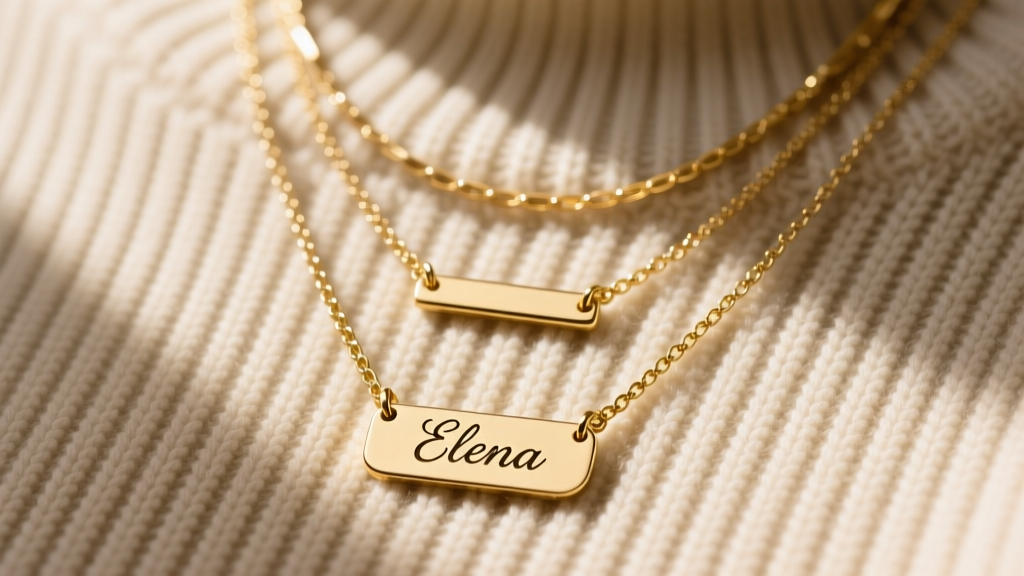
The landscape of personalized jewelry has shifted dramatically over the last decade. In 2026, womens name necklaces are no longer just nostalgic novelties or early-2000s pop-culture relics; they are sophisticated, architectural components of a curated jewelry wardrobe. According to Vogue's recent jewelry trend reports, the modern consumer demands pieces that balance deep sentimental value with high-end metallurgical integrity and quiet luxury aesthetics.
The sweeping, oversized cursive scripts that dominated the 2010s have been replaced by refined, lowercase serif fonts, minimalist sans-serifs, and discreet typewriter-style engravings. Today’s styling ethos treats the nameplate not as a standalone statement piece that demands attention, but as an intimate, personalized anchor within a complex, multi-layered chain curation. This shift requires a deeper understanding of metal grades, chain textures, and proportional layering to execute flawlessly.
Material Grades and the Science of Chain Pairings
When investing in personalized jewelry, understanding the metallurgical composition is non-negotiable. The durability of a nameplate pendant depends entirely on the alloy mix and the manufacturing technique. The Gemological Institute of America (GIA) notes that pure 24k gold is far too soft for daily-wear nameplates, as it will warp and bend against the collarbone within weeks.
Understanding Gold Alloys and Vermeil Standards
- 14k Solid Gold (58.5% Pure): The undisputed champion for daily-wear nameplates. It offers the perfect balance of rich color and Vickers hardness, resisting the micro-bends that cause script fonts to snap. Expect to pay between $180 and $350 for a quality 14k piece.
- 18k Gold Vermeil: A superior alternative to standard plating. True vermeil requires a sterling silver base coated with a minimum of 2.5 microns of 18k gold. It provides the warm, buttery hue of 18k gold with the structural rigidity of silver. Avoid 'flash-plated' brass pieces, which typically feature less than 0.5 microns of gold and will oxidize within months.
- Platinum and Palladium: Emerging trends for 2026 include cool-toned, hypoallergenic platinum nameplates. While significantly more expensive, platinum’s density ensures that delicate connecting loops will never wear thin from chain friction.
The Structural Integrity of Script Fonts
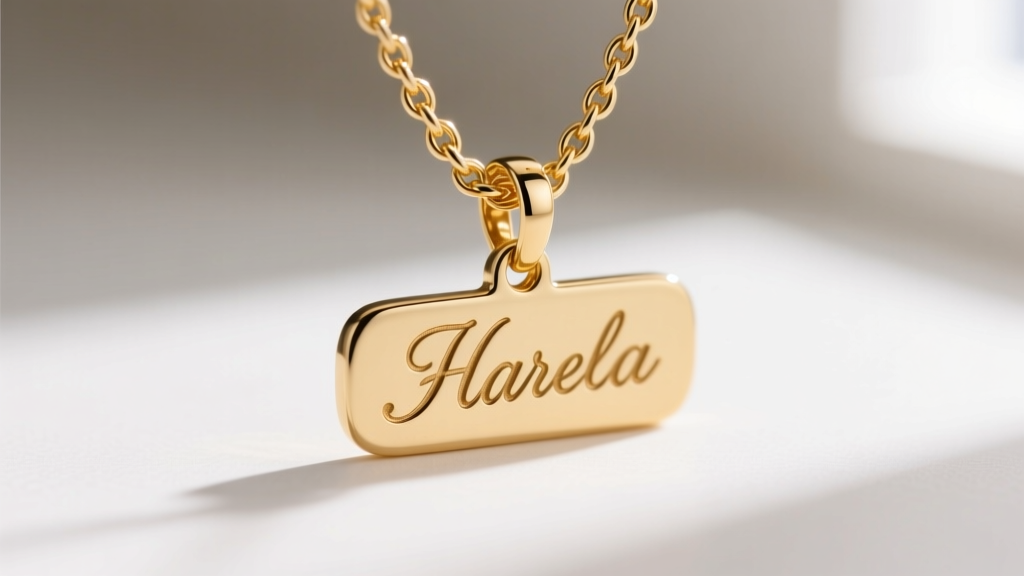
A critical, often overlooked aspect of womens name necklaces is structural engineering. A common failure mode in mass-produced nameplates is the snapping of the pendant at its thinnest points—often the cross of a 't', the dot of an 'i', or the tail of a 'y'. To prevent catastrophic failure, expert jewelers recommend a minimum metal thickness of 1.2mm (roughly 16-gauge) for the script body.
Furthermore, the connection point between the chain and the pendant is a major vulnerability. High-end brands utilize laser-welded, 18-gauge jump rings that are completely closed and soldered. If the jump ring is merely pinched shut, the pendant will eventually slip through the gap and be lost. When commissioning a custom nameplate, always specify a minimum of two connection points (one on the first letter, one on the last) to distribute the tension evenly across the chain and prevent the pendant from flipping upside down.
The 2026 Layering Matrix: Lengths, Textures, and Weights
Mastering the art of layering requires a strategic approach to chain textures and lengths. A cluttered neckline is the result of poor spacing, not too many chains. According to Harper's Bazaar's layering guides, the ideal stack relies on a minimum two-inch gap between each necklace to prevent tangling and allow each piece to catch the light independently.
| Layer Position | Chain Style | Thickness | Length | Purpose & Styling Role |
|---|---|---|---|---|
| Base (Closest) | Box Chain or Snake | 0.9mm - 1.1mm | 14" - 15" | Anchors the collarbone; provides a subtle, liquid-metal shimmer. |
| Middle (Hero) | Classic Cable Chain | 1.2mm - 1.5mm | 16" - 18" | Holds the nameplate pendant; sits perfectly on the upper sternum. |
| Outer (Accent) | Paperclip or Figaro | 2.5mm - 3.5mm | 20" - 24" | Adds visual weight, texture, and a modern, industrial contrast. |
By mixing the delicate, uniform links of a cable chain with the elongated, varied links of a paperclip chain, you create a dynamic visual hierarchy that elevates the personalized nameplate from a simple trinket to a high-fashion focal point.
Neckline Compatibility and Proportional Styling
The impact of a nameplate necklace is heavily dictated by the garment it rests upon. The interplay between metal and fabric can either highlight the jewelry or cause it to disappear entirely.
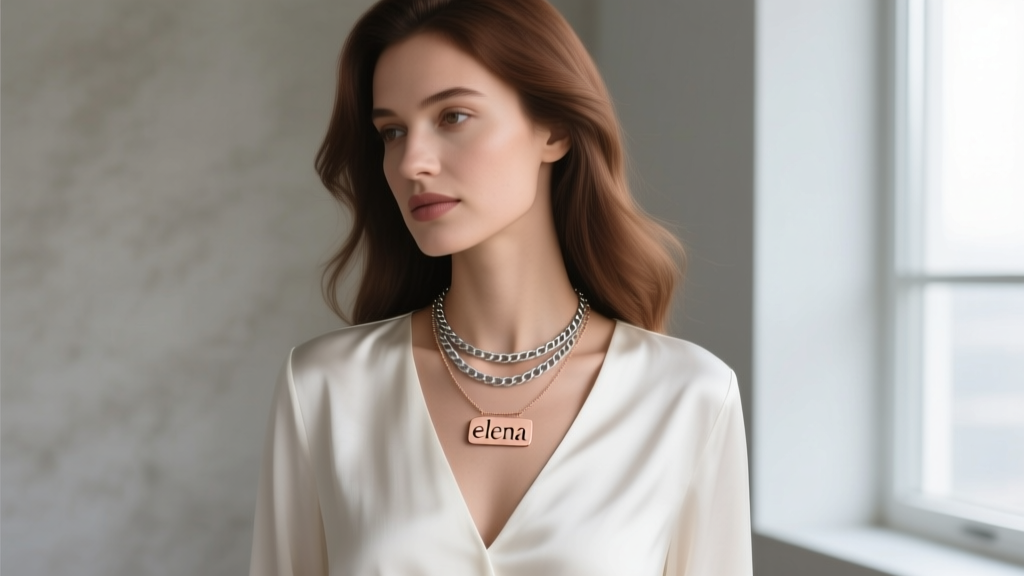
- The Deep V-Neck: Opt for an 18-inch or 20-inch nameplate on a slightly heavier chain (1.5mm). The V-shape naturally draws the eye downward, and a longer pendant will follow the geometric lines of the neckline without looking choked.
- The Crew Neck / High Collar: Keep it tight and delicate. A 14-inch or 15-inch choker-length nameplate resting just above the collarbone creates a striking contrast against the modesty of a high neckline. Use a minimalist, lowercase font to avoid overwhelming the fabric.
- The Silk Slip Dress (Cowl Neck): Drape a 22-inch paperclip chain layered with a 16-inch delicate nameplate. The mixed metals (like a rose gold nameplate against a yellow gold chain) work exceptionally well here, catching the light as the silk moves.
- The Crisp White Button-Down: Leave the top three buttons undone and layer a 16-inch nameplate with a 14-inch simple diamond solitaire pendant. This is the ultimate 2026 'quiet luxury' office-to-evening uniform.
Pricing Tiers and Investment Guidelines
When shopping for womens name necklaces, the market is segmented into distinct pricing tiers based on material longevity and craftsmanship. Understanding these tiers ensures you pay a fair price for the metallurgical value you are receiving.
Entry-Level: $45 – $95
At this tier, you are looking at high-quality gold vermeil or heavy gold-plated sterling silver. Brands like GLDN and Etsy-based artisan jewelers dominate this space. These pieces are excellent for trend-testing or for those who prefer to rotate their jewelry frequently. However, expect the gold layer to eventually wear thin on the back of the pendant where it rubs against the skin, requiring re-plating every few years.
Mid-Tier Investment: $150 – $350
This is the sweet spot for 10k and 14k solid gold nameplates. Brands such as Mejuri, Catbird, and Ariel Gordon offer exceptional craftsmanship in this range. You are paying for solid gold that will never tarnish, turn your skin green, or require re-plating. The laser-cutting precision at this tier is also superior, resulting in smoother edges that won't snag on delicate knitwear.
Luxury and Bespoke: $500 – $1,500+
Luxury tier nameplates feature 18k solid gold, platinum, or incorporate pavé-set diamonds into the script. At this level, you are often paying for bespoke, hand-carved wax molds rather than standard CAD/CAM laser cutting, resulting in a completely unique font and a heavier, more substantial pendant that feels like an heirloom.
Final Styling Verdict
The modern approach to personalized jewelry is all about intentionality. The days of wearing a single, oversized nameplate on a flimsy chain are behind us. By focusing on structural integrity, precise chain layering, and high-quality metal alloys, you transform a simple name into a sophisticated, enduring element of your personal style.
"True luxury in 2026 isn't about shouting your name; it's about the quiet confidence of wearing a piece that is structurally flawless, perfectly proportioned, and intimately yours." — Jewel Style Radar Editorial Team
Whether you are commissioning a bespoke 14k gold piece or carefully layering a vermeil script with vintage chains, the key is to treat your nameplate with the same stylistic respect as any fine jewelry investment. Measure your necklines, check your jump rings, and layer with purpose.


