Troubleshooting Your Kate Spade Spade Necklace: Fixes & Care
Learn how to troubleshoot, clean, and restore your Kate Spade spade necklace. Fix chipped enamel, tarnished gold plating, and broken clasps easily.

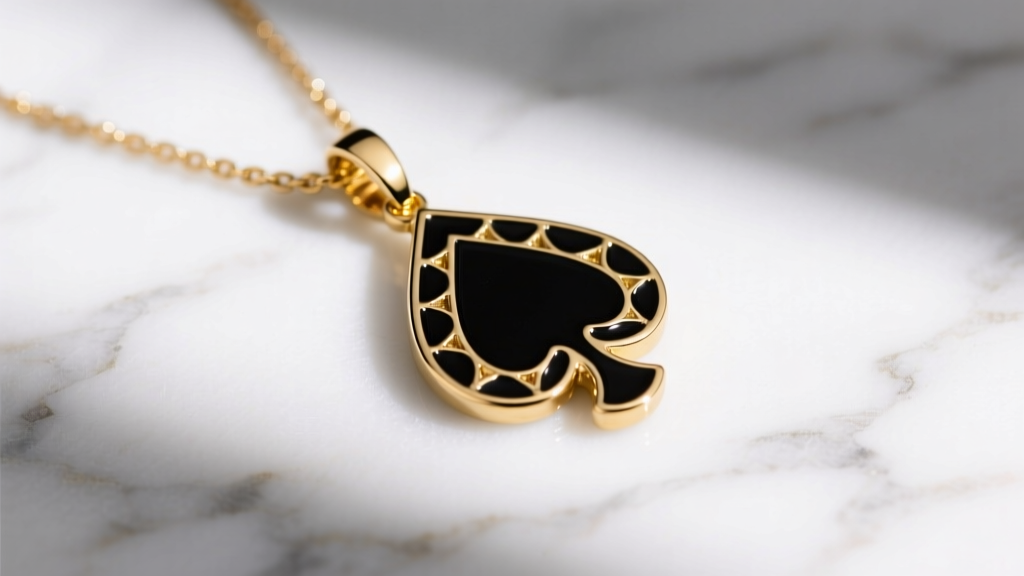
The Kate Spade spade necklace is an iconic staple in fashion jewelry, recognized for its playful yet elegant silhouette. Whether you own the classic black enamel version, the crystal pavé iteration, or the minimalist gold-tone outline, this piece is a frequent go-to for both casual and professional wardrobes. However, because it is classified as fashion jewelry rather than fine jewelry, it is susceptible to specific wear-and-tear issues over time. From fading gold plating to chipped enamel and tangled cable chains, daily exposure to elements can degrade its pristine appearance.
This comprehensive troubleshooting guide dives deep into the metallurgical and material realities of your necklace. We will explore actionable, expert-level solutions to restore your piece, addressing everything from brass oxidation to cold enamel repair, ensuring your favorite pendant stays in rotation for years to come.
Understanding Your Materials: Why Wear Occurs
To effectively troubleshoot any damage, you must first understand the anatomy of a standard Kate Spade spade necklace. Unlike fine jewelry crafted from solid 14k or 18k gold, this piece is typically constructed from a base metal—usually brass or a zinc alloy—which is then electroplated with a thin layer of 12k or 14k gold-tone metal. According to the Gemological Institute of America (GIA), fashion jewelry plating is generally between 0.1 and 0.5 microns thick. Once this microscopic layer wears away from friction or chemical exposure, the underlying brass is exposed to oxygen and moisture, leading to rapid oxidation (tarnish) and the dreaded green skin effect.
The iconic spade motif is often filled with "cold enamel." Unlike vitreous enamel, which is glass fused to metal at extreme temperatures, cold enamel is actually a two-part epoxy resin. While it provides a brilliant, glossy color, it is much softer and more prone to chipping upon impact.
Troubleshooting Gold-Tone Tarnish and Plating Loss
The Danger of Liquid Dips and Abrasives
The most common mistake owners make when their spade necklace loses its luster is reaching for commercial silver dips or aggressive polishing pastes. Liquid dips contain harsh chemicals like thiourea, which will instantly strip the remaining gold-tone plating from the brass base. Similarly, standard jewelry polishing cloths embedded with rouge (iron oxide) are too abrasive for micro-plating and will accelerate wear.
Safe Cleaning Protocol for Plated Brass
If your necklace is dull or mildly tarnished, use the following safe cleaning method:
- Solution: Mix 3 drops of mild, phosphate-free dish soap (like Dawn) into a bowl of lukewarm distilled water. Avoid tap water, as chlorine and hard minerals can leave micro-deposits.
- Agitation: Submerge the necklace for exactly 3 minutes. Use an extra-soft baby toothbrush to gently sweep the crevices around the spade motif and the chain links.
- Drying: Rinse briefly in distilled water and immediately pat dry with a lint-free microfiber cloth. Air-drying leads to water spots that can etch into the remaining plating.
Restoring Chipped Cold Enamel on the Spade Motif
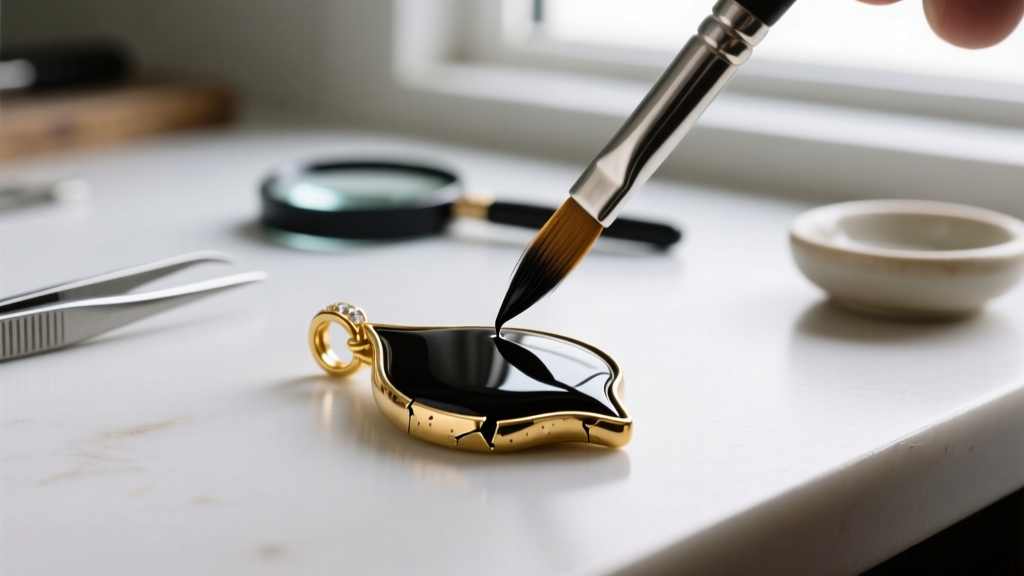
If your black, white, or red enamel has chipped, you cannot take it to a traditional jeweler for "re-enameling," as they use kiln-fired vitreous techniques that will melt the brass base and destroy the gold plating. Instead, you must perform a cold enamel repair using jewelry-grade epoxy.
Step-by-Step DIY Epoxy Repair
- Prep the Area: Clean the chipped area with a cotton swab dipped in 90% isopropyl alcohol to remove skin oils and lotions. Let it dry completely.
- Mix the Resin: Use a two-part clear jewelry epoxy (such as G-S Hypo Cement or a specialized 5-minute epoxy). Mix equal parts on a glass palette.
- Pigment Matching: If repairing a black spade, mix in a microscopic amount of opaque black resin pigment. For white, use titanium dioxide powder.
- Application: Using a 000-size detail brush or a wooden toothpick, carefully drop the tinted epoxy into the chip. Do not overfill; the resin will self-level slightly but can spill over the gold borders if applied too heavily.
- Curing: Let the piece cure on a flat, dust-free surface for 24 hours. Do not use a heat gun to speed up the process, as rapid heating can cause the epoxy to yellow or bubble.
Resolving Cable Chain Tangles and Clasp Failures
Kate Spade necklaces typically feature a 1.2mm to 1.5mm cable chain secured by a 5x9mm lobster clasp. Because the links are small and lightweight, they are highly susceptible to micro-tangles and spring failures.
Untangling Without Breaking
Never pull a knotted cable chain. The brass links will stretch and deform, permanently ruining the chain's structural integrity. Instead, lay the tangled section flat on a glass surface. Apply a single drop of mineral oil or baby oil directly to the knot. Using two fine sewing needles, gently work the center link of the knot outward. The oil reduces friction, allowing the microscopic links to slide apart without stress.
Clasp Spring Replacement
If the lobster clasp no longer snaps shut, the internal spring mechanism has failed. This is not repairable; the clasp must be replaced. You can purchase a 14k gold-filled 5x9mm lobster clasp and a 4mm jump ring (0.8mm wire thickness). Using two pairs of flat-nose pliers, twist the jump ring open (never pull it apart laterally), slide off the broken clasp, attach the new one, and twist the jump ring securely closed.
The Ultimate Spade Necklace Troubleshooting Matrix
Use this quick-reference table to diagnose your necklace's specific issue and determine the most cost-effective repair route.
| Issue | Root Cause | DIY Fix / Action | Estimated Pro Cost |
|---|---|---|---|
| Green skin / Dark brass | Plating worn off, copper oxidizing | Coat inside with clear nail polish; avoid moisture | $45 - $85 (Re-plating) |
| Chipped Enamel | Impact damage, dropped on hard surface | Tinted two-part jewelry epoxy application | $30 - $50 (Custom resin fill) |
| Dull / Cloudy Metal | Lotion buildup, hard water spots | Dawn dish soap and distilled water soak | $15 (Ultrasonic cleaning) |
| Stiff / Broken Clasp | Internal spring fatigue, debris in hinge | Replace with gold-filled 5x9mm lobster clasp | $20 - $35 (Solder & replace) |
When to Seek Professional Re-Plating
If the gold-tone finish on your spade pendant or chain has rubbed away to reveal the yellowish or reddish brass underneath, no amount of polishing will restore the color. At this stage, you must seek a professional electroplating service. A reputable jeweler will first polish the brass base to remove pitting, apply a nickel or palladium barrier layer to prevent the brass from bleeding through, and then flash-plate the piece with a heavy layer of 14k or 18k gold (usually 1.0 to 2.0 microns). This professional re-plating not only restores the original Kate Spade aesthetic but actually makes the piece more durable than it was when it left the factory.
Long-Term Preventative Care Protocol
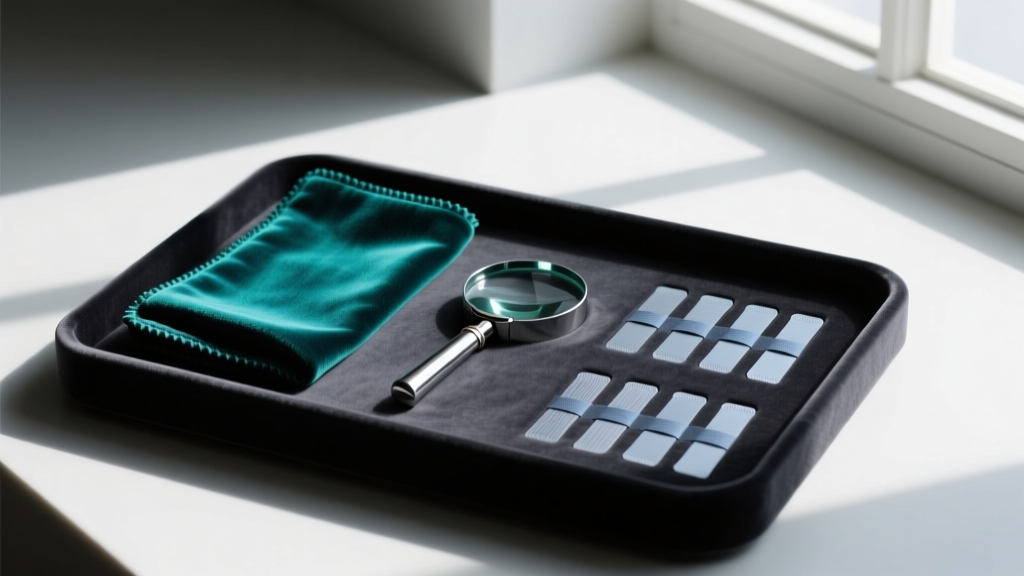
Preventing damage is vastly superior to repairing it. To maximize the lifespan of your Kate Spade spade necklace, implement a strict preventative care protocol based on guidelines from Jewelers of America. Always follow the "Last On, First Off" rule: put your necklace on after applying perfumes, hairsprays, and lotions, and take it off immediately upon returning home. Store the necklace in a sealed, airtight polyethylene bag with a 3M anti-tarnish strip to absorb ambient sulfur compounds that cause brass oxidation. Finally, never wear your plated fashion jewelry in the shower, pool, or hot tub, as chlorine and heat will accelerate the delamination of the gold plating from the brass substrate.


