How to Wear a Necklace With a Turtleneck: Step-by-Step Guide
Learn how to style a necklace with a turtleneck using our step-by-step guide. Discover ideal lengths, layering techniques, and pendant weights.


Styling a necklace with a turtleneck is one of the most common cold-weather fashion dilemmas. The thick, ribbed fabric of a turtleneck collar creates a visual barrier that can swallow delicate chains, cause severe tangling, or generate static cling that ruins your jewelry's drape. However, when executed correctly, pairing knitwear with precious metals creates a striking, sophisticated silhouette that elongates the neck and adds a necessary focal point to winter wardrobes.
This step-by-step guide breaks down the exact mechanics of wearing a necklace with a turtleneck, covering precise length measurements, chain weaves, pendant gram weights, and fabric compatibility. Whether you are wearing a lightweight silk-blend mock neck or a chunky cable-knit wool sweater, these rules will ensure your jewelry sits perfectly and remains damage-free.
Step 1: Calculate the Ideal Necklace Length
The most frequent mistake people make is wearing standard princess-length chains (18 inches) over a turtleneck. This length lands directly on the thickest part of the collar seam, creating bulk and causing the chain to twist. To properly style a necklace with a turtleneck, you must bypass the 'dead zone' and opt for matinee or opera lengths to create a flattering 'V' shape that visually elongates the torso.
- Choker (14-16 inches): Only works if worn *under* the collar, directly against the skin. Avoid wearing over the fabric.
- Princess (18 inches): The danger zone. It will get caught in the ribbed folds and stretch out over time.
- Matinee (22-24 inches): The sweet spot. A 24-inch chain clears the collar entirely and rests on the upper chest, providing a clean, elongated line.
- Opera (28-36 inches): Ideal for dramatic, bohemian layering over chunky knits. Can be doubled up for a complex, multi-tiered look.
Step 2: Select the Correct Chain Weave and Metal
Not all chains are created equal when it comes to knitwear. The texture of your turtleneck dictates the type of chain you should wear. According to textile and jewelry care guidelines from the Gemological Institute of America (GIA), friction between metal and fiber can degrade both materials over time.
Avoid Snake and Herringbone Chains: These flat, tightly woven chains act like velcro against wool and cashmere. The microscopic scales of wool fibers will catch in the tight seams of a snake chain, leading to pulled threads on your sweater and kinked metal on your jewelry.
Opt for Rope, Box, or Cable Chains: These weaves have smooth, rounded, or distinctly closed surfaces that glide over knits without snagging. A 14k gold rope chain, for instance, offers enough structural rigidity to lay flat against a heavy sweater without bending out of shape. Additionally, because turtlenecks trap body heat and perspiration against the neck, sterling silver can tarnish faster when worn near the collar seam. Opt for argentium silver or 14k/18k gold for pieces that will sit near the neckline.
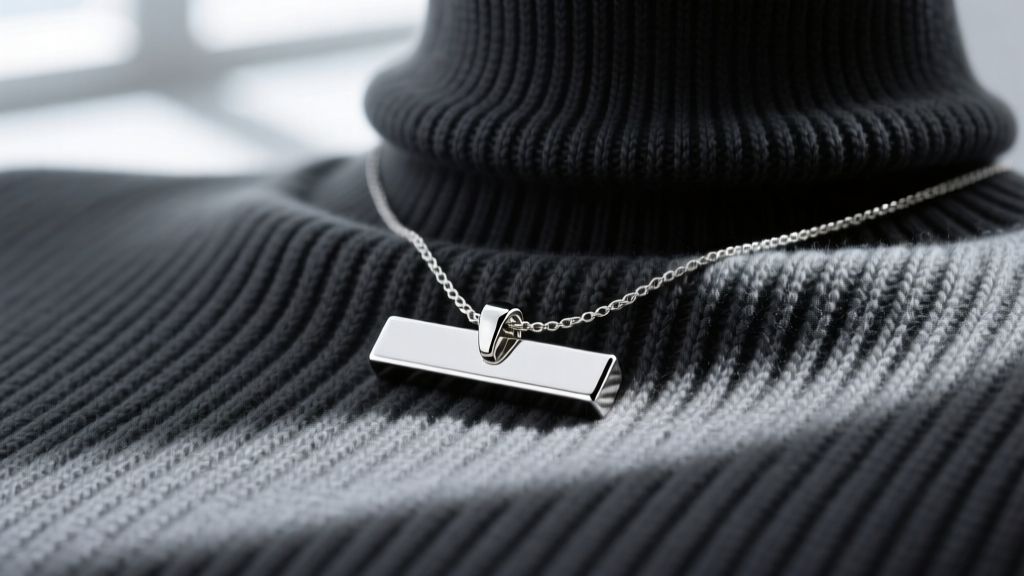
Step 3: Match Pendant Weight to Fabric Thickness
When wearing a necklace with a turtleneck, gravity and fabric friction are your biggest enemies. A lightweight, 2-gram pendant will constantly flip over, get stuck in the collar folds, and fail to lay flat. You need mass to conquer the friction of the knit.
The Gram Weight Rule
For lightweight cotton or silk mock-necks, a pendant weighing 5 to 8 grams is sufficient. However, for standard ribbed wool or cashmere turtlenecks, your pendant must weigh at least 12 to 18 grams. This extra weight acts as a plumb bob, pulling the chain taut and ensuring the pendant remains facing forward. If your favorite pendant is too light, consult a jeweler to add a thick sterling silver or gold 'bail' (the loop that connects the pendant to the chain) to add 3-4 grams of functional weight.
Step 4: Master the Layering Spacing Rule
Layering multiple necklaces over a turtleneck is a hallmark of modern winter styling, but it requires strict mathematical spacing. On bare skin, a 2-inch gap between layered chains is sufficient. Over thick knitwear, the fabric's texture creates friction that will cause chains spaced too closely together to braid and tangle within minutes.
The Turtleneck Layering Formula: Always maintain a minimum 4-inch drop between each subsequent chain. If your base chain is 22 inches, your second chain must be at least 26 inches, and your third should be 30 inches. This ensures each chain occupies a distinct visual tier on the sweater.
Turtleneck Fabric and Chain Compatibility Matrix
Use this quick-reference table to match your specific turtleneck material with the most structurally sound chain type.
| Turtleneck Fabric | Best Chain Weave | Chains to Avoid | Ideal Metal Finish |
|---|---|---|---|
| Chunky Cable Wool | Thick Rope (4mm+) | Delicate Cable, Snake | Yellow Gold, Brass |
| Fine Ribbed Cashmere | Box Chain (2-3mm) | Herringbone, Beaded | White Gold, Platinum |
| Smooth Cotton Blend | Cable or Curb | Overly thick links | Sterling Silver, Rose Gold |
| Silk / Satin Mock Neck | Wheat or Franco | Anything with sharp edges | High-Polish Gold |
Step 5: Troubleshoot Static and Flipping Pendants
Winter environments are dry, and synthetic-blend turtlenecks are notorious for generating static electricity. This static can cause lightweight chains to cling awkwardly to the shoulder or chest. Furthermore, the sloped shape of a turtleneck collar often causes pendants to slide off-center and flip backward.
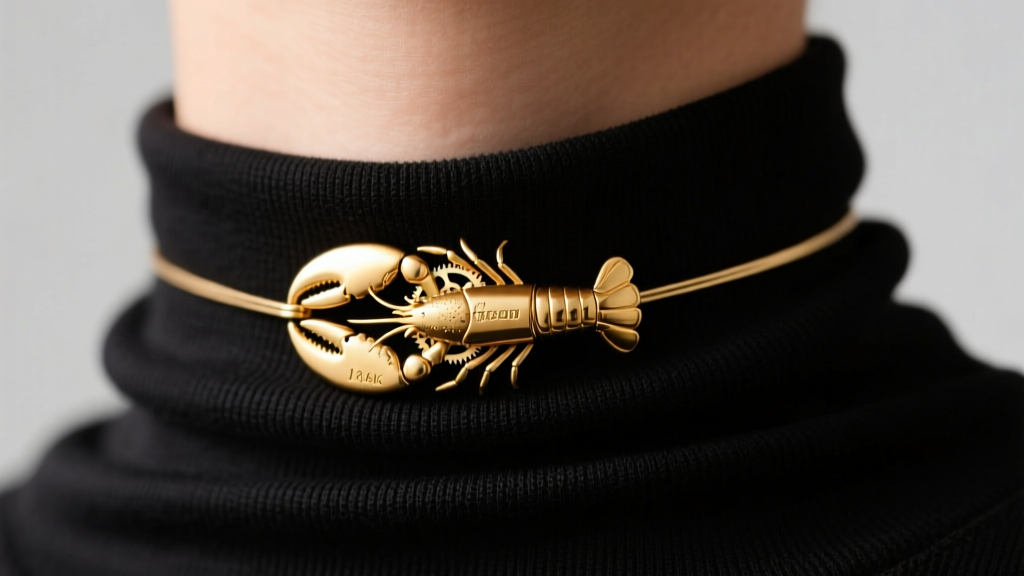
Anti-Static and Anti-Flip Solutions
- Use a Lobster Clasp: Standard spring-ring clasps are difficult to manipulate over a thick collar and are prone to catching on yarn. Upgrade all your turtleneck necklaces to solid 14k gold lobster clasps, which are easier to handle and lay flatter against the nape of the neck.
- The Jump Ring Trick: If a pendant refuses to stay facing forward, attach a heavy, decorative jump ring or a small metallic bead directly to the bail. This lowers the center of gravity and forces the pendant to hang plumb.
- Combat Static: Lightly mist your turtleneck (not the jewelry) with an anti-static spray or rub a dryer sheet over the fabric before putting on your chains. As noted by fashion editors at Vogue, managing the base fabric is just as important as selecting the right accessories for a cohesive winter look.
Final Thoughts on Winter Jewelry Styling
Mastering the art of wearing a necklace with a turtleneck is all about understanding the physics of drape, weight, and friction. By abandoning standard 18-inch chains in favor of 24-inch matinee lengths, choosing snag-free weaves like box and rope, and ensuring your pendants carry enough gram weight to combat thick knits, you can elevate your cold-weather wardrobe effortlessly. Treat your turtleneck not as a barrier to your jewelry, but as a textured canvas that demands bold, deliberate styling choices. Don't be afraid to experiment with mixed metals—pairing a chunky gold rope chain with a delicate silver box chain can create a dynamic, fashion-forward aesthetic that breaks up the monotony of winter layering.


