How to Clean, Untangle, and Care for Your Everyday Lay Necklace
Learn expert care, cleaning, and untangling tips for your everyday lay necklace. Discover how to keep chains flat, tarnish-free, and perfectly draped.

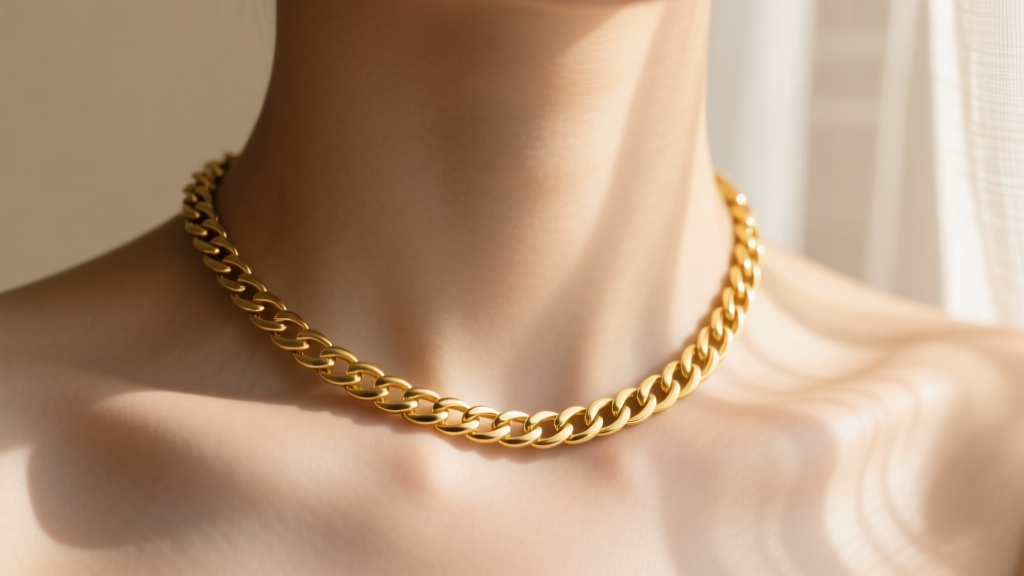
In the jewelry industry, stylists and collectors often use the term 'lay necklace' to describe chains engineered to sit flush against the skin like liquid metal. Unlike standard cable or rolo chains that twist and drape loosely, flat-laying chains—such as herringbone, snake, and wide box chains—rely on precise, interlocking geometries to create a seamless, mirror-like surface. As we move through 2026, the trend of bold, liquid-metal collars and chokers continues to dominate both runway and everyday street style. However, this structural elegance comes with a significant trade-off: these necklaces are notoriously high-maintenance and highly susceptible to kinking, tangling, and internal tarnish.
If you own a piece that refuses to drape correctly or has lost its signature shine, you are likely dealing with structural stress or improper cleaning methods. This comprehensive guide breaks down the exact metallurgy, cleaning protocols, and storage matrices required to keep your flat-laying jewelry in pristine condition.
The Anatomy of a Flat-Laying Chain
To understand how to care for your jewelry, you must first understand its structural vulnerabilities. The way a chain 'lays' is dictated entirely by its link configuration:
- Herringbone Chains: Composed of multiple rows of flat, slanted links that interlock in a V-shaped pattern. Because the links are flush and lack a central supporting wire, they are incredibly fluid but have a high risk of permanent creasing if bent backward.
- Snake Chains: Made of tightly joined, slightly wavy rings that form a smooth, cylindrical tube. While they lay beautifully against the collarbone, the tight tolerances mean that body oils, lotions, and fine dust can easily become trapped between the microscopic gaps.
- Box Chains: Featuring square, interlocking links that create a geometric, faceted surface. These are the most durable of the flat-laying styles, but the sharp inner corners can accumulate stubborn grime that requires specific agitation techniques to remove.
According to the Gemological Institute of America (GIA), the continuous friction of flat links against one another means that abrasive cleaning methods can permanently scratch the polished surface, dulling the reflective 'liquid' effect that makes these pieces so desirable.
Why Your Necklace Won't Lay Flat (And How to Fix Kinks)
The most common complaint among owners of herringbone and snake chains is the dreaded 'kink.' A kink occurs when the chain is folded against its natural articulation axis, causing the metal links to buckle and lock. Once a herringbone chain kinks, the structural integrity of that specific section is compromised, and it will naturally want to fold at that exact point in the future.
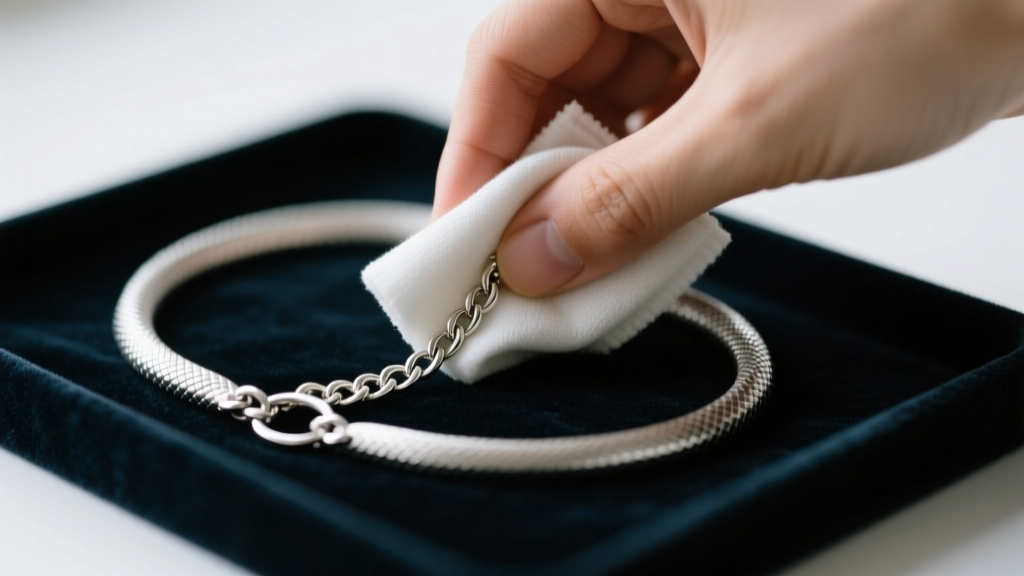
The Spoon Burnish Method (DIY Kink Repair)
If your necklace has developed a mild crease, avoid the temptation to pull or stretch it, which will snap the links. Instead, use the burnishing technique:
- Place the necklace on a hard, perfectly flat surface, such as a steel jeweler's bench block or a piece of tempered glass.
- Ensure the chain is completely untwisted and laid out straight.
- Take a smooth, stainless steel spoon and use the convex back (the bowl) to gently massage the kinked area.
- Apply light, even pressure, rolling the spoon back and forth over the crease to coax the metal links back into their original flat alignment.
Note: If the kink is severe or the metal has fractured, do not attempt DIY repairs. Take it to a professional jeweler who specializes in laser welding.
Step-by-Step Cleaning Protocol for Delicate Chains
Many jewelry owners make the critical mistake of using ultrasonic cleaners on flat-laying chains. The high-frequency cavitation bubbles generated by ultrasonic machines can easily force moisture deep into the microscopic seams of a herringbone or snake chain. This trapped moisture leads to internal verdigris (copper oxidation), which weakens the chain from the inside out and causes irreversible dark spots.
The Distilled Water & Surfactant Method
For safe, deep cleaning that restores the mirror finish without risking internal corrosion, follow this protocol:
- The Solution: Mix 1 part ammonia-free, phosphate-free dish soap (like Dawn) with 10 parts distilled water. Distilled water is crucial; tap water contains chlorine and calcium that can leave microscopic hard-water spots on flat metal surfaces.
- The Soak: Submerge the necklace for exactly 3 to 5 minutes. Do not exceed this time, as prolonged exposure to any aqueous solution can degrade the alloy binders in lower-karat gold.
- The Agitation: Never use a bristled toothbrush on snake or herringbone chains; the bristles will catch on the edges of the links and cause micro-scratches. Instead, use a dense makeup sponge or a lint-free microfiber cloth to gently wipe along the 'grain' of the chain.
- The Rinse & Dry: Rinse briefly in clean distilled water, then immediately lay the chain flat on a dry microfiber towel. Use a hair dryer on the 'cool' setting to blow out any remaining moisture from the link seams.
The 2026 Storage Matrix: Chain Type vs. Care
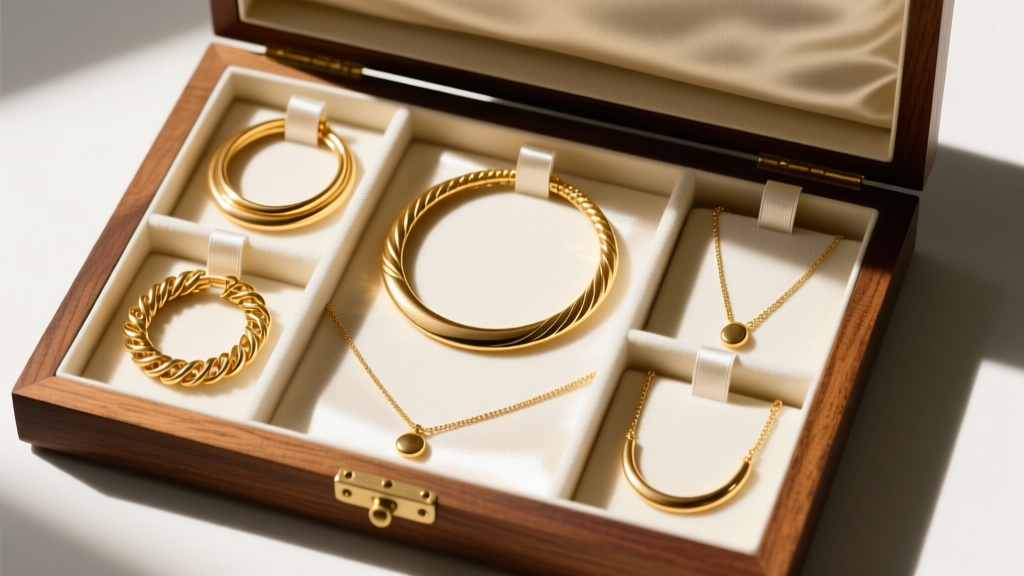
Proper storage is 90% of the battle when it comes to maintaining the drape and shine of your jewelry. Tossing a flat-laying chain into a standard jewelry box guarantees tangles and kinks. Jewelers of America recommends storing delicate chains completely flat or hanging perfectly straight to maintain their structural memory.
| Chain Type | Storage Method | Kink Risk | Tarnish Prevention |
|---|---|---|---|
| Herringbone | Strictly flat in a lined tray; never hang. | Very High | Place 3M anti-tarnish strips directly adjacent to the metal. |
| Snake | Hang on a wide, padded velvet hook to prevent coiling. | High | Store in an airtight ziplock bag with a silica gel packet. |
| Box | Can be hung or laid flat; highly forgiving. | Low | Standard anti-tarnish cloth pouches are sufficient. |
| Omega | Must be stored flat or in its original rigid circular box. | Extreme (Cannot be repaired if kinked) | Keep away from humidity; wipe with a dry polishing cloth after every wear. |
Tangles and Knots: The Micro-Knot Resolution
While flat-laying chains are less prone to the chaotic bird's-nest tangles seen in fine cable chains, they can still develop tight, sliding knots if stored improperly. Pulling on a knot in a herringbone chain will instantly crush the interlocking links.
To resolve a micro-knot, place the necklace on a flat, non-porous surface. Apply a single drop of mineral oil or baby oil directly to the center of the knot. The oil acts as a temporary lubricant, reducing the friction coefficient between the metal links. Take two fine sewing pins and gently work the center link of the knot outward, wiggling it loose rather than pulling the ends of the chain. Once the knot is resolved, clean the chain using the distilled water protocol outlined above to remove the oil residue.
Professional Maintenance: When to See a Jeweler
Even with meticulous care, flat-laying chains require professional maintenance. If your necklace has suffered a severe kink, a broken link, or a snapped clasp, traditional torch soldering is not an option. The broad heat of a traditional jeweler's torch will melt the surrounding flush links, leaving a stiff, visible scar that ruins the drape of the necklace.
Instead, seek out a jeweler equipped with a laser welder. Laser welding uses a highly focused beam of light to fuse metal at a microscopic level without transferring heat to the surrounding links. This allows the jeweler to repair a fractured herringbone or snake chain while maintaining its fluid, liquid-metal flexibility. Expect to pay between $65 and $120 for a laser soldering repair, depending on the karat of the gold and the complexity of the link structure.
By understanding the unique structural demands of your jewelry and abandoning harsh, outdated cleaning methods, you can ensure that your favorite pieces continue to drape flawlessly and catch the light perfectly for years to come.


