How to Stop a Letter S Initial Necklace From Flipping & Tangling
Is your letter S initial necklace constantly flipping or tangling? Discover expert troubleshooting tips, bail fixes, and chain upgrades.

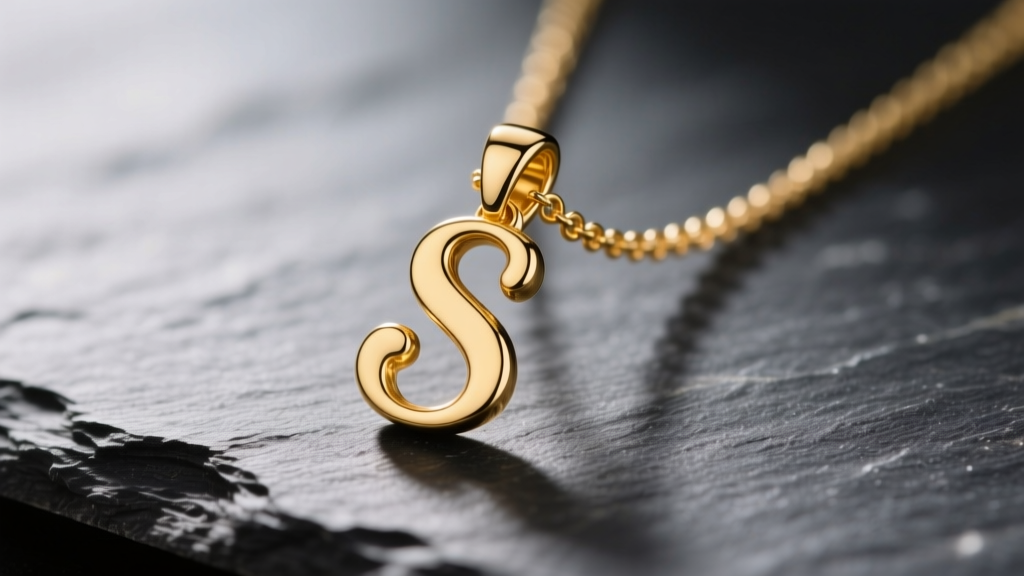
Initial jewelry is a staple of personalized style, but anyone who has worn a letter S initial necklace knows the unique frustration that comes with it. Unlike symmetrical letters such as 'O', 'A', or 'X', the capital 'S' is notoriously uncooperative. It flips upside down, slides off-center, and tangles in its chain with alarming frequency. This isn't a defect in your specific piece; it is a fundamental issue of physics, metallurgy, and jewelry design.
As a jewelry stylist and bench jeweler, I frequently troubleshoot initial pendants for clients. The 'S' shape presents a specific set of mechanical challenges related to its asymmetrical mass distribution and curved geometry. In this comprehensive troubleshooting guide, we will break down exactly why your letter S initial necklace refuses to lay flat, and more importantly, the precise mechanical fixes, chain upgrades, and maintenance routines required to solve the problem permanently.
The Physics of the 'S': Why Your Pendant Won't Lay Flat
To fix the flipping issue, we must first understand the center of gravity in a letter S initial necklace. A standard capital 'S' features two opposing curves. In most mass-produced and even bespoke jewelry designs, the top loop of the 'S' is cast slightly narrower or sits further back on the Z-axis than the bottom loop. When suspended from a single point (the bail), the heavier, protruding bottom loop acts as a pendulum weight, pulling the pendant forward and causing it to flip upside down or rest at a severe diagonal angle against your collarbone.
Furthermore, the 'S' lacks a flat, broad back. Letters like 'M' or 'T' have wide surface areas that create friction against the skin and clothing, anchoring them in place. The curved, serpentine spine of the 'S' minimizes surface contact, allowing it to glide and rotate freely with every movement you make. Solving this requires addressing both the suspension point (the bail) and the friction coefficient of the chain.
Troubleshooting the Flip: Bail and Solder Point Fixes
The bail—the loop that connects the pendant to the chain—is the primary culprit in pendant rotation. If you are dealing with a constantly flipping letter S initial necklace, examine how the bail is attached.
The Hidden Bail vs. Direct Solder
Many initial necklaces feature a 'hidden bail' soldered directly onto the upper back curve of the letter. If this bail is placed dead-center, the asymmetrical weight of the 'S' will immediately pull the bottom loop forward. A master jeweler can solve this by relocating the bail. By moving the hidden bail slightly off-center—specifically toward the heavier side of the top curve—you can artificially re-center the pendant's gravity, forcing it to hang perfectly straight.
Alternatively, if your necklace uses a traditional top-drilled bail or a jump ring, the pendant has too much rotational freedom. The most effective bench-jeweler fix is to convert the piece to a 'V-bail' or a 'drop bail'. A drop bail suspends the pendant slightly lower, allowing the center of gravity to settle naturally beneath the chain's drape point, drastically reducing the flipping motion.
The Silicone Counterweight Trick
If you need an immediate, non-destructive fix without visiting a jeweler, use the silicone friction trick. Take a clear, ultra-thin silicone earring back (the kind used for post earrings) and slide it onto your necklace chain. Position it directly behind the pendant's bail. The silicone grips the skin and the chain, acting as a microscopic counterweight and friction brake that prevents the letter S from spinning and sliding off-center.
Chain Selection: Preventing Tangles and Breakage
The chain you pair with your letter S initial necklace dictates how the pendant behaves. The curves of the 'S' act like tiny hooks; if the chain is too thin or has the wrong link geometry, the pendant will catch on the links, leading to severe tangling and eventual chain snap.
According to metallurgical standards outlined by the Gemological Institute of America (GIA), the tensile strength of precious metal chains drops exponentially when the wire gauge falls below 0.9mm. For an 'S' pendant, which catches on fabrics and hair due to its shape, you need a chain that offers structural rigidity.
| Chain Type | Ideal Thickness | Tangle Risk | Drape Stiffness | Verdict for 'S' Pendants |
|---|---|---|---|---|
| Cable Chain | 0.9mm - 1.1mm | High | Low (Fluid) | Poor. Too fluid; allows the 'S' to flip and hook onto links. |
| Box Chain | 1.1mm - 1.3mm | Low | High (Rigid) | Excellent. The rigid, geometric links keep the pendant facing forward. |
| Rope Chain | 1.2mm - 1.5mm | Medium | Medium | Good. The heavier weight acts as a counterbalance to the pendant. |
| Snake Chain | 1.0mm - 1.2mm | Very High | Very High | Avoid. Snake chains kink easily, ruining the drape and trapping the 'S' curves. |
The Expert Recommendation: Upgrade to a 1.2mm solid 14k gold or sterling silver box chain. The angular links of a box chain cannot easily slip into the tight inner curves of the letter 'S', effectively eliminating the tangling issue while providing enough stiffness to keep the pendant oriented correctly.
Metal Fatigue and Weak Points in Serif 'S' Designs
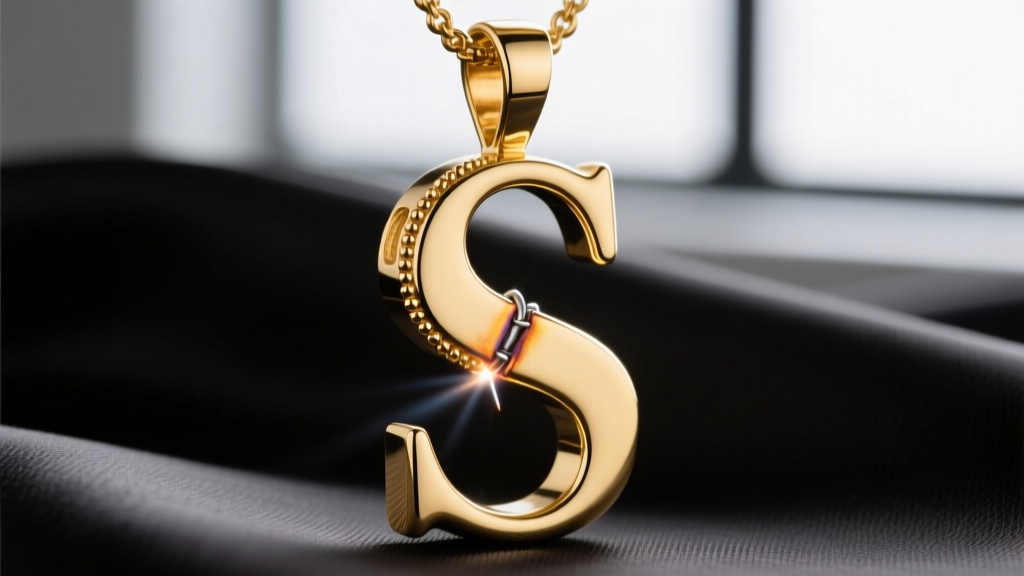
Beyond flipping and tangling, the letter S initial necklace is highly susceptible to structural failure, particularly if it features a 'serif' font (letters with decorative flicks or points at the ends of the strokes). The top and bottom terminals of a serif 'S' are often cast incredibly thin—sometimes less than 0.5mm thick.
These thin points are prime locations for metal fatigue. Every time the necklace is pulled, caught on a sweater, or yanked from a tangle, the stress concentrates on these thin extremities. If your 'S' is crafted in 18k gold or 22k gold, the higher pure gold content makes the metal softer and more prone to bending or snapping at these terminals. 14k gold (58.5% pure gold alloyed with copper, silver, or zinc) offers significantly higher tensile strength and is the superior choice for the complex geometry of an initial pendant.
If a serif tip does break off, do not attempt a standard torch solder repair. Torch soldering requires applying flux and broad heat, which can easily melt the surrounding thin gold or leave a visible, discolored scar on the delicate curve. Instead, seek out a jeweler who utilizes laser welding. Laser welding uses concentrated light to fuse the metal at a microscopic level without the need for flux, heat distortion, or risking the structural integrity of the adjacent curves.
Expert Maintenance Routine
The deep, sweeping curves of the letter 'S' create hidden crevices where skin oils, lotions, and cosmetic powders accumulate. This buildup doesn't just dull the sparkle of your necklace; it creates a sticky residue on the back of the pendant. This residue increases the friction against your skin in an uneven manner, which can actually contribute to the pendant pulling to one side and flipping over as it catches on your collarbone.
Cleaning without Compromising Solder Joints
While ultrasonic cleaners are fantastic for diamond rings, they can be dangerous for delicate initial necklaces. The high-frequency vibrations can shake loose the micro-solder joints holding a hidden bail to the back of the 'S'. The Jewelers of America consistently advises caution when using ultrasonic machines on jewelry with delicate solder points or tension-set stones.
Instead, adopt this weekly maintenance routine:
- The Soak: Mix a few drops of mild, phosphate-free dish soap into a bowl of lukewarm water. Let the necklace soak for exactly 5 minutes to break down cosmetic oils.
- The Agitation: Use an extra-soft baby toothbrush to gently sweep the inner curves of the 'S'. Do not scrub aggressively near the bail solder point.
- The Rinse and Dry: Rinse under a gentle stream of lukewarm water. Pat dry with a microfiber cloth, ensuring no lint is caught in the curves. Avoid paper towels, as their wood fibers can micro-scratch high-polish gold and silver.
Pro Tip: If your sterling silver letter S initial necklace is tarnishing heavily in the recessed curves, use a specialized silver polishing cloth infused with anti-tarnish agents. Never use liquid silver dips on initial necklaces, as the harsh chemicals can strip the rhodium plating often applied to the chains to prevent oxidation.
By understanding the unique physics of the 'S' shape, upgrading to a rigid box chain, and maintaining the solder points with proper care, you can transform your letter S initial necklace from a frustrating, tangled mess into a flawless, personalized staple that lays perfectly flat against your neckline every single time you wear it.


