The Ultimate Care Guide for a New York Yankees Necklace
Learn how to clean, store, and maintain your New York Yankees necklace. Expert tips for enamel, stainless steel, and sterling silver sports jewelry.

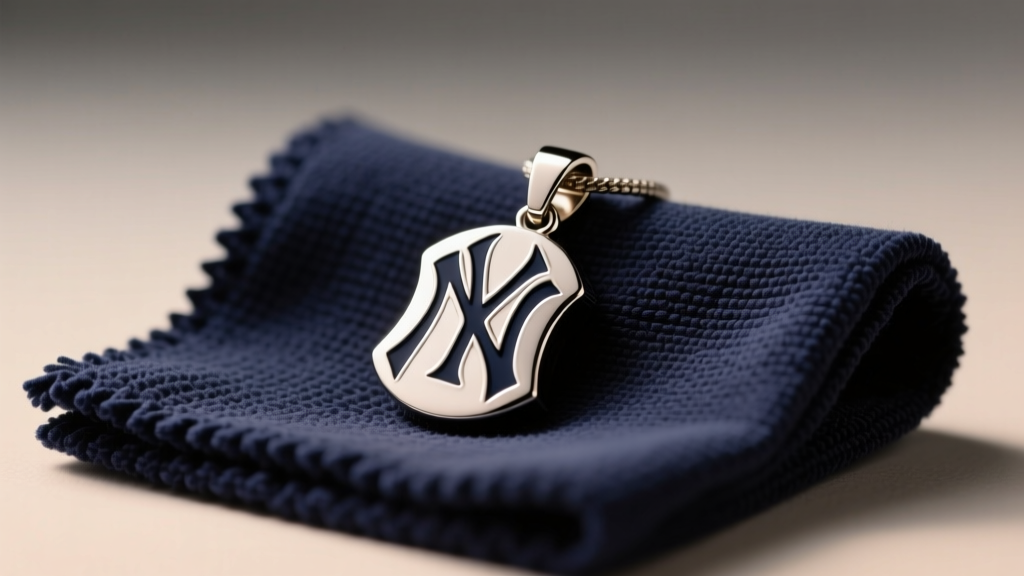
Whether you are cheering from the bleachers at Yankee Stadium or wearing your team pride to the office, a new york yankees necklace is more than just sports merchandise; it is a statement piece. However, sports jewelry faces a unique set of environmental hazards. From the chloride in your sweat during a tense ninth inning to the chemical compounds in your daily sunscreen, the materials used in MLB-licensed pendants require specialized care to maintain their luster.
As jewelry metallurgy and sports licensing manufacturing have evolved, so too have the maintenance requirements for these pieces. This comprehensive guide will break down the exact material compositions of your Yankees jewelry and provide actionable, expert-level cleaning protocols to ensure your interlocking NYs, baseball bats, and championship pendants remain in pristine condition for decades.
Understanding Your Yankees Necklace Materials
Before applying any cleaning solution, you must identify the base metal and accents of your pendant. Officially licensed sports jewelry typically falls into one of four material categories, each with distinct chemical vulnerabilities:
- 316L Surgical Stainless Steel: The most common material for affordable, durable sports pendants. It contains molybdenum, which provides excellent resistance to chloride corrosion (sweat).
- .925 Sterling Silver: Premium Yankees necklaces often use sterling silver. While beautiful, the 7.5% copper alloy makes it highly susceptible to sulfur-induced tarnishing.
- Gold-Plated Brass or Vermeil: Features a thin layer of gold over a base metal. These are highly vulnerable to abrasive friction and chemical stripping from lotions.
- Cold Epoxy Enamel: The navy blue and white fills on Yankees pendants are rarely kiln-fired glass enamel; they are usually cold epoxy resin, which is easily degraded by alcohol and acetone.
Step-by-Step Cleaning Guide by Material
The Gemological Institute of America (GIA) emphasizes that matching the cleaning agent to the specific material is critical to avoiding irreversible damage. Here is how to safely clean your necklace based on its composition.
Stainless Steel & Titanium (The Daily Beaters)
Stainless steel is incredibly resilient, but it can still accumulate a film of dead skin cells, sebum, and environmental dust.
- Fill a bowl with warm distilled water (tap water contains chlorine that can leave micro-spots).
- Add two drops of pH-neutral dish soap (avoid heavy moisturizing soaps).
- Submerge the necklace for 3 minutes.
- Gently agitate with a soft-bristled baby toothbrush, paying special attention to the crevices behind the NY logo where grime accumulates.
- Rinse with distilled water and pat dry with a lint-free microfiber cloth.
Sterling Silver & Gold Vermeil (The Premium Pieces)
Sterling silver requires a gentler, chemistry-aware approach to remove silver sulfide (tarnish) without stripping the metal.
- Light Tarnish: Use a treated polishing cloth (such as a Sunshine Polishing Cloth). Rub the pendant in a back-and-forth motion, not circular, to avoid highlighting micro-scratches.
- Heavy Tarnish: Create an electrolytic bath. Line a glass bowl with aluminum foil (shiny side up). Place the necklace on the foil, add a tablespoon of baking soda, and pour boiling distilled water over it. The chemical reaction transfers the sulfur from the silver to the aluminum. Remove after 60 seconds, rinse, and dry thoroughly.
Enamel & Rhinestone Accents (The Delicate Details)
Many Yankees pendants feature cubic zirconia (CZ) accents or navy blue epoxy enamel. Never use ultrasonic cleaners or harsh chemicals on these pieces. The high-frequency vibrations of an ultrasonic cleaner will shatter cold enamel and dissolve the cyanoacrylate adhesives holding rhinestones in place.
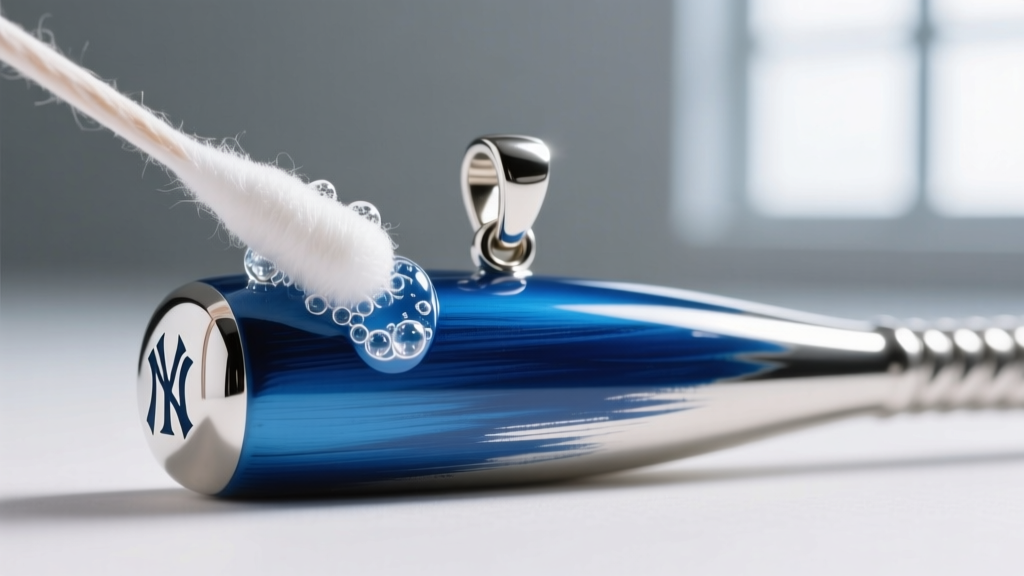
Instead, dip a cotton swab in mild soapy water and carefully trace the enamel lines. Avoid rubbing alcohol, hand sanitizers, and jewelry dips, as these will cause the epoxy to cloud, crack, or peel away from the metal backing.
The Chemistry of Tarnish: Sweat, Sunscreen, and Sulfur
Why does your sterling silver Yankees necklace turn black after a summer day game? The culprit is a combination of human biology and environmental chemistry. Human sweat contains water, salts, and lactic acid, but it also contains trace amounts of sulfur and amino acids. When sulfur reacts with the copper in sterling silver, it forms silver sulfide (Ag2S), a black, crusty compound that dulls the reflection of the metal.
Furthermore, chemical sunscreens contain compounds like avobenzone and octocrylene. When these chemicals mix with the natural acids on your skin and the metallic alloys of your necklace, they can cause a rapid galvanic reaction, leading to severe localized tarnishing and even skin discoloration. According to care guidelines from Jewelers Mutual, applying lotions, perfumes, and sunscreens at least 20 minutes before putting on your jewelry creates a necessary buffer that allows the chemicals to absorb into the skin rather than reacting with your metals.
Quick Reference Cleaning Matrix
Keep this matrix handy to ensure you are using the correct tools for your specific new york yankees necklace.
| Material | Recommended Cleaner | Tool | Frequency | Strictly Avoid |
|---|---|---|---|---|
| 316L Stainless Steel | pH-neutral dish soap + distilled water | Soft baby toothbrush | Bi-weekly | Bleach, chlorine pools |
| .925 Sterling Silver | Aluminum foil/baking soda bath | Microfiber cloth | Monthly | Rubber bands, latex gloves |
| Gold Vermeil / Plated | Warm water + mild soap | Cotton swab / soft cloth | As needed | Polishing cloths, abrasives |
| Cold Epoxy Enamel | Damp cloth only | Q-tip / Cotton swab | Spot clean only | Alcohol, ultrasonic cleaners |
Storage Solutions to Prevent Tarnish and Scratching
How you store your necklace when you are not wearing it is just as important as how you clean it. The worst enemy of sports jewelry is the "junk drawer" or a shared jewelry box.
The Mohs Hardness Problem
If you toss your sterling silver Yankees pendant into a box alongside a diamond tennis bracelet or a tungsten ring, you are guaranteeing micro-scratches. Diamonds rate a 10 on the Mohs hardness scale, while silver and gold rate between 2.5 and 3. The harder metals and stones will easily carve into the surface of your pendant, destroying the polished finish and the intricate detailing of the team logo.
The Anti-Tarnish Protocol
To halt the oxidation process, you must control the micro-climate where the necklace is stored.
- Anti-Tarnish Strips: Place a 3M anti-tarnish strip inside your storage container. These strips absorb airborne sulfur compounds before they can reach your silver.
- Silica Gel Packets: Moisture accelerates tarnish. Toss a small silica gel packet into your jewelry box to maintain a low-humidity environment.
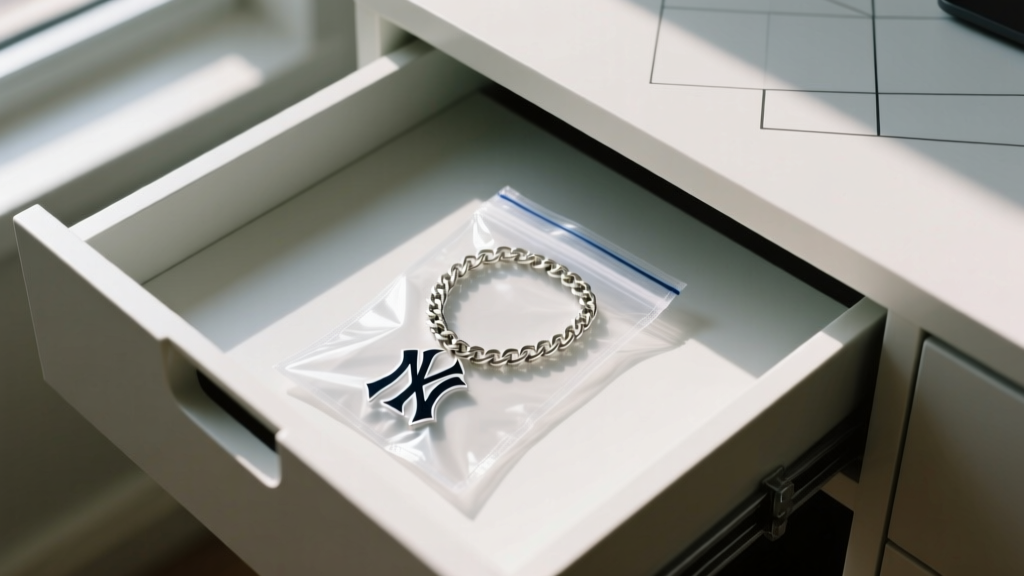
- Individual Pouches: Store every necklace in its own soft flannel or anti-tarnish ziplock bag. This prevents the chain from tangling and knotting, which can stretch the links and weaken the solder points at the clasp.
Troubleshooting Common Yankees Necklace Issues
Even with meticulous care, daily wear can lead to specific issues. Here is how to troubleshoot them like a professional jeweler.
Issue: The Chain is Tangling Constantly
Diagnosis: You are likely wearing a box chain or a snake chain, which are prone to catching on body hair and fabrics. Furthermore, storing the necklace without clasping it allows the links to weave together. Solution: Always fasten the lobster clasp before storage. If the chain is severely knotted, lay it flat on a glass surface, apply a single drop of baby oil to the knot, and use two sewing needles to gently tease the links apart from the center outward.
Issue: Chipped or Peeling Navy Enamel
Diagnosis: The cold epoxy resin has suffered impact damage or chemical degradation from acetone (nail polish remover). Solution: Unfortunately, cold enamel cannot be easily repaired at home. If the pendant is a high-value sterling silver piece, consult a professional bench jeweler who specializes in custom resin color-matching. For base-metal fashion jewelry, it is usually more cost-effective to replace the piece.
Issue: Cloudy Cubic Zirconia (CZ) Stones
Diagnosis: CZ is highly oleophilic, meaning it attracts and holds onto oils from your skin and hair products, causing it to lose its brilliance and look cloudy. Solution: Flip the pendant over and clean the back of the stones. Most Yankees pendants use open-back settings. Use a soft brush dipped in a 50/50 mix of distilled water and ammonia-free glass cleaner to scrub the pavilion (bottom) of the stones, restoring their light return.
Expert Takeaway: A new york yankees necklace is a tribute to baseball history and personal fandom. By understanding the metallurgy of your piece and respecting the chemical sensitivities of its accents, you can ensure your jewelry remains as iconic and enduring as the franchise itself.


