How to Clean and Care for Your Sun and Moon Necklace Set
Learn expert techniques to clean, polish, and store your sun and moon necklace set. Protect mixed metals and stones from tarnish.

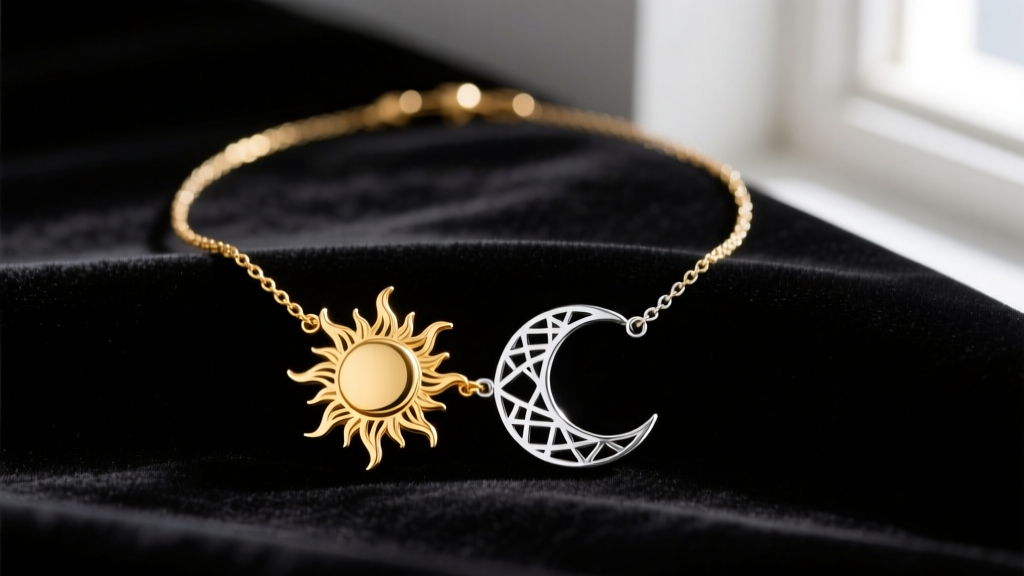
The Unique Anatomy of Celestial Jewelry
Sun and moon necklace sets are a staple in modern jewelry boxes, celebrated for their symbolic duality and intricate aesthetics. However, from a maintenance perspective, these sets present a unique challenge. They frequently combine mixed metals—such as a 925 sterling silver crescent moon paired with an 18k gold vermeil sunburst—and feature complex, laser-cut crevices that trap oils, lotions, and environmental pollutants.
Furthermore, celestial designs often incorporate delicate gemstone inlays like rainbow moonstone, opal, or cubic zirconia to represent starlight. Cleaning a sun and moon necklace set requires a bifurcated approach; the harsh chemicals that effectively strip tarnish from silver will permanently damage gold plating and fracture porous gemstones. This comprehensive guide outlines the precise, material-specific protocols required to maintain the brilliance of your celestial pieces in 2026 and beyond.
Material-Specific Cleaning Protocols
Before submerging your jewelry in any solution, you must identify the exact materials. Most high-quality sun and moon necklace sets utilize specific metal grades and stone settings that dictate their care regimen.
Sterling Silver and Oxidized Details
Silver tarnish is not dirt; it is a chemical reaction between silver and sulfur compounds in the air, forming silver sulfide. For the silver moon pendant, avoid abrasive silver dips. Instead, utilize an electrochemical ion-exchange method. Line a glass bowl with aluminum foil (shiny side up), add one tablespoon of baking soda and a pinch of salt, and pour boiling water over it. Submerge the silver component for 60 to 90 seconds. The sulfur transfers from the silver to the aluminum, reversing the tarnish without removing any base metal.
Gold Vermeil and Plated Components
The sun pendant in your set is likely crafted from gold vermeil (a minimum of 2.5 microns of gold over sterling silver) or gold-plated brass. According to the Gemological Institute of America (GIA), gold-plated jewelry should only be cleaned with warm water and a mild, phosphate-free dish soap. Abrasive polishing cloths will strip the micron-thick gold layer, exposing the base metal beneath and leading to rapid oxidation.
Gemstone Inlays: Moonstone and Opal
If your moon pendant features a cabochon moonstone, extreme caution is required. Moonstone ranks between 6 and 6.5 on the Mohs hardness scale and often contains internal tension fractures known as 'centipedes.' The GIA explicitly warns against using ultrasonic cleaners or steamers on moonstone, as the high-frequency vibrations will shatter the stone. Always clean gemstone-inlaid sections with a damp, lint-free microfiber cloth.
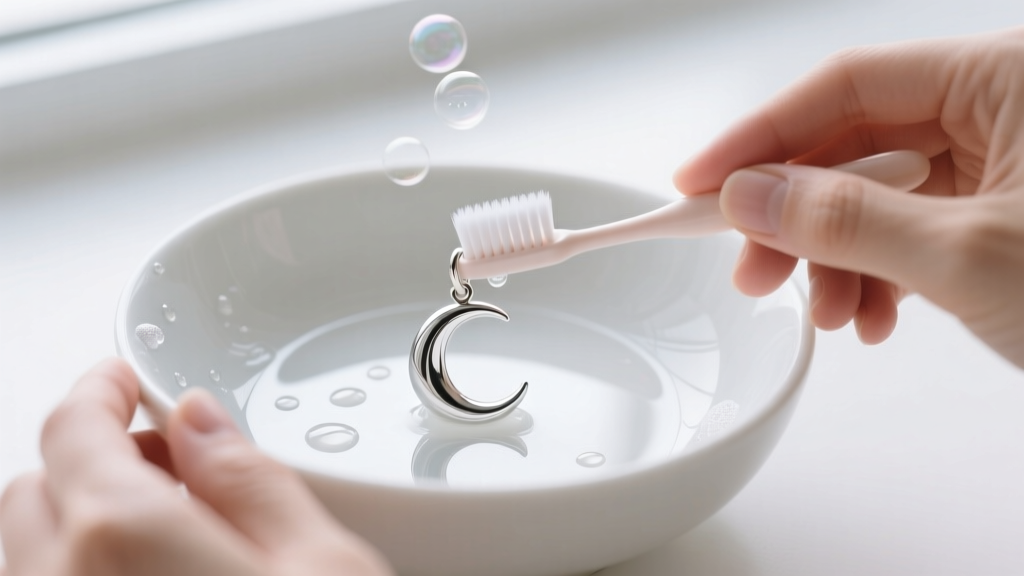
Step-by-Step Deep Cleaning Guide
For a safe, all-encompassing clean that accommodates the mixed metals of a sun and moon necklace set, follow this gentle, manual framework:
- Preparation: Mix three drops of mild, lotion-free dish soap (such as original Dawn) into a bowl of lukewarm distilled water. Avoid tap water, as chlorine and hard minerals can leave microscopic water spots on high-polish metals.
- Agitation: Submerge the necklace for no more than three minutes. Using a baby-soft toothbrush or a dedicated jewelry brush with ultra-fine bristles, gently sweep the bristles across the sun's rays and the moon's engraved craters.
- Rinsing: Rinse the necklace under a gentle stream of lukewarm distilled water. Ensure the drain is securely plugged to prevent catastrophic loss.
- Drying: Pat the piece dry with a clean, lint-free microfiber cloth. Do not air dry, as water pooling in the crevices of the chain links can cause localized rust on steel components or accelerate tarnish on silver.
Cleaning Agents: What to Use vs. What to Avoid
Using the wrong chemical agent is the fastest way to ruin a mixed-metal necklace set. Refer to this quick-reference table to ensure you are using safe solutions.
| Cleaning Agent | Safety Status | Impact on Sun & Moon Sets |
|---|---|---|
| Mild Dish Soap & Distilled Water | Safe | Removes sebum and lotions without harming plating or stones. |
| Aluminum Foil & Baking Soda Bath | Safe (Silver Only) | Reverses silver sulfide tarnish; do not use on pearls or opals. |
| Commercial Silver Dip | Avoid | Contains thiourea; strips gold vermeil and leaves a dull, chalky finish. |
| Ultrasonic Cleaners | Avoid | Vibrations will shatter moonstone, opal, and turquoise inlays. |
| Toothpaste | Avoid | Contains silica abrasives that permanently scratch high-polish gold and silver. |
| Rubbing Alcohol | Avoid | Dries out porous stones and degrades the epoxy used in gemstone settings. |
Tackling Intricate Crevices and Cutouts
The defining feature of a sun and moon necklace set is the intricate cutout work—radiating sunbeams and jagged lunar craters. These microscopic valleys are magnets for dead skin cells and cosmetic residue. When a soft toothbrush cannot reach deep into a laser-cut crevice, employ a wooden toothpick or a bamboo interdental brush. Gently scrape the crevice; wood and bamboo are softer than both silver and gold, meaning they will dislodge compacted debris without scratching the metal surface. For loose dust trapped in delicate cable chains, a quick burst of compressed air (held at least six inches away) can effectively blow out the links.
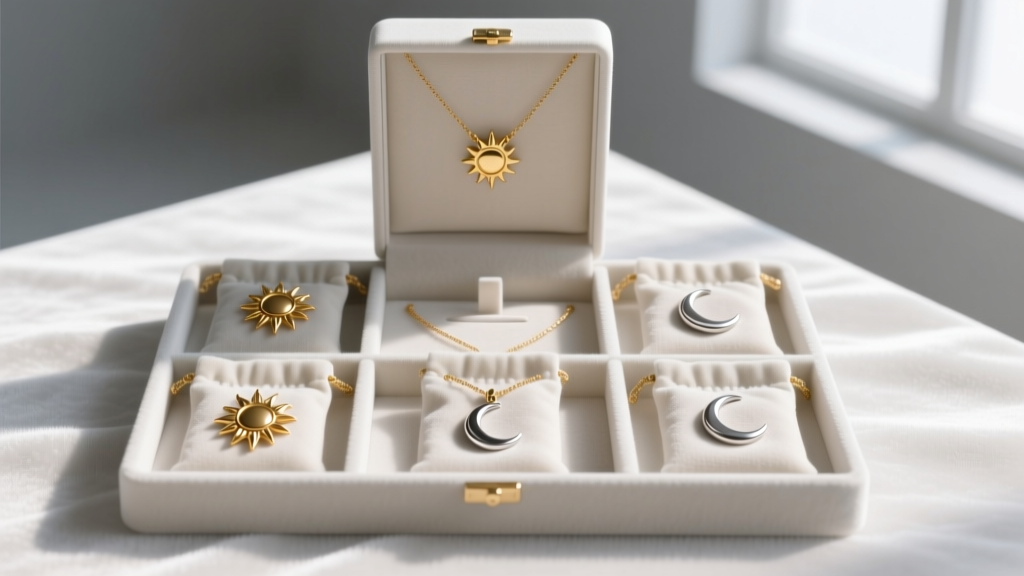
Proper Storage to Prevent Tangling and Tarnish
Maintenance extends far beyond cleaning; how you store your sun and moon necklace set dictates how often it requires deep cleaning. Mixed-metal sets should never be tossed into a communal jewelry box. The friction between the gold vermeil sun and the sterling silver moon will cause micro-scratches and accelerate wear on the gold plating.
Climate and Humidity Control
Tarnish thrives in high-humidity environments. Store your necklace in a cool, dry place, ideally in a room where humidity is kept below 50%. As of 2026, many jewelry enthusiasts utilize small, rechargeable silica gel canisters inside their jewelry drawers to actively absorb ambient moisture.
Anti-Tarnish Technology
Place a 3M anti-tarnish strip inside the storage pouch. These strips absorb airborne sulfur compounds before they can react with the silver moon pendant. Store the necklace flat inside an individual anti-tarnish microfiber pouch to prevent the delicate chain from knotting. If your set features a layered chain design, fasten the clasps and leave an inch of the chain outside the pouch to prevent the clasp from slipping into the links during storage.
Conclusion
A sun and moon necklace set is a beautiful investment that requires a thoughtful, material-aware approach to maintenance. By avoiding harsh chemical dips, respecting the fragility of celestial gemstones, and utilizing targeted cleaning tools for intricate cutouts, you can preserve the striking contrast and brilliant shine of your jewelry for decades. Consistent, gentle care will ensure your celestial pieces remain as luminous as the night sky.


