Cleaning & Care Tips for Three Person Friendship Necklaces
Learn expert cleaning and maintenance tips for three person friendship necklaces. Protect interlocking joints, prevent tarnish, and extend their lifespan.

The Unique Anatomy of Three-Piece Interlocking Jewelry
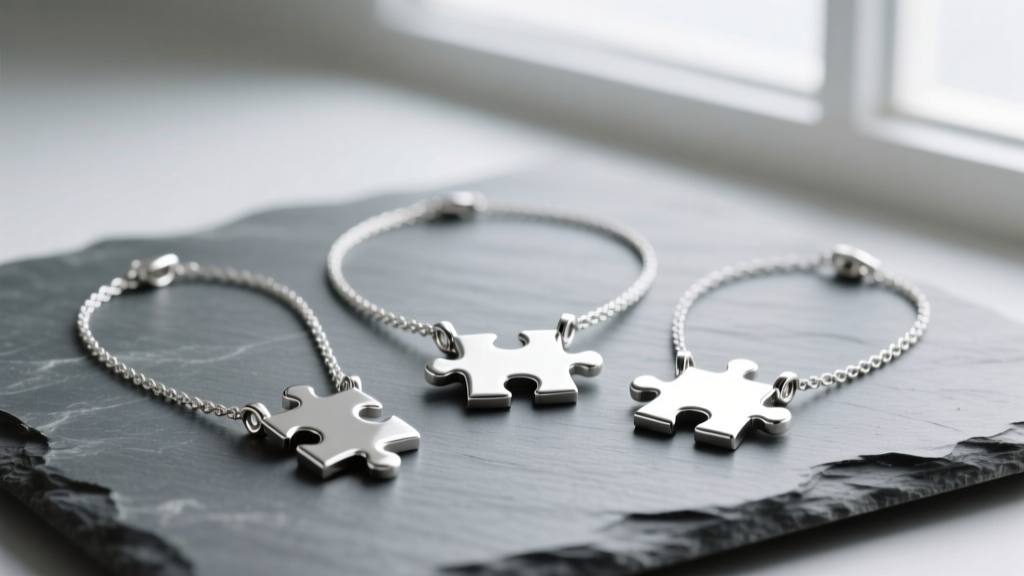
Three person friendship necklaces are more than just sentimental tokens; they are complex mechanical assemblies that require specialized care. Whether your trio wears jigsaw puzzle pieces, interlocking trinity rings, or magnetic split pendants, the defining feature of these necklaces is their connection points. These friction joints, micro-grooves, and magnetic seams act as magnets for environmental debris, skin oils, and cosmetic residues.
Unlike a standard solid pendant, the interlocking edges of a three-piece necklace have tolerances often measuring between 0.1mm and 0.3mm. When sebum, lotions, and airborne sulfur accumulate in these microscopic seams, the pieces can become stubbornly stuck, fail to sit flush against one another, or suffer from accelerated localized tarnishing. Understanding the specific metallurgy and mechanics of your trio's necklaces is the first step in preserving them for decades.
Material-Specific Cleaning Protocols
The cleaning method you choose must be dictated by the base metal and the finish of the jewelry. Using the wrong chemical agent can permanently strip finishes or accelerate galvanic corrosion at the connection points.
Sterling Silver (925) Puzzle Pieces
Sterling silver is an alloy containing 92.5% pure silver and 7.5% copper. It is the copper that reacts with sulfur and moisture in the air to form silver sulfide, commonly known as tarnish. The deep grooves of a puzzle necklace trap moisture, making these areas highly susceptible to dark, stubborn tarnish. Never use liquid silver dips (which contain thiourea) on interlocking pieces. These harsh chemicals strip the anti-tarnish rhodium flash often applied to modern silver and leave a corrosive residue deep inside the puzzle seams that is nearly impossible to rinse out.
Surgical Stainless Steel (316L)
316L stainless steel contains molybdenum, which provides excellent resistance to pitting corrosion from chlorides (like sweat and swimming pool water). However, while the main pendant pieces may be 316L, the 18-gauge or 20-gauge jump rings connecting the chain are sometimes made of lower-grade 304 steel or brass. This mismatch creates a galvanic corrosion cell when exposed to moisture, leading to green skin or rusted jump rings. Always ensure the jump rings are completely dry after cleaning.
Gold-Plated and PVD-Coated Alloys
As of 2026, Physical Vapor Deposition (PVD) coating technology has become the industry standard for high-quality gold-toned friendship necklaces, offering a finish up to 10 times more durable than traditional electroplating. However, if your necklaces are traditional electroplated brass, they are highly vulnerable to abrasive cleaning. Avoid ultrasonic cleaners entirely for plated items, as the 40kHz high-frequency cavitation bubbles will literally blast the microscopic gold layer off the puzzle edges.
Step-by-Step Deep Cleaning Routine for Puzzle Joints
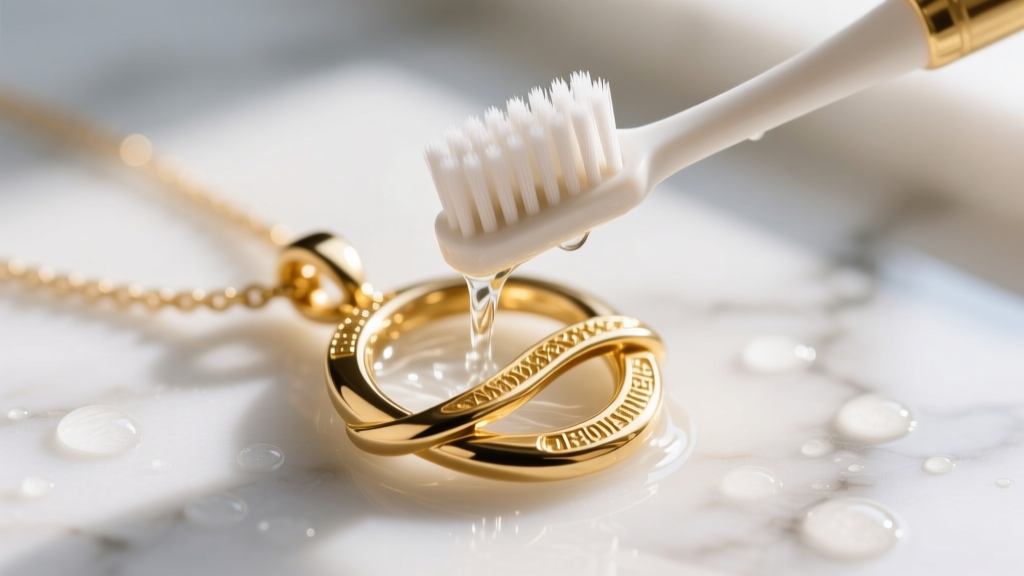
To safely remove trapped debris from the interlocking mechanisms without damaging the metal or any inset gemstones, follow this professional jeweler's cleaning protocol.
Required Tools
- pH-neutral liquid dish soap (free of harsh degreasers or added lotions)
- Distilled water (never use tap water, as dissolved calcium and chlorine leave micro-deposits in the seams)
- Extra-soft baby toothbrush or specialized jewelry detailing brush
- Lint-free microfiber polishing cloth
- Can of compressed air or a hairdryer with a 'cool' setting
The Cleaning Process
- Prepare the Bath: Mix three drops of pH-neutral dish soap into a small bowl of lukewarm distilled water. Ensure the water is no hotter than 35°C (95°F) to protect any heat-sensitive adhesive used for inset cubic zirconia or enamel details.
- Soak Briefly: Submerge the separated necklace pieces for exactly 3 minutes. This is enough time to soften sebum and cosmetic buildup without risking water damage to porous stones like turquoise or opal, if present.
- Agitate the Grooves: Using the extra-soft brush, gently scrub the interlocking tabs and slots. Use a back-and-forth motion parallel to the groove to dislodge dirt, rather than a circular motion which can cause micro-scratches on high-polish surfaces.
- Distilled Rinse: Rinse the pieces thoroughly under a slow stream of distilled water to wash away all soap residue and suspended dirt.
- Immediate Drying: Pat the flat surfaces with a microfiber cloth. Then, use compressed air or a cool hairdryer to forcefully blow out any trapped water from the puzzle seams. Air-drying is not recommended, as trapped water will cause hidden tarnish to form within hours.
Mechanical Maintenance: Protecting Tabs, Magnets, and Clasps
Beyond chemical cleaning, the physical integrity of three person friendship necklaces requires mechanical awareness. The physical act of connecting and disconnecting the pieces introduces wear and tear that standard pendants do not experience.
Puzzle Tabs and Slots: The tabs on metal puzzle pieces are prone to bending if forced. Never try to slide pieces together at an angle. Always align them perfectly flat on a table or against your chest before applying gentle, even pressure. If a tab becomes loose, do not attempt to bend it back with your fingers; use flat-nose nylon-jaw pliers to apply even pressure without marring the metal.
Magnetic Clasps: Many modern three-piece necklaces use neodymium (NdFeB) magnets hidden inside the metal halves to snap together seamlessly. Neodymium magnets are highly sensitive to heat and physical shock. Exposing them to temperatures above 80°C (176°F)—such as leaving them on a car dashboard in summer or using hot water to clean them—will permanently demagnetize them, ruining the snap-fit connection.
Troubleshooting Common Wear Issues
Even with meticulous care, mechanical jewelry will eventually show signs of use. Use this diagnostic table to identify and resolve common issues specific to multi-piece friendship necklaces.
| Symptom | Root Cause | Expert Fix |
|---|---|---|
| Pieces stick together or won't separate | Sebum and dead skin cells have calcified in the 0.1mm puzzle tolerances. | Soak in a 50/50 mix of distilled water and white vinegar for 5 minutes, then brush gently. Rinse thoroughly. |
| Jump ring holding the chain is turning green | Galvanic corrosion between a brass jump ring and a stainless steel or silver pendant. | Replace the jump ring with a solid 925 sterling silver or 316L stainless steel 18-gauge split ring. |
| Magnetic pieces no longer snap tightly | The internal neodymium magnet has suffered thermal demagnetization or physical shock. | The magnet must be replaced by a jeweler. Prevent this by avoiding hot water and dropping the pendant. |
| Visible scratching on the interlocking faces | Friction from sliding pieces together while wearing, or storing them connected in a soft pouch. | Have a jeweler perform a light machine polish. Always align pieces carefully before connecting. |
Proper Storage to Prevent Warping and Tangling
How you store three person friendship necklaces when they are not being worn is just as critical as how you clean them. The primary enemy of interlocking jewelry in a communal jewelry box is abrasive friction.
If you store the three puzzle pieces connected in a standard jewelry box, the natural movement of the box will cause the hard metal edges of the puzzle seams to act like files against the high-polish faces of the adjacent pieces. Over a few months, this will result in deep, irreversible scratch patterns.
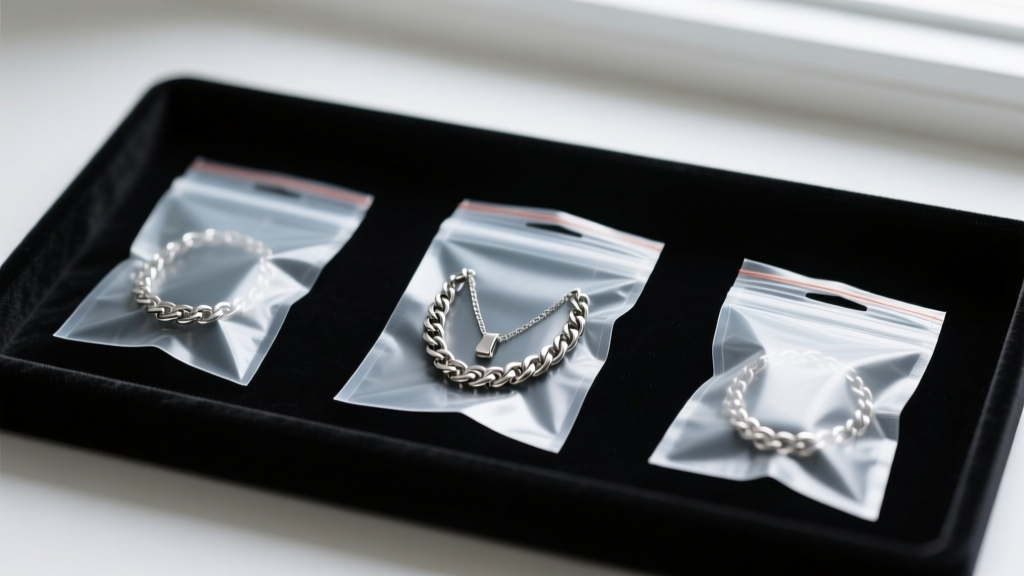
The Ideal Storage Method: Separate the pieces and place each individual necklace into its own anti-tarnish polyethylene ziplock bag. According to metallurgy guidelines from Rio Grande metallurgy resources, polyethylene plastics treated with silver guard inhibitors actively absorb airborne sulfur compounds before they can reach the metal. Store these individual bags flat in a velvet-lined drawer, ensuring the chains are fully extended to prevent the 18-gauge chain links from kinking or tangling with the lobster clasps.
Conclusion
Maintaining three person friendship necklaces requires a shift in mindset from treating them as simple accessories to treating them as precision mechanical jewelry. By understanding the specific vulnerabilities of your metal type, avoiding harsh chemical dips, and utilizing distilled water and compressed air for deep cleaning, you can ensure that the physical connection between your trio's necklaces remains as strong and flawless as the bond they represent. For further reading on advanced metal preservation, consult the Gemological Institute of America (GIA) gem and metal care guidelines.


