How to Clean and Maintain a Large Diamond Heart Necklace
Learn expert cleaning and maintenance tips for your large diamond heart necklace. Protect your fine jewelry investment with our gemological guide.


A large diamond heart necklace is more than just a striking piece of jewelry; it is a significant emotional and financial investment. The heart brilliant cut, typically featuring 56 to 58 facets, requires exceptional precision to achieve its signature symmetrical lobes and sharp cleft. However, this unique geometry also introduces specific structural vulnerabilities that demand specialized care. Whether your pendant features a 2.00-carat solitaire or a 5.00-carat halo design, understanding the gemological and metallurgical nuances of your piece is critical for preserving its brilliance and structural integrity over time.
The Vulnerability of the Heart Cut: Understanding Your Necklace
While diamonds rank a 10 on the Mohs scale of hardness, making them highly resistant to scratching, they possess distinct cleavage planes. These are directional planes of atomic weakness where a sharp impact can cause the stone to chip or split. In a heart-cut diamond, the inward cleft and the bottom point are the most susceptible to chipping. When dealing with a large diamond heart necklace—typically defined as stones exceeding 1.50 carats—the physical mass of the stone increases the gravitational leverage exerted on the setting. This means that a minor impact against a hard surface, like a marble countertop or a car door, transfers significantly more kinetic energy to the stone's vulnerable points than it would in a smaller, lighter pendant.
Furthermore, the cleft of the heart must be secured by a specialized V-prong to protect the sharp inward angle. According to the Gemological Institute of America (GIA), protecting the points and clefts of fancy-shaped diamonds is paramount, as a worn V-prong exposes the stone to catastrophic cleavage failure. Regular inspection of these specific prongs is not just recommended; it is a mandatory aspect of owning a large heart-shaped diamond.
Daily Wear Risks and Prong Fatigue
The V-Prong and Bottom Point Inspection
The metal alloy used in your necklace dictates how quickly the prongs will degrade. Platinum is the superior choice for a large diamond heart necklace due to its high tensile strength and durability; when platinum prongs wear, they tend to bend rather than snap. Conversely, 14k or 18k gold prongs can suffer from microscopic stress fractures over time, eventually leading to sudden prong failure. If your large pendant is set in gold, you must inspect the prongs every three months.
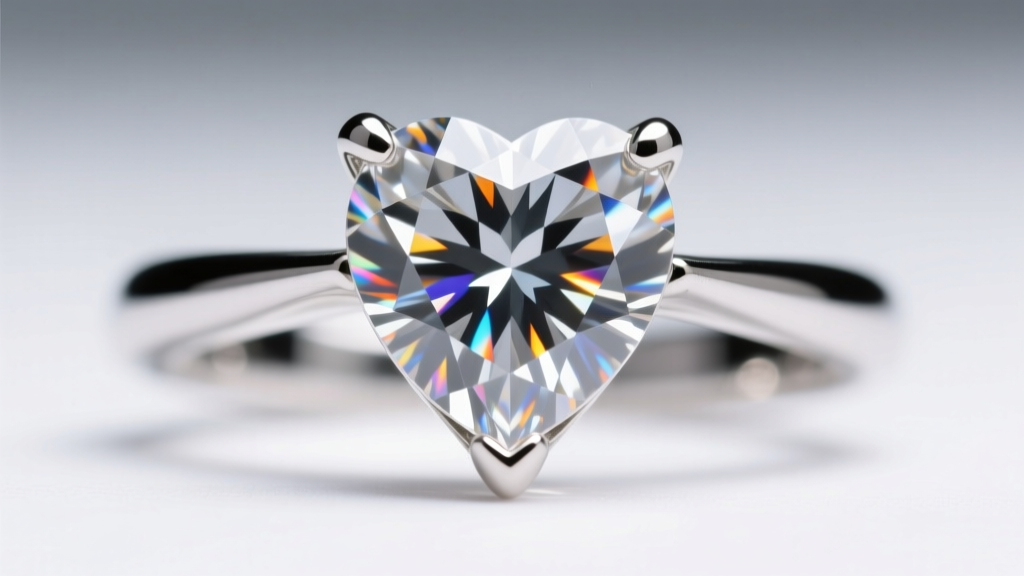
The Cotton Ball Test: To perform a safe, at-home inspection of your prongs, take a clean, dry cotton ball and gently swipe it over the diamond's setting. If the cotton fibers snag or pull on any of the prongs—particularly the V-prong at the cleft or the bottom prong holding the point—it is a definitive indicator that the metal has thinned, lifted, or developed a microscopic burr. Do not wear the necklace until a professional jeweler has retipped or tightened the prongs.
Protecting the Bail and Chain Connection
A large diamond heart pendant carries substantial weight, which places continuous stress on the bail (the loop connecting the pendant to the chain). Over time, the friction between the bail and the chain can wear down the metal. Ensure that your bail is constructed of a heavy-gauge metal and that the jump ring connecting it to the chain is soldered shut. An unsoldered jump ring will eventually pull apart under the pendulum-like swinging motion of a heavy heart pendant.
Step-by-Step Home Cleaning Protocol
Diamonds are naturally lipophilic, meaning they attract and hold onto oils from your skin, cosmetics, and lotions. A film of oil will drastically reduce the stone's light return, making a large, brilliant diamond look dull and lifeless. Establishing a consistent, safe cleaning routine is essential.
What to Avoid: Ultrasonic and Chemical Hazards
Before you begin cleaning, you must know what not to do. Never use ultrasonic cleaners on a large diamond heart necklace if the stone is clarity-enhanced (fracture-filled). The high-frequency vibrations and heated chemical baths used in ultrasonic machines can melt the glass-like resins used to fill internal fractures, permanently clouding the diamond. Additionally, avoid exposing your necklace to chlorine bleach. Chlorine reacts with the copper and zinc alloys in gold, creating microscopic stress cracks that can cause the setting to shatter.
| Cleaning Agent | Safety Level | Notes & Warnings |
|---|---|---|
| Mild Dish Soap & Warm Water | Highly Safe | The gold standard for home cleaning. Use a soft baby toothbrush. |
| Ammonia-Based Glass Cleaner | Conditionally Safe | Safe for untreated diamonds and platinum, but can damage porous accent stones or fracture-filled diamonds. |
| Ultrasonic Cleaners | High Risk | Can loosen pavé halo stones and destroy clarity-enhanced diamonds. |
| Toothpaste or Baking Soda | Unsafe | Highly abrasive. Will cause micro-scratches on gold and platinum settings. |
| Chlorine Bleach | Extremely Unsafe | Causes structural degradation and stress-corrosion cracking in gold alloys. |
The Proper Cleaning Method
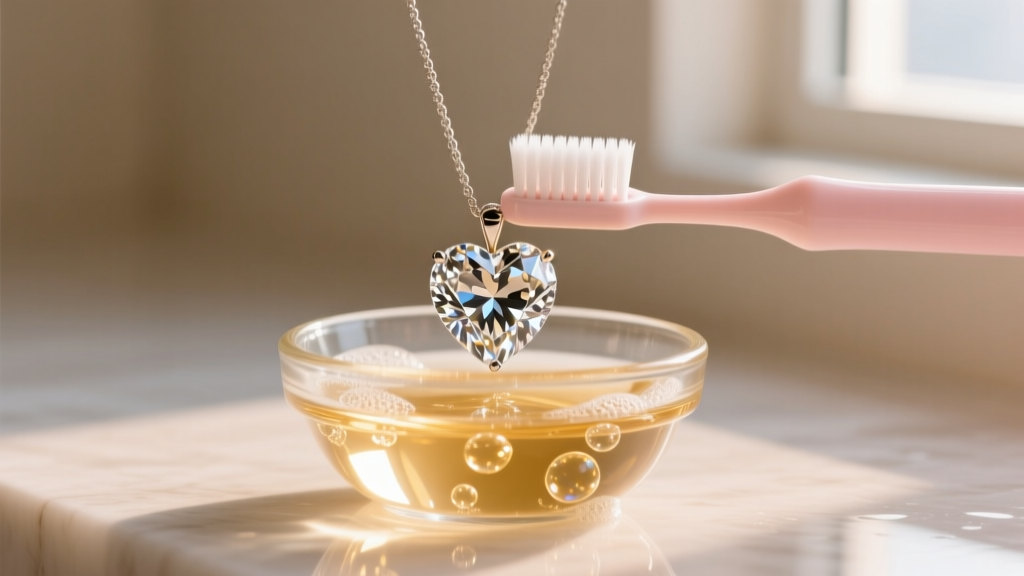
- Prepare the Solution: Fill a small glass bowl with lukewarm water (roughly 90°F to 100°F to avoid thermal shock to any repaired solder joints) and add a few drops of mild, lotion-free dish soap.
- Soak: Submerge the large diamond heart necklace and let it soak for 15 to 20 minutes. This softens hardened oils and cosmetic residue trapped beneath the stone's pavilion.
- Agitate Gently: Using a brand-new, ultra-soft baby toothbrush, gently brush the diamond. Pay special attention to the underside of the stone (the pavilion), where grease accumulates most heavily. Brush away from the prongs to avoid accidentally bending them.
- Rinse and Dry: Rinse the necklace under a gentle stream of lukewarm water. Crucial: Always ensure the drain is plugged or use a mesh strainer over the sink to prevent a catastrophic drop. Pat dry with a lint-free microfiber cloth.
Professional Servicing and Storage Best Practices
While home maintenance is vital, it does not replace professional oversight. The Jewelers of America recommends having fine jewelry professionally inspected and cleaned at least once a year. For a large diamond heart necklace, a bi-annual checkup is preferable. A jeweler will use a 10x triplet loupe to inspect the prong seats for wear, check the bail for thinning, and use professional steam cleaning to remove stubborn debris that a toothbrush cannot reach.
Strategic Storage to Prevent Damage
How you store your necklace when it is not being worn is just as important as how you clean it. Tossing a large diamond pendant into a communal jewelry box is a recipe for disaster. While the diamond itself cannot be scratched by other gemstones, it will easily scratch the gold or platinum settings of surrounding pieces. Furthermore, the sharp cleft and point of the heart shape can easily snag on delicate chains, causing kinks or breaks.
- Individual Pouches: Always store the necklace in its own soft, anti-tarnish flannel pouch or a dedicated fabric-lined compartment.
- Hang or Lay Flat: To prevent the chain from tangling, hang the necklace on a padded jewelry stand or lay it perfectly flat. If laying flat, ensure the pendant is not resting on top of the chain links, as the heavy stone can press the metal links into each other, causing deformation.
- Climate Control: Store the piece in a room with stable humidity. Extreme fluctuations can cause microscopic expansion and contraction in the metal setting, gradually loosening the prongs holding your large heart diamond.
By respecting the unique structural demands of the heart brilliant cut and adhering to a disciplined, gemologically sound cleaning regimen, your large diamond heart necklace will maintain its breathtaking fire and structural security for generations to come.


