Necklace Chain Gold Care: The Ultimate Cleaning Guide
Discover expert methods to safely clean your necklace chain. Gold care tips for removing tarnish, protecting alloys, and storing fine jewelry.

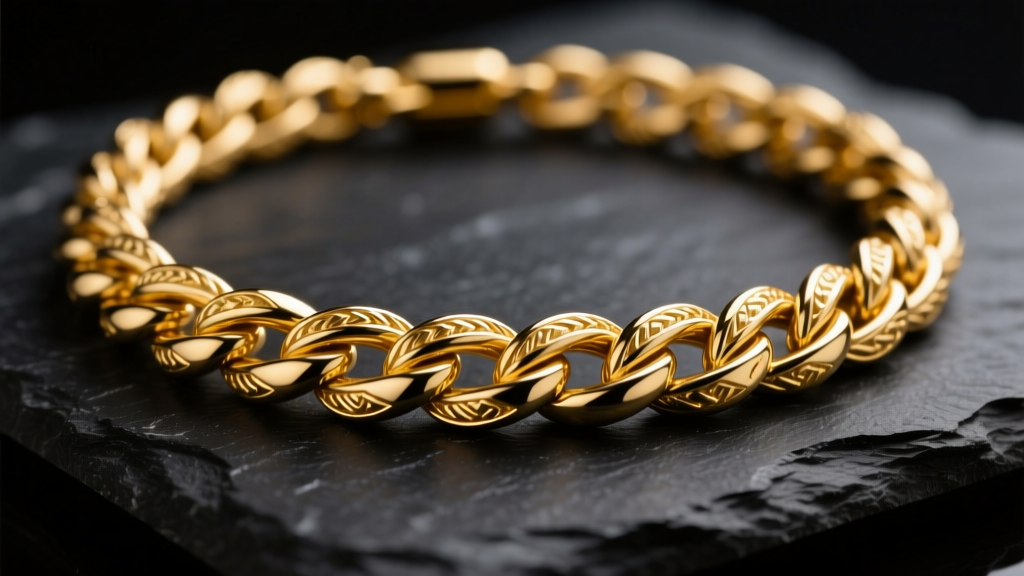
A fine gold necklace is a timeless investment, but daily wear inevitably exposes it to skin oils, environmental pollutants, cosmetic residues, and friction. Over time, this microscopic buildup dulls the metal’s natural luster and can even compromise the structural integrity of delicate links and clasps. When it comes to maintaining a necklace chain, gold requires a specific, scientifically informed approach to cleaning and storage. Unlike harder metals like platinum or tungsten, gold alloys are susceptible to chemical reactions and micro-scratching. This comprehensive guide dives deep into the metallurgy of gold tarnish, outlines a professional-grade cleaning protocol, and reveals the hidden hazards that destroy fine jewelry.
The Science of Gold Tarnish: Why Your Chain Loses Luster
To properly care for your jewelry, you must first understand its metallurgical composition. Pure 24-karat gold is virtually immune to tarnish and corrosion. However, it is far too malleable for daily wear; a 24k cable chain would stretch, warp, and snap under the mere weight of a small pendant. Therefore, jewelers alloy gold with metals like copper, silver, nickel, and zinc to increase tensile strength and durability.
It is these exact alloy metals that cause tarnish. When a 14k (58.3% gold) or 18k (75% gold) chain is exposed to sulfur compounds in the air, chlorine in tap water, or the natural acids in human sweat, the copper and silver molecules react. This creates a microscopic layer of silver sulfide or copper chloride on the surface, manifesting as a dull, dark, or sometimes reddish film. Furthermore, environmental pollutants and cosmetic products like lotions and perfumes create a sticky barrier that traps these reactive compounds directly against the metal, accelerating the degradation process. Understanding this chemical reality is the first step in effective necklace chain gold maintenance.
The Expert Step-by-Step Cleaning Protocol
Forget the internet hacks involving baking soda, toothpaste, or aluminum foil baths. Baking soda is highly alkaline and can pit certain gold alloys, while toothpaste contains abrasive silica that will permanently scratch high-polish links. Instead, rely on this professional, pH-neutral cleaning method recommended by gemological experts.
Phase 1: The Phosphate-Free Soak
Fill a small glass bowl with one cup of lukewarm distilled water. Avoid tap water, as it often contains chlorine and dissolved minerals that can leave hard water spots or trigger stress corrosion cracking in lower-karat gold. Add three drops of a mild, phosphate-free dish soap (such as original Dawn). Phosphates can leave a cloudy residue on polished metals. Submerge your chain entirely and let it soak for 15 to 20 minutes. This allows the mild surfactants to break down the molecular bonds of sebum (skin oil) and cosmetic buildup trapped inside the crevices of rope or figaro links.
Phase 2: Agitation and Detailing
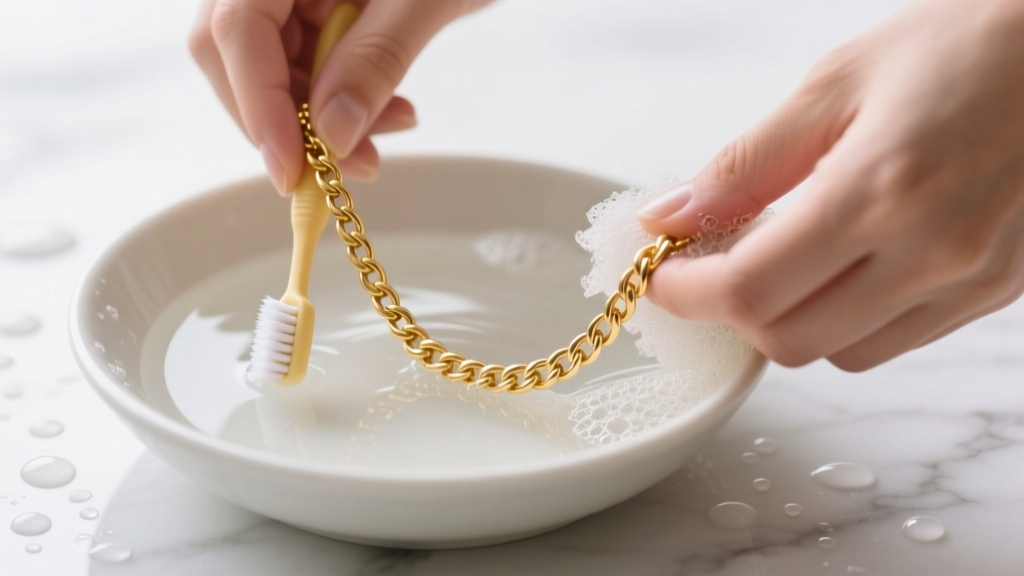
After soaking, remove the chain and place it on a clean, lint-free microfiber cloth. Using an extra-soft baby toothbrush (never a standard adult toothbrush, as the stiff nylon bristles will inflict micro-scratches on the gold), gently agitate the links. Pay special attention to the clasp mechanism—specifically the spring ring or lobster claw—as this area accumulates the most debris, which can eventually cause the spring to fail. Brush in the direction of the chain’s weave to avoid snagging or bending delicate wire links.
Phase 3: Rinsing and Drying
Rinse the chain thoroughly under a gentle stream of lukewarm distilled water to wash away all soap residue. To dry, do not rub the chain aggressively. Instead, lay it flat on a dry microfiber cloth and gently pat it dry. For complex weaves like box or wheat chains that trap moisture, use a hair dryer on the "cool" setting to blow water out of the microscopic gaps. Leaving moisture trapped in the links can lead to localized oxidation of the alloy metals.
Chemical and Mechanical Hazards to Avoid
The most common cause of irreversible damage to a gold necklace chain is not a lack of cleaning, but exposure to the wrong chemicals. According to the Gemological Institute of America (GIA), everyday household chemicals can cause catastrophic structural failures in gold alloys. Below is a breakdown of common hazards and their specific damage mechanisms.
| Hazardous Substance | Common Source | Damage Mechanism to Gold Alloys |
|---|---|---|
| Chlorine | Swimming pools, bleach, hot tubs | Forms gold chloride, leading to stress corrosion cracking and brittle links. |
| Sulfur | Hot springs, rubber bands, wool | Reacts with copper/silver alloys, creating black, stubborn sulfide tarnish. |
| Mercury | Broken thermometers, certain cosmetics | Forms a gold amalgam, turning the metal white/silver and destroying integrity. |
| Aerosol Propellants | Hairspray, dry shampoo, perfume | Dries out the metal's luster and creates a sticky trap for dust and dead skin. |
Always adhere to the "last on, first off" rule: your gold chain should be the last thing you put on after applying cosmetics and perfumes, and the first thing you take off when returning home. For more foundational care guidelines, the Jewelers of America strongly advises removing all gold jewelry before engaging in household cleaning or swimming.
Ultrasonic Cleaners: A Risky Proposition for Certain Chains
Ultrasonic jewelry cleaners use high-frequency sound waves to create microscopic cavitation bubbles in a liquid solution. When these bubbles collapse against the metal, they generate intense localized pressure that blasts away dirt. While this technology is miraculous for solid, heavy chains like a solid 14k curb or Cuban link, it is incredibly dangerous for other styles.
If your necklace chain is hollow (a common manufacturing technique to make large, bold links more affordable and lightweight), the intense vibrations of an ultrasonic cleaner can cause the microscopic soldered seams to split and shatter. Furthermore, if your chain features any porous gemstone pendants (such as opals, emeralds, pearls, or turquoise), the cavitation process will fracture the stones and strip their natural oils. Unless you are 100% certain your chain is solid gold with no delicate solder points or fragile stones, stick to the manual soaking method outlined above.
Long-Term Storage and Tangling Prevention
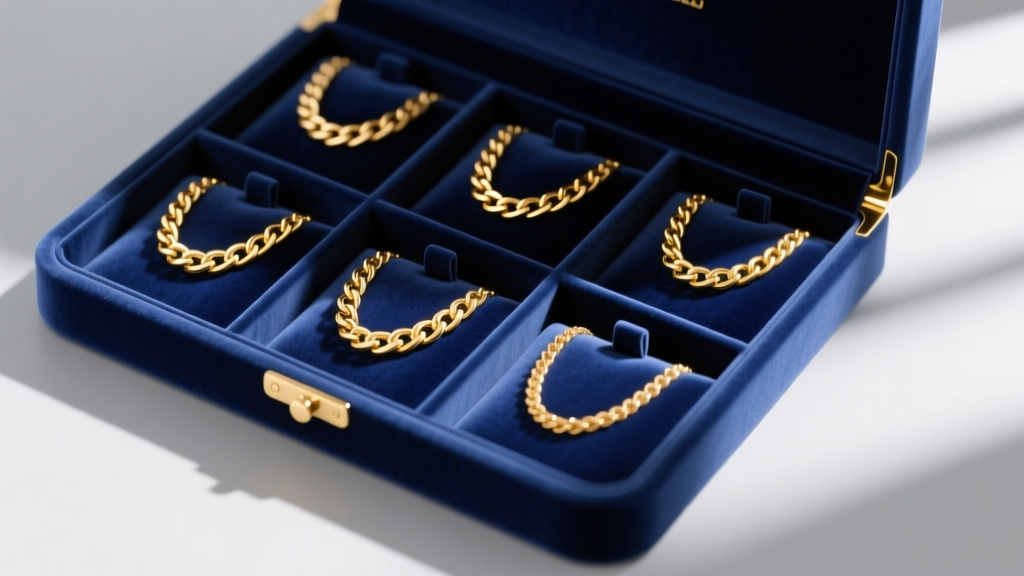
How you store your necklace chain is just as critical as how you clean it. Tossing multiple chains into a single drawer or jewelry box guarantees tangling and friction-induced micro-scratches. When gold chains rub against each other—or worse, against harder gemstones like diamonds or sapphires—the softer gold will inevitably lose its polish and develop a matte, scratched appearance.
To prevent this, store each chain individually in a soft, anti-tarnish flannel pouch. If you prefer a jewelry box, ensure each piece has its own velvet-lined compartment. For added protection against atmospheric sulfur, place a small 3M anti-tarnish strip inside the storage compartment; these strips absorb corrosive gases before they can reach your jewelry. Finally, avoid storing gold in PVC (polyvinyl chloride) plastic bags, as PVC releases chemicals that can stain gold alloys. If you must use plastic, opt for archival-safe polyethylene ziplock bags, squeezing out all excess air before sealing.
Conclusion
Maintaining the brilliant luster and structural integrity of your gold necklace chain does not require expensive professional cleanings every month. By understanding the metallurgical vulnerabilities of gold alloys, avoiding harsh household chemicals, and utilizing a gentle, phosphate-free cleaning protocol, you can keep your jewelry looking pristine for generations. Treat your gold with the scientific respect it deserves, and it will remain a flawless, radiant staple in your collection for a lifetime.


