Ultimate Care Guide for Your Large Square Pendant Necklace
Learn expert cleaning and maintenance tips to keep your large square pendant necklace tarnish-free, polished, and secure for everyday wear.

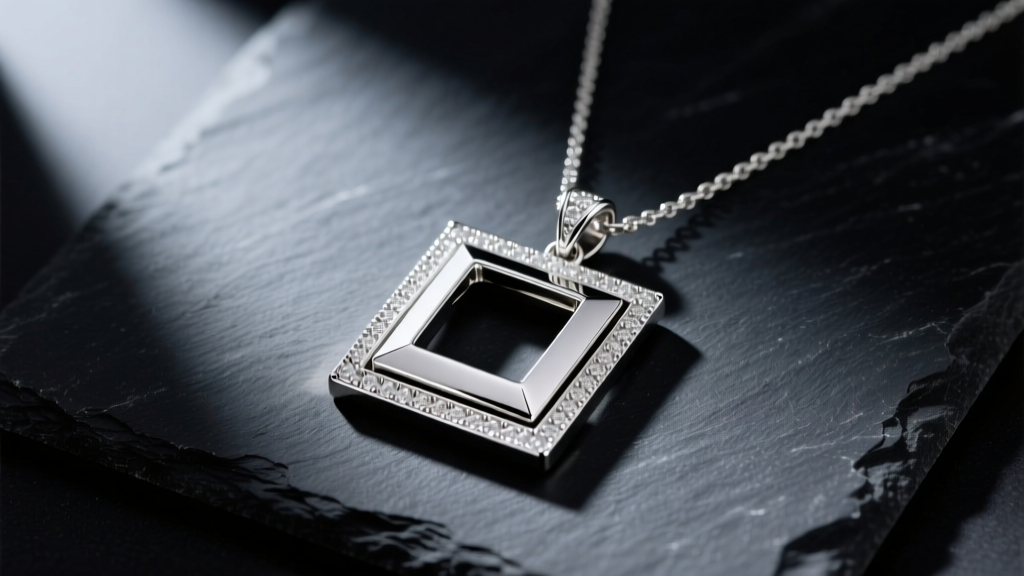
A large square pendant necklace is a bold, architectural statement piece that anchors any outfit. However, the very features that make these pendants striking—their expansive surface area, sharp geometric corners, and substantial weight—also make them uniquely vulnerable to damage, tarnish, and chain fatigue. Unlike delicate, lightweight charms, a substantial square pendant requires a targeted maintenance strategy to preserve its structural integrity and visual brilliance.
Whether your piece is crafted from 925 sterling silver, 18k gold vermeil, or 316L stainless steel, neglecting its specific care requirements will lead to micro-scratches, corner dents, and eventual chain failure. This comprehensive guide provides actionable, expert-level maintenance protocols to ensure your jewelry remains in pristine condition for decades.
Material-Specific Cleaning Protocols
The first rule of jewelry maintenance is recognizing that no two metals react identically to environmental stressors or cleaning agents. According to the Federal Trade Commission Jewelry Guides, understanding the exact composition of your metal is critical before applying any chemical or abrasive treatment.
925 Sterling Silver and Oxidation
Sterling silver contains 7.5% copper, which makes it highly susceptible to tarnishing when exposed to sulfur compounds in the air and hydrogen sulfide in sweat. For a large square silver pendant, tarnish often accumulates in the deep crevices or along the soldered edges.
- Routine Care: Wipe the pendant after every wear with a treated silver polishing cloth (such as a Sunshine cloth) to remove oils and slow oxidation.
- Deep Cleaning: Avoid harsh silver dips containing thiourea, as they can strip the silver's natural luster and leave a chalky residue. Instead, use a phosphate-free dish soap and warm water.
18k Gold Vermeil and Plated Metals
True gold vermeil requires a minimum of 2.5 microns of gold plating over a sterling silver base. Because the gold layer is relatively thin, aggressive polishing will wear it away, exposing the silver beneath.
- What to Avoid: Never use ultrasonic cleaners or abrasive baking soda pastes on vermeil. The high-frequency vibrations (typically 40-45 kHz) can cause micro-fractures in the plating layer.
- Safe Method: Use a lint-free microfiber cloth dampened with a mild, non-detergent soap solution. Gently wipe the surface without applying downward pressure.
316L Stainless Steel and Titanium
These aerospace-grade metals are highly resistant to corrosion and tarnish. However, their large, flat surfaces act as magnets for fingerprint smudges and sebum.
- Restoring Shine: A simple wipe with a 70% isopropyl alcohol solution will cut through body oils instantly, leaving the square pendant streak-free and highly reflective.
The Geometry Factor: Protecting Square Edges and Corners
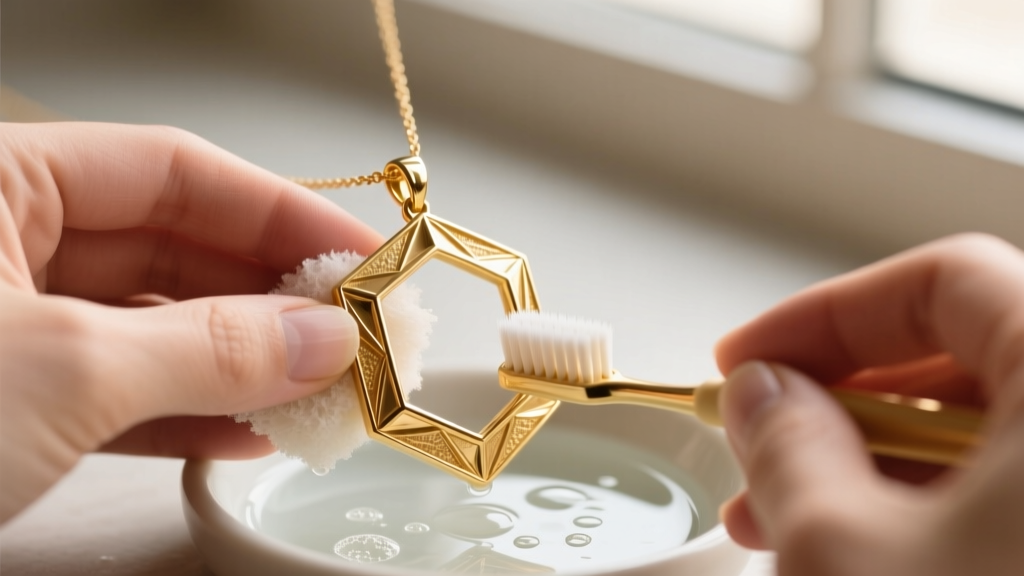
The most overlooked aspect of maintaining a large square pendant necklace is managing its geometry. Unlike circular or oval pendants that deflect impacts, square pendants feature four distinct corners and four flat edges. This makes them highly prone to a phenomenon jewelers call 'corner knocking.'
When a heavy square pendant swings against a hard surface (like a marble countertop or a glass table), the corners absorb the kinetic energy. Over time, this results in localized denting, edge rounding, and, if the piece is enameled, micro-chipping along the perimeter.
To prevent corner knocking, always remove your large square pendant before engaging in activities involving hard surfaces, such as cooking, weightlifting, or typing at a desk where the pendant may swing and strike the keyboard or desk edge.
If your square pendant features a bezel-set gemstone, the corners of the bezel are critical structural points. Ensure a jeweler checks the corner prongs or bezel walls annually, as these are the first areas to pull away from the stone upon impact.
Chain Tension and Clasp Maintenance for Heavy Pendants
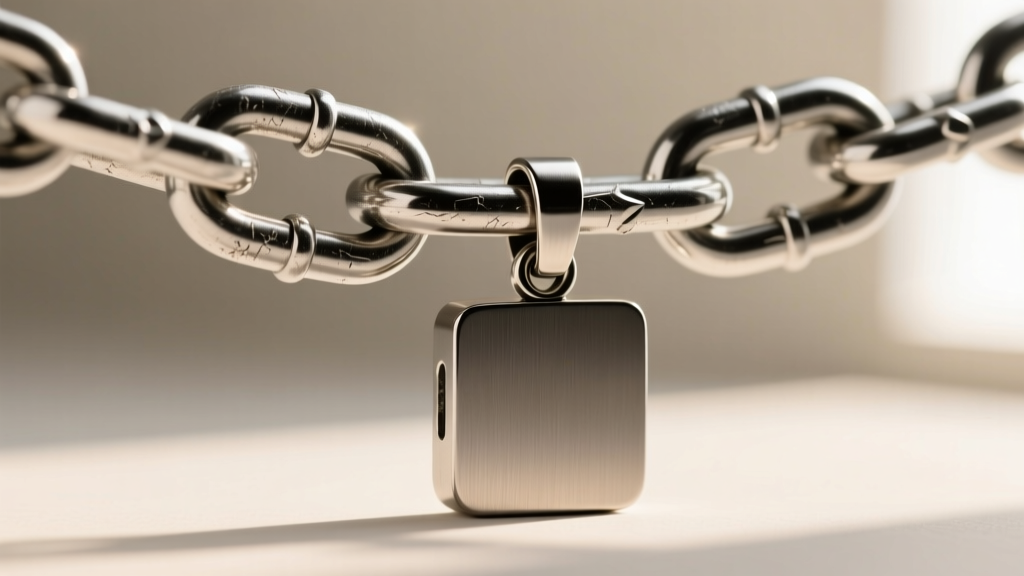
A large square pendant necklace inherently places disproportionate stress on its chain and clasp mechanism. The center of gravity on a wide, flat pendant causes it to swing like a pendulum, generating shear force on the jump ring and clasp spring. Galvanic corrosion can also occur if the chain and pendant are made of dissimilar metals and are constantly exposed to sweat.
Choosing and maintaining the correct chain gauge is non-negotiable to prevent catastrophic failure and the loss of your pendant.
| Pendant Weight | Minimum Chain Gauge | Recommended Chain Style | Jump Ring Requirement |
|---|---|---|---|
| Under 15g | 1.2mm (16-18g) | Cable or Box | 18-gauge, unsoldered |
| 15g - 30g | 1.5mm (14g) | Curb or Figaro | 16-gauge, soldered |
| Over 30g | 2.0mm+ (12g) | Wheat or Rope | 14-gauge, soldered |
Clasp Spring Fatigue: Lobster clasps rely on a tiny internal steel spring. The heavy, swinging motion of a large square pendant can cause this spring to fatigue and fail over time. Inspect the clasp monthly; if the lever feels mushy or fails to snap back instantly, replace the clasp immediately.
Step-by-Step Deep Cleaning Routine
For a thorough, safe cleaning that removes accumulated grime without damaging the metal or any inset stones, follow this expert-approved protocol. For further guidance on caring for specific gemstones that may be set in your pendant, refer to the Gemological Institute of America (GIA) Gem Care guidelines.
- Preparation: Line a glass bowl with a soft silicone mat or a folded towel. This prevents the heavy square pendant from cracking the glass or chipping its corners if dropped.
- The Solution: Mix three drops of phosphate-free, ultra-mild dish soap (like Dawn) into one cup of lukewarm distilled water. Avoid tap water, as the chlorine and hard minerals can leave microscopic water spots on polished metals.
- Agitation: Submerge the pendant and chain. Let it soak for exactly 5 to 7 minutes. Do not exceed this, especially if the piece contains porous stones like turquoise or lapis lazuli.
- Detailing: Use a brand-new, extra-soft baby toothbrush to gently agitate the corners and the bail (the loop connecting the pendant to the chain). Never use a medium or hard-bristled brush, as it will leave micro-scratches on high-polish surfaces.
- Rinsing and Drying: Rinse thoroughly under a gentle stream of lukewarm distilled water. Pat dry with a lint-free microfiber cloth, and use a hair dryer on the 'cool' setting to blow water out of the chain links and the pendant bail.
Storage Solutions to Prevent Micro-Scratches and Tarnish
How you store your large square pendant necklace when it is not being worn is just as important as how you clean it. Tossing it into a communal jewelry box guarantees that the flat, expansive surface will be scratched by harder gemstones or diamond rings.
- Individual Polyethylene Bags: Store the necklace in its own zip-lock bag made of polyethylene. Avoid PVC (polyvinyl chloride) plastics, which emit gases that accelerate silver tarnishing and can permanently cloud certain gemstones.
- Anti-Tarnish Strips: Place a 3M anti-tarnish strip inside the storage bag. These strips absorb airborne sulfur and hydrogen sulfide, effectively neutralizing the environment and keeping silver bright for up to a year.
- Flat Storage: Because of their weight and geometry, large square pendants should ideally be stored flat in a lined drawer rather than hung on a jewelry tree. Hanging heavy pendants for months on end can cause permanent stretching and deformation of the chain links, particularly in softer metals like 14k or 18k solid gold.
By respecting the unique material properties and geometric vulnerabilities of your jewelry, you ensure that your statement piece remains as bold and flawless as the day you acquired it.


