Beginner Guide to Buying a Heartbeat Necklace Gold Pendant
Discover how to choose, style, and care for a heartbeat necklace gold pendant. Learn about gold karats, chain pairings, and EKG jewelry meaning.


A heartbeat necklace—often referred to as an EKG or ECG necklace—is one of the most deeply personal and recognizable designs in modern jewelry. Translating the electrical map of a human heart into a wearable metal silhouette, these pieces serve as powerful symbols of life, love, memorial, and resilience. For beginners stepping into the world of fine jewelry, a heartbeat necklace gold pendant offers a timeless entry point. However, the horizontal geometry and sharp angles of an EKG wave present unique structural and styling challenges that standard pendants do not.
This comprehensive guide will walk you through everything you need to know before purchasing your first gold heartbeat necklace. From decoding gold purity and understanding structural failure modes to selecting the right chain and neckline pairings, we are diving deep into the specifics of EKG jewelry.
The Anatomy of a Heartbeat Necklace
To understand how to buy and care for this jewelry, you must first understand its design origins. The pendant mimics the PQRST wave of a clinical electrocardiogram. The 'P' wave represents atrial depolarization, the 'QRS' complex (the tall spike) represents ventricular depolarization, and the 'T' wave shows ventricular repolarization.
In jewelry design, the 'R' spike is the tallest and sharpest point. While visually striking, this sharp apex is a primary failure point in lower-quality manufacturing. Cheap cast pendants often leave the R-spike needle-sharp, which can easily scratch the wearer's collarbone or snag on delicate lace and knitwear. High-end jewelers employ a technique called micro-beveling, slightly rounding the microscopic tip of the spike to maintain the visual illusion of sharpness while making the piece safe for daily wear against the skin.
Decoding Gold Purity for EKG Pendants
When shopping for a heartbeat necklace gold design, you will encounter three primary karat options: 10K, 14K, and 18K. Because an EKG pendant features long, unsupported horizontal spans and sharp angles, the structural integrity of the gold alloy is critical. Pure gold (24K) is far too soft and would bend out of shape the first time the chain caught on a sweater.
According to the Gemological Institute of America (GIA), the alloy metals mixed with pure gold dictate not just the color, but the tensile strength of the final piece. Here is how the karats compare specifically for horizontal EKG pendants:
| Gold Karat | Pure Gold % | Alloy Composition | Durability for EKG | Average Price Range |
|---|---|---|---|---|
| 10K Gold | 41.7% | High copper/zinc/nickel | Highest (Very rigid) | $60 - $120 |
| 14K Gold | 58.3% | Balanced copper/silver | High (The sweet spot) | $150 - $350 |
| 18K Gold | 75.0% | Higher copper/silver | Moderate (Prone to bending) | $400 - $800+ |
Expert Recommendation: 14K gold is the undisputed champion for heartbeat pendants. It offers the rich, warm hue of fine jewelry while retaining enough alloyed hardness to prevent the long horizontal lines of the EKG from warping or bending under minor tension.
Chain Pairings: Supporting the Pulse
The chain you choose can make or break a heartbeat necklace. Because the pendant is inherently horizontal and linear, it requires a chain that provides stability without competing for visual attention.

The Best Chain Styles for EKG Pendants
- Box Chains (0.9mm - 1.2mm): The geometric, square links of a box chain perfectly complement the sharp, angular lines of an EKG wave. They are highly durable and resist kinking.
- Cable Chains (1.0mm - 1.5mm): A classic, uniform oval-link cable chain offers a traditional look that lets the pendant remain the sole focal point.
- Snake Chains (1.0mm): Smooth and fluid, snake chains offer a sleek, modern aesthetic. However, they are prone to kinking if bent sharply, so they require careful storage.
Chains to Avoid
Avoid rope chains and mariner chains. The twisted grooves of a rope chain or the complex links of a mariner chain will inevitably catch on the sharp P and T waves of the heartbeat pendant, leading to frustrating tangles and potential damage to the chain links.
Proportions, Sizing, and Necklines
The width of a heartbeat pendant typically ranges from 1.25 inches to 2.5 inches. For a beginner-friendly, everyday piece, aim for a width between 1.5 and 1.75 inches. Anything wider can look cumbersome and is more likely to flip upside down when you move.
Chain Length: Heartbeat necklaces look best when they rest squarely on the collarbone. A 16-inch chain with a 2-inch extender is the most versatile option, allowing you to adjust the drop based on your neckline.
Neckline Pairing: The horizontal nature of the EKG pendant pairs beautifully with V-necks and scoop necks, which frame the collarbone. Avoid wearing wide heartbeat pendants with high-neck turtlenecks or complex ruffled collars, as the visual lines will clash and the pendant's spikes will snag on the fabric.
Real-World Wear: Snags, Scratches, and Care
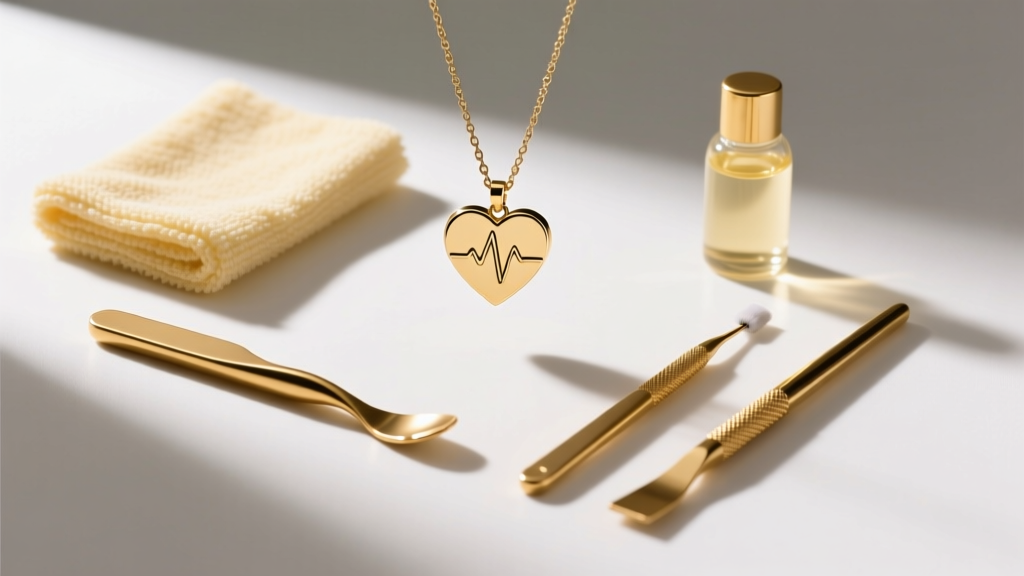
Gold is a relatively soft metal, and the intricate crevices of an EKG wave can trap lotions, perfumes, and dead skin cells over time. Furthermore, the attachment points (jump rings) are critical stress zones.
Preventing the 'Flip' and Metal Fatigue
One of the most common complaints with horizontal pendants is that they constantly flip upside down. This happens when the pendant is hung from a single central bail that is too small for the chain, or when the two end-jump rings are not perfectly aligned. When buying, inspect the jump rings. They should be soldered closed or feature a secure click-lock mechanism. If the jump rings are simply bent wire, the constant friction of the chain will eventually cause metal fatigue, leading to the ring snapping open and the loss of your pendant.
Cleaning Your Gold Heartbeat Necklace
To maintain the brilliant shine of your gold, follow the guidelines recommended by Jewelers of America:
- Mix a few drops of mild, phosphate-free dish soap into a bowl of warm (not hot) water.
- Let the necklace soak for 5 to 10 minutes to loosen body oils trapped in the sharp angles of the QRS complex.
- Use an ultra-soft baby toothbrush to gently sweep the crevices. Never use hard-bristled brushes, as they will leave micro-scratches on the gold.
- Rinse under lukewarm water and pat completely dry with a lint-free microfiber cloth before storing.
Pricing Tiers and Where to Buy
When budgeting for your heartbeat necklace gold pendant, it is vital to understand the difference between solid gold and gold vermeil.
- Gold Vermeil / Plated ($30 - $80): A base of sterling silver coated with a thin layer of gold. While affordable, the friction of daily wear will eventually cause the gold to rub off, especially on the high points of the EKG spikes, revealing the silver beneath.
- Solid 10K / 14K Gold ($150 - $400): The best investment for a piece meant to be worn daily. Solid gold will never flake or tarnish, and it can be professionally polished by a jeweler to remove surface scratches.
- Designer / Diamond Accented ($600 - $2,000+): Many high-end jewelers offer EKG pendants featuring a small pavé diamond set directly into the 'R' spike or the 'P' wave, adding a personalized birthstone or brilliance to the medical silhouette.
Ultimately, a gold heartbeat necklace is more than just a trend; it is a permanent, wearable reminder of what keeps us going. By prioritizing 14K gold for structural integrity, selecting a complementary box or cable chain, and practicing mindful daily care, your EKG pendant will remain a flawless, meaningful staple in your jewelry collection for decades to come.


