Care Guide: Maintaining Your Necklace for Strapless Dresses
Learn expert cleaning and storage tips for your favorite necklace for strapless dresses. Protect diamonds, pearls, and gold from sweat and cosmetics.

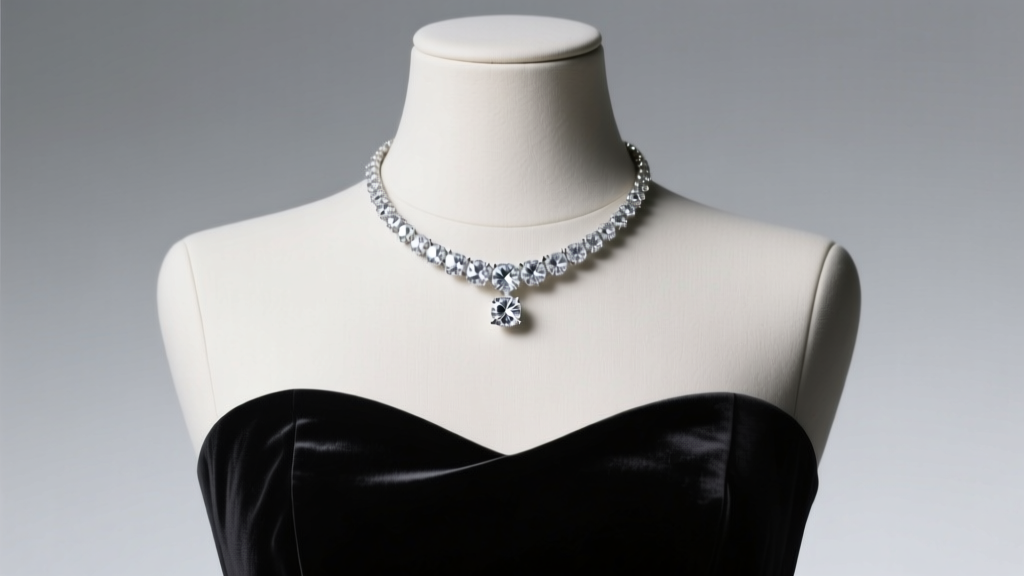
The Décolletage Factor: Why Strapless Jewelry Needs Special Care
Choosing the perfect necklace for strapless gowns is only half the battle; maintaining its brilliance after the event is where many jewelry collectors falter. As we navigate the formalwear trends of 2026, bare-shoulder silhouettes remain a staple for galas, weddings, and red-carpet events. However, the bare skin of the décolletage presents a unique microenvironment for fine jewelry. Unlike pieces worn over fabric, a necklace resting directly against the chest and neck is continuously exposed to sebum, perspiration, body shimmer, and setting sprays.
The skin's natural pH ranges from 4.5 to 7.0, meaning sweat is mildly acidic. When combined with the alcohol found in luxury perfumes and the polymers in makeup setting sprays, this creates a corrosive film that can dull gemstones, degrade silk threading, and accelerate the tarnishing of porous metals. According to the Jewelers of America, jewelry worn directly against the skin requires a 40% more frequent cleaning schedule than pieces worn over clothing. To protect your investment, you must adopt a rigorous, material-specific maintenance protocol.
Material-Specific Cleaning Protocols
Not all statement pieces are created equal. The structural integrity and chemical sensitivity of your jewelry dictate how it must be cleaned after a night out. Here is how to handle the three most popular styles worn with strapless necklines.
Diamond and Gemstone Tennis Necklaces
Tennis necklaces are a classic choice for strapless dresses, but their low-profile bezel or prong settings easily trap foundation and body oils. To clean a diamond tennis necklace, mix three drops of a mild, degreasing dish soap (such as original Dawn) into a bowl of warm distilled water. Avoid tap water, as chlorine and hard water minerals can leave a cloudy film on the stones. Soak the piece for exactly 15 minutes, then gently agitate the underside of the settings with a baby-soft toothbrush. Rinse with distilled water and pat dry with a lint-free microfiber cloth. Warning: Never use a 40kHz ultrasonic cleaner on fracture-filled diamonds, emeralds, or opals, as the high-frequency vibrations can shatter the stones or strip their oil treatments.
Multi-Strand Pearl and Beaded Collars
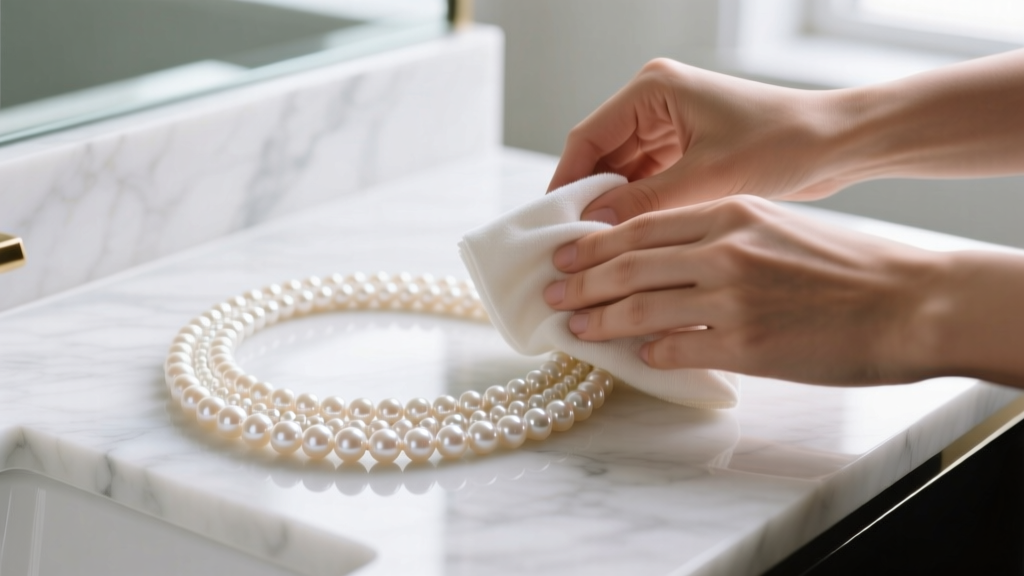
A multi-strand pearl collar sits flush against the collarbone, making it a magnet for skin oils and perfume. The Gemological Institute of America (GIA) strictly advises against submerging pearls in water. These collars are typically strung on Size E or F silk thread. When silk gets wet, it stretches and weakens, leading to catastrophic breakage. Instead, wipe each pearl individually with a slightly damp, soft cotton cloth immediately after removal. If the pearls have lost their luster due to acidic sweat, lightly dampen the cloth with a drop of mineral oil, wipe the nacre, and buff dry. Plan to have multi-strand collars professionally restrung every 12 to 18 months if worn frequently against bare skin.
Gold and Platinum Statement Bibs
Statement bib necklaces often feature mixed metal textures, including high-polish, brushed, and hammered finishes. Using a standard jeweler's polishing cloth on a bib necklace will inadvertently polish away the intentional matte or brushed textures, ruining the designer's contrast. For intricate gold bibs, use a clean, dry makeup blending brush to dust out the crevices. For stubborn oils, use a cotton swab lightly dipped in isopropyl alcohol (90% or higher) to spot-clean only the high-polish areas, avoiding any porous gemstone inlays like turquoise or lapis lazuli, which alcohol will permanently damage.
Step-by-Step Deep Cleaning Matrix
Use the following reference table to ensure you are using the correct agents and tools for your specific necklace type. Improper cleaning is the leading cause of irreversible damage to formalwear jewelry.
| Material / Style | Safe Cleaning Agent | Recommended Tool | Drying Method | Strictly Avoid |
|---|---|---|---|---|
| Diamond / Sapphire Tennis | Mild dish soap + distilled water | Baby-soft toothbrush | Microfiber cloth | Bleach, toothpaste |
| Multi-Strand Pearl Collar | Damp cloth (water only) | 100% Cotton cloth | Air dry flat | Ultrasonic, soaking, ammonia |
| High-Polish Gold / Platinum | Jewelry-specific dip | Untreated polishing cloth | Buffing cloth | Paper towels (cause micro-scratches) |
| Mixed-Metal Statement Bib | Isopropyl alcohol (90%+) | Soft makeup brush, cotton swabs | Air dry | Polishing cloths on matte finishes |
| Emerald / Opal Inlaid Pieces | Dry, soft brush only | Goat-hair duster brush | N/A | All liquids, steam, ultrasonics |
Preventative Maintenance: The 'Last On, First Off' Rule
The most effective way to reduce the cleaning burden for your strapless event jewelry is strict adherence to the 'Last On, First Off' rule. Your necklace should be the absolute final item you put on before leaving for the event. This means it goes on after your body lotion has fully absorbed, after your perfume has dried down, and after your makeup setting spray has completely set. Alcohol and aerosolized polymers are the enemies of gemstone brilliance and silk threading.
Upon returning home, the necklace must be the first thing you remove, before you even take off your gown. This prevents the metal and stones from being exposed to makeup remover, facial cleansers, or the friction of changing out of tight formalwear. If you notice heavy perspiration on the chain or clasp, give it a quick wipe with a dry microfiber cloth before placing it in its storage compartment.
Proper Storage for Complex Silhouettes
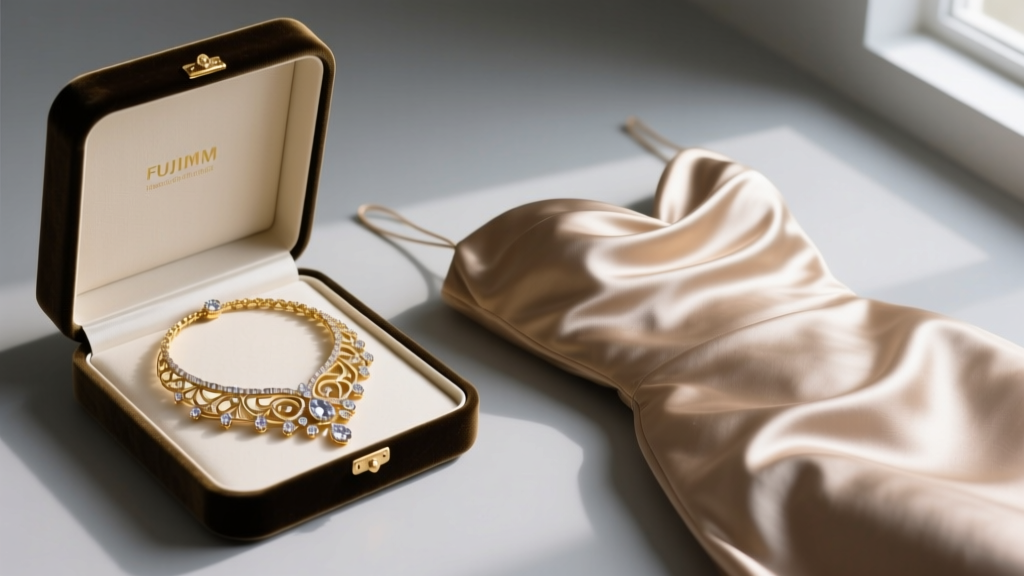
How you store your necklace after cleaning is just as critical as the cleaning process itself. Statement pieces, collar necklaces, and heavy bib designs possess 'metal memory.' If hung on a standard jewelry tree or hook, the weight of the piece will slowly pull the metal links apart and warp the structural wire over time, causing the necklace to sit unevenly on the collarbone the next time you wear it.
Always store heavy strapless-style necklaces completely flat. Line a shallow drawer or a dedicated archival jewelry box with acid-free, anti-tarnish tissue paper. For multi-strand pearl collars, lay them flat in a soft flannel pouch to prevent the silk from stretching under their own weight. Never store different pieces of jewelry in the same compartment; the diamonds from a tennis necklace will easily scratch the high-polish surface of a gold bib or the delicate nacre of a pearl collar. By treating your formalwear jewelry with this level of specialized care, you ensure it remains structurally sound and visually breathtaking for every future occasion.


