Expert Care Guide for Your Vintage Mickey Mouse Necklace
Learn expert cleaning and maintenance tips to safely restore your vintage Mickey Mouse necklace without damaging delicate enamel, rhinestones, or plating.

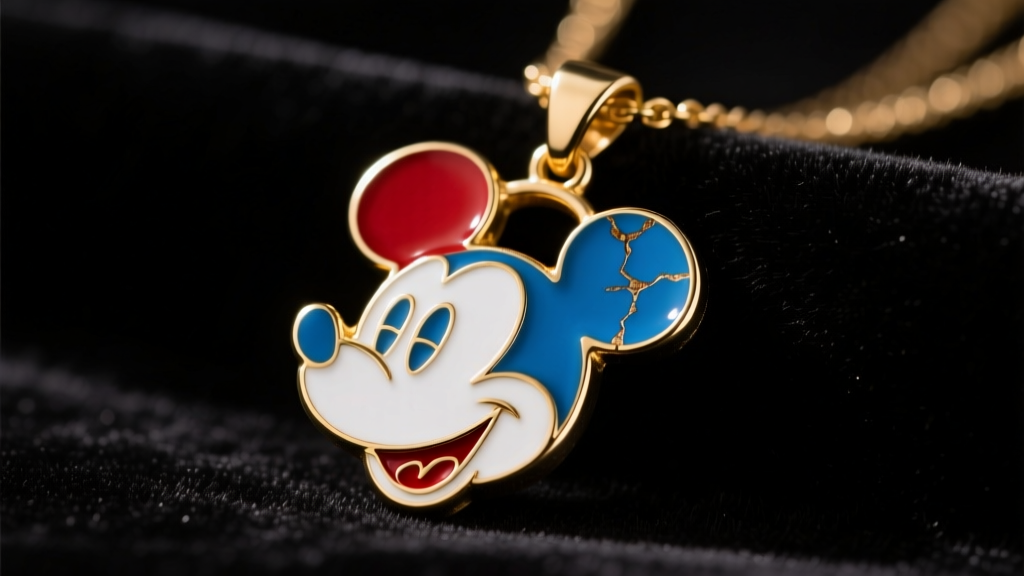
Owning a vintage Mickey Mouse necklace is like holding a wearable piece of 20th-century pop culture history. From the carnival prize pot-metal pendants of the 1930s to the solid 14k gold fine jewelry pieces of the 1980s, vintage Disney jewelry spans a massive range of materials and craftsmanship. As we move through 2026, the earliest examples of these necklaces are approaching a century old, making proper conservation and maintenance absolutely critical.
Unlike modern, mass-produced fashion jewelry, vintage pieces require highly specific care protocols. Using the wrong cleaning agent can strip gold wash, shatter glass rhinestones, or cause irreversible "crazing" in fragile cold-pressed enamels. This comprehensive guide will walk you through the material science of vintage Disney pendants and provide actionable, professional-grade cleaning frameworks to preserve your necklace for future generations.
The Material Evolution of Vintage Disney Jewelry
Before applying any cleaning solution, you must accurately identify the era and material composition of your vintage Mickey Mouse necklace. The cleaning protocol for a 1940s base-metal pendant will instantly ruin a 1960s rhinestone piece.
1930s–1940s: Base Metals and Cold Enamel
Early Mickey Mouse necklaces were often manufactured as carnival prizes or affordable department store items. They were typically cast from "pot metal" (zinc or lead alloys) or brass, featuring hand-painted or cold-pressed enamel details. These metals are highly susceptible to oxidation, and the enamel is prone to chipping if the underlying metal expands due to rust.
1950s–1970s: Gold Plate and Foiled Rhinestones
As Disney's brand prestige grew, so did the jewelry. This era introduced gold-washed brass and silver-plated alloys, frequently adorned with glass rhinestones. Crucially, these stones are often "foiled"—meaning a delicate metallic backing is glued behind the glass to create sparkle. Moisture is the absolute enemy of foiled rhinestones.
1980s–1990s: Solid Gold and Sterling Silver
The late 20th century saw the release of premium vintage Mickey Mouse necklaces crafted from solid 10k or 14k gold, as well as sterling silver, sometimes featuring small diamond chips or synthetic sapphires. These require standard fine jewelry care but still demand caution regarding the integrity of older solder joints.
The Golden Rules of Vintage Conservation
According to the Gemological Institute of America (GIA), the most common cause of damage to vintage jewelry is improper home cleaning. To protect your vintage Mickey Mouse necklace, adhere to these non-negotiable rules:
- Never use ultrasonic cleaners: The high-frequency vibrations will shatter vintage glass rhinestones and shake the delicate foil backings right out of their settings.
- Avoid liquid silver dips: Chemical dips strip away the patina and will completely dissolve thin gold-washed or gold-plated layers on mid-century brass pieces.
- Never soak enamel pieces: Water can seep into microscopic fissures in the enamel, reaching the base metal underneath and causing hidden oxidation that eventually pushes the enamel off.
"When dealing with costume or vintage jewelry, the rule of thumb is 'less is more.' Mechanical cleaning with soft brushes is almost always safer than chemical immersion." — Antique Jewelry Conservation Guidelines.
Step-by-Step Cleaning Guide by Material
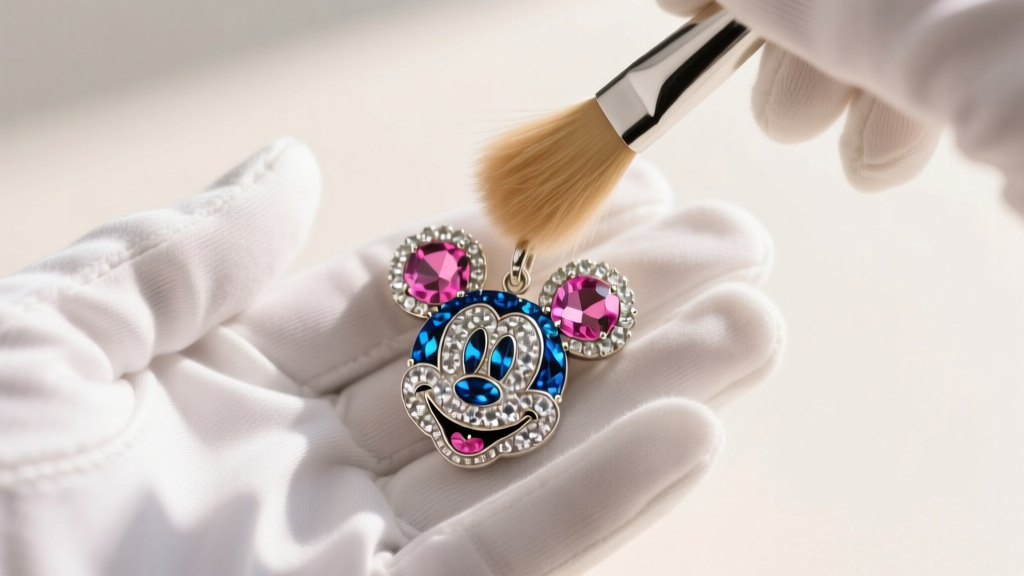
Cleaning Cold-Pressed Enamel & Base Metals (1930s-1940s)
- Dry Dusting: Use a clean, soft camel-hair brush to gently remove surface dust and skin cells from the enamel grooves.
- Spot Cleaning: Dampen a microfiber cloth with distilled water (never tap water, as minerals can stain). Gently wipe the metal, avoiding heavy pressure on the enamel.
- Sealing: To prevent future oxidation on exposed base metals, apply a microscopically thin layer of Renaissance Wax using a cotton swab. This microcrystalline wax, developed for the British Museum, creates a stable, non-yellowing barrier against humidity.
Cleaning Rhinestone & Gold-Plated Pieces (1950s-1970s)
Rhinestone care requires a completely dry approach. If your stones have lost their sparkle due to oils and lotion buildup, follow this method recommended by experts at Lang Antiques' Antique Jewelry University:
- Turn the pendant upside down to ensure no liquid can drip into the back of the settings.
- Dip a cotton swab into 90% isopropyl alcohol and squeeze out the excess so it is barely damp.
- Gently swipe the top facet of the rhinestone to dissolve oils.
- Immediately buff dry with a lint-free optical cloth. Never use tissue paper, as the wood fibers can scratch the glass.
Cleaning Solid 10k/14k Gold & Silver (1980s-1990s)
For solid precious metals, you can use a mild aqueous solution. Mix a few drops of phosphate-free dish soap (like Dawn) into a bowl of lukewarm distilled water. Soak the pendant for exactly 3 to 5 minutes. Use an extra-soft baby toothbrush to gently agitate the crevices around Mickey's ears and facial features. Rinse under a gentle stream of distilled water and pat dry with a microfiber towel. For sterling silver pieces exhibiting heavy black sulfide tarnish, use a dedicated silver polishing cloth impregnated with jeweler's rouge, rubbing in a single direction rather than in circles.
Material-Specific Cleaning Matrix
| Era / Material | Primary Cleaning Agent | Recommended Tool | Major Risk Factor |
|---|---|---|---|
| 1930s Pot Metal / Enamel | Renaissance Wax / Distilled Water | Camel-hair brush | Under-rust causing enamel crazing |
| 1950s Gold-Plated Brass | Mild Soap / Dry Polish | Microfiber cloth | Stripping the gold wash layer |
| 1960s Foiled Rhinestones | 90% Isopropyl Alcohol | Cotton swab (damp, not wet) | Foil rot (blackening from moisture) |
| 1980s Solid 14k Gold | Phosphate-free Dish Soap | Extra-soft baby toothbrush | Loosening older, brittle solder joints |
Chain Maintenance and Clasp Lubrication
The pendant is only half the equation; the chain and clasp on a vintage Mickey Mouse necklace endure the most mechanical stress. Mid-century necklaces frequently feature small "spring ring" clasps or early "dog leash" clip clasps. Over decades, the internal steel springs inside gold-plated brass clasps corrode, causing the clasp to stick open or fail to close.
The Fix: Do not use WD-40, which contains harsh solvents that strip plating. Instead, use a sewing pin to apply a microscopic drop of high-grade sewing machine oil or synthetic watch oil directly into the clasp's hinge and spring mechanism. Work the clasp open and closed a dozen times to distribute the lubricant, then meticulously wipe away all exterior excess with a cotton swab to prevent it from attracting dust and skin oils.
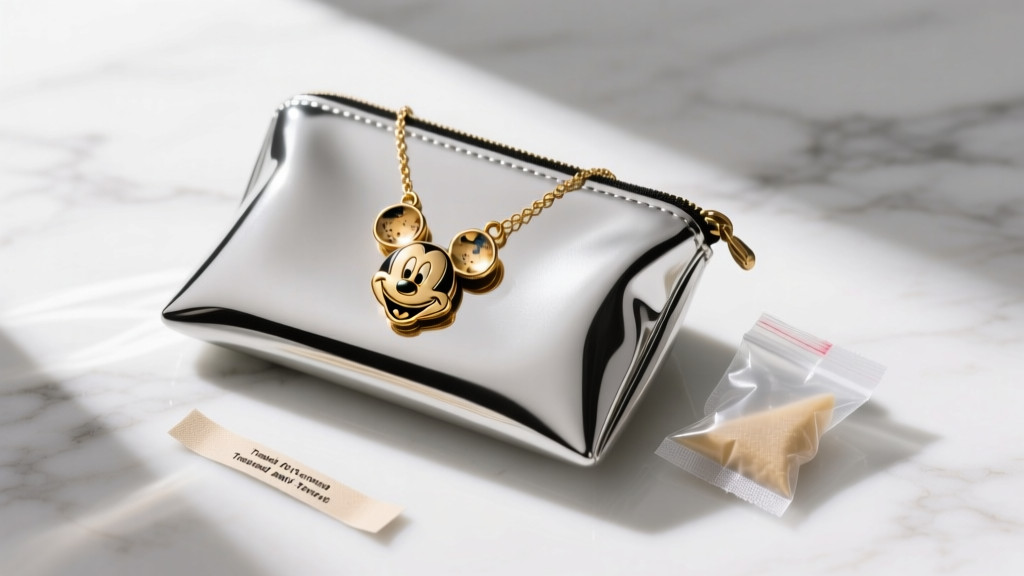
Archival Storage to Prevent Degradation
How you store your vintage Mickey Mouse necklace when it is not being worn is just as important as how you clean it. Environmental factors like UV light, humidity, and sulfur in the air are the primary catalysts for jewelry degradation.
- Humidity Control: Store the necklace in an airtight, archival-safe polyethylene ziplock bag alongside a small silica gel packet to maintain a low-humidity microclimate. This is especially critical for preventing foil rot in rhinestone pieces.
- Tarnish Inhibition: For silver and base-metal pieces, include a 3M anti-tarnish strip or a piece of Pacific Silvercloth inside the storage bag. These materials absorb airborne sulfur compounds before they can react with the metal.
- UV Protection: Store the jewelry in a dark drawer or opaque box. Prolonged exposure to direct sunlight can cause certain vintage red and yellow enamel pigments to fade or become brittle over time.
- Physical Protection: Never toss multiple vintage pieces into the same jewelry box compartment. Harder metals and gemstones will easily scratch softer pot metals and delicate enamels. Wrap each necklace individually in acid-free, unbuffered archival tissue paper.
When to Seek Professional Conservation
While routine maintenance can be handled at home, certain issues require the intervention of a professional jeweler who specializes in antique conservation. If your vintage Mickey Mouse necklace exhibits active "zinc pest" (a white, powdery oxidation that causes the metal to swell and crack), missing enamel that requires color-matched resin infill, or structural fractures near the bail (the loop connecting the pendant to the chain), do not attempt DIY repairs. A professional can stabilize the metal using specialized consolidants and perform laser welding on fragile vintage joints without exposing the entire piece to the damaging heat of a traditional jeweler's torch.
By understanding the specific material composition of your vintage Mickey Mouse necklace and adhering to these targeted cleaning and storage protocols, you ensure that this charming piece of Disney horological and pop-culture history remains vibrant, intact, and ready to be worn for decades to come.


