The Carrie Necklace Trend: 2026 Style Analysis & Layering
Explore the 2026 evolution of the iconic Carrie necklace. Discover font trends, metal grades, pricing, and expert layering techniques for nameplate jewelry.

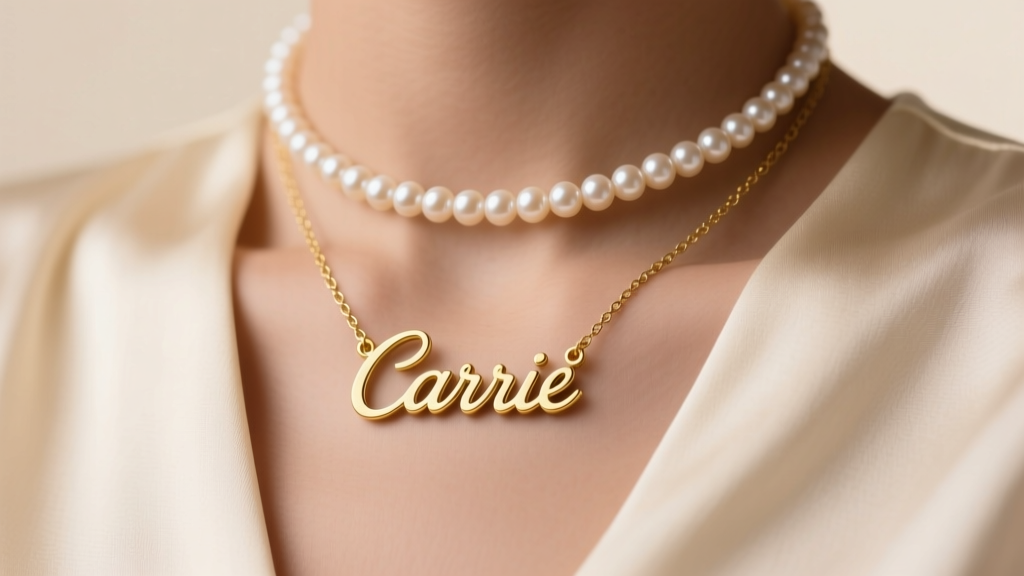
Beyond the Screen: The Cultural Weight of the Carrie Necklace
When discussing the pantheon of iconic jewelry, the carrie necklace occupies a rare space where pop culture, high fashion, and streetwear intersect. Long before it was synonymous with Sarah Jessica Parker’s iconic character in Sex and the City, the nameplate necklace was a foundational pillar of 1980s and 1990s hip-hop culture. Pioneered by legends like LL Cool J and Dapper Dan, the nameplate was a bold declaration of identity and presence. Patricia Field’s styling in the early 2000s merely translated this existing cultural artifact for a global mainstream audience. Today, in 2026, the carrie necklace has evolved past its nostalgic revival phase into a sophisticated, highly customized staple of modern quiet luxury and neo-streetwear.
The modern iteration of the carrie necklace is no longer confined to a single flowing cursive font. Today’s style analysis reveals a market fractured into distinct aesthetic tribes: the minimalist whisper-thin serifs favored by contemporary luxury houses, the chunky 3D Old English gothic fonts dominating streetwear, and the classic sweeping scripts that pay homage to the original television prop. Understanding these nuances is critical for both collectors and everyday wearers looking to invest in a piece that transcends fleeting micro-trends.
Typography & Manufacturing: How 2026 Redefined the Nameplate
The anatomy of a high-quality carrie necklace begins with its manufacturing technique, which directly dictates the typography options and the structural integrity of the piece. In the current market, there are two primary methods used to craft these pendants, each with distinct pros and cons.
Laser-Cut vs. Die-Stamped vs. Cast
Most entry-level and mid-tier nameplates are laser-cut from flat sheets of gold or silver. This allows for infinite font customization and incredibly sharp, intricate edges. However, laser-cutting leaves the edges perfectly flat and sometimes sharp against the skin if not properly tumbled and polished post-cut. Die-stamping, the traditional method used for high-end vintage pieces, forces metal into a mold under immense pressure. This creates a slightly domed, rounded edge that is much more comfortable for daily wear and offers superior structural rigidity, though it limits font choices to pre-existing molds. Casting is generally avoided for delicate script carrie necklaces, as the molten metal can lose the razor-sharp serifs required for elegant cursive fonts, resulting in a muddy, thick appearance.
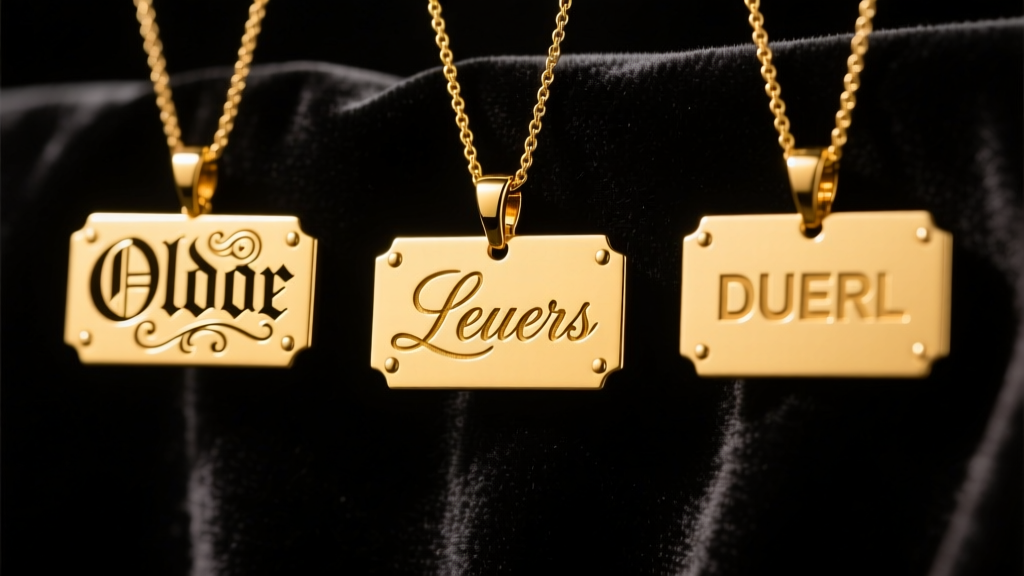
According to industry trend reports highlighted by Vogue, the 2026 typography trend is moving away from the highly ornate, heavily ligatured scripts of the 2010s. Consumers are increasingly opting for 'whisper' fonts—minimalist, elongated sans-serif or thin serif typefaces that read as subtle and intimate rather than loud and declarative.
Metallurgy & Pricing Tiers: What You Are Actually Paying For
The longevity of a carrie necklace is entirely dependent on its metallurgical composition. Because nameplate pendants feature numerous solder points where the letters connect to one another and to the bail (the loop that holds the chain), the karat weight of the gold dramatically affects its durability. While 18k gold offers a richer, deeper yellow hue, it is significantly softer. For a sprawling, multi-letter script necklace, 18k gold is prone to bending and snapping at the solder joints if caught on clothing. Therefore, 14k solid gold remains the undisputed industry standard for daily-wear nameplates, offering the perfect equilibrium between gold content, color, and tensile strength, a fact corroborated by the Gemological Institute of America (GIA).
| Material Grade | Composition | Durability & Wear Profile | Estimated Price Range (5-Letter Name) |
|---|---|---|---|
| Gold Vermeil | 2.5+ microns of 14k/18k gold over Sterling Silver | Moderate. Will eventually wear through at high-friction solder points. Requires careful maintenance. | $120 - $280 |
| 10k Solid Gold | 41.7% pure gold, alloyed with copper/zinc/silver | Extremely high. Very hard, but lacks the warm luster of higher karats. Prone to tarnishing over time. | $350 - $500 |
| 14k Solid Gold | 58.3% pure gold | Excellent. The sweet spot for jewelry. Resists tarnishing, holds solder joints securely, and retains rich color. | $650 - $1,100 |
| 18k Solid Gold | 75% pure gold | Low to Moderate. Beautiful rich yellow, but soft. Best for shorter names or block fonts; not recommended for long, delicate scripts. | $1,200 - $2,500+ |
Chain Selection: Breaking the Cable Chain Monopoly
The most common mistake consumers make when purchasing a carrie necklace is defaulting to the standard, mass-produced 1.2mm cable chain. While a delicate cable chain works for minimalist, whisper-thin fonts, it visually clashes with the weight and presence of traditional script or Old English pendants. In 2026, stylists are pairing nameplates with chains that offer architectural contrast.
- The Figaro Chain: With its pattern of three short links followed by one long link, the Figaro chain adds a vintage, masculine edge that perfectly balances the feminine curves of a cursive carrie pendant. A 1.5mm to 2.0mm Figaro is ideal for names spanning 5 to 8 letters.
- The Rope Chain: A tightly woven 2.5mm rope chain provides a luxurious, twisted texture that catches the light beautifully. This is the preferred choice for heavy, 3D-cast Old English nameplates.
- The Box Chain: For a sleek, modern, and geometric aesthetic, a 1.5mm box chain offers clean lines that complement contemporary sans-serif nameplate fonts without competing for visual attention.
The 2026 Layering Framework
Layering a carrie necklace requires a strategic approach to avoid the dreaded 'tangled bib' effect. The nameplate is inherently a high-visual-weight item; it commands the center of the chest. To integrate it into a modern stack, you must employ the Three-Point Anchor System.
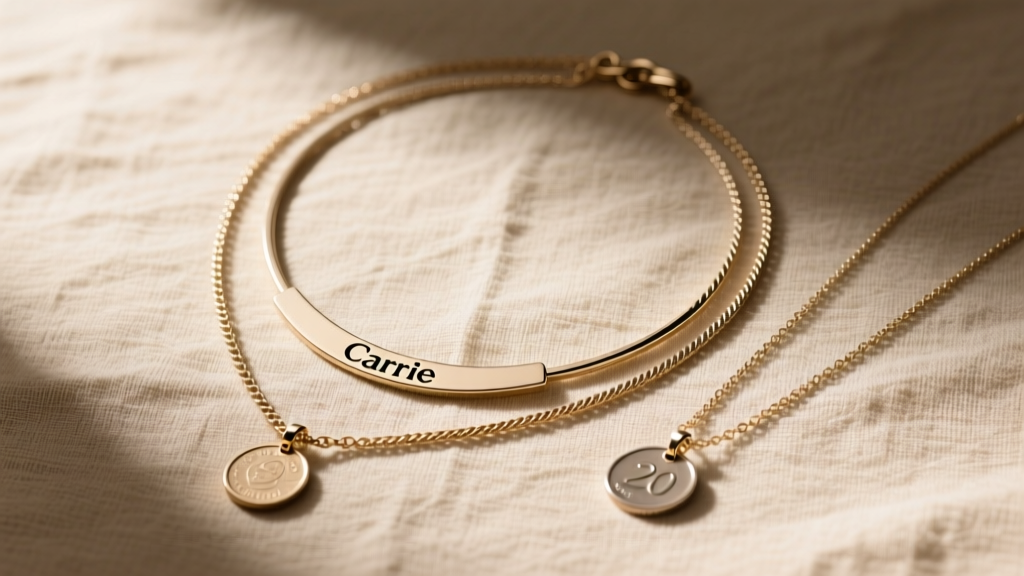
Anchor 1: The Choker (14-15 inches). Start with a simple, non-pendant chain or a delicate pearl strand at the base of the neck. This frames the face and establishes the top boundary of your stack. A 1.0mm wheat chain or a 3mm freshwater pearl strand works perfectly here.
Anchor 2: The Carrie Nameplate (16-17 inches). This is your focal point. The pendant should rest precisely on the sternum or just above it, depending on your neckline. Ensure the bail is large enough to slide freely on the chain so the nameplate always lays flat against the skin, rather than flipping upside down.
Anchor 3: The Counter-Weight (20-22 inches). To balance the horizontal spread of the nameplate, drop a third, longer chain featuring a vertical, geometric pendant—such as a solitaire diamond bar, a simple gold coin, or an elongated teardrop. This draws the eye downward, elongating the neck and torso, and prevents the nameplate from looking visually isolated.
Sizing Proportions: Avoiding the 'Bib' Effect
A critical, often overlooked aspect of the carrie necklace is the proportion of the letter height relative to the length of the name. Custom jewelers use a strict sliding scale to ensure the necklace drapes elegantly. If you are ordering a name with 3 to 5 letters, a letter height of 10mm to 12mm provides excellent visibility and presence. However, if your name or chosen word spans 7 to 10 letters, maintaining a 12mm height will result in a pendant that is 3 to 4 inches wide, causing it to sit stiffly across the collarbones like a bib. For longer names, the letter height must be scaled down to 7mm or 8mm. This preserves the sweeping, arched drape of the script, allowing the ends of the name to curve naturally with the contours of the chest.
Final Thoughts on Sourcing and Customization
When investing in a solid gold carrie necklace, provenance and craftsmanship matter. Avoid fast-fashion jewelers who use ultra-thin 0.8mm gold plating over brass bases, as the brass will oxidize and turn the skin green within weeks of exposure to sweat and perfume. Seek out specialized custom jewelers who offer CAD (Computer-Aided Design) previews before casting or cutting. This allows you to adjust the kerning (spacing between letters) and the angle of the script's baseline to ensure the final piece is a perfectly balanced, wearable work of art that will endure as a timeless personal artifact.


