The Ultimate Casal Necklace Buying Guide: What to Look For
Discover what to look for when buying a Casal necklace. Our expert guide covers metal grades, chain links, pricing, and how to verify authenticity.

The Shift Toward Heirloom-Quality Chain Jewelry
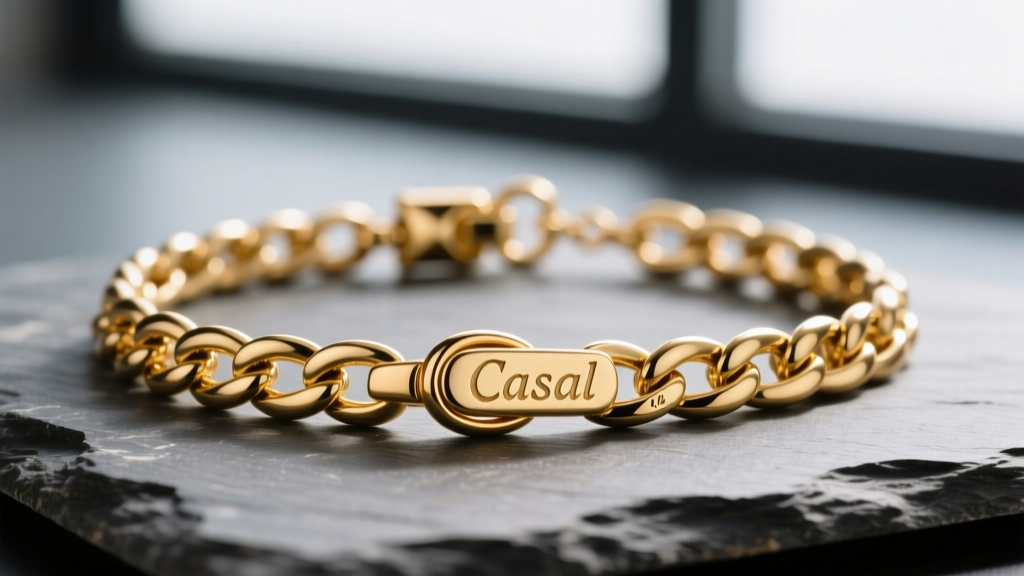
As we navigate the 2026 fine jewelry market, consumer preferences have decisively shifted away from hollow, gold-plated chains toward solid, heirloom-quality metals. When investing in a signature piece like a Casal necklace, understanding the nuances of fine chain construction, metallurgy, and hardware durability is no longer optional—it is essential for protecting your investment. A genuine Casal necklace represents a commitment to precise link construction and premium alloy blending, but navigating the secondary market or authorized dealers requires a trained eye. This comprehensive buying guide will break down the exact specifications, material grades, and structural details you must evaluate before making a purchase.
Understanding Metal Purity and Alloy Compositions
The foundation of any premium necklace is its metallurgical profile. According to the Gemological Institute of America (GIA), the purity of gold is measured in karats, but the alloy metals mixed with pure gold dictate the chain's color, tensile strength, and scratch resistance. When evaluating a Casal necklace, you will primarily encounter three metal categories:
14k Gold (585 Purity)
Comprising 58.5% pure gold and 41.5% alloy metals (typically copper, silver, and zinc), 14k gold is the workhorse of fine chain jewelry. On the Vickers Hardness Scale (HV), 14k gold typically registers around 140-150 HV. This makes it significantly more resistant to stretching and deformation than higher-karat golds, making it the ideal choice for holding heavy pendants or for everyday, active wear.
18k Gold (750 Purity)
With 75% pure gold content, 18k gold offers a noticeably richer, warmer yellow hue that is highly prized in luxury markets. However, its Vickers hardness drops to approximately 130 HV. While it is more resistant to tarnish and oxidation due to the lower alloy content, an 18k Casal necklace is softer and more prone to micro-scratches and link stretching over decades of heavy use.
Platinum 950
For those seeking ultimate longevity, Platinum 950 (95% pure platinum, usually alloyed with 5% ruthenium or iridium) is exceptionally dense and hypoallergenic. Unlike gold, which loses metal when scratched, platinum merely displaces, developing a natural patina over time. A solid platinum chain will weigh roughly 60% more than an identically sized 18k gold chain, giving it a substantial, luxurious drape.
Chain Construction: Solid vs. Hollow Links
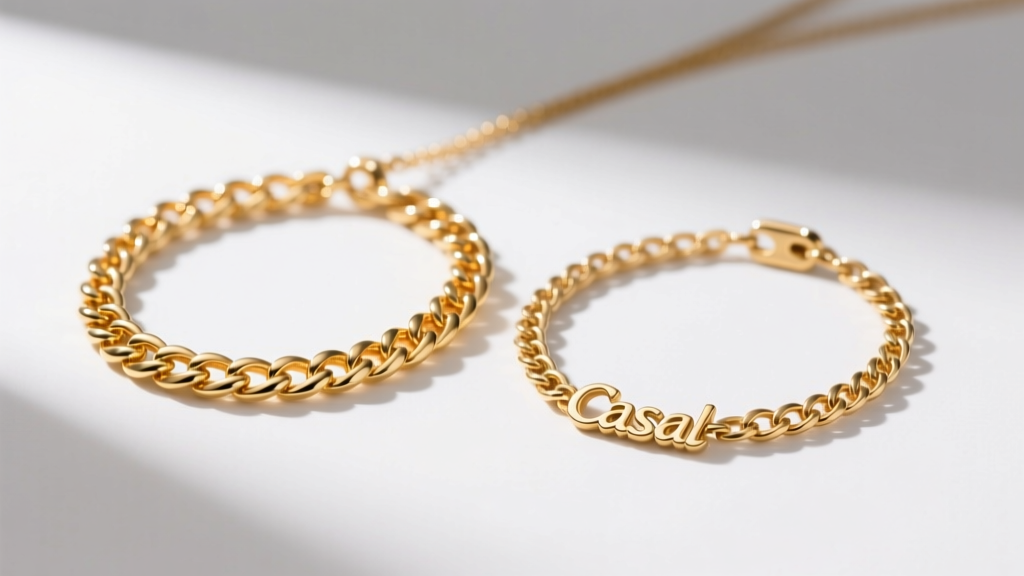
The structural integrity of a Casal necklace relies heavily on how the links are formed and assembled. In the current market, you must be able to distinguish between solid-core links and hollow-core links.
- Solid Links: These are drawn from solid wire and formed into shapes (such as curb, cable, or Figaro). They are heavy, durable, and can be easily repaired by a jeweler if a link snaps. A standard 18-inch solid 14k gold curb chain will typically weigh between 8 and 15 grams, depending on the millimeter width.
- Hollow Links: Manufactured by wrapping thin sheets of gold around a base metal core and then dissolving the core in acid, hollow chains offer a thick look at a fraction of the weight and cost. However, they are notoriously fragile. Once a hollow link dents or crushes, it is nearly impossible to repair, and they should never be used to suspend heavy pendants.
When inspecting a Casal necklace, look closely at the solder points. High-end chains feature individually soldered links (where the joint of each oval or round link is fused shut with gold solder). Unsoldered links can pull apart if the chain is snagged on clothing or hair.
Hardware and Clasp Mechanics
A chain is only as secure as its weakest point, which is almost always the clasp. The Jewelers of America emphasizes that proper clasp selection is critical for preventing catastrophic loss. Here is what to look for based on the chain's weight:
Spring Ring Clasps
Standard on lightweight chains (under 5 grams), spring rings rely on a tiny internal coil spring. They are cost-effective but difficult to operate with one hand and can fail if the internal spring degrades or if the jump ring is pulled open.
Lobster Claw Clasps
The industry standard for mid-weight to heavy chains. A high-quality lobster clasp should be cast or precision-stamped from solid gold, featuring a robust internal spring mechanism. Ensure the lever action is smooth and that the closure is flush, leaving no gap where a jump ring could slip through.
Box Clasps with Safety Figures
For heavy, wide-link chains (over 25 grams), a box clasp is mandatory. The tongue-and-groove mechanism locks securely, but you must also verify the presence of 'safety figures'—small wire loops on the side of the clasp that catch the opposite end if the primary box mechanism fails.
2026 Pricing Tiers and Value Retention
Pricing for fine necklaces fluctuates with the daily spot price of precious metals. The table below outlines the expected retail pricing ranges for an 18-inch solid chain in 2026, factoring in standard artisan craftsmanship premiums.
| Material Grade | Average Weight (18") | Estimated Price Range | Best Application |
|---|---|---|---|
| 925 Sterling Silver | 5g - 15g | $120 - $350 | Layering, budget-conscious buyers |
| 14k Yellow/White Gold | 8g - 15g | $650 - $1,400 | Everyday wear, pendant suspension |
| 18k Yellow/Rose Gold | 8g - 15g | $950 - $2,100 | Luxury investment, rich color profiles |
| Platinum 950 | 15g - 25g | $1,800 - $3,500+ | Heirloom durability, hypoallergenic needs |
Verifying Authenticity and Hallmarks
The secondary market for fine jewelry is unfortunately saturated with counterfeit pieces. To verify the authenticity of a Casal necklace, you must look beyond the visual shine and inspect the legal and maker hallmarks. The Federal Trade Commission (FTC) Jewelry Guides mandate that any piece sold with a purity mark (e.g., 14K, 18K, 750) must accurately reflect the metal content.
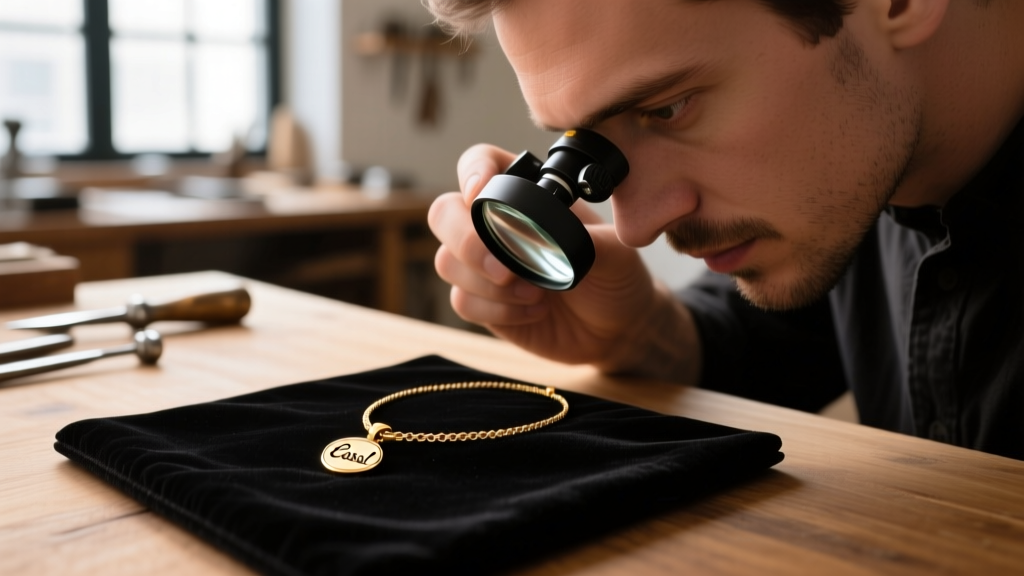
Using a 10x jeweler's loupe, inspect the clasp and the small jump rings connecting the clasp to the chain. You should find:
- The Purity Mark: Stamped clearly as 14K, 585, 18K, or 750.
- The Maker's Mark: Authentic artisan or brand pieces will feature a registered trademark stamp (such as a specific logo or initials) next to the purity mark.
- Origin Stamps: Many premium chains will also feature a country of origin stamp (e.g., 'ITALY'), indicating the region of manufacture.
If a chain is magnetized, it contains ferrous metals and is either heavily plated over a steel core or entirely counterfeit. For absolute certainty, request an X-ray Fluorescence (XRF) scan from a certified gemologist, which non-destructively verifies the exact elemental breakdown of the alloy.
Long-Term Care and Maintenance
Proper maintenance ensures your necklace retains its structural integrity and luster. Avoid wearing your chain in chlorinated pools or hot tubs; chlorine reacts aggressively with the copper and silver alloys in 14k and 18k gold, causing microscopic stress fractures that can lead to sudden chain breakage. For routine cleaning, a simple bath in warm water with a few drops of mild dish soap, followed by a gentle brushing with a soft-bristled toothbrush, will remove sebum and environmental buildup. Dry thoroughly with a microfiber cloth to prevent water spots on polished links.


