Mother of Pearls Necklace Buying Guide: 2026 Quality Tips
Discover how to evaluate luster, nacre thickness, and metal settings in our 2026 mother of pearls necklace buying guide for fine jewelry shoppers.

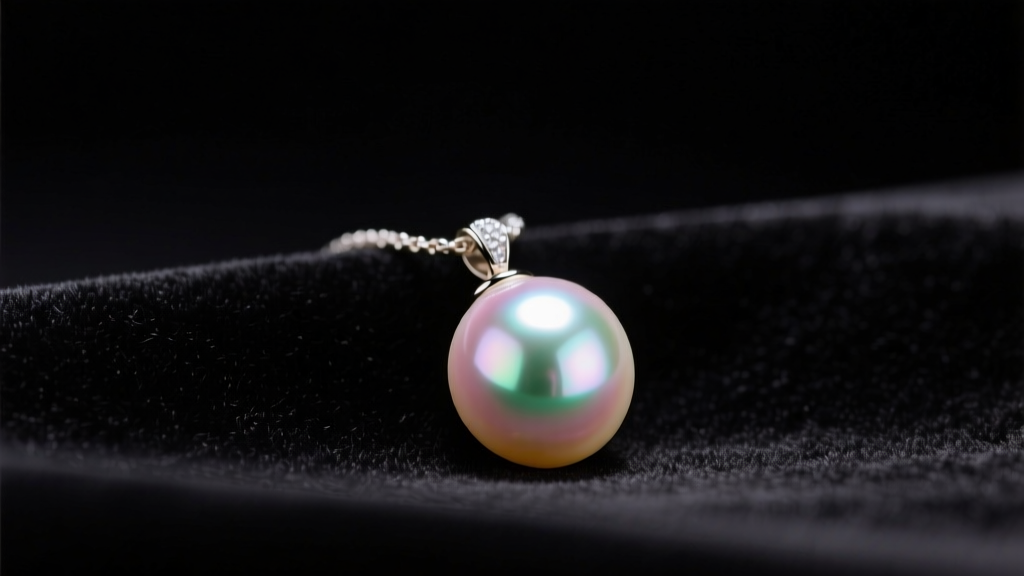
The Enduring Allure of Nacre: An Introduction
When navigating the expansive world of fine jewelry, few materials capture the ethereal beauty of the ocean quite like nacre. Often referred to as mother of pearl, this organic gemstone is the iridescent inner layer of mollusk shells. While pearl jewelry focuses on the spherical gems, a mother of pearls necklace showcases the flat, carved, or inlaid sheets of this remarkable material. As we move through 2026, the demand for organic, sustainably sourced jewelry has pushed nacre back into the spotlight, but the market is simultaneously flooded with synthetic imitations and poorly constructed inlays. This comprehensive buying guide will equip you with the gemological knowledge required to evaluate luster, assess structural integrity, and confidently invest in a piece that will last a lifetime.
What Exactly is Mother of Pearl?
Before evaluating quality, it is crucial to understand the material's biological origins. According to the Gemological Institute of America (GIA), mother of pearl is composed of nacre—the same substance that forms pearls. It is secreted by mollusks (such as the Pinctada maxima oyster or the Turbo petholatus snail) to protect their soft tissues from parasites and irritants. Nacre is a composite material consisting of microscopic hexagonal platelets of aragonite (a form of calcium carbonate) layered with elastic biopolymers like chitin. This unique 'brick-and-mortar' microstructure is what gives the material its remarkable toughness and its signature optical phenomenon: iridescence. When light hits these microscopic layers, it refracts and interferes, creating the shimmering play of color known as 'orient'.
The 4 Pillars of Nacre Grading
Unlike diamonds, which are graded on a universal 4Cs scale, mother of pearl is evaluated based on a more nuanced set of visual and structural criteria. When inspecting a potential purchase, assess the following four pillars:
- Luster and Orient: High-quality nacre should possess a deep, mirror-like luster. The 'orient' refers to the iridescent colors that seem to float just below the surface. Premium pieces will display vibrant flashes of pink, green, and silver, rather than a flat, chalky white appearance.
- Surface Perfection: While natural nacre is rarely flawless, top-tier specimens should be free of deep pits, cracks, or chalky dead spots. Minor growth lines are acceptable and often prized as proof of natural origin, but structural fissures compromise the stone's durability.
- Color Saturation: Natural nacre ranges from stark white to cream, silver, and deep charcoal (often sourced from Tahitian or Mexican oysters). The color should be evenly distributed, though natural gradients are highly valued in artisan carvings.
- Thickness and Weight: For solid carved pendants, the nacre should be at least 2mm to 3mm thick at its highest dome to resist chipping. Thin, translucent pieces are prone to cracking under minor pressure.
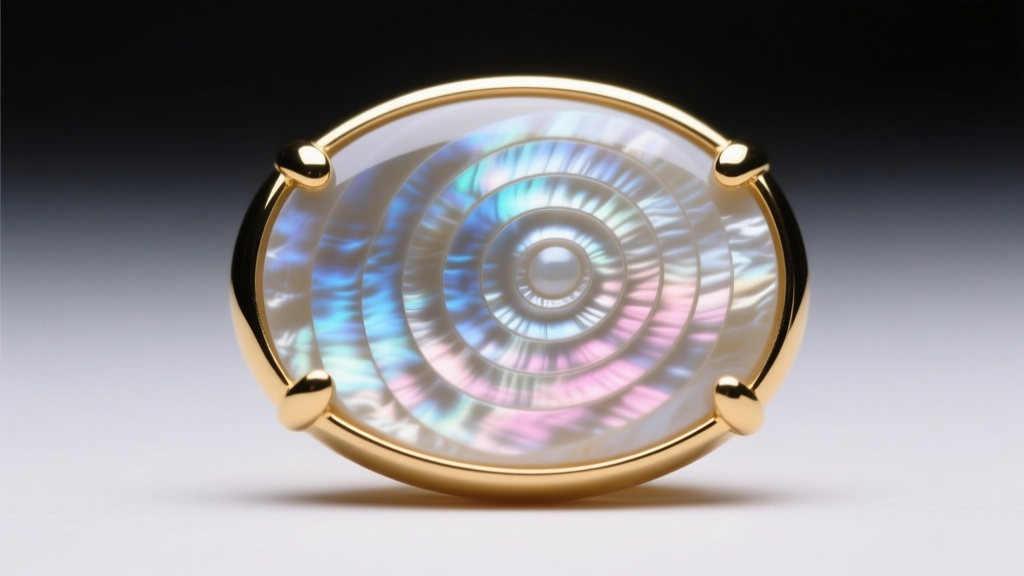
Construction Methods: Solid Carved vs. Inlay
One of the most critical distinctions in the 2026 jewelry market is the construction method used to incorporate nacre into a necklace design. Understanding the difference between solid carving and inlay work will drastically alter your expectations regarding price, durability, and longevity.
Solid Carved Nacre
In solid pieces, the pendant or bead is carved directly from a thick section of the shell. These pieces are typically set in prong or bezel settings, much like a traditional cabochon gemstone. Solid nacre is highly durable, can be repolished if scratched, and holds intrinsic value. Look for pieces where the backing of the pendant still shows the natural, rough exterior of the shell, which is a hallmark of authentic, high-end craftsmanship.
Inlay Work
Inlay involves cutting ultra-thin slices of nacre (often less than 0.5mm thick) and adhering them to a metal or shell backing. While inlay allows for intricate, geometric designs and is generally more affordable, it comes with caveats. The American Gem Society (AGS) notes that the longevity of inlay jewelry depends entirely on the adhesive and the precision of the setting. Avoid 'epoxy-on-top' inlays where the nacre sits above the metal bezel, as the edges will quickly chip. Always opt for 'flush inlay' where the nacre is seamlessly leveled with the surrounding metal.
Expert Tip: If you are purchasing an inlay piece, run your fingernail gently across the boundary where the nacre meets the metal. It should feel perfectly smooth. Any catching or raised edges indicates poor manufacturing that will lead to premature delamination.
Metal Backings and Settings: The Foundation
The metal used to house the nacre is just as important as the organic gem itself. Because nacre is sensitive to acids and harsh chemicals, the wrong metal backing can accelerate degradation or cause skin reactions. Below is a comparison of common metals used in modern nacre jewelry:
| Metal Type | Durability | Best For | Price Impact |
|---|---|---|---|
| Sterling Silver (925) | High | Everyday wear, flush inlays | Moderate |
| Gold Vermeil | Medium | Occasional wear, fashion pieces | Low to Moderate |
| Solid 14k/18k Gold | Very High | Heirloom pieces, solid cabochons | High |
| Brass / Base Metal | Low | Costume jewelry, fast fashion | Very Low |
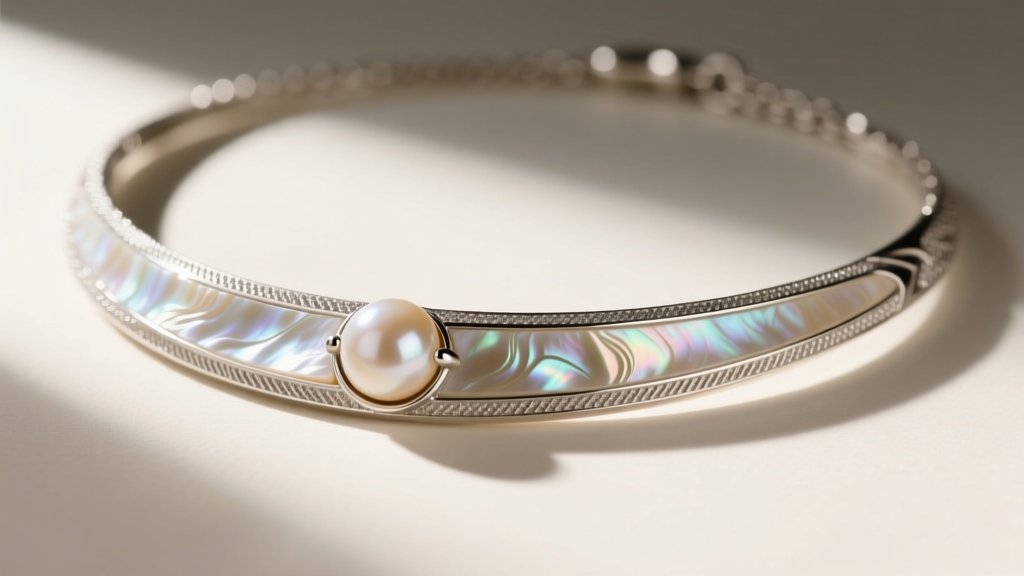
2026 Pricing Matrix: What Should You Pay?
Navigating the pricing landscape requires an understanding of the materials and labor involved. Use this matrix to ensure you are paying a fair market price based on the construction and materials of the necklace.
Tier 1: Fashion & Costume ($30 - $80)
Typically features thin nacre inlays glued onto brass or silver-plated base metals. The nacre may be heavily processed or bleached. Suitable for trend-driven, seasonal wear, but expect the plating to tarnish and the inlay to potentially lift within a year of regular use.
Tier 2: Mid-Range & Artisan ($90 - $250)
This tier offers the best value for daily wear. Expect sterling silver or heavy gold vermeil settings with precision flush inlays or modest solid carvings. The nacre will exhibit good luster and natural orient. Many independent jewelers and sustainable brands operate in this space.
Tier 3: Fine Jewelry ($300 - $850)
Here you enter the realm of solid 14k or 18k gold settings paired with premium, thick-cut solid nacre cabochons or intricate hand-carved cameos. The nacre is selected for exceptional color saturation and flawless surfaces. These pieces are designed to be passed down as heirlooms.
Tier 4: Designer & Heritage ($1,000+)
Reserved for luxury houses and master lapidaries. These necklaces feature rare, naturally dark nacre (such as Tahitian black mother of pearl), complex multi-stone inlays, and diamond accents. You are paying for brand heritage, exceptional design, and top 1% material grading.
Authenticity Tests: Spotting Fakes and Imitations
With the rise of advanced resins and pearlescent plastics, distinguishing genuine nacre from synthetics is a vital skill for the modern buyer. While laboratory testing is the only 100% foolproof method, these three at-home tests are highly reliable:
- The Temperature Test: Genuine mother of pearl is an excellent thermal conductor. When you press it against your cheek or the inside of your wrist, it should feel distinctly cold and take several seconds to warm to your body temperature. Plastic and resin imitations will feel room-temperature or warm immediately.
- The Magnification Test: Use a 10x jeweler's loupe to examine the surface. Real nacre will show subtle, wavy, concentric growth lines and a slightly 'scaly' or overlapping texture at the microscopic level. Plastic will appear perfectly uniform, or you may spot tiny circular mold marks and air bubbles.
- The Acoustic Test: Gently tap the pendant against your tooth or a piece of glass. Real nacre produces a sharp, bright 'click' or 'clink', whereas plastic emits a dull, muted thud. (Note: Perform this test gently to avoid damaging the jewelry or your teeth).
Care and Maintenance for Longevity
Nacre is relatively tough, but it ranks only a 2.5 to 4.5 on the Mohs hardness scale, making it susceptible to scratching from harder gemstones. Furthermore, the calcium carbonate structure is highly reactive to acids. Always apply perfumes, hairsprays, and lotions before putting on your necklace. After wearing, wipe the nacre gently with a soft, damp microfiber cloth to remove skin oils and environmental pollutants. Never use ultrasonic cleaners, steam cleaners, or harsh chemical dips, as these will strip the natural luster and dissolve the biopolymer matrix. Store your necklace in a soft pouch, separate from diamonds or sapphires, to preserve its radiant orient for decades to come.


