Authentic Santo Domingo Turquoise Necklace: Grading & Buyer Guide
Master the technical grading of a Santo Domingo turquoise necklace. Learn matrix identification, stabilization methods, and pricing tiers.

The Cultural and Lapidary Origins of Kewa Pueblo Jewelry
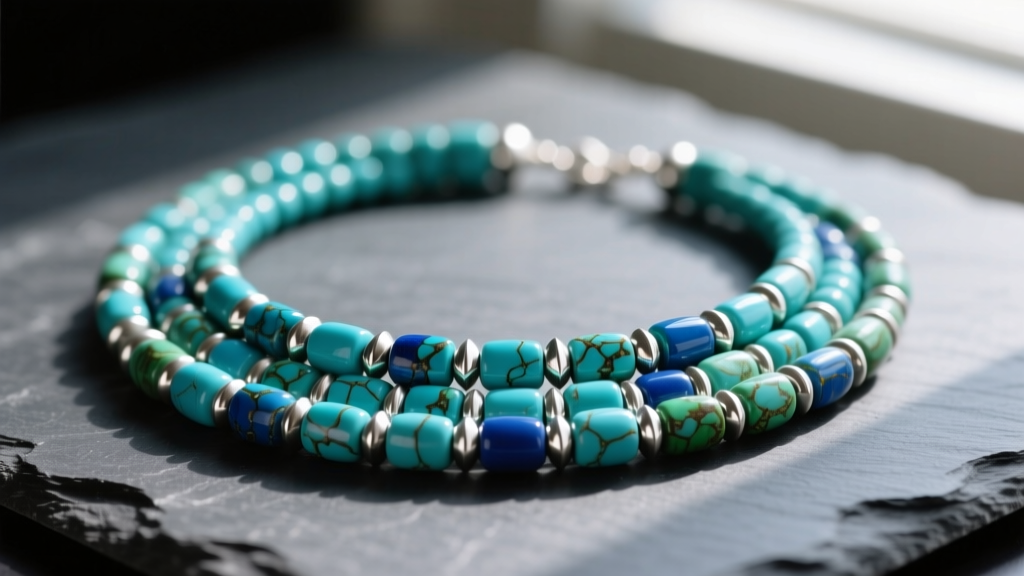
When evaluating a Santo Domingo turquoise necklace, collectors and gemologists must navigate a complex intersection of cultural heritage, lapidary precision, and mineralogical variance. Historically, the term "Santo Domingo" referred to the Pueblo located along the Rio Grande in New Mexico. In 2009, the tribe officially reclaimed its traditional name, Kewa Pueblo. However, in the gemological and Native American jewelry trade, "Santo Domingo" remains the entrenched technical designation for a specific style of lapidary work—most notably the painstakingly crafted heishi and hand-shaped nugget necklaces produced by Kewa artisans.
It is a common misconception among novice buyers that "Santo Domingo" denotes a specific turquoise mine. In reality, Kewa Pueblo lapidaries source high-grade rough from premier deposits across the American Southwest, including the Kingman mine in Arizona, the Sleeping Beauty mine in Globe, Arizona, and historically significant deposits like Cerrillos in New Mexico. The value of the necklace is derived not from a singular geographic mine origin, but from the artisan's mastery in cutting, drilling, and polishing the stone into uniform, gem-quality beads.
Evaluating a Santo Domingo Turquoise Necklace: Matrix and Hardness
The technical grading of turquoise requires a deep understanding of its physical properties. Natural, untreated turquoise is a hydrous phosphate of copper and aluminum, registering between 4.5 and 6.0 on the Mohs hardness scale. Stones falling below 5.0 are highly porous and structurally unstable, making them unsuitable for the rigorous friction involved in heishi grinding.
The Reality of Stabilization Treatments
Because gem-grade natural turquoise (Mohs 5.5+) accounts for less than 15% of all mined material, stabilization is a widely accepted practice in the industry, provided it is disclosed. The most common method involves vacuum-impregnating the porous rough with an optically clear epoxy resin. This process hardens the stone to a Mohs 6.0 or higher, allowing it to withstand the diamond-grinding wheels used to shape heishi beads without shattering.
Advanced collectors should also be aware of the Zachery treatment, a proprietary, non-polymer method that enhances the stone's luster and reduces porosity without introducing plastics. According to the Gemological Institute of America (GIA), the Zachery treatment is virtually undetectable without destructive chemical analysis, making it highly prized among purists who want enhanced durability without epoxy fillers.
Heishi Construction: Drill Tolerances and Lapidary Specs
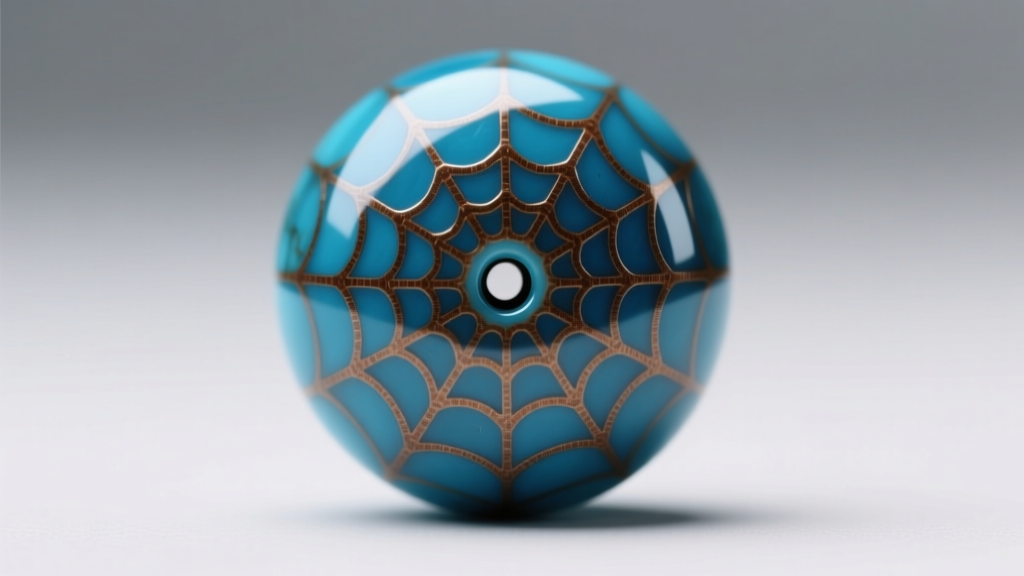
The term "heishi" translates to "shell" in the Keresan language, but it universally applies to the flat, disc-shaped stone beads that define the classic Santo Domingo turquoise necklace. The creation of these beads is a masterclass in precision lapidary work.
- Rough Selection: Artisans select rough with tight, uniform matrix patterns to ensure color consistency across a 24-inch strand.
- Drilling: Before shaping, the rough is drilled using diamond-tipped core bits. Standard high-quality heishi features a drill hole between 0.8mm and 1.2mm. Holes larger than 1.5mm often indicate mass-produced, overseas manufacturing.
- Grinding and Sanding: The drilled blanks are strung on high-tensile wire and ground against silicon carbide wheels. The tolerance for bead thickness in a premium strand is typically within 0.2mm from bead to bead.
- Stringing Materials: Authentic, high-end pieces are strung on heavy-duty nylon (such as PowerPro braided line) or traditional sinew, finished with sterling silver or gold-filled "cones" at the clasp to protect the terminal beads from fraying.
2026 Market Pricing Matrix: What You Should Actually Pay
Pricing in the Native American jewelry market is traditionally calculated on a "price per inch" basis rather than a flat retail markup. As of 2026, the scarcity of high-grade, untreated rough has driven natural stone premiums to historic highs. The following table outlines the current market expectations for a standard 18-inch to 24-inch strand.
| Grade Classification | Material State | Matrix & Color Profile | Avg. Price Per Inch (USD) |
|---|---|---|---|
| Grade A (Gem) | 100% Natural, Untreated | Deep robin's egg or rich green; tight, aesthetic matrix | $85 - $160+ |
| Grade B (Premium) | Epoxy Stabilized | Excellent color retention; moderate spiderweb matrix | $35 - $70 |
| Grade C (Commercial) | Stabilized / Block | Pale, heavily veined, or reconstituted turquoise dust | $12 - $25 |
| Grade D (Imitation) | Dyed Howlite / Magnesite | Artificial matrix lines; opaque white base | $2 - $8 |
When purchasing directly from Kewa Pueblo artisans or verified guild members, always request a written breakdown of the stone's origin and treatment status. The Indian Arts and Crafts Board (IACB) provides strict guidelines on authenticating Native American-made jewelry, ensuring that the lapidary work was genuinely performed by tribal members.
Authentication: Spotting Dyed Howlite and Block Composites
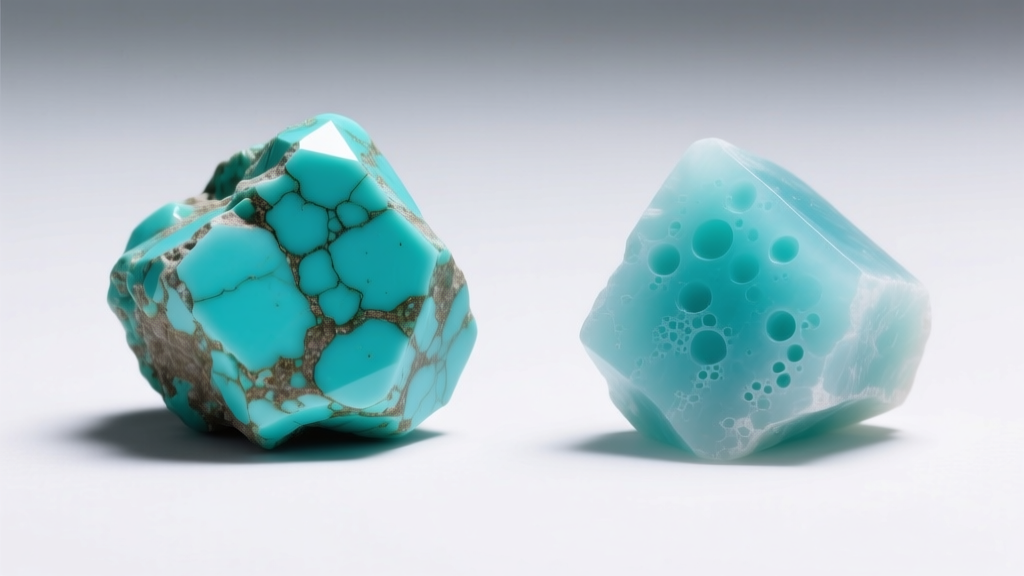
The most pervasive counterfeit in the market is dyed howlite or magnesite passed off as high-grade turquoise. Howlite is a naturally white, highly porous borate mineral that readily absorbs chemical dyes, mimicking the blue and green hues of turquoise. However, it fails under gemological scrutiny.
Under 10x magnification, natural turquoise exhibits a smooth, waxy luster with matrix inclusions (usually brown limonite or black pyrite) that sit flush with the stone's surface. In dyed howlite, the dye concentrates heavily in the natural fractures and crevices of the stone, creating dark, spiderweb-like veins that look painted on. Furthermore, howlite has a lower specific gravity (2.53 - 2.59) compared to natural turquoise (2.60 - 2.90), meaning a howlite necklace will feel noticeably lighter in the hand than a genuine Santo Domingo turquoise necklace of the exact same dimensions.
Another common deception is "block turquoise," which is not turquoise at all, but rather a composite of pulverized low-grade stone dust mixed with epoxy resins and synthetic dyes, pressed into molds. Block turquoise lacks any natural matrix structure and will exhibit a uniform, plastic-like appearance under UV light, often fluorescing a milky blue due to the resin binder.
Long-Term Maintenance and Chemical Vulnerabilities
Even high-grade, stabilized turquoise requires meticulous care to maintain its structural integrity and color saturation. Turquoise is highly sensitive to prolonged exposure to stearic acids, ammonia, and chlorine.
Expert Maintenance Rule: Never use ultrasonic jewelry cleaners or steamers on any turquoise necklace. The high-frequency cavitation can fracture the stone along natural matrix lines, and the heat can melt or cloud epoxy stabilizers, permanently ruining the bead's luster.
To clean a Santo Domingo turquoise necklace, wipe it gently with a soft, dry microfiber cloth after wearing. The natural oils from human skin are actually beneficial to untreated turquoise, helping to develop a rich, vintage patina over decades. However, you must apply all perfumes, hairsprays, and lotions at least 15 minutes before putting the necklace on, allowing the volatile alcohols and emulsifiers to evaporate completely. Store the piece in a breathable cotton pouch; sealing it in an airtight plastic bag can trap ambient humidity, which may lead to the oxidation of the copper within the stone, slowly shifting its vibrant blue hue to a dull, muddy green over time.


