Catholic Scapular Necklace Guide: Budget & Value Tips
Evaluate the true cost and value of a Catholic scapular necklace. Compare metals, chain durability, and pricing tiers for 2026 buyers.

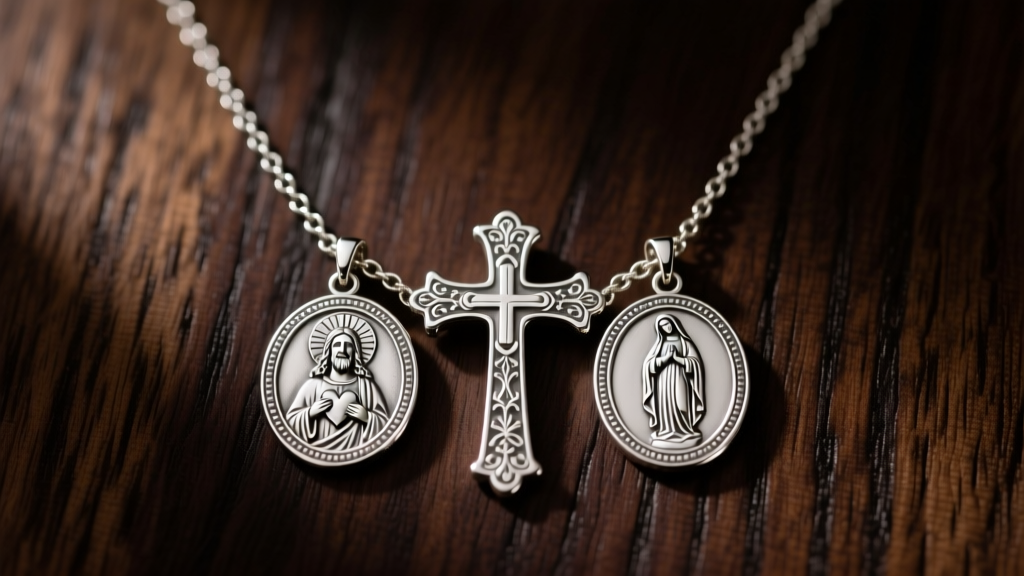
For many Catholics, wearing a scapular is a profound expression of faith, a sacramental that signifies devotion to Mary and a commitment to a life of prayer. Historically, this took the form of two pieces of brown cloth connected by strings, resting over the shoulders. However, in 1910, Pope Pius X granted an indult allowing the faithful to wear a scapular medal instead, provided specific theological criteria were met. Today, the catholic scapular necklace has become a staple of religious jewelry, blending deep spiritual significance with everyday wearability.
Yet, as the market for religious jewelry has expanded, so too has the influx of mass-produced, low-quality imports. For buyers in 2026, distinguishing between a durable, reverent sacramental and a flimsy fashion accessory requires a keen eye for metallurgy, chain mechanics, and hidden long-term costs. This guide provides a comprehensive budget and value assessment to help you invest in a scapular necklace that will last a lifetime.
The Theological Baseline: What Makes a Scapular Medal Valid?
Before assessing financial value, we must establish spiritual validity. A scapular medal is not merely a religious pendant; it is a sacramental that replaces the cloth scapular. According to guidelines echoed by the Eternal Word Television Network (EWTN) and the United States Conference of Catholic Bishops (USCCB), a valid scapular medal must meet strict criteria:
- Dual Imagery: One side must bear an image of the Sacred Heart of Jesus, and the other side must bear an image of the Blessed Virgin Mary (specifically in her Carmelite habit for the Brown Scapular).
- Material: The medal itself must be made of a solid, durable metal. Cheap plastics or easily degrading base metals do not fulfill the requirement of permanence.
- Blessing: The medal must be blessed by a priest or deacon who has the proper faculties to invest the faithful.
From a value perspective, buying a theologically invalid medal—such as one featuring the wrong Marian apparition or lacking the Sacred Heart—means you are purchasing standard religious jewelry, not a true scapular replacement. Always verify the dual-imagery requirement before purchasing.
Identifying Cheap Imports vs. Crafted Sacramentals
The global jewelry market is saturated with drop-shipped religious pendants. These items often retail for $5 to $12 and are typically made from zinc alloy or brass with a microscopic flash-plating of silver or gold. While budget-friendly upfront, these alloys react with the skin's pH, causing green discoloration and contact dermatitis. Furthermore, the plating wears off within weeks, exposing the base metal to rapid oxidation.
A genuine, high-value catholic scapular necklace will be stamped with a metal purity mark (e.g., '925' for sterling silver or '316L' for surgical steel). The engraving on crafted sacramentals is deep and precise, often utilizing CNC milling or hand-engraving, whereas cheap imports use shallow laser etching that fades as the metal polishes against clothing.
Material Breakdown and Pricing Tiers
When budgeting for a scapular necklace, the metal composition dictates both the price and the lifespan of the piece. Below is a comparative analysis of the most common materials used in 2026.
| Material | 2026 Price Range | Durability & Tarnish Resistance | Best For |
|---|---|---|---|
| 316L Surgical Steel | $25 - $50 | Exceptional. Hypoallergenic, will not tarnish or rust. | Active individuals, daily showering, tight budgets. |
| 925 Sterling Silver | $60 - $120 | High. Will tarnish over time but can be easily polished. | Traditionalists, heirloom gifts, everyday elegance. |
| Gold Vermeil (Silver base) | $80 - $150 | Moderate. Gold layer wears off after 1-3 years of daily use. | Those wanting the gold look without solid gold pricing. |
| Solid 14k Yellow Gold | $350 - $800+ | Superior. Tarnish-resistant, holds intricate engraving perfectly. | Lifetime investments, generational heirlooms. |
Expert Tip: If you opt for sterling silver, look for pieces that have been rhodium-plated. This adds a microscopic layer of platinum-group metal that delays tarnishing and provides a bright, white-gold-like finish, adding roughly $15 to the manufacturing cost but significantly extending the time between required polishings.
Evaluating Chain Strength and Clasp Security
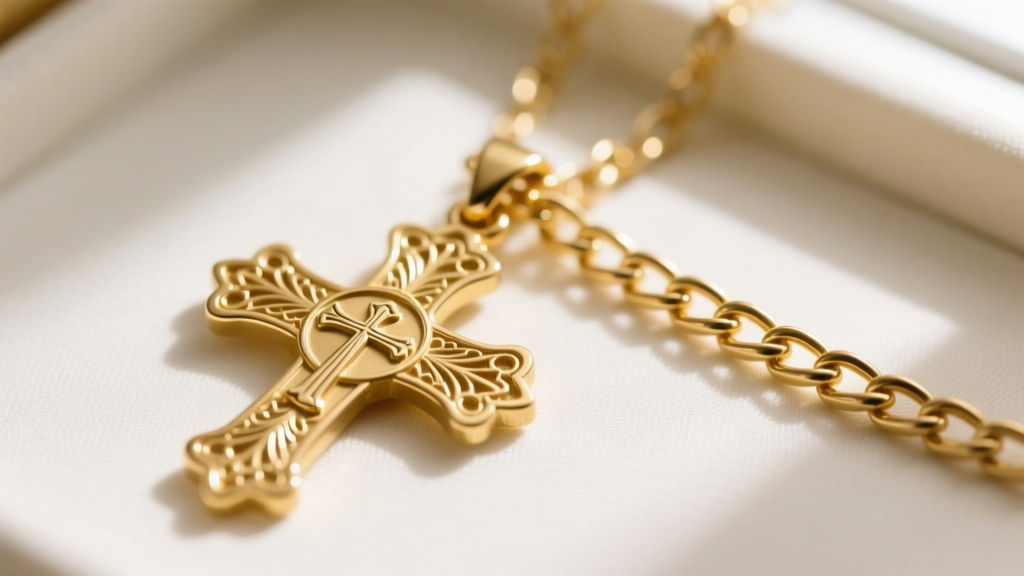
The most devastating failure mode for a scapular necklace is not the medal itself, but the chain snapping. Losing a blessed sacramental is a spiritual and emotional inconvenience. Therefore, allocating 20% to 30% of your budget toward a high-quality chain is a critical value decision.
The Best Chain Styles for Scapulars
- Box Chains: Composed of square links interlocked in a smooth, continuous pattern. They are incredibly strong, resist kinking, and distribute weight evenly. A 1.2mm to 1.5mm sterling silver box chain is the gold standard for scapular medals.
- Rolo Chains: Featuring uniform round or oval links. They are robust and easy to repair if a single link fails, though they can catch on fine fabrics.
- Avoid Cable and Snake Chains: Standard cable chains (especially under 1.0mm) are prone to snapping at the solder points. Snake chains, while sleek, easily kink and crack when bent, making them a poor choice for a pendant that rests against the chest.
Clasp Mechanics: Lobster vs. Spring Ring
Never accept a spring ring clasp on a scapular necklace. Spring rings rely on a tiny, easily fatigued internal spring and a minuscule soldered ring that frequently fails under the weight of a dual-sided medal. Always insist on a lobster clasp. Lobster clasps feature a solid, spring-loaded lever that locks securely into the jump ring, providing vastly superior tensile strength and peace of mind.
Hidden Costs: Blessing, Engraving, and Maintenance
When calculating the total cost of ownership, buyers often overlook the post-purchase requirements of a catholic scapular necklace.
- The Blessing and Investiture: While the blessing itself is a spiritual service and typically free (though a donation to the parish is customary), you must factor in the time and travel to a priest with the proper faculties. Some online Catholic jewelers partner with local dioceses to offer pre-blessed medals, though many theologians prefer the blessing to be done in person.
- Custom Engraving: Many buyers choose to engrave the edge of the medal or the back of the clasp with a baptism date or confirmation name. Laser engraving on silver or steel usually costs $20 to $35, while deep diamond-cut engraving on gold can exceed $50.
- Maintenance: Sterling silver requires occasional polishing. Avoid ultrasonic jewelry cleaners, as the high-frequency vibrations can loosen the solder joints connecting the jump ring to the medal. Instead, invest in a $10 jeweler's polishing cloth infused with anti-tarnish compounds.

Final Verdict: Maximizing Your Spiritual Investment
A catholic scapular necklace is a unique intersection of sacramental theology and metallurgical craftsmanship. If your budget is under $50, a 316L surgical steel medal on a sturdy box chain offers unbeatable durability and hypoallergenic safety, ensuring the sacramental remains intact through years of daily wear. For those with a budget between $80 and $150, a rhodium-plated 925 sterling silver piece with a secure lobster clasp provides the ideal balance of traditional beauty, heirloom potential, and structural integrity.
Ultimately, the true value of a scapular necklace is not measured solely by the spot price of its precious metals, but by its ability to serve as a resilient, beautiful, and theologically accurate companion on your spiritual journey. Prioritize deep engravings, solid metal stamps, and unbreakable chains, and your investment will serve you for a lifetime.


