2026 Trends: Choosing the Perfect Kay Jewelry Necklace for Women
Analyze 2026 trends for the ideal Kay jewelry necklace for women. Compare 10k vs 14k gold, lab-grown diamonds, chain gauges, and layering frameworks.

The 2026 Landscape: Redefining the Kay Jewelry Necklace for Women
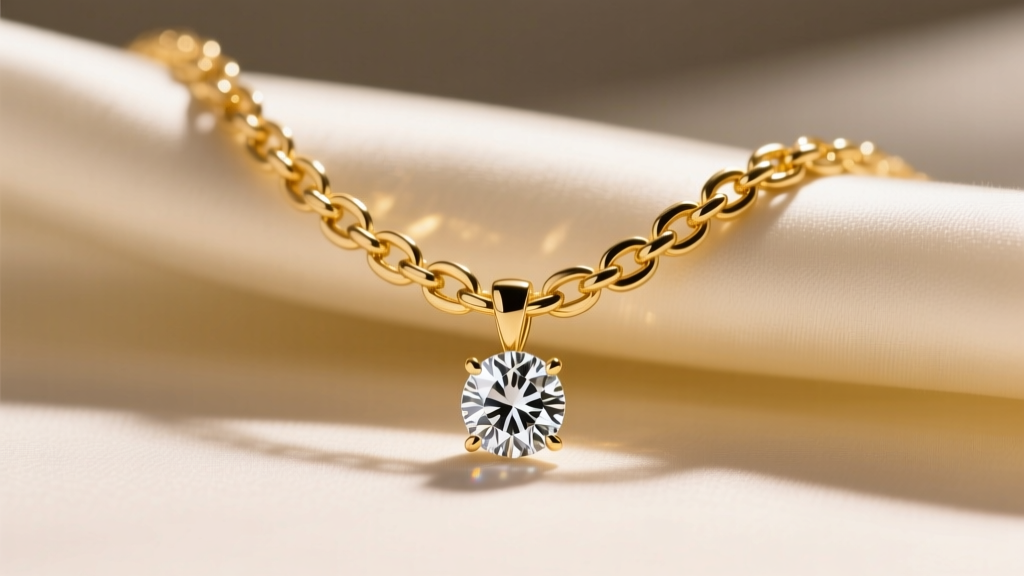
The retail jewelry market has undergone a seismic shift as we navigate 2026, and Signet Jewelers—the parent company of Kay Jewelers—has aggressively adapted its inventory to match modern consumer demands. When evaluating a Kay jewelry necklace for women today, the focus has moved far beyond simple brand recognition. Shoppers are now scrutinizing metallurgical integrity, lab-grown diamond provenance, and modular layering capabilities. According to recent Signet Jewelers corporate reports, the allocation of lab-grown center stones in their fashion and fine pendant categories has surged, reflecting a broader industry pivot toward sustainable and accessible luxury.
However, navigating the vast inventory at Kay requires a discerning eye. The difference between a timeless, durable piece and a fragile, overpriced accessory often lies in the microscopic details of chain gauge, alloy composition, and clasp engineering. This comprehensive style and trend analysis breaks down exactly what you are buying, how to style it for 2026 necklines, and where the hidden value lies in their current collections.
Metallurgical Realities: 10K vs. 14K Gold Alloys
A significant portion of the gold inventory at Kay Jewelers is offered in 10K and 14K purities. Understanding the Vickers hardness (HV) and alloy composition of these metals is critical for predicting how your necklace will age.
The 10K Gold Advantage and Drawbacks
10K gold contains exactly 41.7% pure gold, with the remaining 58.3% composed of strengthening alloys like copper, zinc, and silver. This high alloy content gives 10K gold a Vickers hardness of approximately 130-150 HV, making it highly resistant to scratching and bending. If you are purchasing a Kay jewelry necklace for women who lead active lifestyles or plan to wear the piece daily without removal, 10K offers superior structural integrity. However, the higher copper content makes 10K rose and yellow gold more susceptible to oxidation and tarnishing when exposed to environmental pollutants or cosmetics.
The 14K Gold Standard
At 58.3% pure gold, 14K gold (roughly 110-120 HV) strikes the optimal balance between richness of color and durability. It is significantly more resistant to tarnishing and hypoallergenic compared to 10K. For fine diamond pendants and heirloom-quality lockets, 14K remains the definitive choice, offering a warmer luster that better complements the dispersion of light in high-clarity diamonds.
The Diamond Paradigm: Lab-Grown vs. Natural
The Gemological Institute of America (GIA) has established rigorous grading standards that apply equally to natural and lab-grown diamonds. In 2026, Kay's lab-grown diamond pendants offer exceptional value, but buyers must pay close attention to the specific clarity and color grades offered.
- Clarity (I1 vs. VS): Many entry-level Kay diamond pendants feature I1 or I2 clarity. These stones contain inclusions (like carbon spots or feathers) visible to the naked eye, which can interfere with light return. For a brilliant, eye-clean appearance, insist on VS (Very Slightly Included) or SI1 (Slightly Included) grades, which Kay frequently offers in their premium lab-grown collections.
- Color (G-H vs. J-K): Near-colorless (G-H) lab-grown diamonds are now the standard in Kay's mid-tier pricing, providing a crisp, white face-up appearance that pairs perfectly with 14K white gold settings. Avoid J-K color grades in white gold settings, as the warm tint of the diamond will clash with the rhodium plating of the metal.
Chain Architecture and Failure Points
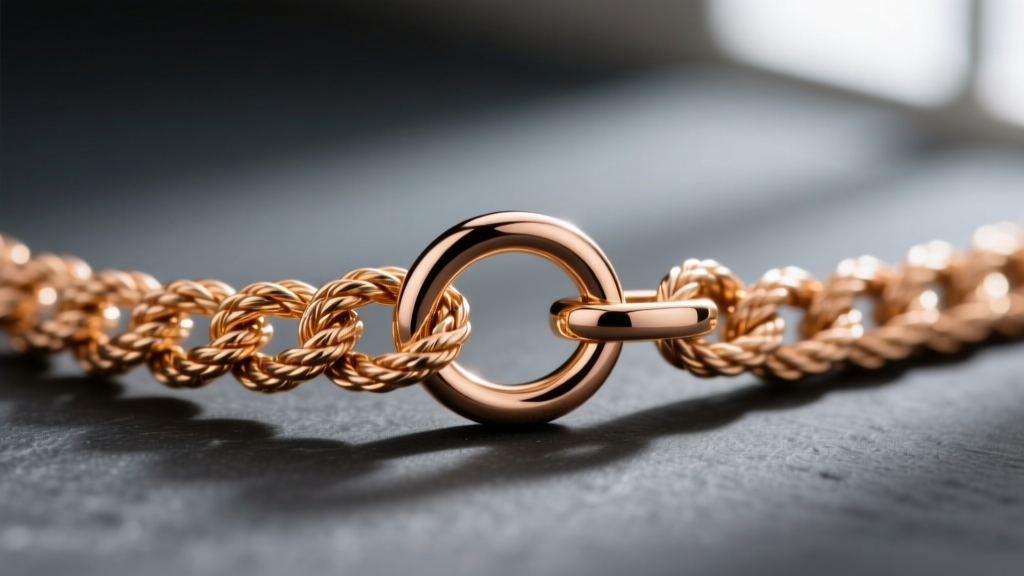
The chain is the structural backbone of any pendant necklace. A heavy diamond solitaire suspended on an inadequate chain is a recipe for catastrophic failure. Below is an engineering breakdown of the primary chain styles utilized in Kay's inventory, detailing their gauge limits and tensile strengths.
| Chain Type | Standard Gauge | Tensile Limit | Best Application | Failure Risk |
|---|---|---|---|---|
| Box Chain | 0.9mm - 1.2mm | ~8 lbs | Lightweight solitaires (under 1.0 ct) | Kinking if bent sharply |
| Rope Chain | 1.5mm - 2.0mm | ~15 lbs | Heavy medallions and multi-stone pendants | Unraveling if a single link snaps |
| Cable Chain | 1.0mm - 1.5mm | ~10 lbs | Delicate layering and charm necklaces | Link stretching under tension |
| Figaro Chain | 2.0mm - 3.0mm | ~20 lbs | Standalone statement pieces (no pendant) | Clasp failure due to weight |
Clasp Engineering: Always inspect the clasp. Spring ring clasps (common on chains under $300) contain a tiny internal steel spring that frequently fails or loses tension over time. For any Kay jewelry necklace for women featuring a pendant valued over $500, demand a lobster claw clasp, which utilizes a solid internal lever mechanism for vastly superior security.
Strategic Layering: The 2026 Proportions Framework
Layering is no longer about haphazardly piling on chains; the 2026 trend dictated by the Jewelers of America emphasizes structured, mathematically spaced cascades. To achieve a high-end, curated look using Kay's offerings, follow the 2-4-6 inch drop rule.
The 3-Tier Cascade Execution
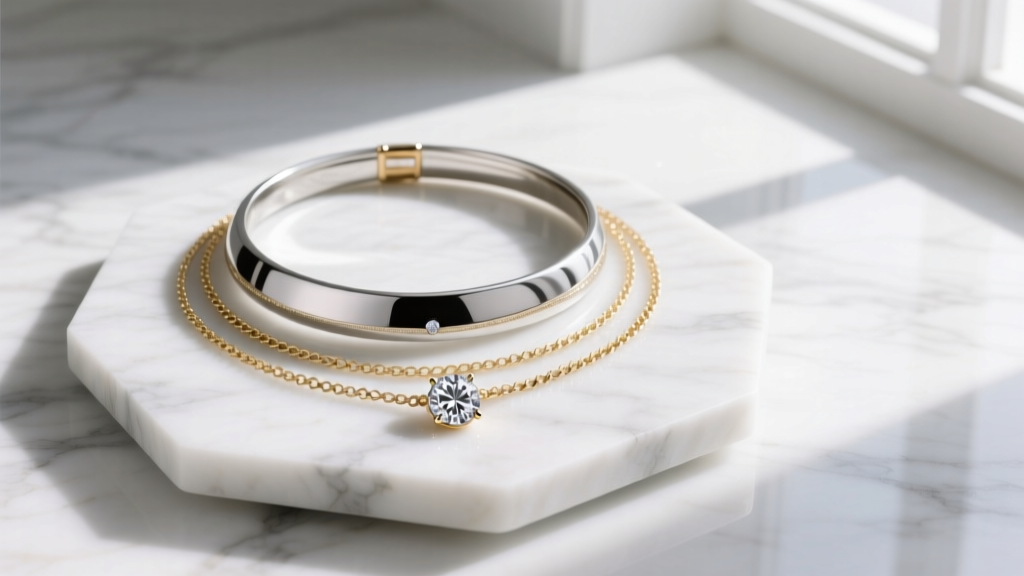
- Tier 1 (The Choker): 14-inch length. Use a 1.2mm 14K yellow gold cable chain. This sits flush against the collarbone and anchors the visual weight.
- Tier 2 (The Princess): 16-inch length. A 0.9mm box chain featuring a bezel-set 3mm lab-grown diamond solitaire. The bezel setting prevents the diamond from flipping upside down, a common annoyance with prong-set pendants on thin chains.
- Tier 3 (The Matinee): 18 to 20-inch length. A 1.5mm rope chain anchoring a 12mm to 15mm geometric medallion or a vintage-inspired locket. This draws the eye downward and elongates the neck.
Neckline Matching Matrix
Pairing your necklace with the correct garment neckline is crucial for maintaining proportional harmony. Use this framework to match your Kay purchases to your wardrobe:
- Deep V-Neck: Requires a Y-drop or lariat style, or a 20-inch matinee chain with a heavy, downward-pointing geometric pendant to mirror the garment's angles.
- Crew Neck / T-Shirt: Demands a bold, standalone piece. Opt for a 2.5mm Figaro chain or a chunky 18-inch rope chain worn outside the collar. Delicate chains will get lost in the fabric folds.
- Scoop Neck: The ideal canvas for the 3-tier cascade mentioned above. The curved neckline perfectly frames a 14-inch to 18-inch layered arrangement.
- Off-the-Shoulder / Boat Neck: Focus on chokers and collar-length (12-14 inch) pieces that sit entirely on the skin, avoiding long pendants that will tangle with the garment's horizontal hem.
Final Verdict and Purchasing Strategy
The modern Kay jewelry necklace for women offers remarkable versatility, provided the buyer approaches the purchase with an understanding of material science and structural limits. The brand's aggressive expansion into high-quality lab-grown diamonds and 14K gold vermeil options makes it a viable destination for both everyday essentials and milestone gifts.
Expert Tip: To maximize value, time your purchase around Signet's historical promotional cycles. The deepest discounts on gold chains and diamond solitaires consistently occur during the pre-Mother's Day window (late March to early April) and the post-holiday clearance events in late January, where premium 14K and lab-grown inventory is frequently marked down by 20% to 30%.
By prioritizing 14K gold for longevity, demanding VS clarity in lab-grown stones, and respecting the tensile limits of your chosen chain gauge, you can curate a resilient, trend-forward necklace collection that transcends seasonal fads.


