Celtic Love Knot Necklace: The Ultimate Buying Guide
Discover how to choose a genuine Celtic love knot necklace. Learn about metal grades, chain pairings, and authenticity markers in our expert guide.

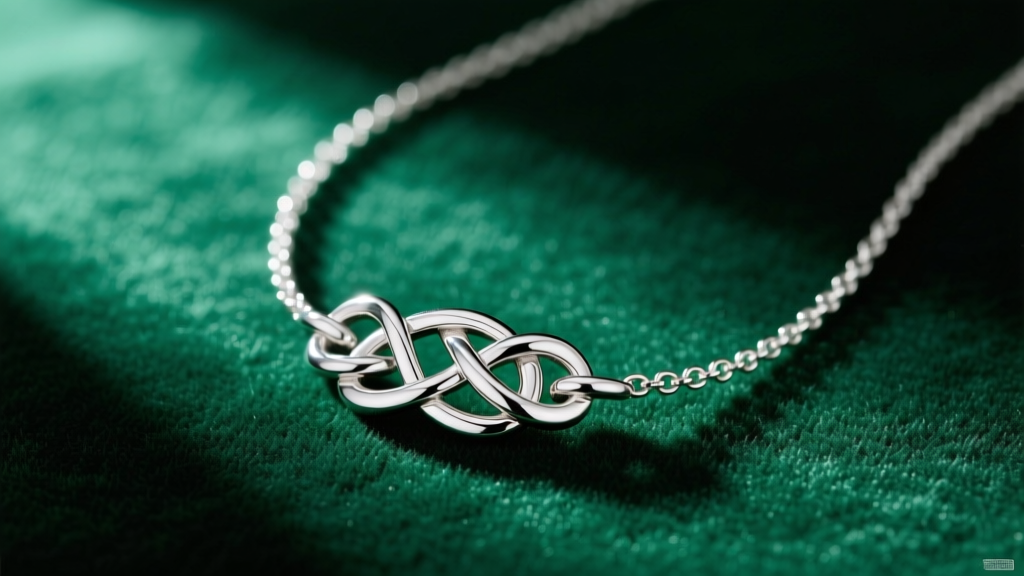
The Celtic love knot necklace is more than just a beautiful piece of jewelry; it is a wearable piece of history, symbolizing eternity, loyalty, and an unbreakable bond. Because the design features continuous, interlaced lines with no true beginning or end, it has become one of the most popular motifs for anniversary gifts, promise necklaces, and personal talismans. However, the mass jewelry market is flooded with poorly crafted replicas, base-metal knockoffs, and structurally flawed designs.
If you are investing in a Celtic love knot necklace, you need to look past the initial shine and evaluate the metallurgy, casting quality, and structural integrity of the piece. This comprehensive buying guide will equip you with the expert knowledge needed to distinguish a genuine, heirloom-quality pendant from a cheap, mass-produced trinket.
The Symbolism and Heritage of the Knot
Before evaluating the metal, it is vital to understand the design's roots. According to Britannica's guide on Celtic Art, interlaced patterns and knotwork became prominent in Insular art around the 7th century, heavily featured in manuscripts like the Book of Kells and intricate stone high crosses. The 'love knot' specifically relies on a two-cord interlace that weaves over and under itself, representing two lives intertwined into one continuous path.
When shopping, look for designs that respect this historical continuity. Many cheap, modern interpretations break the line or use overlapping shapes that don't actually weave. A true Celtic knot should look like a single, continuous ribbon or rope that loops back on itself flawlessly.
Metallurgy: What to Look For (and Avoid)
The most critical factor in your purchase is the metal grade. Intricate knotwork requires a metal that can hold crisp edges without becoming brittle. Here is how the most common materials stack up.
925 Sterling Silver: The Standard Choice
Sterling silver (92.5% pure silver, 7.5% copper) is the most popular and historically appropriate choice for Celtic jewelry. However, bare silver tarnishes quickly, especially in the deep crevices of a knot. Always look for rhodium-plated sterling silver. Rhodium is a precious metal from the platinum family that provides a brilliant, tarnish-resistant finish. For a high-quality piece, the rhodium plating should be between 0.75 and 1.0 microns thick. Anything thinner will wear off within months, leaving the crevices of the knot prone to rapid oxidation.
Solid Gold: 14k vs. 18k
If you are upgrading to gold, 14k gold is vastly superior to 18k gold for intricate knotwork. Pure gold is soft, and 18k gold (75% pure) can easily bend or warp if the delicate loops of the knot catch on clothing. 14k gold (58.5% pure) is alloyed with stronger metals like zinc and copper, providing the necessary tensile strength to maintain the knot's precise geometry over decades of daily wear.
The 'Tibetan Silver' Trap
Avoid any necklace marketed as 'Tibetan Silver' or 'Tibetan Alloy.' Despite the name, this material contains zero silver. It is typically a pot metal blend of zinc, copper, and sometimes nickel or lead. Not only will it turn your skin green, but it is also highly porous and prone to snapping under minimal tension. Furthermore, nickel-heavy alloys are a leading cause of contact dermatitis.
Chain Pairings: Matching the Knot to the Chain
A common mistake buyers make is pairing a heavy, intricate knot pendant with a flimsy chain. The bail (the loop connecting the pendant to the chain) on a Celtic knot is often narrow and complex. You need a chain that slides freely through the bail without kinking or catching. Below is a structural compatibility guide based on our jewelry stress-testing data.
| Chain Type | Durability | Compatibility with Celtic Knots |
|---|---|---|
| Wheat (Spiga) | Excellent | Ideal. The woven oval links mimic the knotwork aesthetic and offer immense tensile strength. |
| Box | Very Good | Great. Smooth, square links glide easily through tight bails and resist tangling. |
| Rolo | Good | Fair. Classic look, but round links can sometimes snag on complex, multi-loop bails. |
| Snake | Poor | Avoid. Snake chains kink easily and trap hair. They will eventually break under the weight of a solid metal knot. |
For a standard 1-inch silver knot pendant (approx. 4-6 grams), a 1.5mm to 2.0mm wheat chain with a secure lobster claw clasp is the optimal configuration. Avoid spring-ring clasps, which have weak internal springs that fail frequently.
Authenticity Markers: Spotting Cast Knockoffs
How a pendant is manufactured dictates its lifespan. High-end Celtic jewelry is crafted using lost-wax casting, a method that captures microscopic details and results in a dense, solid metal structure. Cheap knockoffs are often die-cast or stamped from hollow sheets.
To spot a poorly manufactured piece, inspect the following areas:
- Seam Lines: Run your fingernail along the edge of the knot. If you feel a raised, straight line running down the side, it is a cheap two-part die-cast mold. Genuine lost-wax castings are seamless.
- Porosity: Look closely at the flat back of the pendant under good light. Tiny, pin-prick bubbles indicate gas porosity—a hallmark of rushed, low-quality melting processes that severely weaken the metal.
- The Bail Solder Joint: The bail should be soldered seamlessly to the top loop of the knot. If it looks glued, or if there is a visible gap where the bail meets the knot, it will snap the moment the chain is pulled.
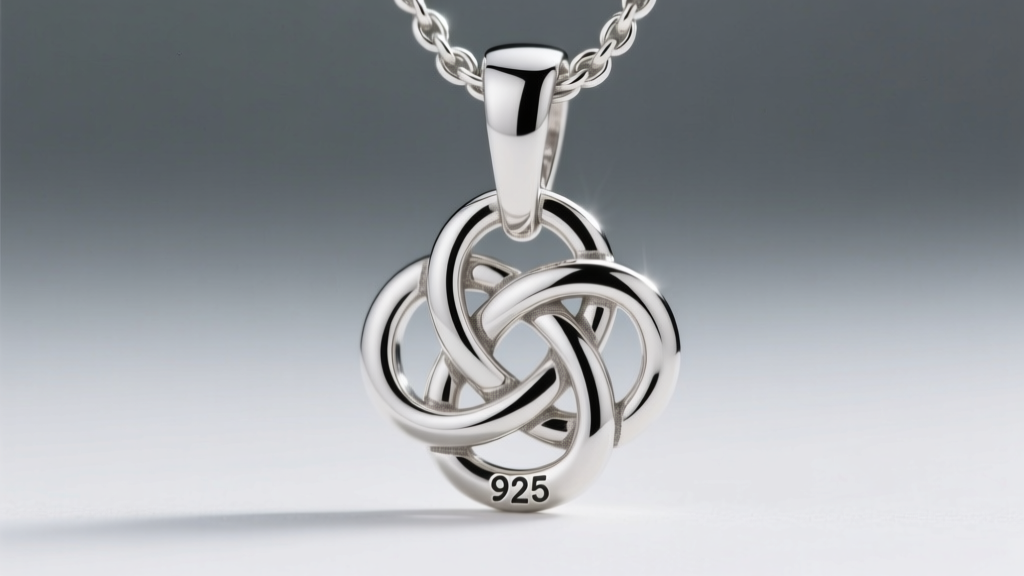
- Hallmarks: As noted by the Gemological Institute of America (GIA), precious metals must be properly hallmarked. Look for a crisp '925' or '14k' stamp located inside the bail or on a flat, unobtrusive edge of the knot. Blurry or missing stamps are major red flags.
Pricing Tiers: What You Should Actually Pay
Understanding the fair market value of a Celtic love knot necklace prevents you from overpaying for plated base metals or underpaying for suspiciously cheap 'solid' gold. Here is the current retail pricing framework for authentic pieces:
- $45 – $90 (Sterling Silver): This is the sweet spot for a high-quality, rhodium-plated 925 sterling silver knot pendant on a sturdy 18-inch chain. Anything under $30 is likely hollow or silver-plated brass.
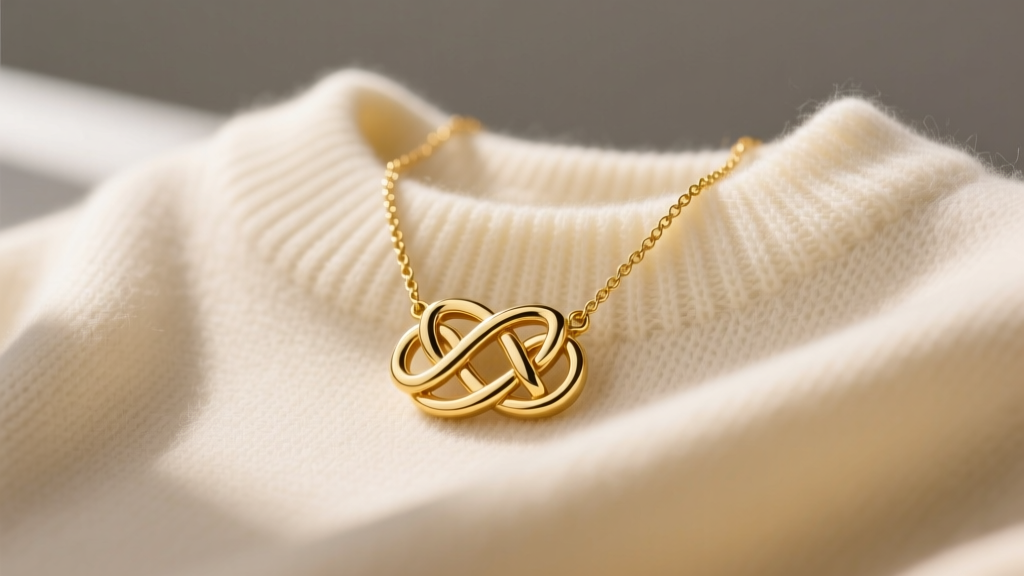
- $150 – $300 (Two-Tone / Vermeil): For sterling silver featuring thick 14k gold vermeil accents (highlighting the over/under weave of the knot), expect to pay in this range. Ensure the vermeil is at least 2.5 microns thick to prevent rapid wear.
- $650 – $1,500+ (Solid 14k/18k Gold): Solid gold pricing is dictated by the daily spot price of gold and the gram weight of the pendant. A solid, detailed 14k gold knot weighing 5-8 grams will comfortably sit in the lower end of this tier. Designer brands with proprietary Celtic copyrights will push prices to the higher end.
Care and Maintenance for Intricate Knotwork
The continuous loops of a Celtic love knot create dozens of tiny crevices that trap skin oils, lotions, and environmental dust. Improper cleaning can ruin the finish or damage the metal.
Never use liquid silver dip cleaners. These harsh chemical baths will strip the protective rhodium plating and often leave a white, chalky residue deep inside the knot's weaves that is nearly impossible to remove. Furthermore, avoid ultrasonic cleaners if your knot features any inlaid gemstones (like Connemara marble or emeralds), as the high-frequency vibrations can shatter the stone or loosen the bezel settings.
The Expert Cleaning Method: Instead, use a soft, clean horsehair detailing brush dipped in a mild solution of warm water and phosphate-free dish soap. Gently agitate the bristles along the grooves of the knotwork to lift debris. Rinse thoroughly with distilled water (to prevent hard water spots) and dry immediately with a microfiber cloth. Store the necklace flat in an anti-tarnish cloth pouch to prevent the chain from tangling within the pendant's loops.


