The Ultimate Material Guide for a Celtic Torque Necklace
Discover the best metals for a Celtic torque necklace. We compare bronze, silver, gold, and steel for durability, historical accuracy, and skin safety.

The Metallurgical Heritage of the Celtic Torc
The Celtic torque (or torc) is one of the most iconic artifacts of the European Iron Age. Characterized by its rigid, open-neck design and ornate terminal caps, this ancient neck ring was a powerful status symbol. When shopping for a modern Celtic torque necklace, understanding the metallurgical properties of the materials used is crucial. Historical torcs were primarily forged from gold, electrum, bronze, and iron. Today, jewelers utilize a wider array of alloys, each presenting unique challenges regarding tensile strength, skin reactivity, and historical authenticity.
According to the British Museum, the Great Torc from Snettisham was crafted from electrum (a natural gold-silver alloy) using complex lost-wax casting and wire-twisting techniques. Modern replicas and fashion interpretations must balance this historical aesthetic with the ergonomic demands of daily wear. A rigid neck ring cannot be cast in overly soft metals without risking permanent deformation, nor can it be made from overly hard alloys without making it impossible to flex open and closed.
Material Comparison Chart: Torque Metals Evaluated
Before diving into specific alloys, here is a structured comparison of the most common metals used in contemporary Celtic torque necklaces. This framework evaluates historical precedence, structural integrity, and maintenance requirements.
| Metal Alloy | Historical Precedent | Yield Strength & Flexibility | Corrosion & Tarnish Profile | Avg. Market Price |
|---|---|---|---|---|
| Silicon Bronze | High (Iron Age standard) | Moderate; work-hardens over time | Develops verdigris; reacts to sweat | $40 - $120 |
| .925 Sterling Silver | Moderate (Later periods) | High flexibility; prone to bending | Tarnishes (silver sulfide); easy to polish | $150 - $450 |
| 316L Stainless Steel | None (Modern alternative) | Extremely rigid; high spring-back | Highly corrosion-resistant; hypoallergenic | $30 - $90 |
| 14k / 18k Gold | High (Elite/Chieftain class) | 14k is ideal; 18k+ is too soft | Minimal tarnish; highly stable | $800 - $3,500+ |
| Yellow Brass | Low (Often used as cheap bronze substitute) | High malleability; loses shape easily | Severe skin discoloration; rapid oxidation | $20 - $60 |
Deep Dive: Modern Alloys vs. Historical Metals
Bronze and Brass: The Authentic Patina
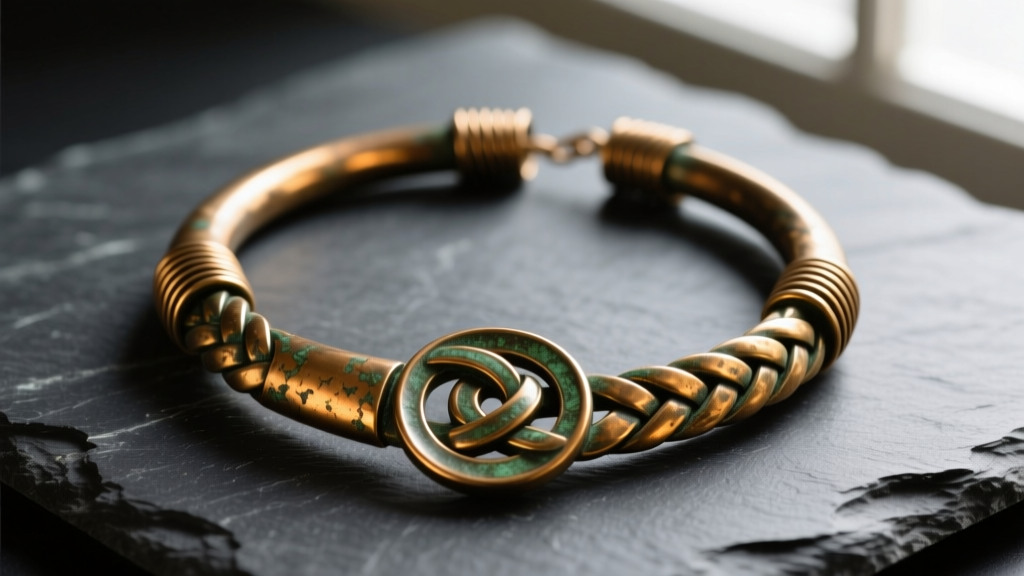
For historical reenactors and purists, bronze is the quintessential Celtic torque material. However, not all bronze is created equal. Modern jewelers often use silicon bronze (C65500) or phosphor bronze rather than traditional tin-bronze. Silicon bronze offers superior corrosion resistance and a warmer, more gold-like hue when polished.
Failure Mode: The primary issue with copper-based alloys is copper chelation. When the copper in bronze reacts with the chlorides and amino acids in human sweat, it produces copper carbonate (verdigris), which leaves a distinct green stain on the collarbone. To mitigate this, many artisans apply a micro-crystalline wax (like Renaissance Wax) to seal the metal, though this requires reapplication every few months.
Sterling Silver: The Premium Standard
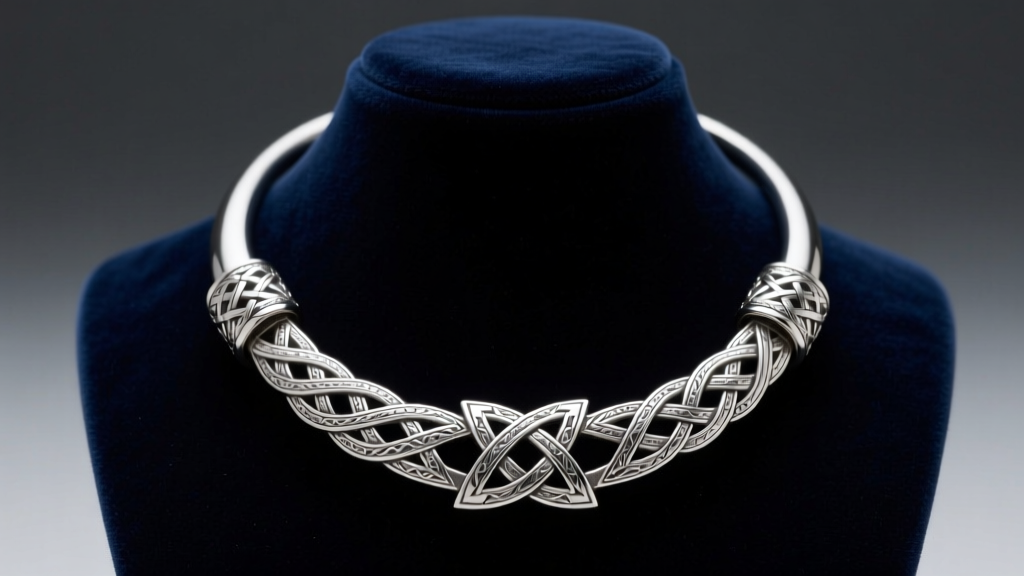
Sterling silver (.925) is the most popular choice for high-end Celtic torque necklaces. The addition of 7.5% copper to pure silver provides the necessary tensile strength to hold the rigid shape of the neck ring while still allowing the wearer to gently flex the terminals apart to put it on.
According to the London Assay Office, .925 is the legal standard for sterling, but some artisan jewelers use Argentium silver. Argentium replaces some of the copper with germanium, making the torque highly resistant to tarnish and eliminating the fire-scale that occurs during the soldering of the ornate terminal caps. If you choose standard sterling, expect to polish the recessed La Tène knotwork patterns regularly, as sulfur in the air will quickly blacken the deep crevices.
Stainless Steel: The Modern Workhorse
While entirely ahistorical, 316L surgical stainless steel is a dominant force in the modern market for Celtic jewelry. The 'L' stands for low carbon, and the addition of molybdenum makes 316L vastly superior to standard 304 steel in resisting chloride corrosion (sweat).
Ergonomic Warning: Steel has a much higher yield strength than silver or bronze. A 6mm solid steel wire torque requires significant force to flex open. Over time, repeatedly bending steel past its elastic limit can lead to metal fatigue and catastrophic snapping at the neck of the terminal caps. If buying steel, opt for designs that utilize a hidden hinge or a flexible braided cable core.
Gold and Gold Vermeil: Luxury and Legacy
True to the Snettisham hoard, gold remains the ultimate expression of the Celtic torque. However, 24k gold is far too soft for a rigid neck ring; it would bend out of shape under the mere weight of its own terminals. 14k gold is the metallurgical sweet spot, offering enough alloyed metals (like zinc and copper) to provide 'spring-back' when flexed. Gold vermeil (a thick layer of gold over sterling silver) is a cost-effective alternative, but the friction of the torque resting against the collarbone will eventually wear through the gold layer at the back of the neck, exposing the silver beneath.
Weight, Gauge, and Ergonomic Considerations
The physical dimensions of a Celtic torque necklace dictate its comfort. Historical torcs were substantial, often featuring wire gauges ranging from 4mm to 8mm in thickness.
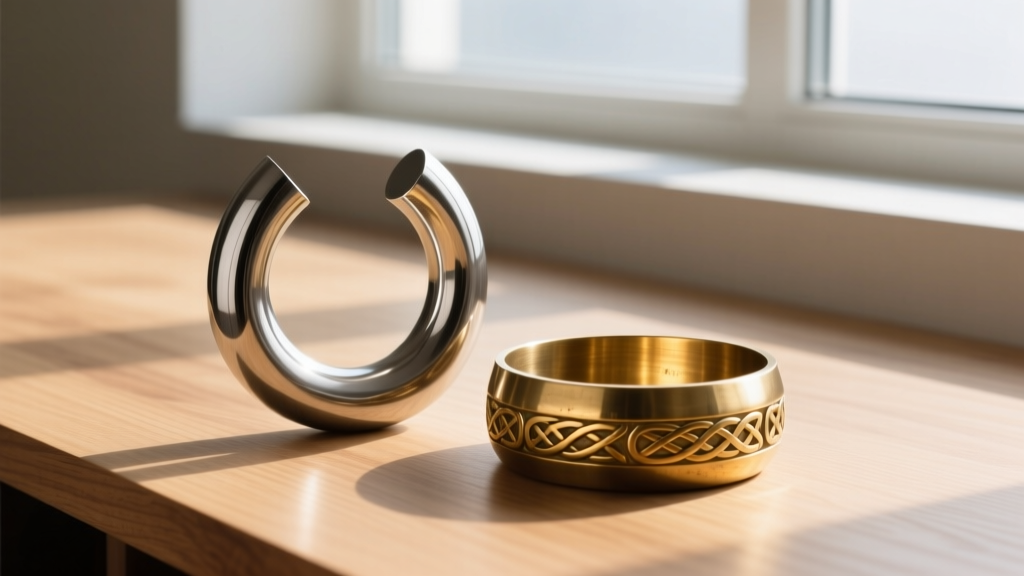
- Solid Rod Construction: A solid 6mm bronze or silver rod torc will typically weigh between 150g and 220g. While this provides a satisfying, premium drape, weights exceeding 180g can cause cervical fatigue and trap heat against the skin during summer months.
- Hollow Tubing: To combat weight, modern jewelers often draw metal into hollow tubes. A 6mm hollow sterling silver torque weighs roughly 45g to 60g. The trade-off is structural vulnerability; if dropped on a hard surface, hollow tubing can dent, whereas solid wire will merely scratch.
- Braided Wire: Twisting multiple thinner wires (e.g., four 2mm wires) to mimic historical rope-torcs creates a flexible, lightweight piece that conforms to the clavicle without the rigid pressure points of a solid rod.
How to Prevent Metal Reactivity and Skin Discoloration
If you opt for a historically accurate bronze or brass Celtic torque necklace, managing skin reactivity is mandatory. The green discoloration caused by copper alloys is harmless but aesthetically undesirable.
Pro-Tip: Avoid using clear nail polish to seal your bronze torque. The solvents in nail polish can react with certain metal patinas, and it will peel unevenly, creating a patchy texture. Instead, use a specialized jewelry sealant like ProtectaClear or a museum-grade micro-crystalline wax.
Furthermore, always remove your torque before swimming. The chlorine in pools will rapidly strip the patina from bronze and cause irreversible pitting in lower-grade silver alloys. For stainless steel and gold, chemical exposure is less of a concern, but the mechanical stress of taking the necklace on and off with wet, slippery hands increases the risk of dropping and denting the piece.
Final Verdict: Which Metal Should You Choose?
Selecting the right material for your Celtic torque necklace depends entirely on your priority: historical authenticity, daily wearability, or budget.
Choose silicon bronze if you are a historical reenactor or value the organic, evolving patina of ancient metals, provided you are willing to maintain a protective wax coating. Choose .925 sterling silver (or Argentium) for a premium, heirloom-quality piece that balances historical elegance with modern metallurgical reliability. Finally, opt for 316L stainless steel only if you require a rugged, maintenance-free piece for daily wear and are unconcerned with historical accuracy. By matching the alloy to your lifestyle, your torque will remain a striking testament to Iron Age artistry for decades to come.


