Chai Necklace Meaning: A Beginner's Guide to the Symbol of Life
Discover the chai necklace meaning, its rich Jewish heritage, and how to choose the perfect gold or silver symbol of life pendant for daily wear.

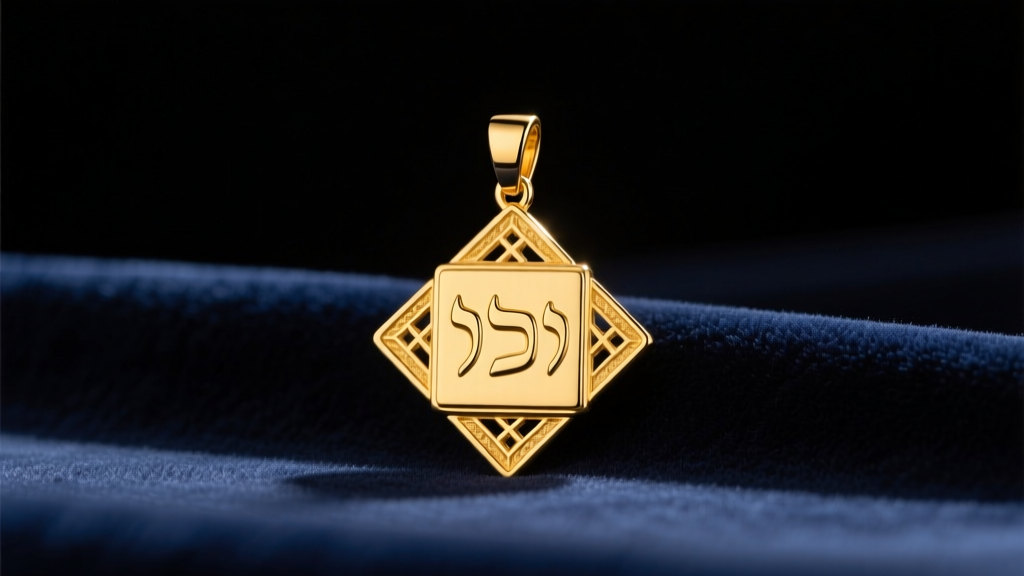
When exploring meaningful jewelry, few pendants carry the profound cultural and spiritual weight of the Chai necklace. Whether you are purchasing your first piece of Jewish jewelry, looking for a meaningful Bar or Bat Mitzvah gift, or simply drawn to its striking geometric design, understanding the chai necklace meaning is essential before making a purchase. This beginner-friendly guide breaks down the historical roots, numerological significance, and practical jewelry-buying advice you need to choose a pendant that will last a lifetime.
The Roots of the Chai Necklace Meaning
The word "Chai" (pronounced with a guttural 'ch' like in 'Bach') translates directly from Hebrew to "life" or "living." The symbol itself is composed of two Hebrew letters: Chet (ח) and Yod (י). While the concept of life is universal, the Chai symbol holds a specific, revered place in Jewish culture and mysticism.
Numerology and the Number 18
To truly grasp the chai necklace meaning, one must look at Gematria, the Jewish system of numerology where every Hebrew letter corresponds to a numerical value. The letter Chet has a value of 8, and the Yod has a value of 10. Together, they equal 18.
In Jewish tradition, the number 18 is synonymous with life, good luck, and spiritual vitality. This is why charitable donations and monetary gifts are frequently given in multiples of 18—a practice known as "giving Chai."
Wearing a Chai pendant is therefore not just a display of cultural pride; it is considered a spiritual amulet. According to Chabad.org, the symbol serves as a constant, physical reminder of the sanctity of life and the commitment to live purposefully. Historically, the symbol gained massive popularity as a jewelry motif in the 18th century among Eastern European Jewish communities, eventually becoming a global staple in Jewish identity.
Choosing the Right Metal for Your Chai Pendant
Understanding the symbolism is only half the journey. As a daily wear piece, your Chai necklace must withstand the rigors of everyday life—shower steam, friction, and accidental snags. Here is a deep dive into the best metals for a Chai pendant, moving beyond basic aesthetics into metallurgical durability.
14k vs. 18k Gold: The Durability Debate
Gold is the most traditional choice for a Chai necklace, but the karat weight drastically changes its physical properties. Pure 24k gold is far too soft for a pendant that might feature delicate cut-out lettering; the prongs or connecting loops will bend out of shape.
- 14k Gold (58.5% pure gold): With a Vickers hardness of roughly 135 HV, 14k gold is the gold standard for daily wear pendants. It resists scratching and maintains the structural integrity of the Yod's thin vertical stroke.
- 18k Gold (75% pure gold): Softer (around 120 HV) and richer in color. It is beautiful but more prone to micro-scratches and deformation if the pendant is thin or lightweight.
Sterling Silver and Tarnish Management
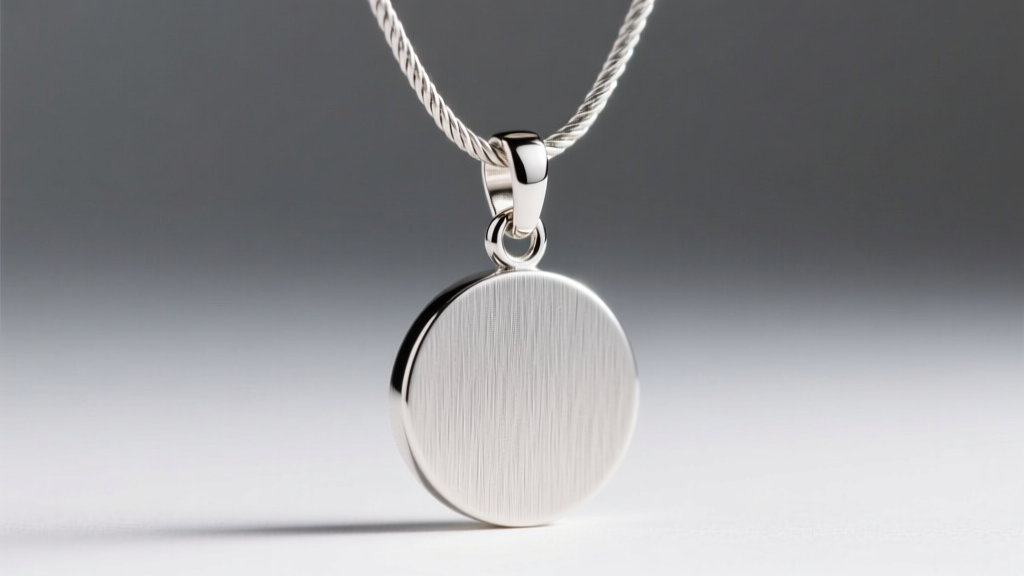
Sterling silver (925) is a highly accessible entry point for beginners, often ranging from $30 to $80 for a solid cast pendant. However, silver reacts with sulfur in the air and the natural pH of your skin, leading to tarnish. If you choose a silver Chai necklace, look for pieces that have been rhodium-plated. This microscopic layer of platinum-group metal seals the silver, providing a bright white finish and preventing oxidation for several years.
| Metal Type | Average Price Range | Durability (Vickers) | Maintenance Level | Best For |
|---|---|---|---|---|
| 14k Yellow Gold | $150 - $450 | ~135 HV | Low | Lifelong daily wear, showering |
| 18k Yellow Gold | $300 - $800+ | ~120 HV | Medium | Special occasions, heirloom gifts |
| Sterling Silver (925) | $30 - $90 | ~65 HV | High (Polishing) | Beginners, budget-conscious buyers |
| Platinum (950) | $600 - $1,500+ | ~130 HV (Dense) | Very Low | Hypoallergenic needs, luxury buyers |
Chain Pairings: Lengths, Links, and Clasps
The chai necklace meaning emphasizes life and continuity, and your chain should reflect that by being secure and unbroken. A beautiful pendant is easily lost if paired with a substandard chain. Let us look at the structural mechanics of chain selection.
The Best Chain Links for Pendants
Not all chains are created equal when it comes to holding a pendant with a fixed bail or a standard jump ring.
- Cable Chains: The classic choice. The uniform oval links allow the Chai pendant to slide freely and lay flat against the collarbone. Ensure the wire gauge is at least 1.0mm to prevent snapping.
- Box Chains: Made of square links connected in a smooth, continuous line. They are incredibly strong and resist kinking, making them ideal for heavier solid gold Chai pendants.
- Rope Chains: While visually stunning, the twisted links can sometimes catch on the bail of the pendant, restricting its movement and causing uneven wear on the pendant's loop over time.
Clasp Security: Spring Ring vs. Lobster
Most entry-level necklaces come with spring ring clasps. These are circular, rely on a tiny internal spring, and are notoriously difficult to operate with one hand. Furthermore, the thin wire of the spring ring is a common failure point. For a piece of jewelry you intend to wear every day, always upgrade to a lobster claw clasp. Lobster clasps feature a solid, lever-operated mechanism that is significantly more secure and easier to fasten behind your neck.
Styling and Layering Your Chai Necklace
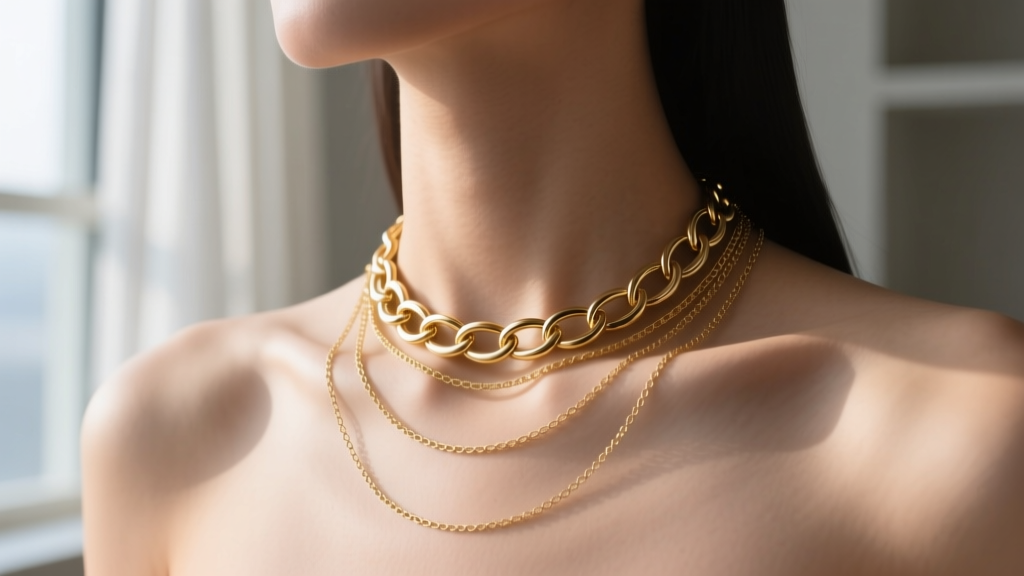
Modern jewelry styling embraces the art of layering, and the Chai pendant is remarkably versatile in this regard. Because the symbol is vertically oriented and typically features clean, linear edges, it pairs beautifully with contrasting shapes.
The Rule of Proportion and Length
If you are layering your Chai necklace, the golden rule is a minimum two-inch gap between chains to prevent the pendants from tangling and scratching one another.
- The Base Layer (14 to 16 inches): Wear your Chai pendant on a 16-inch chain so it rests perfectly at the hollow of your throat or upper collarbone. This keeps the meaningful symbol close to your heart and highly visible.
- The Secondary Layer (18 to 20 inches): Pair it with a longer, heavier chain featuring a different texture—such as a 2.0mm Figaro chain or a simple, unadorned 18-inch herringbone snake chain.
- Contrasting Pendants: If your Chai is a solid, polished gold cut-out, pair it with a matte-finished geometric pendant, a small solitaire diamond bezel, or a simple gold sphere on the longer chain to create visual depth without competing for attention.
For a deeper dive into the cultural evolution of Jewish jewelry motifs and how they integrate into contemporary fashion, My Jewish Learning offers excellent historical context on how ancient symbols transition into modern wearable art.
What to Look for When Buying: A Quality Checklist
Before you finalize your purchase, run the piece through this expert quality checklist to ensure you are getting a well-crafted item:
- Check the Bail: The bail (the loop the chain passes through) should be soldered closed or feature a secure hinged mechanism. An open, unsoldered wire loop will eventually bend and drop your pendant.
- Examine the Edges: Run your finger over the edges of the Chet and Yod. High-quality cast pendants will have smooth, slightly rounded edges. Cheap, stamped pendants often have sharp, machine-cut edges that will fray your clothing and scratch your skin.
- Verify the Hallmark: Look for a microscopic stamp on the back of the pendant or on the chain clasp. You should see "14k", "18k", or "925" alongside a manufacturer's trademark. This is legally required in many countries and guarantees the metal purity.
Understanding the chai necklace meaning transforms a simple piece of metal into a profound talisman of vitality and heritage. By prioritizing structural integrity—opting for 14k gold or rhodium-plated silver, selecting a secure lobster clasp, and pairing it with a durable cable or box chain—you ensure that your symbol of life remains a resilient, beautiful part of your daily wardrobe for decades to come.


