The Chandelier Crystal Necklace: 2026 Trend & Style Guide
Discover 2026 trends for the chandelier crystal necklace. Learn how to style crystal cuts, metal pairings, and neckline matching for modern elegance.

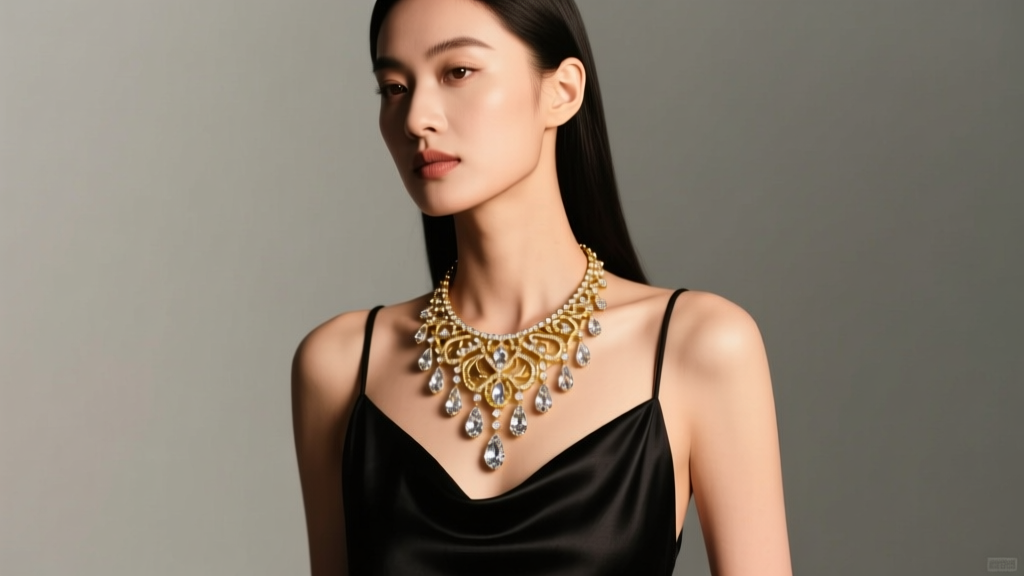
The jewelry landscape of 2026 has decisively pivoted from the quiet luxury of the early 2020s into an era of architectural maximalism. At the forefront of this shift is the chandelier crystal necklace. Once relegated to red-carpet events and vintage estate collections, this striking silhouette has been re-engineered for modern wearability. Today’s iterations blend high-refractive optics with industrial-grade hardware, creating pieces that command attention without sacrificing structural integrity. Whether you are investing in a heritage piece or exploring contemporary lab-grown alternatives, understanding the anatomy, material science, and styling mechanics of the chandelier crystal necklace is essential for the modern collector.
The Anatomy of a Modern Chandelier Pendant
A true chandelier crystal necklace is defined by its articulated, multi-tiered drop structure. Unlike a static pendant, a chandelier features moving parts—typically a central bail from which multiple articulated arms or chains suspend smaller crystal drops. This articulation is what creates the signature kinetic light dispersion, but it also introduces significant mechanical stress.
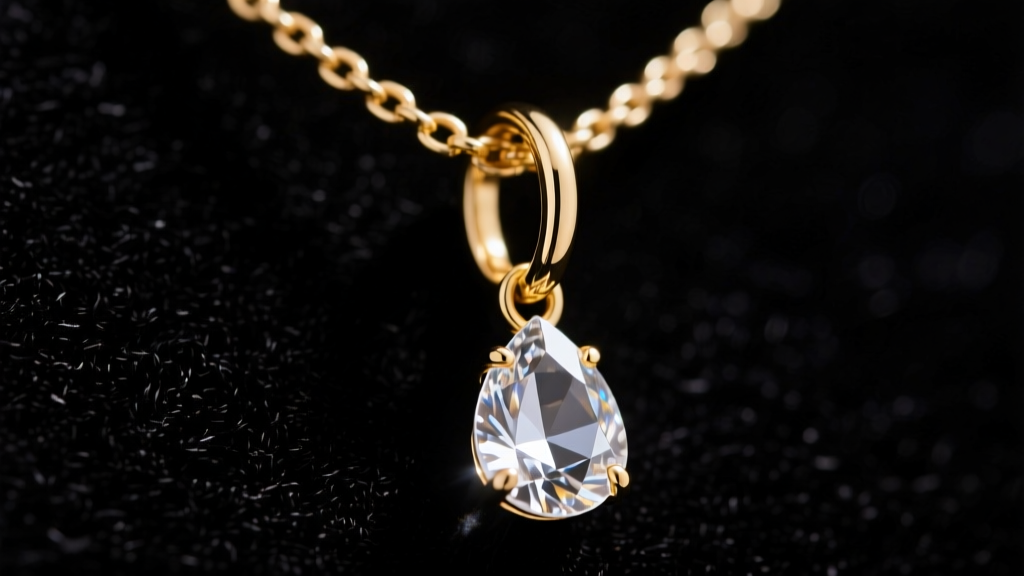
In 2026, the hallmark of a premium chandelier necklace lies in its hardware. A fully articulated crystal pendant of this scale typically weighs between 15 and 35 grams. Standard 5mm spring-ring clasps and unsoldered jump rings are notorious failure points under this dynamic load. High-end manufacturers now utilize 8mm or 10mm soldered jump rings at the bail connection and secure the chain with a 12mm lobster clasp or a neodymium magnetic tube clasp. When evaluating a piece, always inspect the bail: it should be reinforced with a thick gauge wire (minimum 18-gauge) to prevent the metal from warping and snapping under the pendant's pendulum-like movement.
2026 Crystal Cut & Material Matrix
The visual impact of a chandelier crystal necklace relies entirely on the refractive index (RI) and precision of the faceting. While vintage pieces often relied on leaded glass, modern 2026 standards prioritize lead-free, high-optic alternatives that offer superior brilliance and environmental safety. Below is a comparative matrix of the dominant materials used in contemporary chandelier designs.
| Material | Refractive Index (RI) | Mohs Hardness | Avg. Price (3-inch Drop) | Best For |
|---|---|---|---|---|
| Preciosa Maxima (Lead-Free) | 1.90 - 2.00 | 6.0 | $120 - $280 | Everyday maximalism, vibrant color dispersion |
| Swarovski Zirconia | 2.15 - 2.18 | 8.5 | $350 - $600 | Diamond-like brilliance, formal evening wear |
| Lab-Grown Quartz (Hydrothermal) | 1.54 - 1.55 | 7.0 | $80 - $150 | Large statement pieces, budget-conscious layering |
| Hand-Cut Rock Crystal | 1.54 - 1.55 | 7.0 | $400 - $900+ | Artisan heritage pieces, antique reproductions |
According to gemological data from the Gemological Institute of America (GIA), a higher refractive index directly correlates to greater light return and 'fire.' For a chandelier necklace, where the drops are often small (10mm to 15mm), maximizing the RI is critical to ensure the piece doesn't look dull in low-light environments. Swarovski Zirconia remains the gold standard for diamond simulation, but Preciosa Maxima has dominated 2026 trend forecasts due to its advanced vapor-deposited color coatings that resist tarnishing.
Neckline Pairing Framework: Beyond the V-Neck
The traditional styling advice for a chandelier crystal necklace dictates pairing it with a deep V-neck to mirror the pendant's geometry. However, 2026 styling frameworks emphasize contrast and asymmetry to elevate the piece from predictable to avant-garde.
The Halter & High-Neck Contrast
Pairing a sprawling chandelier pendant with a high-neck ribbed knit or a structured halter top creates a striking visual tension. The key to executing this without looking overwhelmed is proportion. If wearing a high neckline, opt for a chandelier with a shorter, wider silhouette (e.g., a 2-inch drop with a 3-inch lateral spread) that rests just above the sternum. This prevents the crystals from tangling in the fabric and ensures the piece sits flat against the collarbone.
The Asymmetrical Offset
As highlighted in recent Vogue runway analyses, asymmetrical one-shoulder garments are dominating evening wear. A chandelier crystal necklace acts as a visual counterweight to a bare shoulder. To balance the look, choose a pendant with an asymmetric drop design—where the left and right sides of the chandelier feature varying lengths or crystal cuts. This mimics the organic imbalance of the outfit and creates a cohesive, editorial silhouette.
Layering Mechanics: The 4-Inch Differential Rule
Can you layer a chandelier crystal necklace? The short answer is yes, but it requires strict adherence to spatial mechanics. The primary risk of layering an articulated chandelier is that the secondary chains will catch on the moving crystal drops, leading to tangled hardware and potential stone loss.
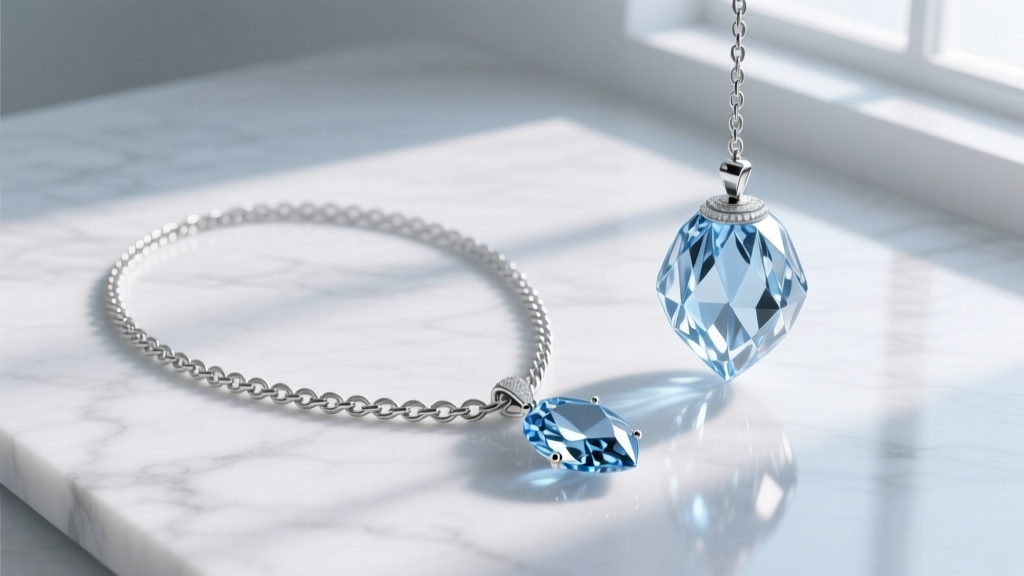
To layer successfully, employ the 4-Inch Differential Rule. If your chandelier necklace sits at 18 inches (the standard princess length), your secondary chain must be no longer than 14 inches (a choker or collar length) or no shorter than 22 inches (a matinee length). This ensures a minimum 4-inch buffer zone between the choker's clasp and the chandelier's top bail, or between the chandelier's lowest crystal drop and the secondary chain's pendant.
Furthermore, the secondary chain should be visually subordinate. A 1.5mm to 2mm cable or rope chain in a matching metal tone provides a subtle textural backdrop without competing with the light dispersion of the chandelier crystals. Avoid layering with other articulated pendants; stick to static, low-profile charms or simple solitaire bezels on the companion chains.
Care & Maintenance for High-Refractive Crystals
The brilliance of a chandelier crystal necklace is easily compromised by skin oils, cosmetics, and environmental dust, which create a microscopic film over the facets, drastically reducing light return. However, improper cleaning can permanently damage the piece.
- Avoid Ultrasonic Cleaners: While ultrasonic waves are safe for solid diamonds, the high-frequency vibrations can loosen the adhesives used in crystal foiling and shatter the delicate jump rings connecting the articulated drops.
- The Ammonia Warning: Never use commercial jewelry dips containing ammonia on vintage or foil-backed crystals. Ammonia will strip the metallic backing, turning the stones opaque and gray.
- The 2026 Cleaning Protocol: Use a solution of lukewarm distilled water and a single drop of pH-neutral dish soap. Submerge the piece for exactly three minutes. Use a soft-bristled, clean makeup brush (not a toothbrush, which is too abrasive for coated crystals) to gently agitate the dust from the pavilion facets (the bottom of the stone). Rinse with distilled water and dry immediately with a microfiber optics cloth to prevent water spots.
By understanding the precise engineering, material science, and styling geometry behind the chandelier crystal necklace, you can confidently integrate this bold 2026 trend into your permanent rotation. It is a piece that demands attention, but when anchored by proper hardware and styled with intentional contrast, it transcends mere accessory status to become a masterclass in wearable architecture.


