The Characters In The Necklace: Real Vs Fake Gem Troubleshooting
Learn from the characters in The Necklace by Maupassant. Our expert troubleshooting guide reveals how to spot real diamonds vs. paste and CZ fakes.

The Literary Mistake That Cost a Fortune
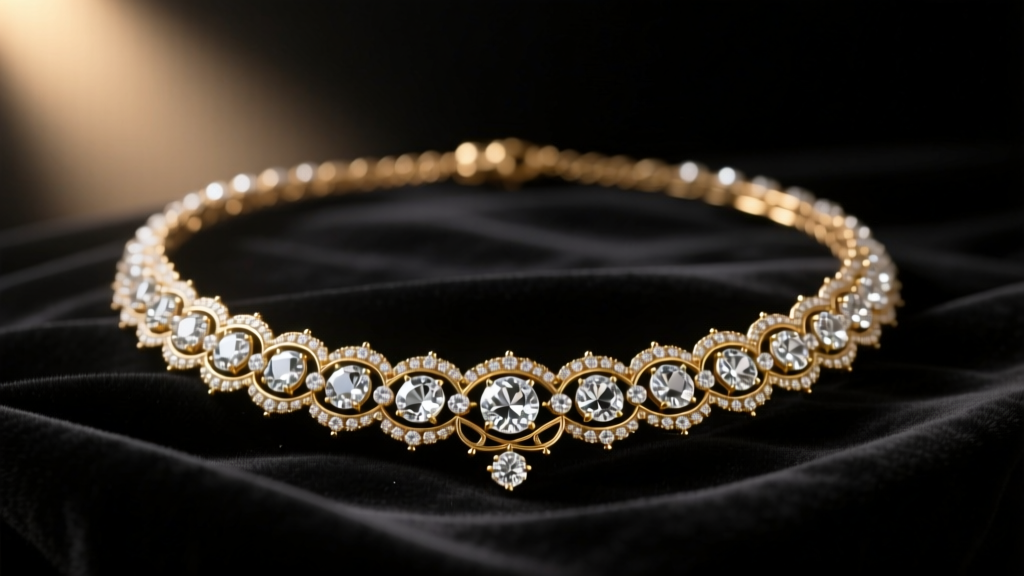
In Guy de Maupassant’s classic 1884 short story The Necklace (La Parure), the protagonist Mathilde Loisel borrows what she believes to be an exquisite diamond necklace from her wealthy friend, Madame Forestier. After losing the piece, Mathilde and her husband endure a decade of grueling poverty to replace it with a genuine 36,000-franc diamond riviere. The devastating twist? The original necklace was paste (fake glass), worth at most 500 francs.
"She had no dresses, no jewels, nothing. And these were the only things she loved..."
While modern jewelry buyers are unlikely to lose a borrowed piece and secretly replace it, the core problem remains highly relevant in today's market: How do you accurately troubleshoot and identify whether a necklace features real diamonds, modern simulants, or antique paste? By analyzing the mistakes made by the characters in the necklace, we can build a modern, gemological framework for authentication.
Visual Troubleshooting: The 10x Triplet Loupe Test
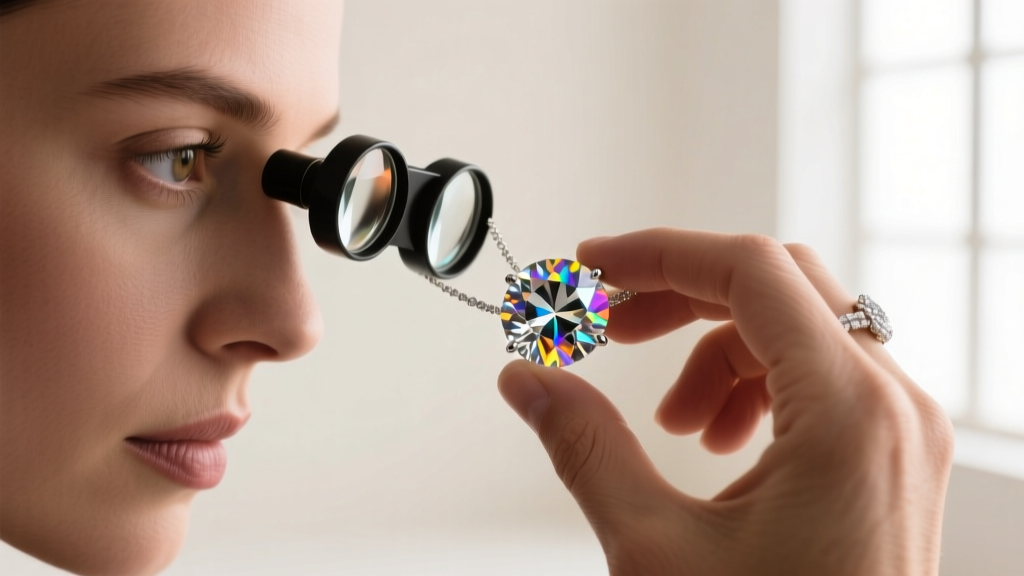
To avoid the fate of Mathilde Loisel, your first line of defense is a 10x triplet loupe. Unlike a standard magnifying glass, a triplet lens corrects spherical and chromatic aberration, giving you a distortion-free view of the gemstone's interior and facet junctions. When inspecting a diamond pendant or tennis necklace, you must look for specific optical and physical clues.
Spotting Paste and Glass Simulants
In the 19th century, "paste" referred to high-lead-content glass (often called Strass glass) cut to mimic diamonds. Today, glass simulants are still prevalent in vintage and costume necklaces. Under 10x magnification, look for:
- Gas Bubbles: Natural diamonds never contain spherical gas bubbles. If you see tiny, perfect spheres trapped inside the stone, you are looking at glass or paste.
- Abraded Facet Junctions: Glass and cubic zirconia (CZ) are significantly softer than diamond. Over time, the sharp points where facets meet will become rounded, scratched, or "fuzzy." A real diamond’s facet edges will remain razor-sharp, even on a 100-year-old antique necklace.
- Mold Marks: Cheap glass pendants are often cast in molds rather than faceted. Look for slight depressions on the facet surfaces or rounded girdles.
Identifying Cubic Zirconia (CZ)
Introduced to the mass market in the late 1970s, CZ is denser and softer than diamond. Troubleshooting CZ requires a mix of visual and physical tests:
- The Read-Through Effect: If the necklace pendant is unmounted or has an open back, place it face down on a piece of printed text. Because CZ has a lower refractive index (2.15–2.18) compared to diamond (2.42), light leaks through the pavilion. If you can read the letters through the stone, it is almost certainly CZ or glass, not diamond.
- Flawless Interiors: CZ is lab-created and typically completely flawless. A natural diamond of any significant carat weight will almost always contain microscopic inclusions (feathers, crystals, or pinpoints).
- Weight Discrepancy: CZ is roughly 1.7 times denser than diamond. A CZ pendant of the exact same physical dimensions as a diamond will feel noticeably heavier in the hand.
Advanced Diagnostics: Thermal and Electrical Conductivity
When visual inspection is inconclusive—especially with high-end simulants like moissanite—you must rely on gemological testing tools to troubleshoot the stone's identity.
Thermal Conductivity Testers
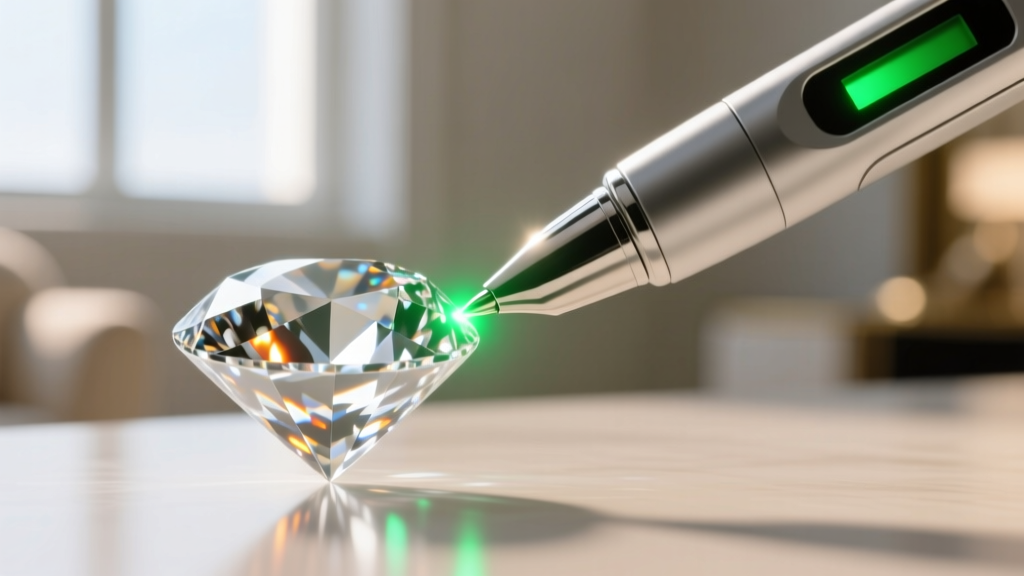
Diamonds are exceptional heat conductors. A standard thermal diamond tester uses a heated copper tip to measure how quickly heat dissipates into the stone.
- Diamond: Heat dissipates instantly; the tester beeps and lights up.
- CZ, Glass, Paste: Heat dissipates slowly; the tester remains silent.
- The Moissanite Problem: Moissanite (silicon carbide) conducts heat almost as well as diamond. A standard thermal tester will falsely identify moissanite as a diamond, leading to costly mistakes.
Electrical Conductivity Testers
To solve the moissanite problem, professional gemologists use multi-testers that check for electrical conductivity alongside thermal properties.
- Moissanite: Is electrically conductive. The tester will flag it as a simulant.
- Diamond: Is generally an electrical insulator (with the rare exception of natural blue boron-doped Type IIb diamonds).
Gemstone Property Comparison Chart
Understanding the fundamental physical properties of necklace gemstones is critical for accurate troubleshooting. Use this chart as a quick reference guide when evaluating potential purchases.
| Material | Refractive Index (RI) | Specific Gravity (SG) | Mohs Hardness |
|---|---|---|---|
| Natural / Lab Diamond | 2.42 | 3.52 | 10 |
| Moissanite | 2.65 - 2.69 (Double) | 3.22 | 9.25 |
| Cubic Zirconia (CZ) | 2.15 - 2.18 | 5.60 - 6.00 | 8.0 - 8.5 |
| Paste / Lead Glass | 1.50 - 1.70 | 2.20 - 4.20 | 5.0 - 6.0 |
The 2026 Market Reality: Lab-Grown Diamonds and High-End Fakes
If you are shopping for a diamond necklace in 2026, the troubleshooting landscape has shifted dramatically. Lab-grown diamonds (created via Chemical Vapor Deposition [CVD] or High Pressure High Temperature [HPHT] methods) possess the exact same chemical, physical, and optical properties as mined diamonds.
According to the Gemological Institute of America (GIA), standard thermal and electrical testers cannot distinguish between a lab-grown diamond and a natural diamond. Both will pass as "diamond."
The Troubleshooting Solution: To separate natural from lab-grown, you must look for specific growth patterns under advanced magnification or rely on UV fluorescence imaging. CVD diamonds often exhibit faint orange or red fluorescence under shortwave UV light due to silicon inclusions, while HPHT diamonds may show distinct color zoning. However, the only foolproof method is to require a grading report from a major laboratory (GIA, AGS, or IGI), which uses advanced spectroscopy to definitively identify the stone's origin.
Furthermore, the Federal Trade Commission (FTC) Jewelry Guides mandate that sellers must clearly disclose if a stone is lab-created, simulated, or natural. In 2026, a 1-carat natural diamond solitaire pendant may retail between $4,500 and $8,000, whereas an equivalent lab-grown diamond pendant sits in the $800 to $1,500 range. If a seller offers a "natural" diamond necklace at simulant prices, consider it a massive red flag.
Step-by-Step Authentication Checklist for Vintage Necklaces
When evaluating an estate or vintage diamond necklace, follow this strict troubleshooting protocol before exchanging any funds:
- Inspect the Hallmarks: A genuine diamond necklace from a reputable jeweler will typically feature precious metal hallmarks (e.g., 18K, 750, PT950). If the chain is magnetic or stamped with "925" but lacks a maker's mark, proceed with extreme caution.
- Examine the Clasp Mechanism: High-value necklaces utilize secure clasps, such as a lobster claw or a box clasp with a safety figure-8. Cheap spring-ring clasps on heavy "diamond" chains often indicate costume jewelry.
- Perform the Fog Test: Breathe lightly on the stone. A real diamond disperses heat instantly, and the fog will clear in less than a second. Glass and CZ will remain foggy for several seconds.
- Check for Double Refraction: Look through the crown of the stone at the pavilion facets. If you see doubled facet lines (a hallmark of moissanite or zircon), it is not a diamond.
- Demand the Paperwork: Never purchase a high-value diamond necklace without verifiable documentation or a recent appraisal from a certified gemologist.
Conclusion: Don't Let a Paste Necklace Ruin Your Decade
The tragedy of the characters in the necklace serves as a timeless warning about the dangers of assumption and the high cost of ignorance in the jewelry world. Whether you are inheriting a family heirloom, shopping for an engagement pendant, or browsing estate sales, relying on visual assumptions is a gamble you cannot afford. By mastering loupe inspection, understanding thermal conductivity, and demanding verifiable lab reports, you ensure that the diamonds around your neck are as genuine as the investment you made in them.


