Charlie Kirk Necklace: Merch vs Fine Jewelry Value Guide
Is the Charlie Kirk necklace worth the price? We compare official creator merch materials against fine jewelry alternatives for true value.

The "Charlie Kirk Necklace" Phenomenon: What Are You Actually Buying?
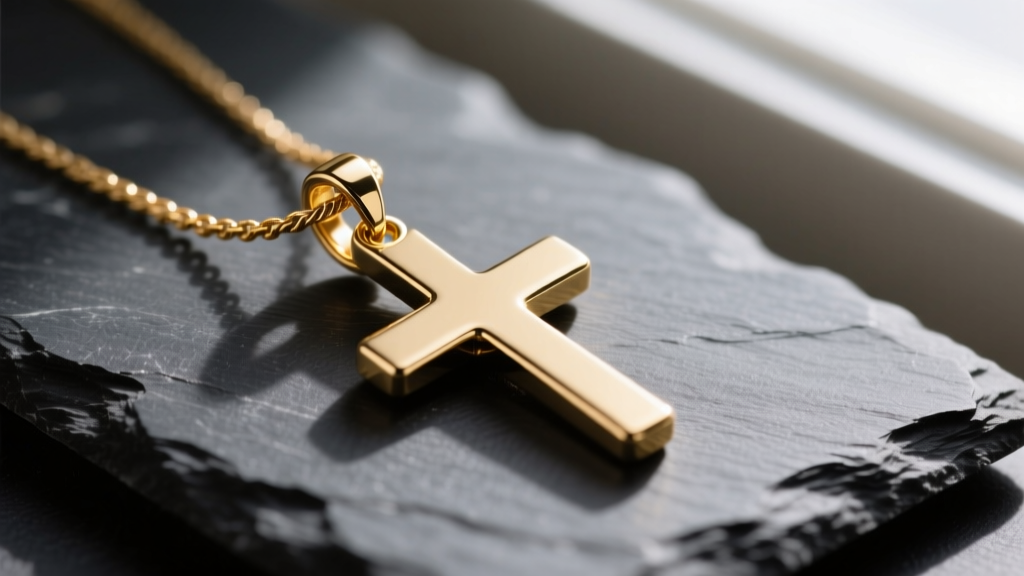
When consumers search for a "Charlie Kirk necklace," they are typically navigating two distinct markets. The first is the official political and creator merchandise ecosystem, which frequently features branded pendants, traditional crosses, or medallions meant to signal ideological alignment. The second is the broader traditionalist aesthetic—a modest, classic precious metal pendant worn close to the collarbone. As a jewelry value assessor, my primary concern is not the symbolism of the pendant, but the metallurgical reality of what you are wearing against your skin.
In 2026, the creator-merch jewelry market is saturated with dropshipped accessories that carry a premium price tag purely due to brand association. A pendant that costs $4 to manufacture in overseas alloy foundries is routinely marked up to $45 or $60. For the budget-conscious consumer who values the traditional, modest aesthetic popularized by conservative commentators, it is critical to separate the brand tax from the material value. This guide provides a forensic budget assessment of merch-grade necklaces versus genuine fine jewelry alternatives, helping you allocate your budget toward pieces that will actually last.
Material Breakdown: Merch Alloys vs. Precious Metals
The vast majority of creator-branded necklaces are not made of solid precious metals. They are typically cast from Zamak (a zinc alloy containing aluminum, magnesium, and copper) or cheap brass, and then finished with a micro-thin layer of gold or silver-colored plating. According to the Federal Trade Commission's Jewelry Guides, items with less than 0.5 microns of gold plating cannot even be legally marketed as "gold plated" in many contexts, yet they are routinely sold as "gold-tone" or "dipped" in merch stores.
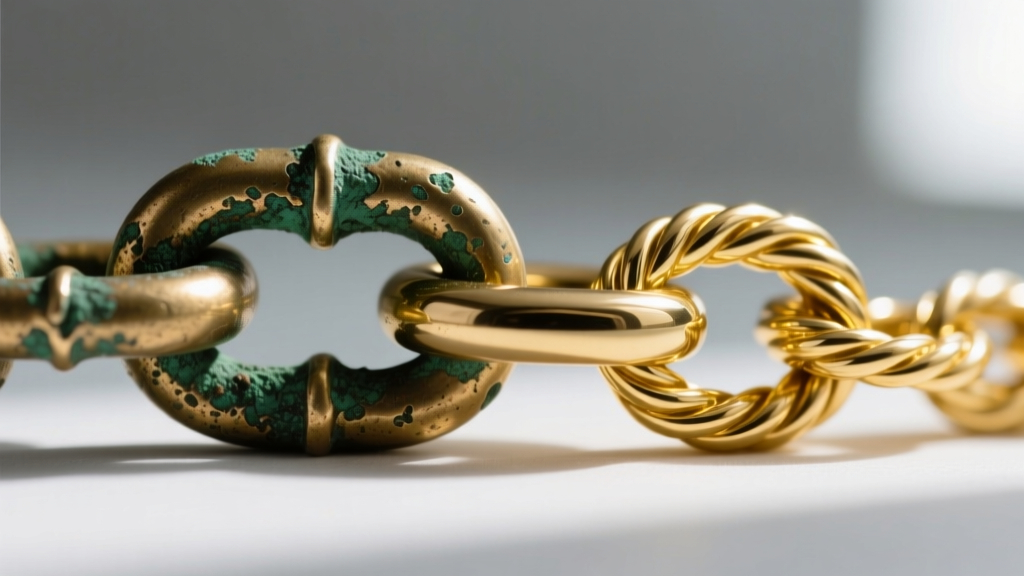
Zinc alloys are highly porous. When worn against the skin, these microscopic pores trap sweat, sebum, and environmental moisture. This trapped moisture accelerates the degradation of the flash plating, leading to the inevitable "green skin" effect caused by copper oxidation in the base metal. In contrast, a genuine 925 sterling silver or solid 14k gold pendant offers inherent antimicrobial properties and structural integrity that will outlive the wearer.
Comparative Value Matrix
| Feature | Official Merch / Dropshipped | Solid 925 Sterling Silver | Solid 14k Yellow Gold |
|---|---|---|---|
| Base Metal | Zinc Alloy (Zamak) / Brass | 92.5% Silver, 7.5% Copper | 58.5% Gold, 41.5% Alloy |
| Plating Thickness | Flash Plating (0.1μm - 0.3μm) | Rhodium or Unplated | N/A (Solid throughout) |
| Average Retail Price | $35 - $65 | $80 - $150 | $350 - $650+ |
| Functional Lifespan | 3 - 8 Months (Daily Wear) | Lifetime (Requires polishing) | Lifetime (Heirloom grade) |
| Skin Reaction Risk | High (Nickel/Copper exposure) | Low (If nickel-free alloy) | None (Hypoallergenic) |
Cost-Per-Wear Analysis: The True Budget Assessment
To accurately assess the budget value of a Charlie Kirk-style necklace, we must apply the Cost-Per-Wear (CPW) metric. A $50 merch necklace that loses its plating and turns your skin green after four months of daily wear has a CPW of roughly $0.41 per day, culminating in a total loss of capital once the piece is relegated to the trash. It holds zero scrap value and cannot be repaired by a jeweler because you cannot solder zinc alloy or re-plate porous base metals effectively.
Conversely, consider a $120 solid 925 sterling silver cross pendant on a 1.5mm rolo chain. While the initial outlay is more than double the merch option, the silver can be polished indefinitely. If worn daily for five years, the CPW drops to $0.06 per day. Furthermore, according to the Gemological Institute of America (GIA), precious metals retain intrinsic scrap value. If the chain breaks, a jeweler can easily laser-weld a solid silver link back together. The fine jewelry route is objectively the superior financial decision for anyone intending to wear a traditional pendant daily.
Chain Gauge and Clasp Failure Modes
The pendant is only half the equation; the chain is where budget necklaces experience catastrophic mechanical failure. Merch necklaces almost universally utilize 1.0mm to 1.2mm hollow-cored cable chains equipped with spring-ring clasps. This combination is a structural liability.
The Spring Ring Flaw
Spring ring clasps operate via a tiny internal coil spring. In cheap jewelry, this spring is made of carbon steel rather than stainless steel. When exposed to the natural acidity of human sweat, the internal spring rusts and loses its tension. The clasp either sticks in the open position, resulting in the loss of the necklace, or fails to close securely. High-quality fine jewelry utilizes the lobster claw clasp, which features a solid cast body and a corrosion-resistant stainless steel internal mechanism.
Chain Gauge Tensile Strength
According to manufacturing data from jewelry suppliers like Rio Grande, a 1.2mm hollow cable chain has a tensile breaking point of less than 3 pounds of force. Simply catching the chain on a t-shirt collar while undressing can generate enough lateral torque to snap the soldered links. For a modest, traditional pendant weighing between 3 and 8 grams, the ideal chain gauge is 1.5mm to 1.8mm in a solid rolo or curb link pattern. This thickness provides the necessary structural support without overpowering the conservative, understated aesthetic of the pendant.

Bail Mechanics: Where Pendants Snap
The bail is the loop that connects the pendant to the chain. Budget necklaces frequently use "pinch bails," which are essentially two metal prongs squeezed into the pre-drilled holes of a pendant. Over time, the lateral swinging motion of the pendant creates metal fatigue at the base of these prongs, causing them to snap off and drop the pendant into the abyss. When sourcing a high-value alternative, always look for a pendant with an integrated cast bail (where the loop is part of the original wax mold) or a soldered tube bail. These designs distribute the kinetic energy of the swinging pendant evenly across the metal, virtually eliminating bail-related failure.
Sourcing High-Value Alternatives in 2026
If you want to replicate the traditional, modest aesthetic without subsidizing the creator-merch markup, you must pivot away from political storefronts and toward dedicated precious metal refiners and traditional jewelers. Here is a practical framework for sourcing:
- For Sterling Silver: Look for established religious or heritage jewelers that explicitly stamp their pieces with "925" and offer solid, soldered jump rings. Avoid "silver-plated" or "silver-filled" terminology.
- For Solid Gold: With 2026 gold spot prices remaining elevated, 10k or 14k solid gold is the entry point for heirloom-quality pieces. Ensure the clasp is stamped with the manufacturer's hallmark and the karat weight (e.g., 14K).
- Chain Selection: Purchase the pendant and the chain separately if necessary. Select a 1.5mm or 1.8mm solid rolo chain with a lobster clasp. The visual weight of a rolo chain perfectly complements traditional crosses and medallions without looking ostentatious.
Final Verdict: Budgeting for Your Pendant
The appeal of the Charlie Kirk necklace lies in its traditional symbolism and understated profile, not in the metallurgical excellence of official merchandise. When you apply a rigorous budget and value assessment, the $50 dropshipped alloy pendant is a depreciating liability destined for the landfill. By redirecting that budget toward a $120 solid sterling silver piece or saving for a $400 solid 14k gold pendant, you acquire an asset that aligns with the very principles of longevity, quality, and heritage that the traditionalist aesthetic seeks to project. True value in jewelry is not determined by the logo on the packaging, but by the atomic integrity of the metal resting against your skin.