Technical Guide to Choker Chain Necklace Construction
Explore the technical engineering of a choker chain necklace, from link geometry and metal hardness to clasp mechanics and precise fit tolerances.

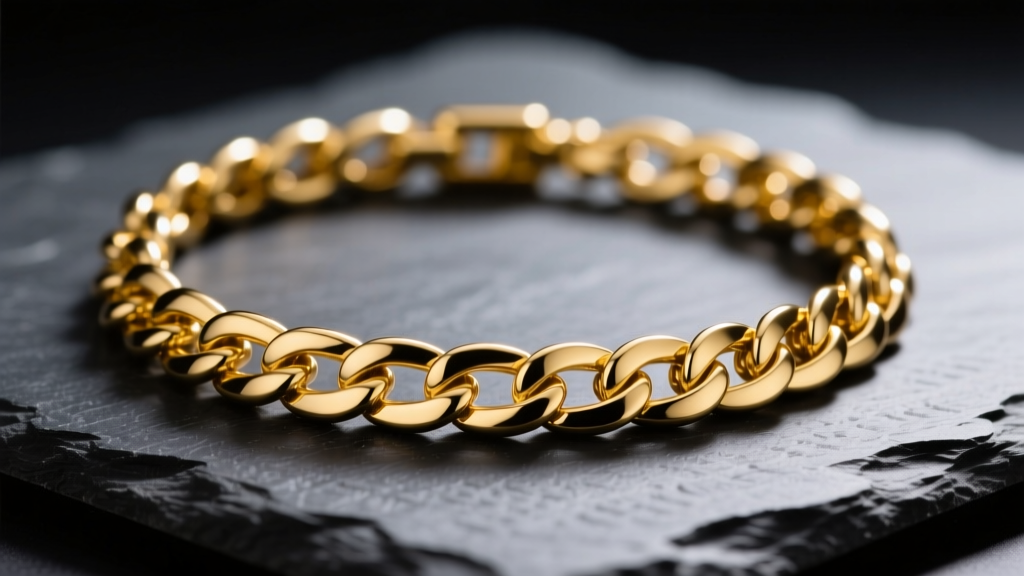
The Physics of the 14-to-16 Inch Drape
When analyzing the structural integrity and aesthetic drape of a choker chain necklace, one must look beyond superficial design and examine the underlying engineering. Unlike standard 18-to-24-inch chains that hang freely in a parabolic arc, a 14-to-16-inch choker sits directly on the complex topography of the cervical spine and clavicle. This anatomical reality demands precise link articulation, specific metallurgical hardness, and high-tension clasp mechanics. In this expert deep dive, we explore the technical specifications that separate a masterfully engineered choker chain necklace from a mass-produced accessory.
Link Geometry and Articulation Angles
The human neck is not a perfect cylinder; it is a tapered, dynamic structure that expands and contracts with movement, swallowing, and respiration. A poorly engineered choker chain necklace will either gap at the front or dig into the nape of the neck. To achieve a flush drape, the chain must possess a high degree of lateral flexibility while maintaining longitudinal rigidity. This balance is dictated by the link aspect ratio—the mathematical relationship between the inner diameter of the link and the gauge (thickness) of the wire used to form it.
Different chain styles exhibit distinct articulation behaviors. For a choker chain necklace, the goal is to maximize the articulation angle per link without compromising tensile strength.
- Cuban and Curb Links: These feature a low profile and a high width-to-thickness ratio. The flattened links allow for a maximum articulation angle of roughly 160 degrees per joint, enabling the chain to lay perfectly flat against the collarbone without twisting.
- Wheat (Spiga) Chains: Woven in a continuous braided pattern, wheat chains offer multi-directional flexibility. However, their tight interlocking geometry limits the articulation angle to about 120 degrees, making them slightly stiffer but highly resistant to kinking.
- Rope Chains: Created by twisting two or more strands of links, rope chains possess high torsion memory. In a 14-inch choker length, this torsion can cause the chain to spiral if the links are not precisely diamond-cut to relieve internal tension.
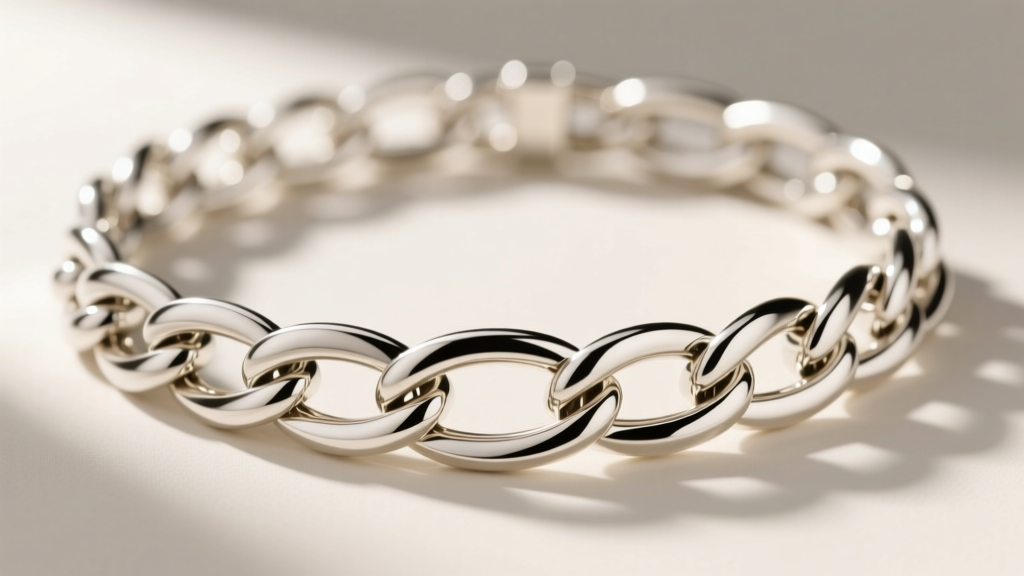
Metallurgical Hardness and Wear Resistance
Because a choker chain necklace rests in the "sweat zone" of the neck and endures constant friction against the skin and hair, the metallurgical composition of the alloy is critical. Pure 24k gold (Vickers Hardness of ~25 HV) is entirely unsuitable for chain manufacturing due to its malleability. Instead, jewelers rely on precise alloying to achieve the necessary tensile strength and scratch resistance.
According to metallurgical standards outlined by the World Gold Council, the addition of copper, silver, and zinc to gold drastically alters its work-hardening properties. Cold-working (drawing the wire through successively smaller dies before forming the links) increases the dislocation density within the metal's crystal lattice, effectively boosting its hardness.
| Metal Alloy | Composition | Vickers Hardness (HV) | Tensile Strength (MPa) | Choker Suitability |
|---|---|---|---|---|
| 14k Yellow Gold | 58.5% Au, Ag, Cu, Zn | 135 - 150 HV | ~450 MPa | Excellent for daily wear; high scratch resistance. |
| 18k Yellow Gold | 75.0% Au, Ag, Cu | 110 - 125 HV | ~350 MPa | Good, but prone to micro-abrasions from neck friction. |
| 950 Platinum | 95.0% Pt, Ru/Ir | 110 - 130 HV | ~300 MPa | Superior density; develops a patina rather than losing metal. |
| Sterling Silver | 92.5% Ag, 7.5% Cu | 60 - 75 HV | ~250 MPa | Requires thicker gauges to prevent stretching at the clasp. |
Clasp Mechanics for High-Tension Chokers
The clasp is the most frequent point of catastrophic failure in any necklace, but the stakes are higher for a choker chain necklace. When the wearer turns their head sharply, the skin and muscles of the neck expand, applying sudden lateral tension to the 14-inch circumference. A standard 5mm spring ring clasp is mechanically inadequate for this dynamic load, as the internal coil spring can fatigue, or the delicate trigger mechanism can slip.
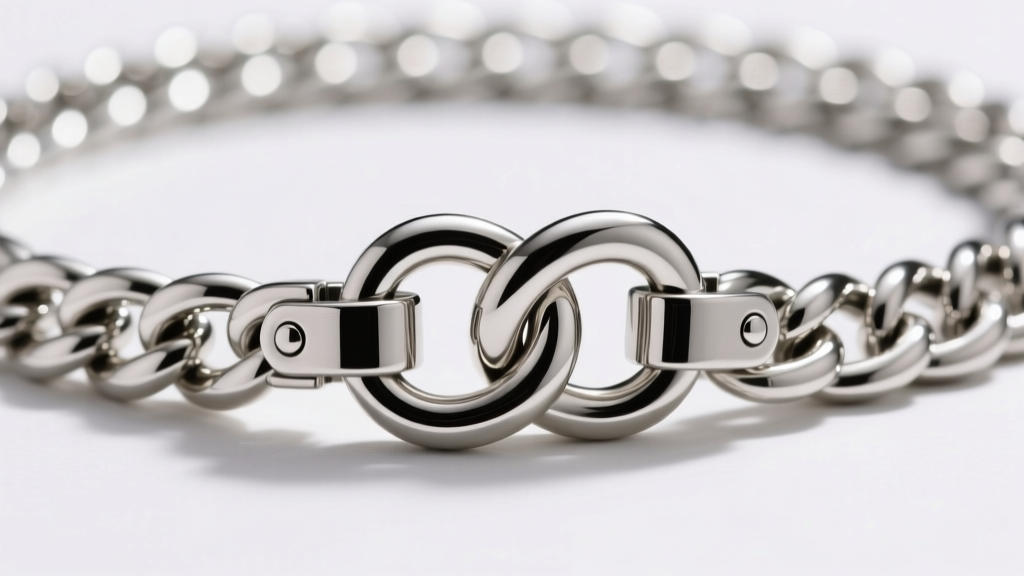
Spring Ring vs. Lobster vs. Hidden Box Clasps
For chains weighing under 10 grams, a high-quality cast lobster clasp with a stainless steel internal spring is the minimum acceptable standard. However, for luxury choker chain necklaces exceeding 15 grams, a hidden box clasp (also known as a tongue-and-groove clasp) engineered with a figure-eight safety catch is mandatory.
Expert Insight: When inspecting a box clasp on a heavy choker, test the tension of the "tongue." It should require a deliberate, firm squeeze to compress and slide into the groove. Furthermore, the figure-eight safety wire must be tempered spring steel, not soft gold or silver, to ensure it retains its snapping tension over thousands of articulation cycles.
Gauge Thickness vs. Weight Ratios
Selecting the correct wire gauge is a balancing act between visual proportion and structural integrity. In the context of a choker chain necklace, the proximity to the face means that overly thick gauges (above 5.0mm) can appear visually overwhelming and physically restrictive, while ultra-fine gauges (below 1.2mm) are highly susceptible to plastic deformation (stretching) from the weight of the clasp itself.
For a standard 15-inch choker, the optimal gauge range sits between 2.0mm and 3.5mm. At this dimension, a 14k gold Cuban link chain will weigh approximately 18 to 28 grams. This weight provides enough gravitational pull to keep the chain seated properly on the clavicle without causing neck fatigue. According to manufacturing guidelines from Rio Grande, maintaining a consistent gram-weight-per-inch ratio is crucial for ensuring the chain does not develop weak points during the soldering and tumbling phases. Tumbling, a process where the chain is placed in a vibratory bowl with steel shot and burnishing compound, not only polishes the links but also induces a mild surface work-hardening effect. This compressive stress layer helps resist the micro-scratches that inevitably occur when a choker rubs against the wearer's jawline and collar.
Sourcing and Hallmark Verification
As the market sees an influx of hollow-core and electroformed chains, verifying the structural density of a choker chain necklace is paramount. Hollow chains, while lightweight, are prone to crushing and cannot be repaired if a link kinks or breaks. Always opt for solid-link construction. You can often identify hollow chains through an acoustic resonance test; when gently dropped on a glass or stone surface, a solid chain produces a dense, dull thud, whereas a hollow chain emits a higher-pitched, tinny rattle.
Furthermore, examine the hallmarking. Modern master jewelers utilize laser hallmarking, which etches the metal purity (e.g., 585 for 14k, 750 for 18k) and the maker's mark into the links near the clasp without compromising the metal's structural integrity. Traditional deep-stamped hallmarks on thin links can create micro-fractures that eventually lead to chain failure. By understanding these intricate technical details, you can confidently evaluate the true craftsmanship and longevity of any choker chain necklace you encounter.


