How to Choose and Style a Bezel Set Tennis Necklace
Learn how to choose, size, and layer a bezel set tennis necklace. Expert guide on metal grades, diamond specs, and clasp security.

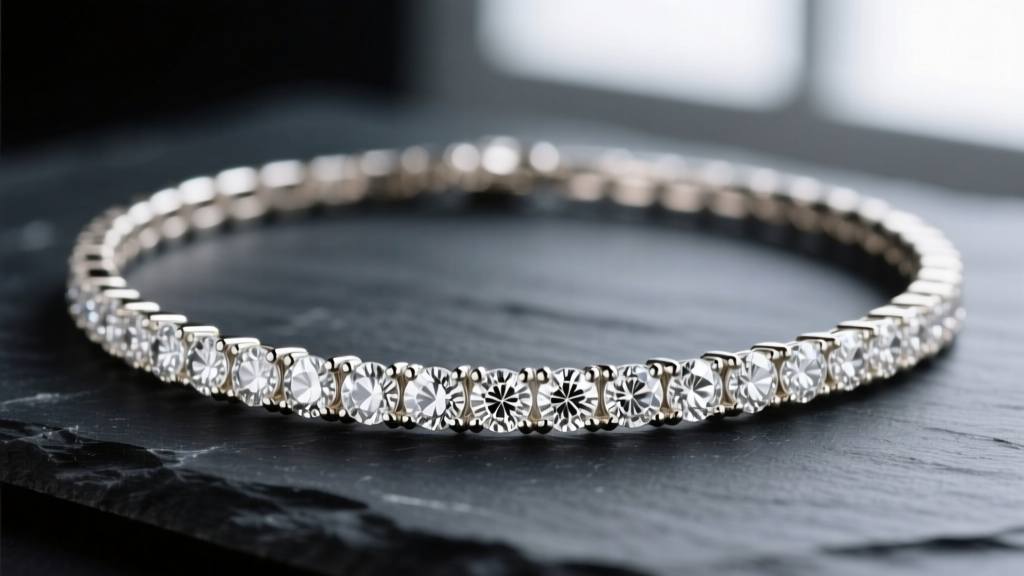
The Shift to Bezel Settings: Why the Modern Tennis Necklace is Snag-Free
The classic diamond tennis necklace has long been a staple of fine jewelry, traditionally dominated by delicate prong settings designed to maximize light return. However, as everyday luxury continues to dictate jewelry trends in 2026, the bezel set tennis necklace has emerged as the ultimate standard for modern wearers. By encasing each diamond in a custom-fitted metal rim, jewelers have solved the biggest pain points of traditional tennis necklaces: snagging on knitwear, loose stones, and bent prongs.
Choosing the right bezel set tennis necklace requires a different approach than buying a prong-set piece. The metal rim alters how light enters the stone, changes the overall weight of the piece, and demands specific clasp engineering to support the heavier metal-to-stone ratio. This step-by-step guide will walk you through the exact specifications, material grades, and styling techniques you need to invest in a piece that balances brilliance with bulletproof durability.
Step 1: Understand the Mechanics of Bezel vs. Prong Settings
Before selecting your stones, it is crucial to understand how a bezel setting fundamentally changes the architecture of a tennis necklace. A full bezel setting wraps entirely around the girdle of the diamond, securing it from all sides. This requires approximately 15% to 20% more precious metal per stone compared to a standard four-prong setting.
| Feature | Bezel Set Tennis Necklace | Traditional Prong Set |
|---|---|---|
| Security | Exceptional; stones cannot vibrate loose | Moderate; prongs can catch and bend |
| Light Return | Slightly reduced (metal blocks crown edges) | Maximum (open sides allow 360° light) |
| Perceived Size | Appears ~0.2mm larger due to metal halo | True to exact millimeter measurement |
| Maintenance | Low; no prong retipping required | High; requires annual prong checks |
| Snag Resistance | 100% smooth profile | Prone to catching on silk and wool |
According to the Gemological Institute of America (GIA), while a bezel setting may slightly reduce the sheer volume of light entering the diamond's crown, a well-proportioned round brilliant cut will still exhibit excellent scintillation. The trade-off for a marginal decrease in brilliance is a massive increase in structural integrity, making the bezel set tennis necklace ideal for 24/7 wear.
Step 2: Select the Right Metal Grade and Diamond Specifications
Because the bezel setting covers the girdle and a portion of the diamond's crown, you can strategically adjust your diamond grading requirements to maximize your budget without sacrificing visual beauty.
Optimizing the 4Cs for Bezel Settings
- Color: The metal rim reflects its color into the edges of the stone. If you choose yellow gold, you can safely drop your diamond color grade to J or K, as the warm metal will mask faint yellow tints. For white gold or platinum, stick to G or H color grades. The GIA notes that once a diamond is set, distinguishing between D and G color grades with the naked eye is nearly impossible, especially when the edges are framed by metal.
- Clarity: Bezel settings reflect light differently, often creating a 'hall of mirrors' effect inside the stone. Because of this, inclusions can sometimes be masked by the setting's geometry. A VS2 or SI1 clarity grade is generally eye-clean in a bezel setting, provided the inclusions are not directly under the table facet.
- Carat Weight & Width: Instead of focusing solely on Carat Total Weight (CTW), focus on the millimeter width of the necklace. A 3.0mm to 3.5mm width (typically translating to 5.0 to 7.0 CTW depending on the length) is the sweet spot for a bezel set tennis necklace. It provides substantial presence without feeling like armor.
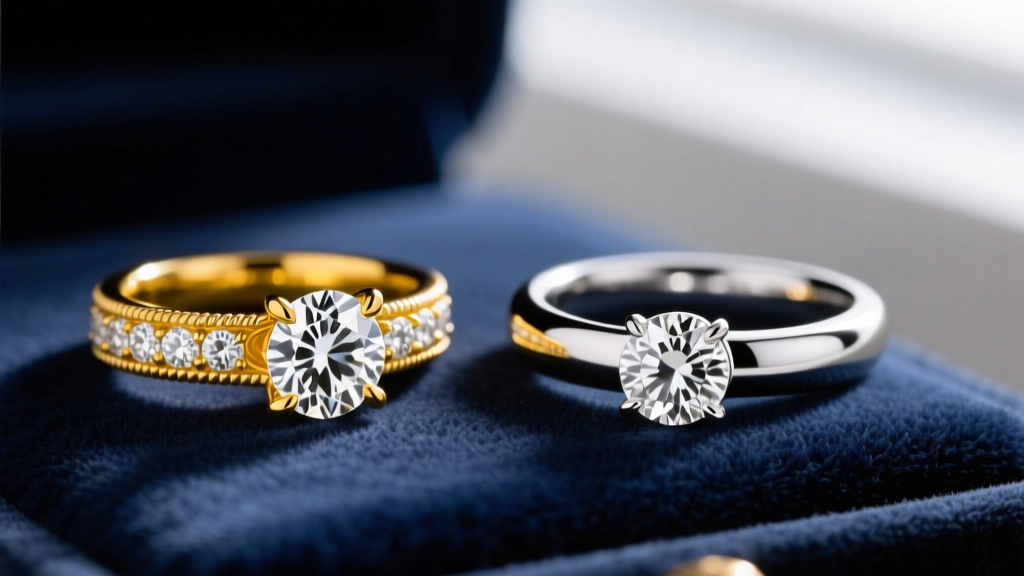
Choosing the Metal: Platinum 950 vs. 14k/18k Gold
For a bezel set tennis necklace, Platinum 950 is the undisputed champion of durability. Unlike gold, which wears away and loses mass over decades of friction, platinum is malleable and displaces. If a platinum bezel is scratched, the metal is merely moved, not lost. However, platinum is significantly heavier and more expensive. If you prefer gold, opt for 14k gold over 18k. The higher alloy content in 14k gold provides a more rigid bezel wall that is less prone to denting if the necklace is dropped or pulled.
Step 3: Sizing, Length, and Clasp Engineering
A heavy bezel set tennis necklace requires specialized engineering at the clasp to prevent catastrophic failure. The weight of the extra metal and stones puts immense tensile stress on the connection points.
The Mandatory Clasp Configuration
Never purchase a bezel set tennis necklace with a simple lobster clasp or a single spring ring. You must insist on a box clasp with double figure-eight safety catches. The box clasp provides a secure, mechanical lock, while the dual figure-eight wires act as redundant backup systems. If the primary box mechanism fails or is accidentally depressed, the safety catches will hold the necklace securely to your neck. According to Jewelers of America, proper clasp engineering is the number one factor in preventing the loss of high-value tennis necklaces.
Length Proportions
- 15 Inches (Choker): Sits high on the collarbone. Best for V-necklines and off-the-shoulder gowns. Requires a precise neck measurement.
- 16 Inches (Standard): The most versatile length. Rests perfectly on the upper chest and accommodates most standard necklines.
- 18 Inches (Layering): Drops lower, allowing room for shorter pendant chains to be layered above it.
Step 4: Mastering the Layering Technique
The smooth profile of a bezel set tennis necklace makes it the ultimate anchor piece for complex layering stacks. Because there are no prongs to catch on secondary chains, you can layer with confidence. Here is the exact framework for building a balanced stack:
- The Anchor (16"): Your bezel set tennis necklace sits at the base of the stack.
- The Mid-Layer (14"): Add a delicate 14-inch chain featuring a single, bezel-set solitaire pendant (e.g., a 0.25ct pear or marquise shape). The matching bezel aesthetic creates visual cohesion.
- The Choker (12.5"): Finish with a 12.5-inch woven or snake chain choker. The contrasting texture of a snake chain against the diamond bezels adds depth to the neckline.

Pro Tip: To prevent the chains from tangling throughout the day, use a magnetic necklace spacer clasp at the nape of your neck. This keeps the chains perfectly spaced at the front while securing them together at the back.
Step 5: Maintenance and Ultrasonic Cleaning Protocols
One of the greatest advantages of a bezel set tennis necklace is the ease of maintenance. However, improper cleaning can still cause damage if you are not careful.
Safe Cleaning Methods
Because the diamonds are fully encased, they cannot vibrate loose in an ultrasonic cleaner. This makes ultrasonic cleaning highly effective for removing trapped lotions, oils, and dead skin cells from the flat metal surfaces and the backs of the settings. However, you must verify with your jeweler that your diamonds have not been fracture-filled. While rare in high-end tennis necklaces, fracture-filled diamonds will shatter or cloud in an ultrasonic machine.
For routine weekly cleaning, skip the harsh chemicals. Use a simple solution of warm distilled water and a few drops of mild, phosphate-free dish soap. Soak the necklace for 15 minutes, then gently agitate it with a baby-soft toothbrush, focusing on the gallery (the underside) of the bezel settings where light enters the pavilion of the diamond. Rinse with distilled water to prevent hard water spots and dry with a lint-free microfiber cloth.
Final Thoughts on Investment and Value
In the current 2026 market, a high-quality 5.0 CTW lab-grown diamond bezel set tennis necklace in 14k gold typically ranges from $2,800 to $4,200, while natural diamond equivalents command between $14,000 and $22,000. By prioritizing a robust box clasp, opting for 14k gold or platinum, and strategically selecting G-H color diamonds, you secure a piece of jewelry that is not only visually stunning but engineered to survive a lifetime of daily wear without requiring constant trips to the jeweler for prong retipping.


