How to Choose and Style a Labradorite Pendant Necklace
Learn how to choose, style, and protect your labradorite pendant necklace. Expert tips on settings, chain pairings, and preserving labradorescence.

The Gemology of Labradorite: Understanding Labradorescence
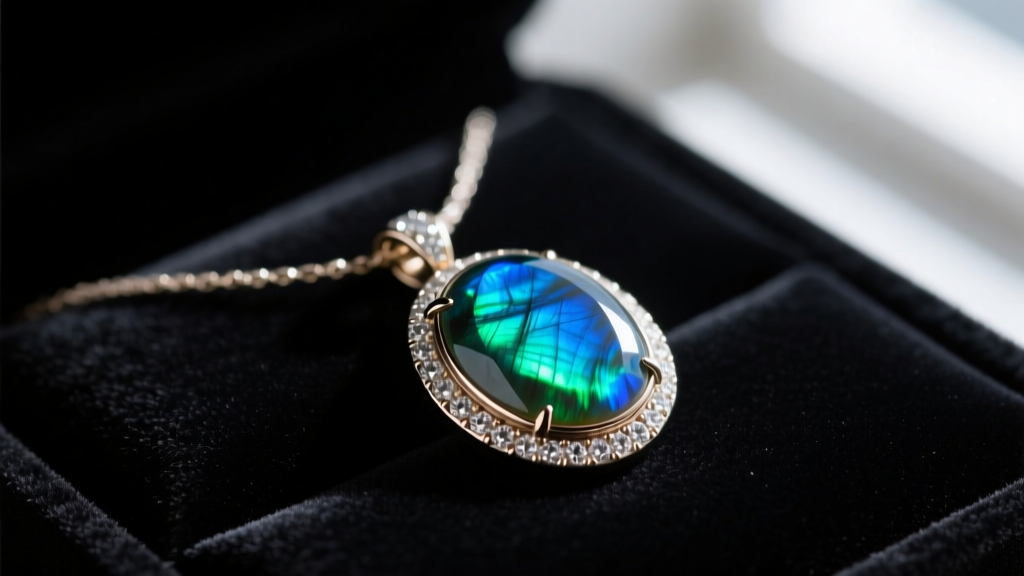
Before selecting a labradorite pendant necklace, it is crucial to understand the optical and physical properties of this unique feldspar mineral. Labradorite is world-renowned for its labradorescence—a mesmerizing optical phenomenon where the stone displays vibrant flashes of electric blue, emerald green, and sometimes coppery gold. According to the Gemological Institute of America (GIA), this effect is caused by light interference within microscopic lamellar twinning planes inside the crystal structure. When light enters the stone, it bounces off these internal layers, separating into spectral colors.
From a durability standpoint, labradorite ranks between 6 and 6.5 on the Mohs scale of mineral hardness. Furthermore, Mindat.org notes that labradorite possesses two directions of perfect cleavage. This means that if subjected to a sharp impact, the stone can split or chip along its internal structural planes. Understanding this inherent vulnerability is the foundational step in choosing a pendant that will survive daily wear while maximizing its optical brilliance.
Step 1: Selecting the Ideal Cut and Setting
Because of its internal twinning planes, the cut of the labradorite dictates the visibility of its flash. The optimal cut for a labradorite pendant is a smooth, polished cabochon. Faceting is rarely used because it disrupts the broad, sweeping flashes of color that make the stone desirable. When evaluating a cabochon, look for a high, rounded dome; this shape allows light to enter and reflect across the twinning layers at multiple angles, creating a dynamic, moving flash as you wear it.
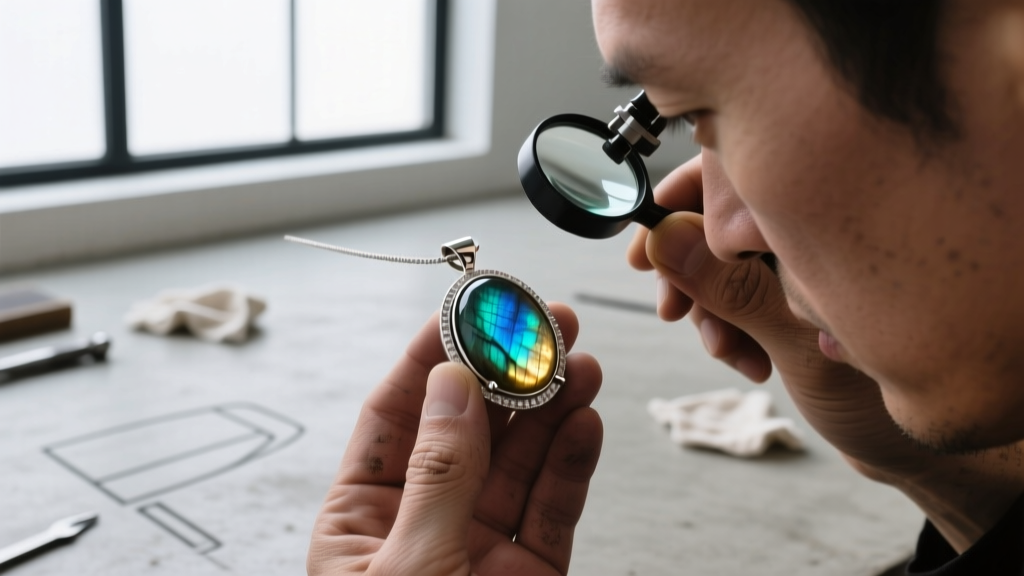
The setting is equally critical due to the stone's 6-6.5 Mohs hardness and perfect cleavage. Here is a breakdown of setting types for labradorite pendants:
- Bezel Setting (Highly Recommended): A full metal rim wraps around the entire circumference of the cabochon. This protects the vulnerable edges from chipping against tables, doorframes, and other hard surfaces. It is the absolute best choice for everyday wear.
- Halo Setting (Recommended): A center labradorite surrounded by a border of smaller gemstones (like diamonds or white sapphires). The halo acts as a physical bumper, absorbing impacts before they reach the center stone.
- Prong Setting (Not Recommended): Prongs leave the edges and the girdle of the stone completely exposed. A single knock to the side of a prong-set labradorite pendant can easily cause a catastrophic chip or fracture along the cleavage plane.
Step 2: Matching the Chain Metal and Gauge
The metal you choose for your chain and pendant bail should not only complement your skin tone but also enhance the specific color flash of your labradorite. Labradorite typically features a dark grey to charcoal base body color, which acts as a canvas for its spectral flashes.
Metal Color Pairing Guide
| Metal Type | Best Paired With | Visual Effect |
|---|---|---|
| Sterling Silver / White Gold | Blue and Green Flash | Enhances the cool, icy, and electric tones of the labradorescence. |
| 14k or 18k Yellow Gold | Gold, Copper, and Yellow Flash | Creates a warm, high-contrast, and regal aesthetic. |
| Rose Gold | Pinkish-Copper and Green Flash | Offers a modern, romantic contrast against the dark grey base. |
| Oxidized / Blackened Silver | Any Flash Color | Provides a moody, gothic, or artisan look that blends seamlessly with the stone's dark matrix. |
Chain Gauge and Style Specifications
Labradorite cabochons are dense, often weighing between 5 and 15 grams depending on their carat size. A delicate 0.8mm chain will snap under this weight over time. For a secure labradorite pendant necklace, select a chain with a thickness between 1.5mm and 2.2mm. Box chains and rope chains are superior to standard cable chains because their interlocking geometric links distribute the pendant's weight more evenly and resist kinking. Always ensure the clasp is a sturdy lobster claw rather than a fragile spring ring, which can easily fail when supporting heavier gemstone pendants.
Step 3: Styling and Layering Techniques
A labradorite pendant necklace is a versatile statement piece, but its dark base color requires strategic styling to prevent it from looking visually heavy or getting lost against dark clothing.
Neckline Pairings
- V-Neck and Scoop Necks: An 18-inch labradorite pendant rests perfectly in the negative space of a V-neck, drawing the eye downward and elongating the neck. The skin acts as a neutral backdrop, allowing the stone's flash to pop.
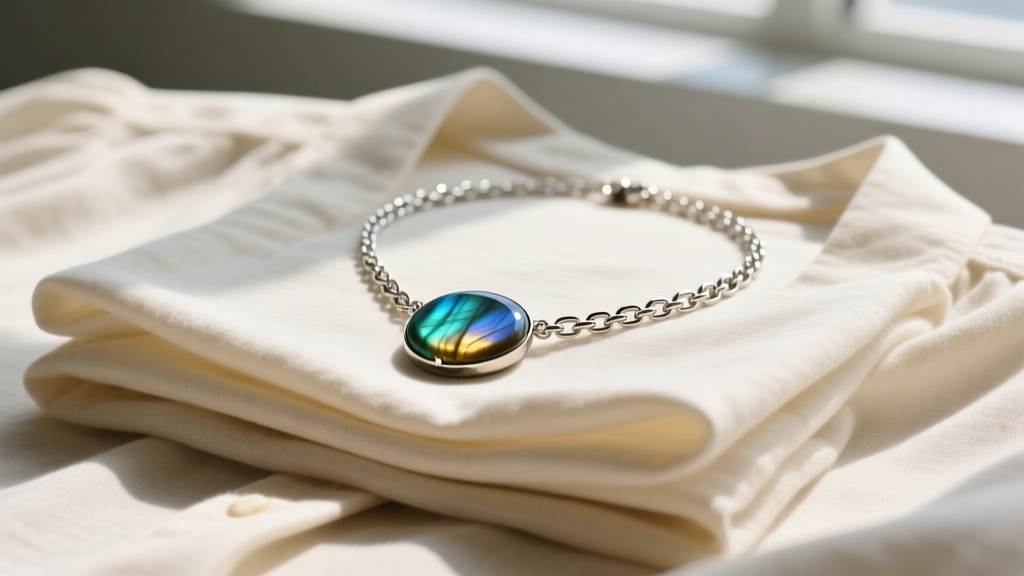
- Turtlenecks and Crew Necks: When wearing high-collared garments, opt for a longer 22-inch or 24-inch chain. This allows the pendant to rest over the fabric. Ensure the fabric is a light or contrasting color (like cream, camel, or charcoal) so the dark grey stone doesn't camouflage into a black sweater.
The Art of Layering
Layering a labradorite pendant requires careful length staggering to avoid tangling and visual clutter. Use the "2-inch rule": each subsequent chain should be exactly two inches longer than the last. For example, pair a 16-inch delicate silver choker, an 18-inch labradorite pendant necklace, and a 20-inch plain silver rope chain. Because labradorite is visually complex, keep the companion chains simple and unadorned. Avoid layering it with other highly reflective or colorful gemstones like amethyst or citrine, as competing optical phenomena will diminish the impact of the labradorescence.
Step 4: The Correct Cleaning and Maintenance Protocol
Improper cleaning is the fastest way to ruin a labradorite pendant. The stone's internal micro-fractures and twinning planes make it highly susceptible to thermal shock and chemical damage. Never use ultrasonic cleaners or steam cleaners; the high-frequency vibrations and sudden temperature changes will cause the stone to fracture internally, turning the vibrant flash into a cloudy, dead grey.
Step-by-Step Safe Cleaning Method
- Prepare a Mild Solution: Mix a few drops of pH-neutral dish soap (free of harsh degreasers or citrus extracts) into a bowl of lukewarm, distilled water. Avoid hot water to prevent thermal shock.
- Soak Briefly: Submerge the labradorite pendant necklace for no more than 3 to 5 minutes. Prolonged soaking can weaken the adhesive if the stone is glued into the bezel setting.
- Gentle Agitation: Use a baby-soft toothbrush or a dedicated, ultra-soft makeup brush to gently sweep away dirt from the back of the stone and the chain links. Never scrub the face of the cabochon aggressively, as accumulated dust often contains quartz particles (Mohs 7), which will scratch the labradorite's surface.
- Rinse and Dry: Rinse thoroughly under a gentle stream of lukewarm water. Pat dry immediately with a clean, lint-free microfiber cloth. Ensure the area where the bail meets the chain is completely dry to prevent metal oxidation.
Storage Best Practices
When not being worn, store your labradorite pendant necklace in a soft, individual flannel pouch. Because labradorite is softer than diamonds, sapphires, and even quartz, storing it loose in a communal jewelry box will result in severe surface scratching, which dulls the polish and severely diminishes the stone's ability to reflect light and display its signature flash.
Conclusion
Selecting and caring for a labradorite pendant necklace requires a balance of gemological knowledge and practical styling. By prioritizing protective bezel settings, matching the metal to the stone's specific flash color, and adhering to a strict, non-abrasive cleaning protocol, you ensure that your pendant remains a captivating, luminous centerpiece in your jewelry collection for decades to come.


