How to Choose, Verify, and Style Love Necklace Diamonds
Learn how to select, authenticate, and style love necklace diamonds. Our step-by-step guide covers melee diamond grades, chain pairings, and layering.

The Enduring Appeal of the Diamond Love Motif
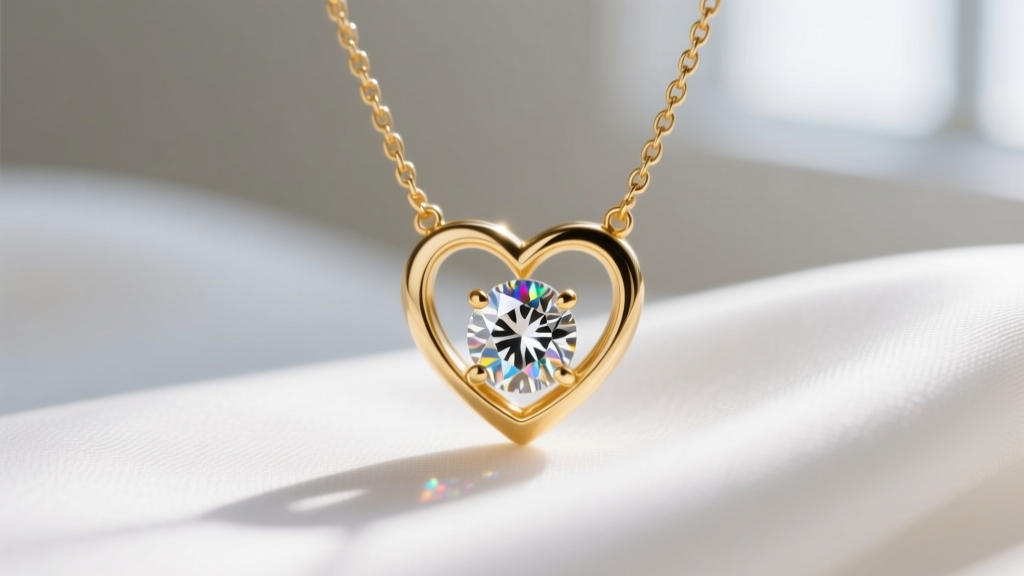
A diamond love necklace is more than just an accessory; it is a deeply personal talisman. Whether the pendant features a classic heart, an infinity loop, or a delicate script spelling out "Love," the addition of diamonds elevates the piece from simple sentiment to enduring luxury. However, buying and styling these pieces requires a nuanced understanding of jewelry mechanics, specifically regarding small stone grading and chain proportions. This comprehensive, step-by-step guide will walk you through the exact specifications you need to look for when investing in love necklace diamonds, ensuring you get maximum brilliance, structural integrity, and stylistic versatility.
Step 1: Decoding Melee Diamond Quality in Love Pendants
The most common mistake consumers make when purchasing a diamond pendant is applying the same grading standards used for large center stones (like a 1.5-carat engagement ring) to small accent stones. Most love pendants utilize melee diamonds—stones weighing between 0.01 and 0.15 carats each. Because of their size, the Gemological Institute of America (GIA) notes that melee diamonds are rarely issued individual grading reports. Instead, they are sorted and sold in batches by specialized cutters.
The 4Cs for Small Stones: What Actually Matters
When evaluating love necklace diamonds, you must adjust your expectations and focus on visual performance rather than paper grades. Here is the precise framework for selecting melee quality:
- Color: For 14k or 18k yellow gold settings, G-H color melee is perfectly adequate, as the warm metal reflects into the stone. For platinum or white gold, insist on D-F (colorless) melee to prevent the pendant from looking yellowish against the white metal.
- Clarity: SI1 (Slightly Included 1) is the sweet spot for melee. Inclusions in SI1 stones are generally invisible to the naked eye at pendant viewing distances (12–18 inches). Avoid I1 or I2 clarity at all costs; heavy carbon spots or feathers in small stones will make the pendant look cloudy and dull, killing light return.
- Cut: Cut is paramount. Even a tiny 0.05ct diamond will sparkle fiercely if it has ideal proportions. Look for "full cut" melee (57-58 facets) rather than "single cut" (17-18 facets), which is sometimes used in cheaper mass-produced jewelry and lacks scintillation.
| Metal Setting | Recommended Color Grade | Recommended Clarity | Estimated Price Premium |
|---|---|---|---|
| Yellow Gold (14k/18k) | G - H (Near Colorless) | SI1 - SI2 | Base Price |
| Rose Gold (14k) | G - H (Near Colorless) | SI1 - SI2 | Base Price |
| White Gold / Platinum | D - F (Colorless) | VS2 - SI1 | +15% to 25% |
Step 2: Selecting the Right Setting and Chain Architecture
The way your love necklace diamonds are secured dictates both their safety and their brilliance. Furthermore, the chain you select must be proportionally balanced with the pendant's weight and visual footprint.
Prong vs. Bezel: The Everyday Wear Debate
Because a love pendant is often worn daily as a sentimental staple, durability is a primary concern.
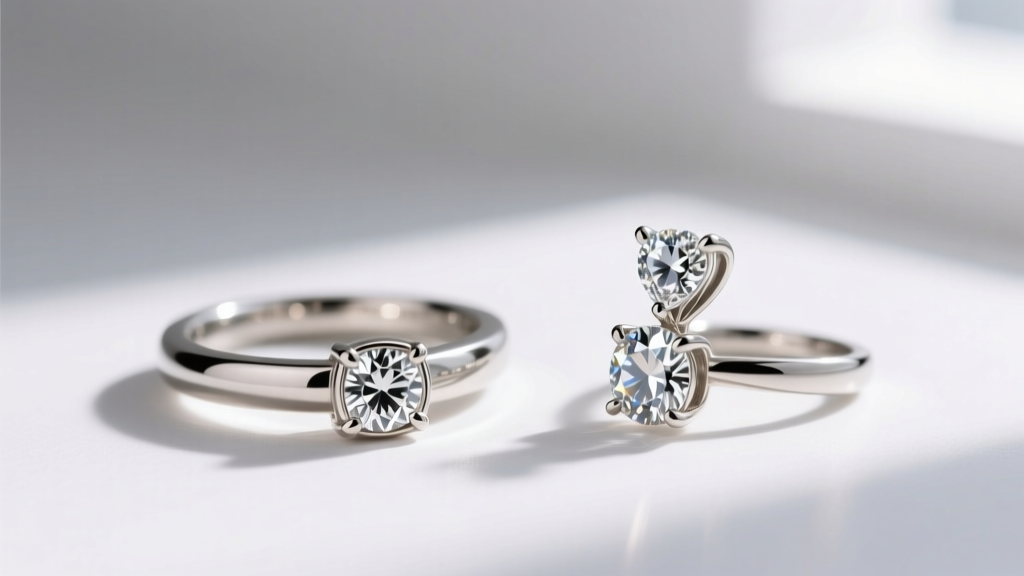
- Bezel Settings: A metal rim encircles the diamond's girdle. This is the safest option for everyday wear, protecting the stone's fragile edges from chipping if the pendant swings and hits a hard surface. The trade-off? A bezel blocks light from entering the sides of the diamond, reducing overall brilliance by roughly 10% compared to prong settings.
- Prong Settings: Typically utilizing 3 or 4 tiny metal claws, prong settings expose the maximum amount of the diamond's pavilion to light, resulting in superior sparkle. However, prongs can catch on knitwear and silk, and they require annual check-ups to ensure the metal hasn't worn down and released the stone.
Chain Proportions and Clasp Mechanics
A heavy diamond pendant on a flimsy chain will cause the chain to stretch, kink, or eventually snap. Follow these proportional rules based on the pendant's total carat weight (TW):
- Lightweight Pendants (0.10ct - 0.25ct TW): Pair with a 0.8mm to 1.0mm cable or box chain.
- Medium Pendants (0.30ct - 0.75ct TW): Require a 1.1mm to 1.4mm rope or wheat chain for structural support.
- Clasp Selection: Always upgrade from a standard spring-ring clasp to a lobster claw clasp. Lobster clasps feature a solid internal spring mechanism that is significantly less prone to accidental unfastening or mechanical failure over time.
Step 3: Mastering the Layering Formula and Neckline Pairings
A standalone love necklace diamonds pendant is beautiful, but integrating it into a curated stack elevates your personal style. The key to layering is varying both the length and the texture of the chains to prevent tangling and visual clutter.
The 3-Piece Layering Framework
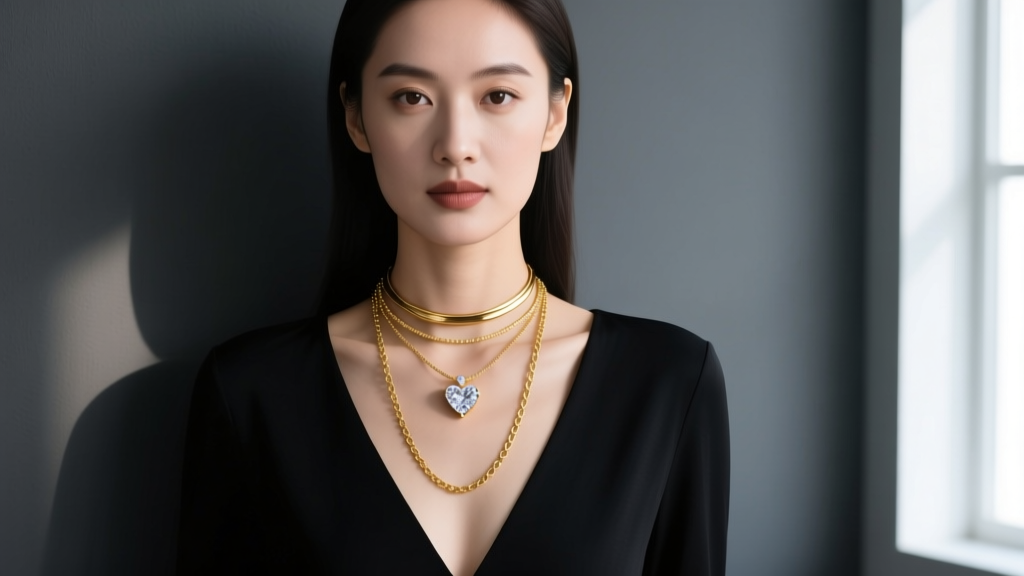
To create a balanced, high-end look, use the "Rule of Three" with a minimum 2-inch gap between each chain:
- The Anchor (14-15 inches): A simple, diamond-free 1.5mm herringbone or snake chain that sits snugly on the collarbone.
- The Focal Point (16-18 inches): Your love necklace diamonds pendant. This should rest perfectly in the hollow of the throat or just above the bust line.
- The Elongator (20-22 inches): A textured chain, such as a paperclip link or a satellite chain with tiny gold beads, which draws the eye downward and elongates the neck.
Matching Pendants to Necklines
The silhouette of your clothing should dictate the length and scale of your pendant. According to styling principles endorsed by the Jewelers of America, proper proportion prevents jewelry from competing with your wardrobe.
- Crew Necks & High Collars: Opt for a shorter 16-inch chain with a compact, bezel-set love pendant. Avoid long chains that will dangle awkwardly over the fabric ridge.
- V-Necks & Wrap Dresses: This is the ideal canvas for an 18-inch pendant. The V-shape of the neckline naturally frames the pendant, drawing the eye directly to the diamonds. A prong-set heart or infinity motif works beautifully here.
- Off-the-Shoulder & Scoop Necks: Maximize the exposed skin with a dramatic, multi-diamond love script pendant on a 20-inch chain, allowing the piece to act as a standalone statement without the need for layering.
Step 4: Maintenance, Cleaning, and Long-Term Care
Diamonds are naturally lipophilic, meaning they attract and hold oils from your skin, lotions, and perfumes. A buildup of oil on the pavilion (the bottom of the diamond) will completely block light refraction, making even the highest quality love necklace diamonds look like dull glass.
The Safe Weekly Cleaning Protocol
Do not rely on ultrasonic cleaners for your everyday pendants. While ultrasonic waves are great for solid metal, they can shake melee diamonds loose from their prongs over time, especially if the setting has experienced microscopic wear. Furthermore, if your diamonds have been fracture-filled (a common treatment for lower-clarity stones), ultrasonic heat and vibrations can destroy the filling.
The Expert Method:
- Fill a small ceramic bowl with warm water and a few drops of mild, ammonia-free dish soap.
- Let the pendant soak for 15 minutes to loosen sebum and cosmetic buildup.
- Use a baby toothbrush (which has ultra-soft bristles that won't scratch 14k or 18k gold) to gently brush the back of the diamonds, where oil accumulates the most.
- Rinse under lukewarm running water, ensuring the drain is securely plugged.
- Pat dry with a lint-free microfiber cloth. Avoid paper towels, as the wood fibers can leave microscopic scratches on polished gold and platinum.
Final Thoughts on Your Investment
Choosing the perfect diamond love necklace is an exercise in balancing emotional significance with gemological reality. By prioritizing full-cut melee in the SI1 clarity range, selecting a chain gauge that properly supports the pendant's weight, and mastering the art of proportional layering, you ensure that your piece remains a brilliant, wearable staple for decades. For further education on diamond anatomy and how light interacts with different facet structures, consult the American Gem Society before making your final purchase. Armed with these technical specifications, you can shop with absolute confidence and curate a necklace stack that is uniquely, beautifully yours.


