How to Choose a Necklace Metal: Gold, Silver, and Platinum Compared
Discover how to choose the perfect metal for a necklace. Compare gold, platinum, silver, and titanium properties, hardness, and allergy risks.

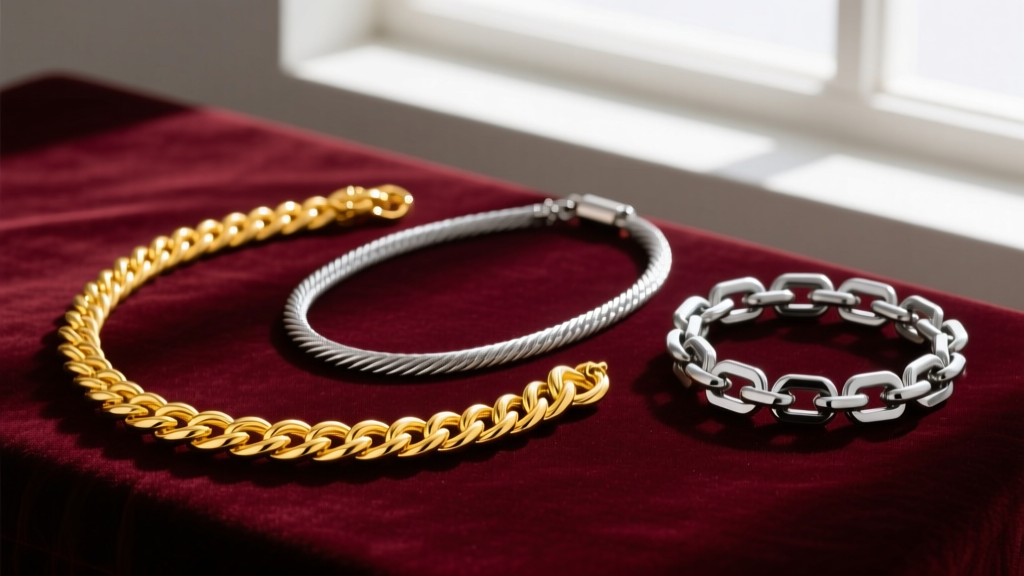
Why Metal Selection Dictates Necklace Longevity
When selecting a necklace, consumers often fixate on pendant aesthetics or chain length, overlooking the metallurgical foundation that dictates the piece's lifespan. The metal you choose determines not only the initial price point but also the chain's tensile strength, resistance to micro-abrasions, and biological compatibility with your skin. As of 2026, advancements in alloy treatments and alternative metals have expanded the market, making it crucial to understand the specific material properties before investing in fine jewelry.
A necklace is subjected to constant friction, environmental pollutants, and structural stress—especially at the clasp and bail. Choosing the wrong metal for your lifestyle can result in premature chain stretch, severe tarnishing, or allergic contact dermatitis. This guide breaks down the precise material properties of the most popular necklace metals to help you make an informed, expert-level decision.
The Precious Metal Hierarchy: Gold, Platinum, and Palladium
Gold Alloys: Karats, Hardness, and Chain Stretch
Pure 24-karat gold is exceptionally malleable, with a Vickers hardness (HV) of roughly 60. While prized for its rich, buttery color, 24k gold is entirely unsuitable for daily-wear necklace chains; the links will stretch and deform under the weight of even a modest pendant. To achieve structural integrity, gold is alloyed with metals like copper, silver, zinc, and nickel.
- 18k Gold (75% Pure): With a Vickers hardness of approximately 125 HV, 18k gold offers a luxurious color and adequate durability for medium-weight pendants. However, delicate 18k chains (like serpentine or box chains) can still suffer from clasp deformation over a decade of daily wear.
- 14k Gold (58.5% Pure): The industry standard for durability, 14k gold sits around 135-140 HV. The higher proportion of alloying metals provides superior resistance to the micro-abrasions that cause chain links to thin and snap.
- White Gold and Rhodium Plating: White gold is alloyed with nickel or palladium to bleach the yellow hue. It is then electroplated with rhodium (typically 0.5 to 1.0 microns thick) for a bright, reflective finish. Be aware that this plating wears off within 1 to 3 years, requiring periodic re-plating to maintain the stark white appearance.
Platinum and Palladium: Density and Patina
Platinum is the undisputed king of durability in fine jewelry. Most platinum necklaces are stamped Pt950, meaning they contain 95% pure platinum alloyed with 5% ruthenium or iridium. According to the Gemological Institute of America (GIA), platinum's density (21.45 g/cm³) makes it significantly heavier than gold. A platinum cable chain will feel substantial and luxurious on the neck.
Unlike gold, which loses microscopic flakes of metal when scratched, platinum merely displaces. Over time, this displacement creates a soft, frosted finish known as a "patina." Rather than degrading the structural integrity of the chain, this patina is highly sought after by collectors and can be polished back to a mirror finish by a jeweler without significant metal loss.
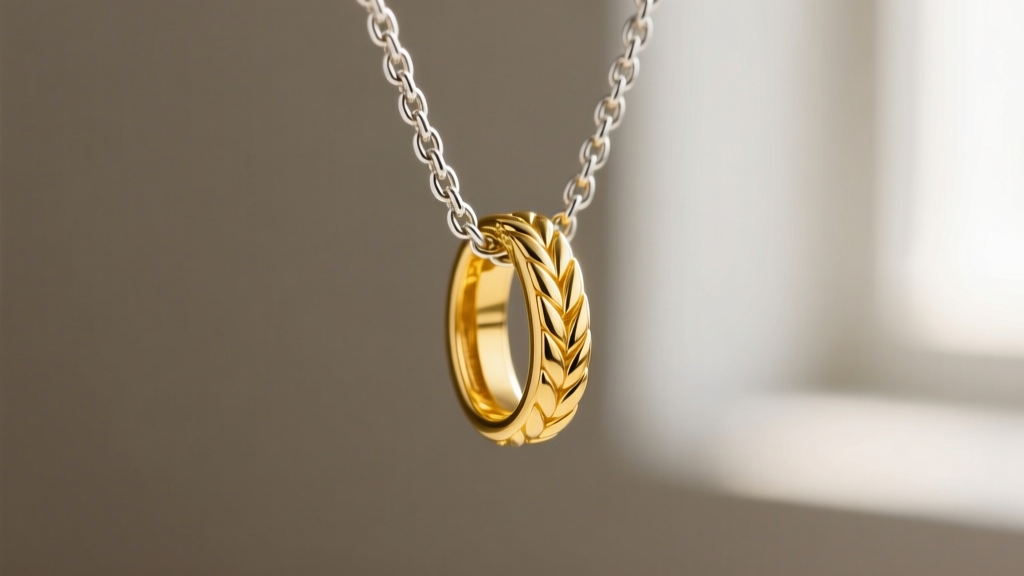
Silver and Modern Alternatives: Durability vs. Cost
Sterling Silver vs. Argentium
Traditional Sterling Silver (925) consists of 92.5% silver and 7.5% copper. The copper provides necessary hardness but is highly reactive to atmospheric sulfur dioxide, leading to rapid tarnishing. For necklace wearers who dislike frequent polishing, Argentium Silver is the superior modern alternative. By replacing some of the copper with germanium, Argentium (typically 93.5% or 96% pure) forms a transparent, self-healing germanium dioxide layer on the surface that drastically slows tarnish formation.
Titanium: Aerospace-Grade Strength
Titanium has surged in popularity for men's and minimalist necklaces due to its incredible strength-to-weight ratio. While Commercially Pure (Grade 2) titanium is common, expert jewelers utilize Grade 5 Titanium (Ti-6Al-4V). This aerospace-grade alloy is exceptionally strong, allowing for ultra-thin, lightweight chains that can easily support heavy gemstone pendants without stretching. The primary drawback is that titanium cannot be traditionally soldered or resized, making clasp repairs nearly impossible.
Material Properties Comparison Matrix
Use this matrix to compare the physical and chemical properties of common necklace metals at a glance.
| Metal / Alloy | Purity Standard | Vickers Hardness (HV) | Tarnish Resistance | Hypoallergenic |
|---|---|---|---|---|
| 24k Yellow Gold | 99.9% Au | ~60 | Excellent | Yes |
| 18k Yellow Gold | 75% Au | ~125 | Excellent | Yes |
| 14k White Gold | 58.5% Au | ~135 | Excellent (Rhodium) | No (Contains Nickel) |
| Platinum (Pt950) | 95% Pt | ~135 | Excellent | Yes |
| Sterling Silver (925) | 92.5% Ag | ~65 | Poor | Mostly (Copper allergy) |
| Argentium Silver | 93.5%+ Ag | ~75 | Very Good | Mostly |
| Grade 5 Titanium | Ti-6Al-4V | ~340 | Excellent | Yes |
Skin Sensitivity and Allergic Contact Dermatitis
The neck and décolletage feature thin, highly sensitive skin, making metal biocompatibility a critical factor. According to the American Academy of Dermatology (AAD), nickel allergy is the most common cause of allergic contact dermatitis, affecting roughly 10-15% of the population.
When purchasing a white gold necklace, verify the alloy composition. Many mass-market white gold chains use nickel as a bleaching agent. Once the rhodium plating wears thin from friction against the collarbone, the exposed nickel triggers redness, itching, and blistering. If you have sensitive skin, bypass white gold entirely and opt for Platinum, Palladium, or high-purity Titanium, all of which are inherently hypoallergenic and require no toxic plating.
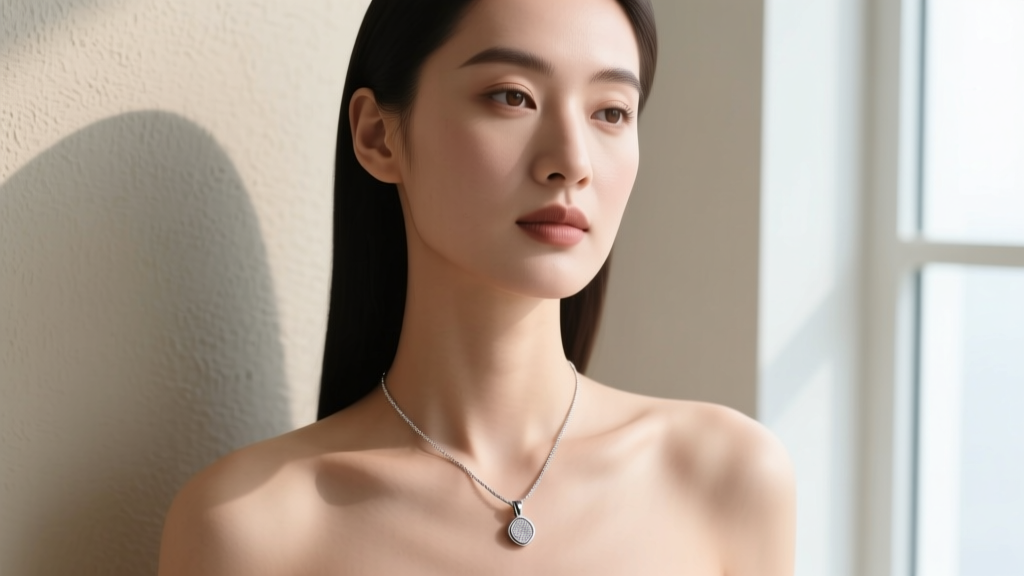
The Buying Framework: Matching Metal to Lifestyle
To ensure your necklace withstands the test of time, align your metal choice with your daily wear habits and maintenance tolerance.
"A necklace is only as resilient as its weakest link. The clasp mechanism and the bail connecting the pendant endure 80% of the structural stress. Always prioritize high-tensile metals for these specific components."
1. The Daily Wear / Minimal Maintenance Profile
If you intend to wear your necklace in the shower, at the gym, and while sleeping, choose Platinum or Grade 5 Titanium. Platinum will not tarnish, will not trigger allergies, and its structural integrity will not degrade from water exposure or sweat. Titanium offers similar resilience at a fraction of the cost, though it lacks the prestige and weight of platinum.
2. The Heirloom / Occasional Wear Profile
For statement pieces or lockets worn primarily for evening events, 18k Gold or Argentium Silver are exceptional choices. These metals offer superior color saturation and workability for intricate, artisanal link designs. Because they are not subjected to daily friction, the softer nature of 18k gold and silver will not result in premature chain stretch.
3. The Budget-Conscious / High-Fashion Profile
For trend-driven layering where chains are swapped frequently, Rhodium-plated Sterling Silver provides the bright, white-metal aesthetic of platinum without the exorbitant price tag. Just be prepared to re-plate or polish the silver every few years to combat inevitable oxidation.
Final Thoughts on Necklace Metallurgy
Understanding the material science behind jewelry transforms you from a passive consumer into an informed collector. Whether you prioritize the indestructible nature of platinum, the rich heritage of 18k gold, or the modern utility of titanium, evaluating the Vickers hardness, alloy composition, and biocompatibility of the metal ensures that the necklace you choose will remain a lasting staple in your wardrobe.


