How to Organize Necklaces: A Beginner's Guide to Tangle-Free Storage
Learn how to organize necklaces to prevent tangles and damage. Explore beginner-friendly storage solutions, material care, and display tips.

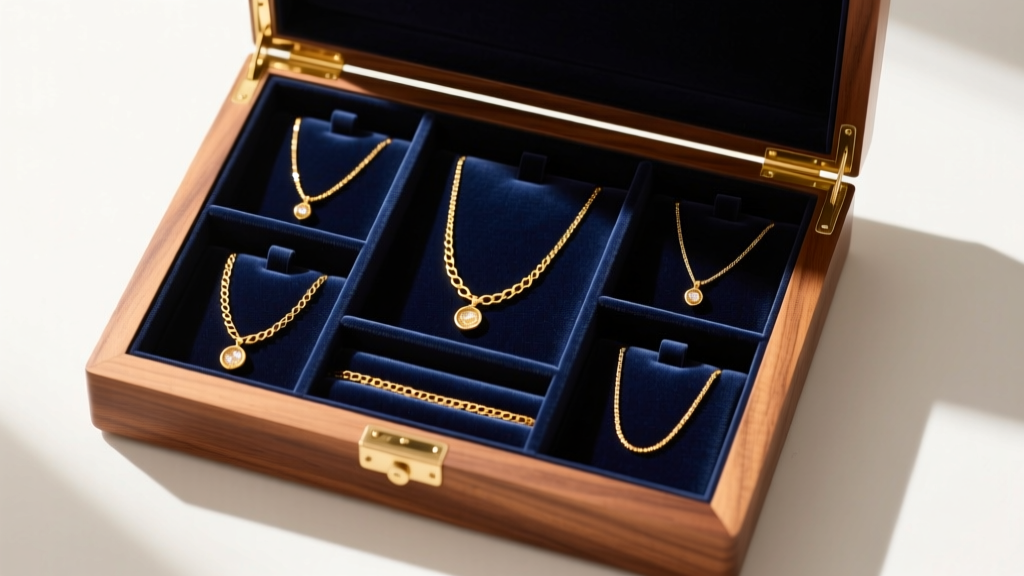
If you have ever spent ten minutes painstakingly picking apart a knot in your favorite gold chain, you already know the frustration of poor jewelry storage. Learning how to organize necklaces is not just about keeping your vanity tidy; it is a critical practice for preserving the structural integrity and finish of your jewelry. When necklaces are tossed into a drawer, the physics of spontaneous knotting takes over, leading to bent links, broken clasps, and severe metal fatigue.
This beginner-friendly explainer will walk you through the science of chain tangling, material-specific storage rules, and actionable frameworks to build a tangle-free jewelry collection that lasts a lifetime.
The Physics of Tangles: Why Chains Knot
To understand how to organize necklaces effectively, you must first understand why they tangle. In physics, the 'spontaneous knotting of agitated strings' dictates that flexible chains left in a confined, moving space will naturally form complex knots. However, the weave of your necklace plays a massive role in this process.
- Herringbone and Snake Chains: These flat, fluid weaves are notorious for tangling. Because they lack rigid structural links, they easily flip over themselves and catch on microscopic burrs.
- Box and Cable Chains: These feature rigid, geometric links that resist bending at sharp angles, making them naturally more tangle-resistant.
- Paperclip and Cuban Links: The large, open links of these chains rarely knot, but they can easily snag and scratch softer gemstones if stored together.
Expert Rule of Thumb: Never store flat-weave chains loose in a box. They must always be hung or laid perfectly flat and isolated.
Step 1: The Sorting and Purging Framework
Before buying acrylic organizers or velvet rolls, you must audit your collection. Group your necklaces by length, as this dictates how they should be stored to prevent overlapping.
- Collars & Chokers (14-16 inches): These rigid or semi-rigid pieces require wide, curved compartments or specialized velvet rolls to prevent kinking.
- Princess Length (18 inches): The most common length. These can be hung on standard jewelry tree hooks or placed in standard drawer dividers.
- Matinee & Opera (20-36 inches): Long chains should be doubled over when hung, or stored in deep, partitioned drawers to prevent them from dragging and catching on other items.
Step 2: Choosing the Right Storage Medium
Not all organizers are created equal. The material of your storage solution can actually accelerate tarnishing or scratching if chosen poorly. Below is a comparison of the most common storage methods for beginners.
| Storage Type | Best For | Pros | Cons |
|---|---|---|---|
| Velvet-Lined Drawer Inserts | Everyday wear, mixed metals | Keeps pieces flat, prevents scratching, easy to view | Takes up significant drawer space |
| Wall-Mounted Hanging Racks | Long chains, pendants | Utilizes vertical space, completely eliminates tangling | Exposes silver to airborne sulfur (tarnish) |
| Ziplock Bags with Anti-Tarnish Strips | Sterling silver, travel | Cheap, highly effective against oxidation | Not visually appealing, hard to browse quickly |
| Leather Jewelry Rolls | Travel, chokers | Portable, protects from hard impacts | Can trap moisture if stored before cleaning |
Step 3: Material-Specific Storage Rules
Organizing by color or style is a beginner mistake; true jewelry preservation requires organizing by material science. Different metals and gemstones react to their environment in vastly different ways.
Sterling Silver and the Sulfur Problem
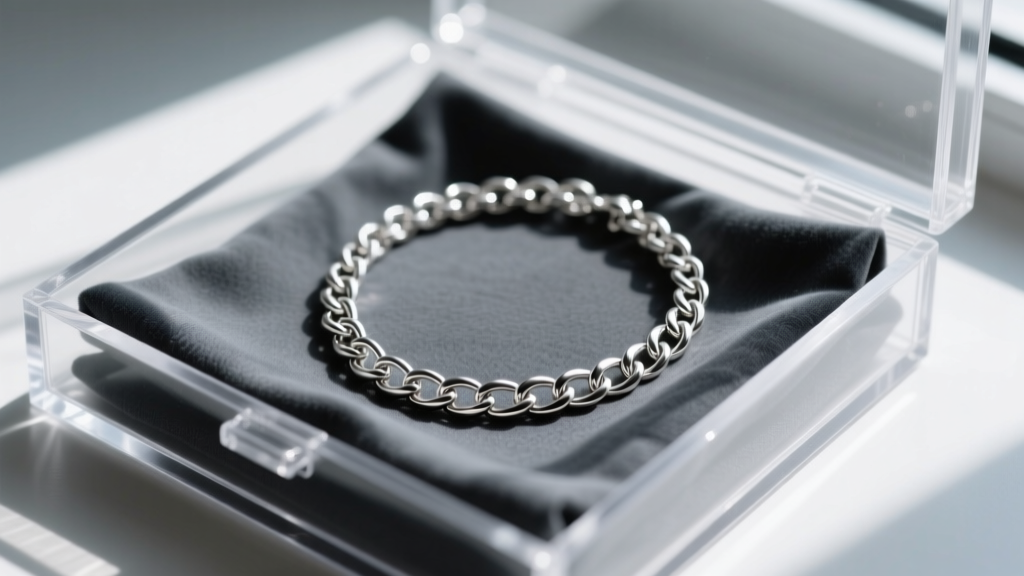
Sterling silver tarnishes when it reacts with hydrogen sulfide in the air, forming silver sulfide (a black crust). If you live in a humid climate, this process accelerates. According to conservation guidelines, silver should be stored in airtight containers with specialized anti-tarnish strips or wrapped in Pacific Silvercloth, which actively absorbs sulfur gases before they reach your jewelry.
Pearls and Organic Gemstones
Pearls are organic and contain trace amounts of water. Storing them in an airtight plastic bag or a safety deposit box will cause them to dehydrate, crack, and lose their luster. The Gemological Institute of America (GIA) recommends storing pearls in a soft linen pouch that allows for slight air circulation, keeping them away from extreme heat and dry environments. Furthermore, pearls rank at a mere 2.5 on the Mohs hardness scale; they must never share a compartment with metal chains that will easily scratch their nacre.
The Mohs Hardness Scale and Scratching
Diamonds rank at a 10 on the Mohs scale, while 14k gold sits around 2.5 to 3. If you store a diamond pendant in the same compartment as a delicate gold chain, the diamond will act like sandpaper, micro-scratching the gold every time the drawer is opened. Always isolate diamond and sapphire pieces in individual soft-lined slots.
Travel Organization: The Straw and Cling Film Tricks
Traveling is where most necklace casualties occur. When packing a suitcase, vibrations and movement guarantee a tangled mess. Professional stylists rely on two incredibly effective, low-cost hacks to keep chains secure on the road.
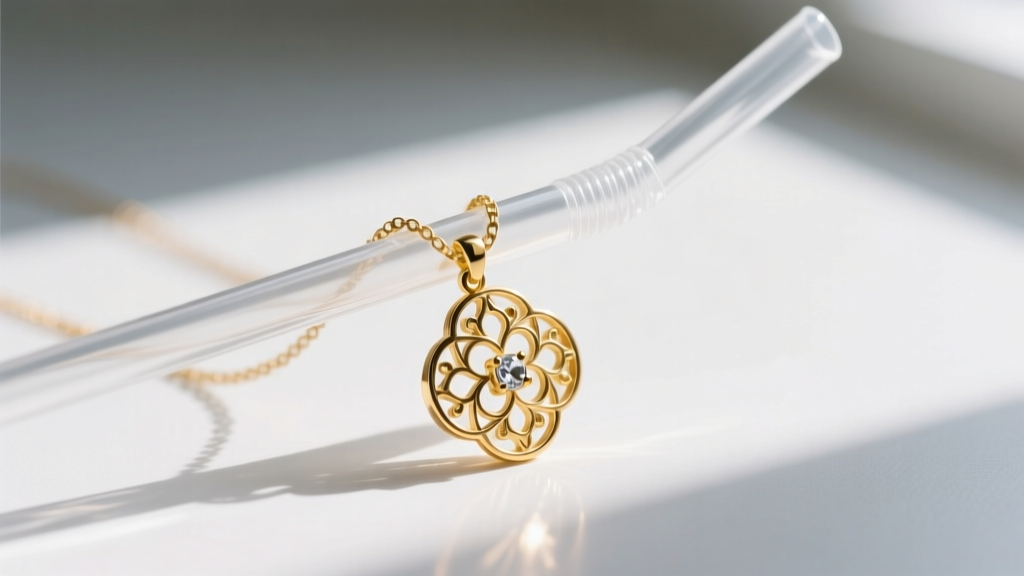
The Straw Method: Unclasp your necklace and thread one end of the chain through a standard plastic drinking straw. Re-clasp the necklace. The rigid straw prevents the chain from bending sharply enough to form a knot, no matter how much your luggage is jostled.
The Press-and-Seal Method: Lay your necklaces flat on a sheet of plastic cling wrap, leaving space between each piece. Place a second sheet of cling wrap over the top and press down to seal the chains between the two layers. This creates a custom, tangle-proof barrier that can be rolled up and placed in your toiletry bag.
Maintenance Routine for Longevity
How you prepare your necklaces for storage is just as important as the organizer you use. Human sebum (skin oils), lotions, and perfumes contain salts and chemicals that degrade metal finishes and attract abrasive dust.
Before putting a necklace away for the season, wipe it down with a lint-free microfiber cloth. For deeper cleaning, use a few drops of mild dish soap in lukewarm water and a soft baby toothbrush, ensuring the piece is completely dry before sealing it in a drawer. As noted by experts at Tiffany & Co., regular gentle cleaning prevents the buildup of corrosive compounds that can permanently pit soft metals like high-karat gold and silver.
By implementing these structural sorting methods and respecting the material science of your jewelry, you will eliminate the dread of tangled chains and ensure your necklaces remain in pristine, wearable condition for decades.


