How to Repair and Clean a Tarnished Flower Necklace
Learn to safely clean, untangle, and repair a tarnished flower necklace. Expert troubleshooting for enamel, loose stones, and botanical crevices.

Floral jewelry has remained a cornerstone of personal adornment for centuries, but as we navigate the 2026 vintage and estate jewelry market, collectors and everyday wearers are increasingly inheriting or thrift-shopping delicate botanical pieces that require specialized triage. A flower necklace is uniquely vulnerable to environmental damage. Unlike simple geometric pendants, botanical designs feature deep recesses, overlapping petals, and intricate stamen details that trap skin oils, cosmetic residues, and atmospheric pollutants.
Troubleshooting a damaged or tarnished floral pendant requires an understanding of metallurgy, gemstone settings, and historical enameling techniques. Below is a comprehensive, bench-jeweler-approved guide to diagnosing and resolving the most common failures in floral necklaces.
The Unique Vulnerabilities of Botanical Jewelry Designs
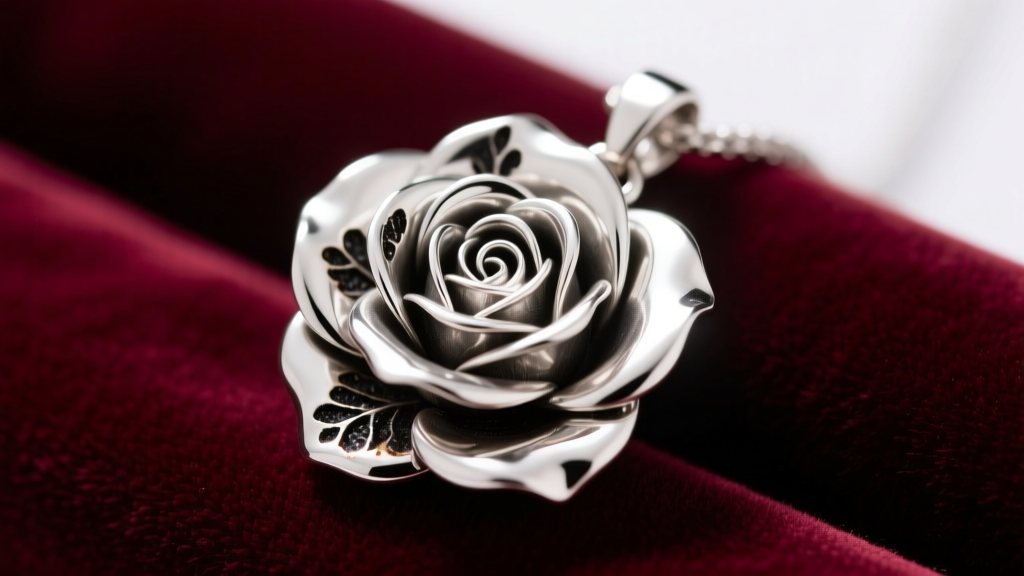
Before applying any cleaning solution or repair tool, you must identify the specific construction of your flower necklace. The high surface area of petal designs accelerates oxidation, particularly in sterling silver (925) pieces. When silver reacts with hydrogen sulfide in the air, it forms silver sulfide (Ag2S), a black tarnish that aggressively lodges in the deep grooves of engraved floral patterns.
Furthermore, many vintage and mid-century flower necklaces utilize mixed media. It is common to find gold-plated brass bases adorned with cold enamel (an epoxy-based resin) or vitreous enamel (fired glass). The petals may feature micro-prong settings holding tiny seed pearls or melee diamonds. Applying a blanket cleaning approach to such a complex ecosystem of materials is the fastest way to destroy the piece.
Troubleshooting Tarnish in Intricate Floral Crevices
Removing tarnish from the deep crevices of a rose, daisy, or lotus pendant without stripping the surrounding polish or damaging the metal requires a targeted approach. According to the Jewelers of America, abrasive dips and harsh chemical baths can permanently dull the high-polish edges of floral petals while leaving the recesses untouched.
The Danger of Ultrasonic Cleaners
Never place a vintage or enamel flower necklace in an ultrasonic cleaner. Ultrasonic waves create microscopic cavitation bubbles that implode against the metal. While this is excellent for stripping grime from a plain diamond solitaire, it will shatter vitreous enamel, peel cold enamel, and vibrate loose the delicate adhesive holding seed pearls into the center of a floral design. The Gemological Institute of America (GIA) explicitly warns against using ultrasonics on porous gems and fragile organic materials frequently found in botanical jewelry, such as coral, turquoise, and pearls.
Safe Cleaning Protocol for Silver and Gold Botanicals
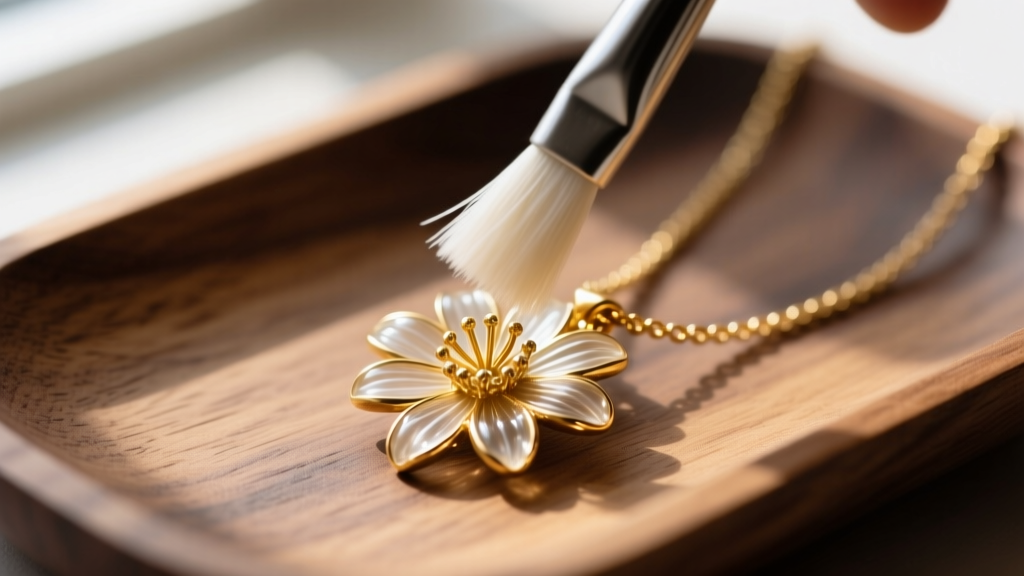
- Step 1: Dry Agitation. Use a clean, soft horsehair detailing brush to gently sweep out dry debris, lint, and cosmetic powder from the stamen and petal grooves.
- Step 2: Targeted Chemical Application. For sterling silver, apply a small amount of non-abrasive silver polish (like Goddard's) to a cotton swab. Gently work the swab into the dark crevices. Do not rub the high-polish edges, as repeated friction will eventually wear through silver plating.
- Step 3: The Fiberglass Scratch Pen. For stubborn, hardened tarnish in deep floral engravings, professional jewelers use a fiberglass scratch brush pen. By gently twisting the pen, you expose fresh fiberglass bristles that can scrape out oxidation from microscopic grooves without bending the silver petals.
- Step 4: Neutralization. Rinse the pendant in distilled water (never tap water, which contains chlorine) and immediately dry with a microfiber cloth, using compressed air to blow moisture out of the deepest floral recesses to prevent water spots.
Structural Failures: Loose Stones and Chipped Enamel
The overlapping nature of floral designs means that the edges of the petals are constantly subject to friction and impact against clothing and skin. This leads to specific structural failure modes that require distinct troubleshooting strategies.
| Failure Mode | Primary Cause | DIY vs. Professional | Estimated Repair Cost |
|---|---|---|---|
| Chipped Cold Enamel on Petals | Impact or thermal shock | Professional (Epoxy tinting) | $45 - $85 |
| Loose Center Gemstone | Prong snagging on fabric | Professional (Prong tightening) | $20 - $50 per stone |
| Worn Gold Vermeil on Edges | Friction against skin/clothing | Professional (Re-plating) | $60 - $120 |
| Bent Silver Petals | Crushing in storage | DIY (Nylon jaw pliers) | $0 (Tool cost: $15) |
Addressing Loose Gemstones in Floral Centers
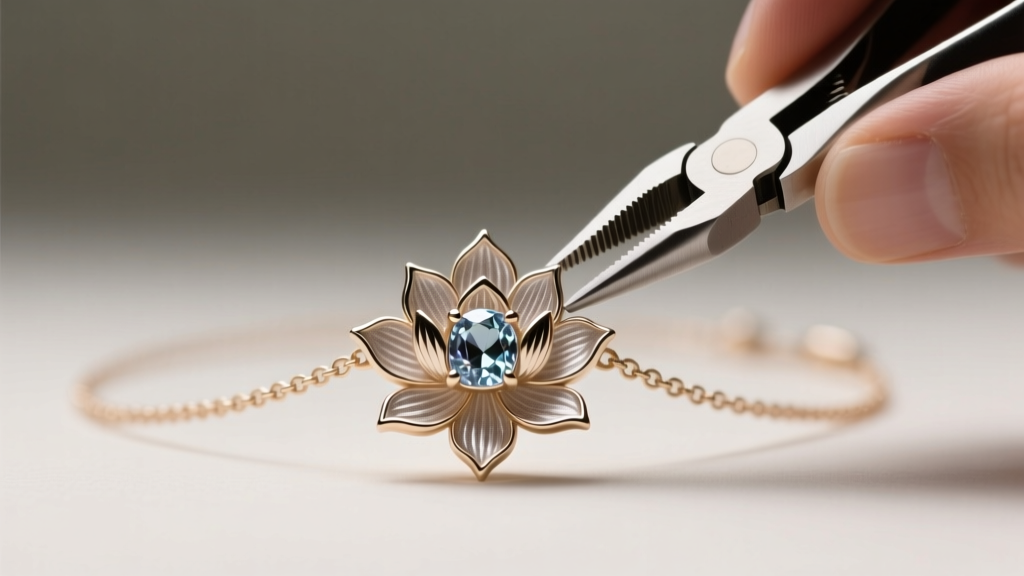
Flower necklaces often feature a central gemstone (the 'pistil') surrounded by a halo of metal petals. The prongs securing this center stone are frequently integrated into the petal design, making them asymmetrical and prone to catching on knitwear. If you notice the center stone spinning or rattling, stop wearing the necklace immediately. Attempting to push the prongs down yourself with standard steel pliers will mar the gold or silver and likely crack the stone. A bench jeweler will use a specialized bezel pusher or a prong burnisher under a microscope to apply even, calculated pressure without scratching the surrounding floral metalwork.
Untangling Floral Link Chains
Chain selection is critical for floral pendants, but chains featuring floral-shaped links (such as rose links or lily pad chains) are notoriously prone to severe knotting. Unlike standard cable chains, the wide, irregular surface area of a floral link acts as a catch-point for adjacent links, creating dense, multi-layered knots.
To troubleshoot a severely tangled floral chain, avoid pulling. Tension tightens the metallic weave. Instead, lay the chain flat on a smooth, hard surface. Dust the knot heavily with talcum powder or cornstarch to eliminate metal-on-metal friction. Using two T-pins or sewing needles, gently work the center of the knot outward. The powder allows the links to slide past one another's wide floral profiles without bending the delicate solder joints at the base of each link.
When to Seek Professional Bench Jeweler Intervention
While surface cleaning and minor untangling can be managed at home, certain floral necklace repairs demand professional equipment. If your piece features guilloché enamel—a technique where transparent enamel is fired over an engine-turned, engraved metal base to create a shimmering, multi-dimensional petal effect—any crack or chip requires a master enamelist. This is not a simple resin fill; it requires matching the refractive index of the original glass enamel and firing it in a kiln at precise temperatures.
Additionally, if a petal has completely snapped off at the base, traditional soldering with a torch can cause thermal shock, melting adjacent enamel or shattering nearby heat-sensitive gemstones like opals or emeralds. Modern bench jewelers utilize laser welding to reattach broken floral elements. Laser welding uses a highly focused beam of light to fuse metal at a microscopic level without transferring heat to the surrounding pendant, preserving the integrity of the botanical design and any delicate gemstone accents.
By understanding the specific material grades, structural vulnerabilities, and proper cleaning protocols of botanical jewelry, you can ensure your flower necklace remains a pristine, wearable piece of art for decades to come.