ZZ Top Pearl Necklace Song Meaning & Pearl Material Properties
Explore the ZZ Top pearl necklace song meaning and dive into pearl material properties, comparing Akoya, Tahitian, and Freshwater types.


The Cultural Hook: ZZ Top Pearl Necklace Song Meaning
When rock fans and jewelry enthusiasts alike search for the ZZ Top pearl necklace song meaning, they are usually diving into the cheeky double entendre behind the band's 1981 hit from the album El Loco. Written by Billy Gibbons, the track uses the imagery of a pearl necklace as a well-known sexual innuendo, cementing the jewelry piece in pop-culture history as a symbol of rock-and-roll excess and swagger. However, beyond the lyrical metaphors and blues-rock riffs, a literal pearl necklace is a marvel of organic material science. While the song plays fast and loose with its definitions, gemologists and jewelers approach pearls with strict, measurable criteria. Understanding the actual material properties of pearls—how they form, their structural integrity, and how they compare across different environments—reveals a level of complexity that far outshines any rock lyric.
The Material Science of Nacre: Aragonite and Conchiolin
To understand pearl durability and luster, we must look at their microscopic composition. Pearls are not stones; they are organic-inorganic composites. According to the Gemological Institute of America (GIA), a pearl's primary material is nacre, which consists of microscopic crystals of aragonite (a form of calcium carbonate) bound together by conchiolin, an organic protein.
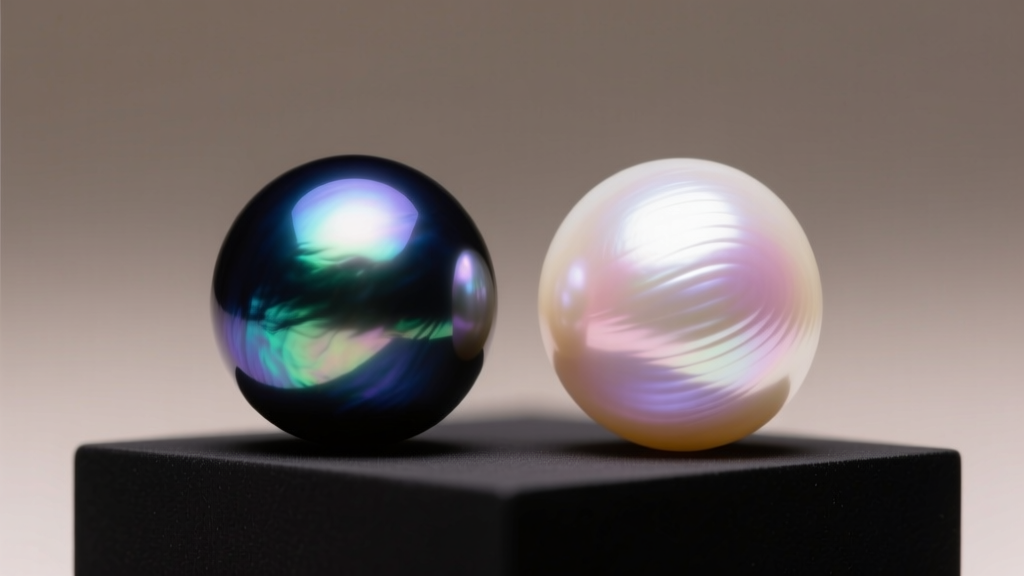
The ratio and crystalline structure of these two materials dictate the pearl's optical properties. Aragonite platelets are typically 0.5 micrometers thick. When light enters the pearl, it refracts and diffracts through these overlapping layers, creating the phenomenon known as luster (surface reflection) and orient (the iridescent play of colors just below the surface). A higher concentration of well-aligned aragonite crystals yields a sharper, mirror-like luster, while a higher conchiolin content can result in a duller, more chalky appearance. This biological blueprint is why material comparison between different pearl types is essential for buyers.
Comparative Analysis: Saltwater vs. Freshwater Pearl Properties
Not all pearls are created equal. The environment in which the mollusk lives, the species of the host, and the nucleus material drastically alter the final gem's physical properties. Below is a material comparison chart detailing the structural differences between the four primary pearl types available on the market today.
| Pearl Type | Origin / Host | Nacre Thickness | Average Size (mm) | Mohs Hardness | Typical Price Range (Strand) |
|---|---|---|---|---|---|
| Akoya | Saltwater (Pinctada fucata) | 0.2mm - 0.8mm | 6.0 - 8.5 | 2.5 - 3.0 | $300 - $3,000+ |
| Tahitian | Saltwater (Pinctada margaritifera) | 0.8mm - 2.0mm+ | 8.0 - 14.0 | 2.5 - 3.5 | $500 - $10,000+ |
| South Sea | Saltwater (Pinctada maxima) | 2.0mm - 6.0mm+ | 9.0 - 20.0 | 2.5 - 3.5 | $1,000 - $50,000+ |
| Freshwater | Freshwater (Hyriopsis species) | 100% Nacre (Tissue nucleated) | 4.0 - 12.0 | 2.5 - 3.0 | $50 - $1,500 |
As highlighted in the GIA Pearl Quality Factors guide, the most striking material difference lies in nucleation. Most saltwater pearls are bead-nucleated, meaning a round shell bead is inserted into the mollusk, and the nacre grows around it. If harvested too early (common in lower-grade Akoya pearls), the nacre layer may be a mere 0.2mm thick, making it highly susceptible to peeling and chipping. Freshwater pearls, conversely, are traditionally tissue-nucleated, resulting in a pearl that is solid nacre all the way through. This makes high-quality freshwater pearls exceptionally durable, despite their lower price point.
The Hidden Material: Stringing Mediums and Structural Integrity
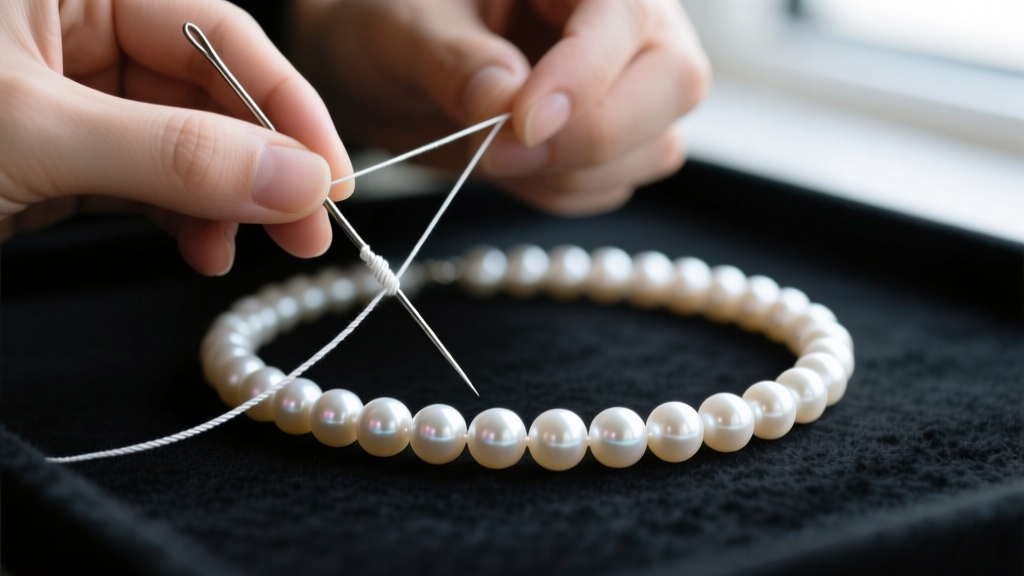
A pearl necklace is only as strong as its stringing material. Because pearls are organic and possess a relatively low Mohs hardness of 2.5 to 4.5, the choice of thread or wire is a critical material property that affects the necklace's drape, longevity, and safety.
Silk Thread: The Traditional Standard
For high-end Akoya and South Sea pearls, 100% silk thread remains the gold standard. Silk offers a supple drape that allows the necklace to conform elegantly to the clavicle. Jewelers typically use Size F (0.35mm) or Size FF (0.40mm) silk for standard 6mm to 8mm pearls. However, silk is a protein fiber that degrades over time. It absorbs oils, sweat, and cosmetics, which weakens the tensile strength. A silk-strung pearl necklace worn regularly must be professionally re-strung every 12 to 18 months to prevent catastrophic failure.
Synthetic Polymers: Power Pro and Nylon
For heavy Tahitian or large South Sea pearls that exert significant gravitational stress on the thread, modern jewelers often turn to braided polyethylene threads (like Power Pro) or high-grade nylon. These synthetic materials offer 3 to 5 times the tensile strength of silk and do not absorb moisture or degrade from skin acidity. While they may lack the buttery drape of silk, they provide superior structural integrity for heavier, more valuable strands.
Stainless Steel and Titanium Wire
Wire stringing is generally avoided for fine pearls. Metal wire can act like a saw against the soft nacre around the drill hole, especially if the necklace is pulled or bent. If wire must be used for specific design elements, flexible, nylon-coated stainless steel wire (such as 49-strand Soft Flex in a 0.015-inch gauge) is preferred, and each pearl must be separated by a soft spacer or knot to prevent internal abrasion.
Mohs Hardness and Environmental Vulnerabilities
Understanding the environmental vulnerabilities of calcium carbonate is crucial for maintaining a pearl necklace. With a Mohs hardness of just 2.5 to 3.5, pearls are easily scratched by dust (which contains quartz particles at a hardness of 7.0). They should never be tossed loosely into a jewelry box with diamond or sapphire pendants.
Furthermore, the aragonite structure is highly reactive to acids. The Jewelers of America strongly advises against exposing pearls to common household chemicals, perfumes, and hairsprays. Even mild skin acidity can slowly etch the surface of a pearl over decades, reducing its luster. Ultrasonic cleaners are strictly forbidden; the high-frequency vibrations will shatter the delicate nacre layers and strip the orient. Cleaning should only involve a damp, soft microfiber cloth and, occasionally, a drop of mild, non-detergent soap.
2026 Buying Framework: Evaluating Pearl Quality
When shopping for a pearl necklace today, look past the cultural associations and focus on verifiable material traits. Use this quick checklist to evaluate quality:
- Nacre Thickness: Ask the jeweler for X-ray verification or a clear view of the drill hole. Avoid Akoya pearls with visible chalky cores or nacre thinner than 0.4mm.
- Luster Grade: Look for sharp, distinct reflections on the pearl's surface. If your reflection in the pearl looks blurry or cloudy, the aragonite crystallization is poor.
- Surface Blemishes: 100% flawless pearls are virtually non-existent. Look for minor imperfections that do not compromise the structural integrity of the drill hole.
- Drill Hole Quality: Inspect the holes. Clean, sharp edges indicate precision drilling, whereas chipped or jagged edges suggest mass-production techniques that weaken the pearl.
"While the ZZ Top pearl necklace song meaning will always be a staple of rock trivia, the true value of a pearl strand lies in its microscopic layers of aragonite and the meticulous craftsmanship of its stringing. Treat them as organic marvels, not just pop-culture punchlines."
Ultimately, whether you are drawn to pearls because of a classic rock anthem or a deep appreciation for organic gemology, understanding their material properties ensures your investment will last for generations. By prioritizing nacre thickness, selecting the appropriate stringing medium, and respecting their environmental sensitivities, you can enjoy the timeless elegance of a pearl necklace with absolute confidence.


