How to Choose Your First Gold Necklace Pearl: A Beginner Guide
Discover how to choose your first gold necklace pearl. Learn about pearl types, gold karats, ideal lengths, and expert care tips for beginners.

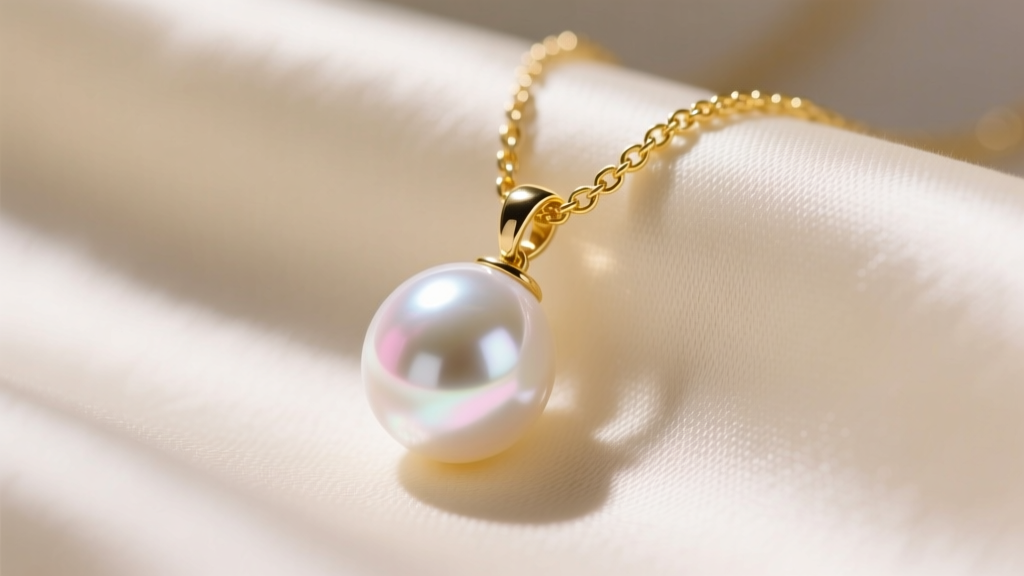
The Timeless Intersection of Organic Gems and Precious Metals
Few jewelry pairings are as universally flattering and historically significant as the combination of gold and pearls. For a beginner navigating the vast jewelry market, selecting the perfect gold necklace pearl piece can feel overwhelming. You are not just choosing a necklace; you are balancing organic gemology (the pearl) with metallurgy (the gold chain and setting). This guide strips away the marketing jargon and provides a concrete, data-driven framework to help you select, style, and maintain your first high-quality pearl and gold necklace.
Unlike mined gemstones, pearls are created by living organisms, meaning their value is dictated by nacre quality, luster, and surface cleanliness rather than carat weight. Meanwhile, the gold chain must be engineered to support the pearl's weight without snapping or tarnishing. Let us break down exactly what to look for.
Decoding Pearl Types for Your Gold Necklace
The first decision you must make is the type of pearl. According to the Gemological Institute of America (GIA), the four primary commercial pearl varieties each offer distinct visual characteristics and price points. Understanding these will prevent you from overpaying for a lower-grade specimen.
1. Akoya Pearls: The Classic Standard
Akoya pearls are the quintessential round, white pearls with sharp, mirror-like luster. They typically range from 6mm to 9mm in diameter. When buying an Akoya pearl for a gold pendant, insist on a minimum nacre thickness of 0.4mm. Anything thinner risks peeling over time, exposing the bead nucleus beneath. Expect to pay between $300 and $1,200 for a high-quality, single-pearl gold pendant.
2. Freshwater Pearls: The Budget-Friendly Alternative
Modern bead-nucleated freshwater pearls (often marketed as 'Edison' pearls) have closed the quality gap with saltwater varieties. They offer a softer, more satiny luster and come in natural pastel hues like peach, pink, and lavender. They are an excellent choice for beginners, with premium single-pearl gold necklaces ranging from $80 to $350.
3. South Sea Pearls: The Luxury Statement
Ranging from 10mm to 20mm, South Sea pearls are the largest and most valuable. They possess a thick nacre that produces a soft, luxurious, satiny luster rather than a sharp reflection. White and golden varieties are most common. A single South Sea pearl on a heavy 18k gold chain is an investment piece, typically starting at $1,500 and exceeding $10,000 for top-tier gems.
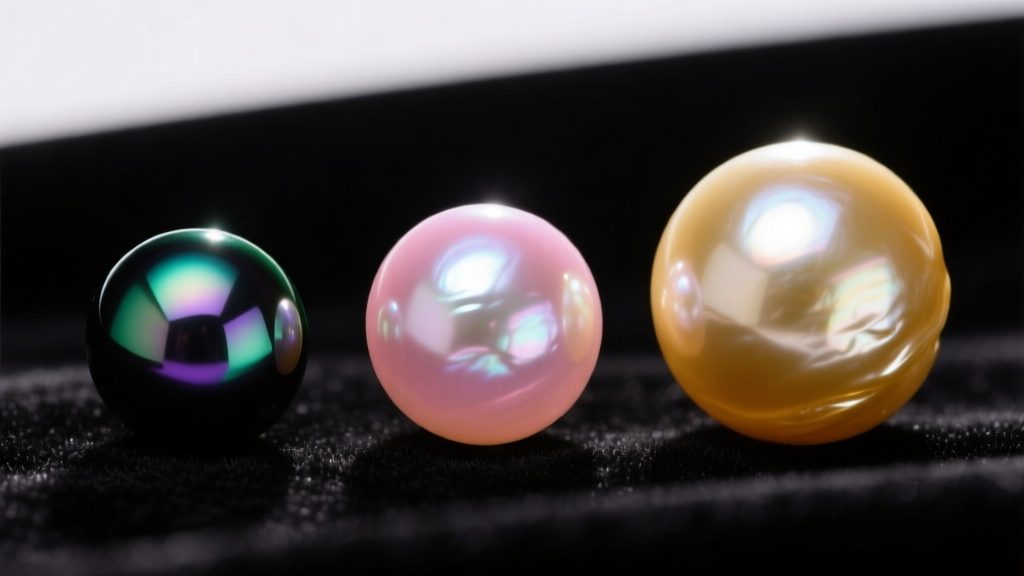
4. Tahitian Pearls: The Dark Exotic
Despite the name, Tahitian pearls are not purely black; they exhibit stunning overtones of peacock green, aubergine, and silver. They range from 8mm to 16mm. Pairing a dark Tahitian pearl with yellow or rose gold creates a striking, high-contrast aesthetic that is highly sought after in contemporary jewelry design.
Matching Gold Karats and Chain Styles to Your Pearl
The gold component of your necklace requires just as much scrutiny as the pearl. The American Gem Society (AGS) notes that pure 24k gold is too soft for everyday jewelry. Therefore, you will primarily encounter 14k and 18k gold.
14k vs. 18k Gold: A Practical Comparison
- 14k Gold (58.5% pure gold): Harder, more durable, and less prone to scratching. It is the ideal choice for delicate chains (1.0mm to 1.5mm) that need tensile strength to hold a heavier pearl pendant without stretching.
- 18k Gold (75% pure gold): Softer, richer in color, and hypoallergenic. It is best reserved for thicker chains (1.8mm+) or bezel settings where the metal is not bearing extreme structural stress.
Selecting the Right Chain Profile
The chain style dictates how the pearl hangs and how the necklace wears over time. Here is a quick decision matrix for beginners:
| Chain Style | Ideal Thickness | Durability & Best Use |
|---|---|---|
| Cable Chain | 1.0mm - 1.2mm | Classic but prone to kinking. Best for lightweight Akoya or Freshwater pearls under 8mm. |
| Box Chain | 1.2mm - 1.5mm | Highly durable, lays flat, reflects light beautifully. Excellent for 9mm-12mm pearls. |
| Rope Chain | 1.5mm - 2.0mm | Hides dirt and oils well, very strong. Perfect for heavy South Sea or Tahitian pearls. |
The Luster and Overtone Matrix: Pairing Colors
Matching the gold color to the pearl's overtone is where beginners often make aesthetic mistakes. The goal is to create harmony or intentional contrast. Use this framework to guide your purchase:
Yellow Gold: Amplifies the warm, creamy overtones of Akoya and South Sea pearls. Creates a vintage, classic look. Avoid pairing with pearls that have strong pink/rose overtones, as the colors can clash.
White Gold / Platinum: Enhances the sharp, icy, mirror-like luster of high-grade Akoya pearls. Creates a modern, crisp aesthetic. Ideal for pearls with silver or blue overtones.
Rose Gold: Complements the natural peach and pink hues of Freshwater pearls beautifully. Also creates a stunning, warm contrast against the dark greens of a Tahitian pearl.
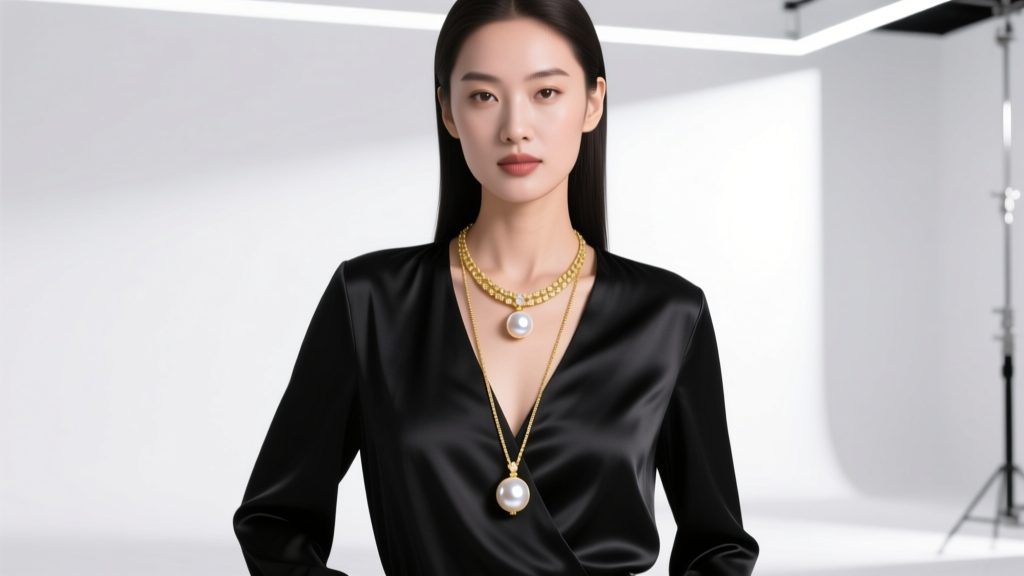
Sizing and Length: Where Should the Pearl Rest?
The length of your gold necklace determines how the pearl interacts with your neckline and face shape. For a single pearl pendant, the chain length is critical.
- 16 Inches (Choker): Sits tightly at the base of the neck. Best for casual wear, crew necks, and off-the-shoulder tops. A small 6mm-7mm pearl works best here to avoid looking overly formal.
- 18 Inches (Princess): The most versatile and universally flattering length. The pearl rests on the collarbone. This is the ideal length for V-neck blouses, button-down shirts, and everyday office wear. An 8mm-10mm pearl is perfect.
- 20 to 24 Inches (Matinee): Falls between the collarbone and the bust. Excellent for layering or wearing over high-neck sweaters and turtlenecks. Larger pearls (11mm+) anchor this length beautifully.
Real-World Care and Maintenance: Avoiding Common Failure Modes
Pearls rank between 2.5 and 4.5 on the Mohs hardness scale, making them significantly softer than gold and most other gemstones. Improper care is the number one reason beginners ruin their pearl necklaces. Follow these strict, actionable maintenance rules:
The 'Last On, First Off' Rule
Pearls are highly porous and sensitive to acids. Hairspray, perfume, and cosmetics contain chemicals that can eat away at the nacre, causing it to dull or peel. Always apply your cosmetics and perfumes at least 15 minutes before putting on your gold pearl necklace. When you return home, take the necklace off before changing clothes or showering.
Proper Cleaning Techniques
Never use ultrasonic cleaners, steam cleaners, or harsh jewelry dips on a pearl necklace. The vibrations can shatter the pearl, and the chemicals will destroy the nacre. Instead, after every few wears, gently wipe the pearl with a slightly damp, lint-free microfiber cloth to remove body oils and sweat. Allow it to air dry completely before storing.
Strategic Storage
Do not store your pearl necklace in a plastic bag; pearls need a slight amount of moisture to prevent the nacre from cracking and drying out. Furthermore, never toss your pearl necklace into a jewelry box alongside diamond or sapphire rings. The harder gemstones will easily scratch the soft pearl and the gold chain. Store the necklace flat in a soft cotton or silk pouch, separate from all other jewelry, to prevent the gold chain from tangling and the pearl from abrasion.
Final Thoughts for the Beginner
Choosing your first gold necklace pearl piece is an exercise in balancing organic beauty with structural integrity. By prioritizing nacre thickness over sheer size, selecting a chain profile that matches the pearl's weight, and adhering to strict care protocols, you will secure a timeless piece of jewelry that can easily be passed down to the next generation. Start with a high-quality 18-inch 14k gold chain and an 8mm Akoya or Edison freshwater pearl, and you will have a versatile, elegant foundation for your jewelry collection.


