Slanted Cross Necklace Buying Guide: What to Look For
Discover how to choose the perfect slanted cross necklace. Our buying guide covers material grades, chain weight ratios, and hardware durability.

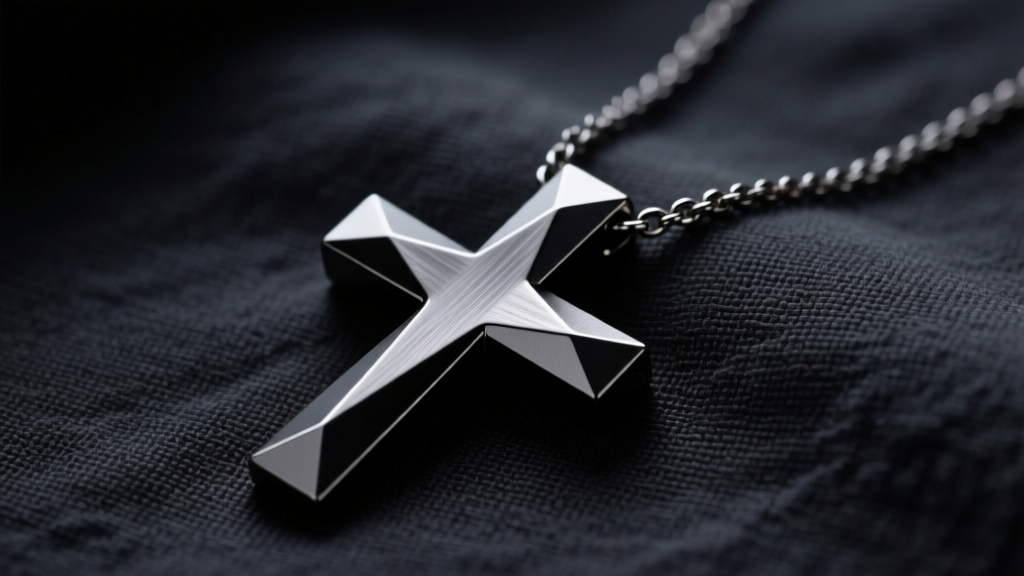
The Slanted Cross Aesthetic
The slanted cross necklace has evolved from a niche subculture staple into a mainstream avant-garde statement piece. Unlike the traditional Latin cross, which relies on strict vertical and horizontal symmetry, the slanted cross introduces dynamic tension through diagonal intersections, tilted axes, or asymmetric beams. Whether you are drawn to the gothic undertones of a Saint Andrew’s cross or the sleek, minimalist geometry of a modern 30-degree tilted pendant, buying the right piece requires more than just picking a design you like.
Asymmetric jewelry presents unique engineering challenges. A poorly designed slanted cross will constantly flip upside down, snag on fabrics, or suffer from premature bail failure due to uneven weight distribution. This comprehensive buying guide breaks down the exact material grades, chain pairings, and structural details you need to inspect before making a purchase in 2026.
Material Grades: Beyond Basic Plating
When shopping for a slanted cross pendant, the base metal dictates not only the price but the longevity of the piece’s sharp, angular edges. Thin plating over brass or zinc alloy will quickly wear away on the pendant's corners, revealing the dull base metal underneath.
| Material | Tarnish Resistance | Price Range | Best For |
|---|---|---|---|
| 316L Surgical Steel | High | $35 - $90 | Everyday streetwear, high-friction environments |
| 925 Sterling Silver | Moderate | $120 - $350 | Classic luxury, intricate engraved slanted crosses |
| 14k Solid Gold | Very High | $600 - $1,500+ | Heirloom pieces, sensitive skin, lifelong wear |
| Titanium (Grade 5) | Absolute | $150 - $400 | Lightweight, ultra-sharp modern minimalist designs |
According to the Gemological Institute of America (GIA), 14k gold remains the sweet spot for durability and color retention in daily-wear pendants, offering a 58.3% gold content that resists bending better than softer 18k or 24k variants. For those opting for silver, ensure the piece is stamped '925'. As noted by Blue Nile's metal education guide, sterling silver requires occasional polishing, especially if the slanted cross features deep, oxidized grooves that trap moisture and skin oils.
The PVD Coating Factor
Many black or rose-gold slanted crosses utilize PVD (Physical Vapor Deposition) rather than traditional electroplating. PVD bonds at a molecular level, making it 5 to 10 times more resistant to sweat and friction. However, on a slanted cross with sharp, protruding corners, micro-abrasions from clothing can eventually wear through the coating. If you want a black slanted cross that will never fade, opt for solid black zirconium or darkened titanium rather than coated steel.
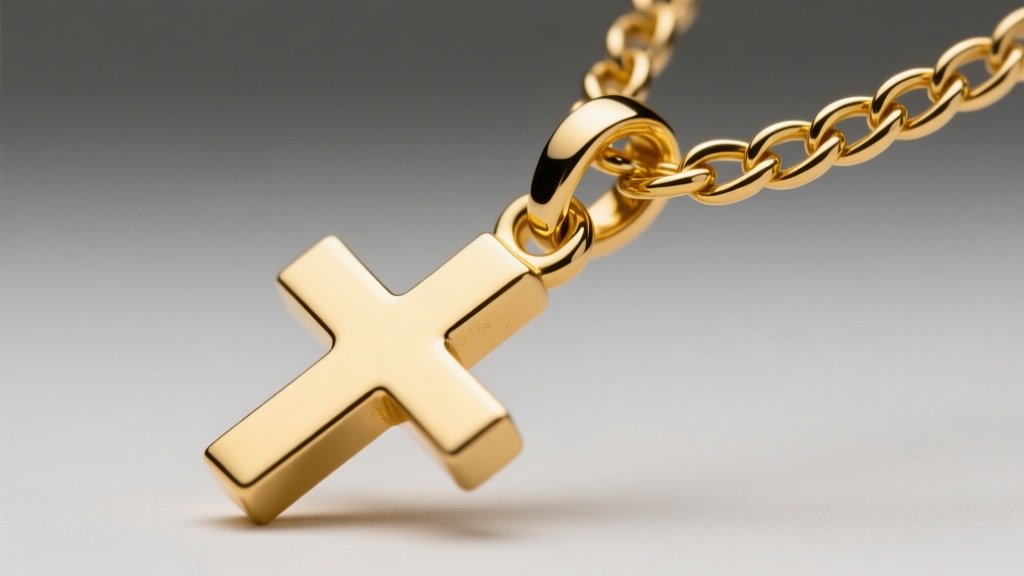
Chain Selection and Weight Ratios
A heavy, oversized slanted cross pendant paired with a flimsy chain is a recipe for a snapped necklace. The golden rule of jewelry proportion is the 'Rule of Thirds': your chain should weigh approximately one-third to one-half the weight of the pendant. If your solid silver slanted cross weighs 18 grams, you need a chain that weighs at least 6 to 9 grams.
- Curb Chains: The undisputed champion for slanted crosses. The flat, interlocking links lay flush against the chest, providing a wide, stable base that complements the edgy geometry of the pendant.
- Box Chains: Offer a sleek, modern look but come with a caveat. The sharp corners of a slanted cross can catch inside the square links of a thin box chain, causing kinks or link separation.
- Rope Chains: Excellent for heavy pendants due to their twisted, multi-strand durability, but their intricate texture can compete visually with heavily detailed or gemstone-set slanted crosses.
For a pendant thicker than 3mm, avoid chains under 2.5mm in width. A 4mm to 5mm Cuban link or curb chain provides the necessary structural support and visual balance.
Hardware and Failure Points: The Center of Gravity
This is the most critical, yet frequently overlooked, aspect of buying asymmetric jewelry. A traditional cross hangs perfectly plumb because its mass is evenly distributed. A slanted cross, by definition, has an offset center of mass.
If the manufacturer simply solders a standard bail to the top center of the tilted cross, the pendant will hang awkwardly, often flipping upside down or resting at an unintended angle against your sternum. High-end jewelers calculate the pendulum's center of gravity and place the bail slightly off-axis to counterbalance the tilt. When inspecting a slanted cross in person or reviewing product photos, look closely at the bail placement. It should not always be perfectly centered at the top edge; it must be positioned where the piece naturally balances on a horizontal axis.
Expert Troubleshooting: If your slanted cross constantly flips upside down, do not glue the bail. Take it to a local bench jeweler and have them add a small, hidden counterweight (like a tiny drop of lead-free solder or a micro-bead) to the bottom-heavy corner of the reverse side to recalibrate the center of gravity.
Furthermore, inspect the jump ring connecting the bail to the chain. Because slanted crosses swing with an uneven pendulum motion, they exert lateral torque on the jump ring. Ensure the jump ring is laser-welded or soldered shut. A simple split ring or unsoldered jump ring will eventually pull apart under the asymmetric torque.

Styling and Neckline Pairings
The aggressive geometry of a slanted cross demands intentional styling. It thrives on contrast and structured silhouettes.
Optimal Necklines
- Crew Necks and Turtlenecks: The high, tight collar provides a solid visual backdrop, allowing the diagonal lines of the cross to pop without competing with exposed skin or collarbones.
- Open Button-Downs: A mid-length slanted cross (dropping about 2 to 3 inches below the collarbone) perfectly fills the V-shape of an unbuttoned shirt, drawing the eye downward and elongating the torso.
- Asymmetric Necklines: Pairing a slanted cross with an off-the-shoulder or one-shoulder top creates a cohesive, avant-garde aesthetic that leans heavily into modern streetwear.
Avoid delicate, ruffled, or highly patterned blouses. The sharp angles of the pendant will snag on delicate fabrics, and the visual noise of the clothing will drown out the pendant's architectural lines.
Pricing Tiers and Value Assessment
Understanding what you should pay in the current market prevents overpaying for mass-produced alloys disguised as artisan work.
- Entry Tier ($30 - $80): Typically 316L stainless steel or brass with PVD plating. Expect mass-produced molds, standard bails, and machine-cut edges. Great for testing the trend.
- Mid Tier ($150 - $450): Solid 925 sterling silver or titanium. You should expect hand-finished edges, custom-calibrated bails for proper hanging, and heavier weight (15g+).
- Luxury Tier ($800+): 14k or 18k solid gold, often featuring pavé diamonds or custom engraving. Brands in this tier use CAD modeling to ensure perfect center-of-gravity balance and include soldered hardware.
Final Verdict
A slanted cross necklace is a bold departure from traditional religious or classic jewelry, offering a sharp, contemporary edge to any collection. By prioritizing solid materials over flash plating, respecting the Rule of Thirds for chain weight, and critically evaluating the bail placement for proper asymmetric balance, you can secure a piece that hangs perfectly and lasts a lifetime. Inspect the hardware, weigh the pendant, and choose a chain that anchors the design—your slanted cross will then serve as a flawless, gravity-defying statement piece.


