The Ultimate Guide to Choosing Your First Porcelain Necklace
Discover how to choose, style, and care for a porcelain necklace. Learn about glazes, metal pairings, and durability in this beginner-friendly guide.

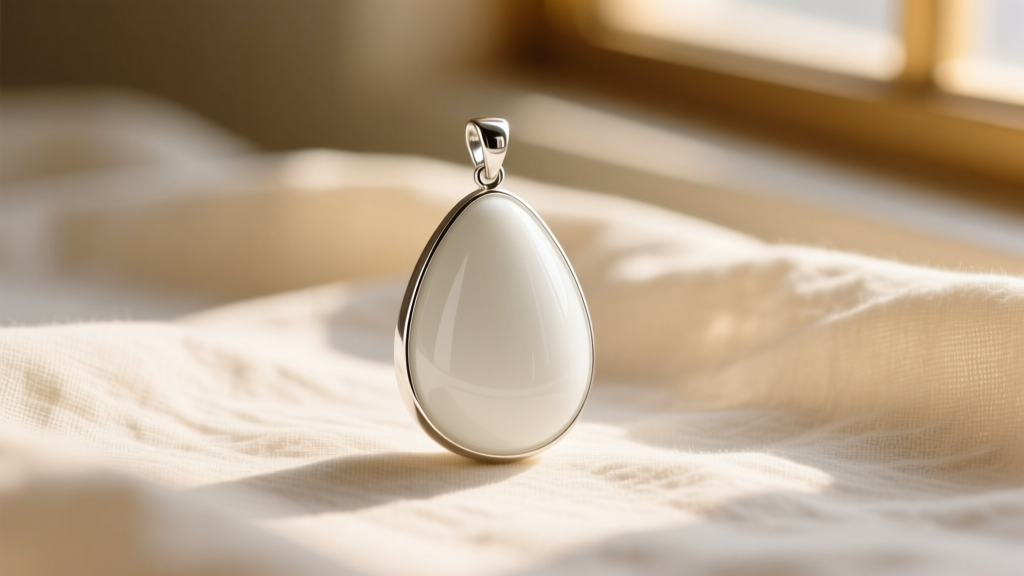
When most people hear the word porcelain, they immediately think of delicate teacups, antique vases, or bathroom fixtures. However, in the world of artisan jewelry, a porcelain necklace represents a stunning intersection of ancient ceramic artistry and modern wearable design. For beginners stepping into the realm of non-traditional jewelry materials, porcelain offers a lightweight, hypoallergenic, and visually striking alternative to heavy gemstones or standard metals.
But not all porcelain jewelry is created equal. The difference between a fragile, poorly constructed piece and a lifelong heirloom lies in the clay body, the firing temperature, and the metal findings used to secure it. In this comprehensive guide, we will break down exactly what you need to know before purchasing your first porcelain pendant, from decoding chain gauges to understanding material durability.
What Exactly is a Porcelain Necklace?
At its core, porcelain is a highly refined ceramic material made primarily from kaolin clay, mixed with feldspar and quartz. According to Britannica, true porcelain is defined by its vitrification—a process where the clay body becomes glass-like, non-porous, and translucent when fired at extreme temperatures.
For jewelry makers, this high-fire process is non-negotiable. Artisans typically fire porcelain pendants to Cone 10 (approximately 2381°F or 1305°C). At this temperature, the silica in the clay melts and fuses, creating a pendant that will not absorb water, sweat, or skin oils. If a pendant is made from low-fire clay (often mislabeled as porcelain by mass-market retailers), it remains porous and can easily stain or degrade when exposed to lotions and perfumes.
The Role of the Glaze
The brilliant, glass-like finish on a porcelain necklace comes from the glaze. Glazes are essentially liquid glass suspensions that melt onto the clay body during the firing process. For jewelry, food-safe and lead-free glossy glazes are the industry standard, providing a smooth surface that resists scratching and feels cool against the collarbone.
Porcelain vs. Standard Ceramic: Understanding the Difference
Many beginners confuse porcelain with standard earthenware or stoneware ceramics. While both are clay-based, their structural integrity varies wildly. Here is a data-driven comparison to help you identify high-quality pieces:
| Feature | True High-Fire Porcelain | Standard Earthenware Ceramic |
|---|---|---|
| Primary Clay | Kaolin (highly refined) | Red or brown terracotta clay |
| Firing Temperature | Cone 10 (~2381°F / 1305°C) | Cone 04 (~1945°F / 1063°C) |
| Porosity | 0% (Fully vitrified/glass-like) | 5% - 10% (Porous, absorbs moisture) |
| Mohs Hardness | 6.5 - 7 (Similar to Quartz) | 4 - 5 (Easily scratched by metal) |
| Translucency | Slightly translucent at thin edges | Completely opaque |
Takeaway: Always look for artisans who specify "high-fire" or "Cone 10" porcelain. The vitrification ensures your necklace won't harbor bacteria or crack from internal moisture expansion during winter freezes.
Decoding Metal Settings and Findings
The most common point of failure in a porcelain necklace is not the clay itself, but the metal hardware (findings) connecting it to the chain. Because porcelain cannot be soldered or drilled as easily as metal without specialized diamond-tipped lapidary equipment, the setting requires careful engineering.
Bezel vs. Prong Settings
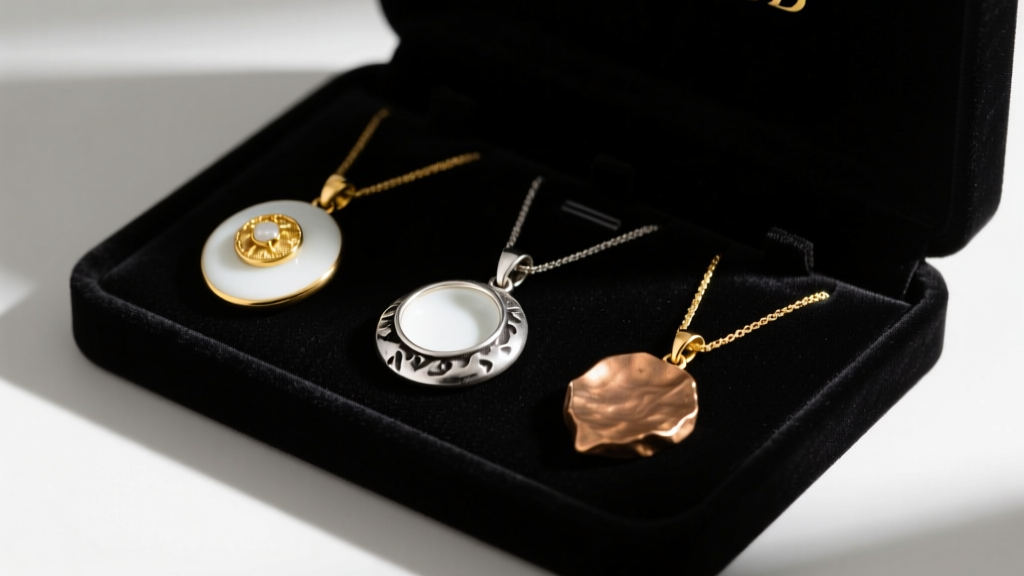
- Bezel Settings: A metal rim is pushed over the edges of the porcelain. This is the safest and most secure method, protecting the fragile edges from chipping if dropped.
- Prong Settings: Metal claws grip the pendant. While this allows more light to hit hand-painted details, it leaves the porcelain edges exposed to impact.
The Bail: Glue vs. Mechanical
The bail is the loop that connects the pendant to the chain. According to jewelry supply experts at Rio Grande, mechanical connections are always superior to chemical ones in fine jewelry. Avoid pendants where the bail is simply glued to the back of the porcelain. Over time, body heat, humidity, and skin oils will break down cyanoacrylate or epoxy adhesives, causing the pendant to snap off the chain.
Instead, look for pinch bails (which mechanically grip a pre-drilled hole in the porcelain) or wrapped wire bails (where sterling silver or gold-filled wire is tightly wound through the pendant's hole).
Matching Chain Gauges to Pendant Weight
Porcelain is surprisingly dense. A solid, high-fire porcelain pendant measuring just one inch across can easily weigh between 12 and 20 grams. Pairing a heavy porcelain pendant with a delicate, thread-like chain is a recipe for disaster. The metal will eventually work-harden and snap at the clasp or jump ring.
Use this structural framework to match your chain gauge (thickness) to your porcelain pendant's weight:
- Lightweight Pendants (1g - 8g): 22-gauge (0.64mm) or 20-gauge (0.81mm) chains. Delicate cable or rolo chains work beautifully here.
- Medium Pendants (9g - 18g): 18-gauge (1.02mm) chains. A sturdy box chain or wheat chain provides the necessary tensile strength without looking bulky.
- Heavy Statement Pendants (19g+): 16-gauge (1.29mm) or 14-gauge (1.63mm) chains. Opt for interlocking rope chains or thick curb chains to distribute the weight evenly across the nape of your neck.
The Reality of Durability: Hardness vs. Toughness
To truly understand how to wear a porcelain necklace, you must understand the difference between hardness and toughness. The Gemological Institute of America (GIA) utilizes the Mohs scale to measure a material's resistance to scratching. True porcelain ranks between 6.5 and 7 on the Mohs scale, meaning it is harder than steel and will not be scratched by your keys, coins, or standard metal jewelry.
However, porcelain has very low toughness (resistance to breaking or chipping upon impact). It is a brittle material. If your porcelain pendant swings forward and strikes a granite countertop or a bathroom mirror, it will likely chip or shatter, much like a glass screen protector. Treat your porcelain necklace with the same physical caution you would apply to a solid opal or a tumbled piece of fluorite.
The Threat of Thermal Shock
While high-fire porcelain is incredibly stable, extreme and sudden temperature changes can cause micro-fractures in the glaze (known as crazing). Never wear your porcelain necklace into a hot sauna and immediately jump into a freezing cold plunge pool. The rapid expansion and contraction of the glaze versus the clay body beneath it can cause the glass finish to spiderweb and flake off.
Care and Maintenance Routine
Keeping your porcelain jewelry pristine requires a gentle touch and the right tools. Forget the harsh chemical dips used for oxidized silver; porcelain requires a much simpler regimen.
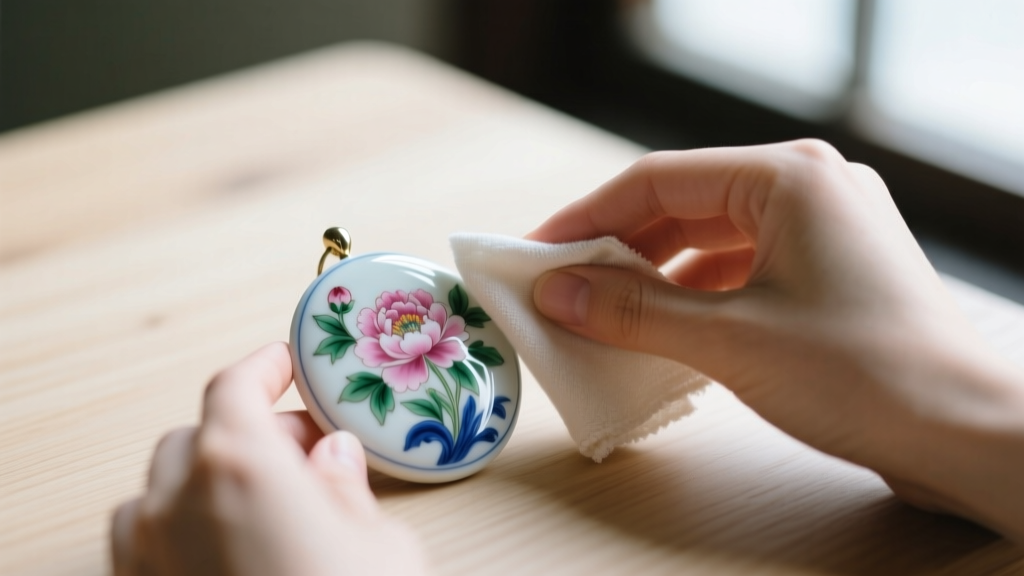
- Daily Wiping: After wearing, gently wipe the porcelain surface with a clean, dry microfiber cloth to remove skin oils and environmental dust.
- Deep Cleaning: Once a month, wash the pendant in lukewarm water with a single drop of pH-neutral dish soap (like Dawn). Use your fingertips to massage the surface. Never use a toothbrush, even a soft one, as trapped grit in the bristles can cause micro-scratches in lower-quality glazes.
- Drying: Pat dry immediately with a lint-free towel. Ensure the area where the metal bail meets the porcelain is completely dry to prevent moisture from degrading any secondary adhesives or causing base-metal bails to rust.
- Storage: Store your porcelain necklace in a soft cotton pouch or a dedicated compartment in a lined jewelry box. Never toss it loosely into a drawer where it can collide with diamond or sapphire jewelry (which rank 9 and 10 on the Mohs scale and will scratch your porcelain).
Styling Your Porcelain Necklace
Porcelain pendants often feature intricate hand-painted motifs, transfer decals, or striking solid crystalline glazes. Because they are visually complex and often feature a high-gloss finish, they act as natural focal points.
- For V-Necklines: A teardrop or marquis-shaped porcelain pendant perfectly mirrors the geometry of a V-neck, drawing the eye downward and elongating the neck.
- For Scoop and Crew Necks: Opt for a wider, disc-shaped or geometric hexagon porcelain pendant that sits flat against the collarbone, providing a modern, artistic contrast to the curved neckline.
- Layering: Because porcelain is opaque and visually heavy, it should always be the longest and lowest piece in a layered necklace stack. Pair a 20-inch porcelain pendant with 14-inch and 16-inch delicate gold or silver chains to create a balanced, cascading effect without overcrowding the chest.
Choosing your first porcelain necklace is an investment in wearable art. By prioritizing high-fire vitrified clay, mechanical metal findings, and appropriately gauged chains, you ensure that your piece remains a stunning, durable staple in your jewelry collection for years to come.