Chrome Hearts Necklace Chain: Material Properties & Metal Guide
Explore the metallurgy of a Chrome Hearts necklace chain. We compare .925 silver, 22k gold accents, and leather properties for luxury buyers.

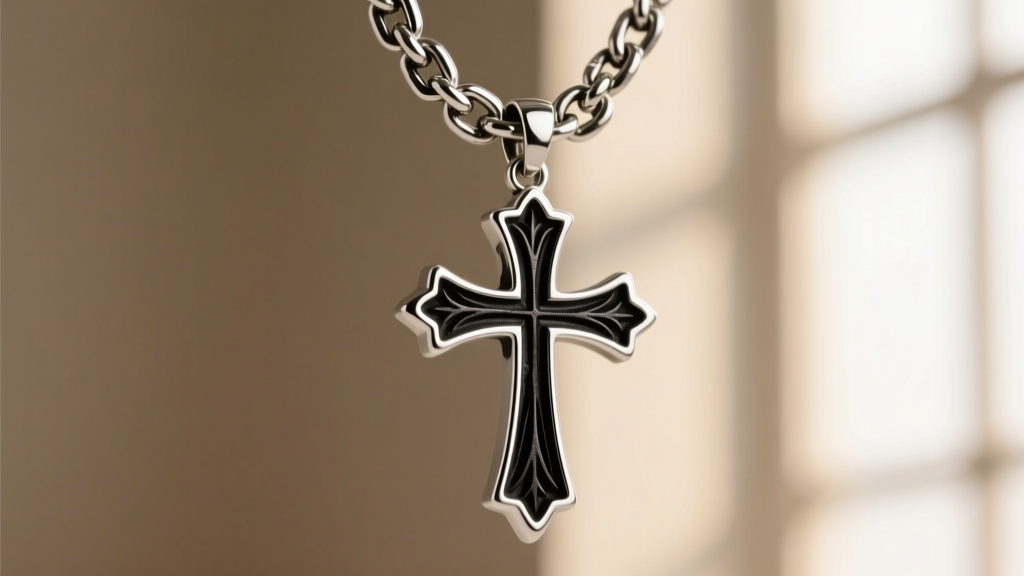
In the upper echelon of luxury streetwear and gothic jewelry, few items command the respect, secondary market premiums, and cultural cachet of a Chrome Hearts necklace chain. As we navigate the 2026 luxury resale landscape, authentication and material integrity have become paramount. Buyers and collectors are no longer just looking at the iconic dagger and cross motifs; they are scrutinizing the metallurgical properties, alloy compositions, and structural durability of these heavy-hitting pieces.
Unlike mass-market luxury brands that rely on die-striking and heavy rhodium plating, Chrome Hearts employs traditional, labor-intensive sand-casting techniques. This results in a distinct porous texture, significant gram weight, and a specific oxidation profile that demands specialized care. This guide provides a deep-dive material comparison, breaking down the exact properties of the silver, gold, and leather components that define these iconic chains.
The Metallurgy Behind the Gothic Aesthetic
The foundation of almost every Chrome Hearts necklace chain is its proprietary approach to .925 sterling silver. While the legal standard for sterling silver dictates a composition of 92.5% pure silver and 7.5% copper alloy, the processing of this metal is where the brand diverges from contemporaries. Most luxury houses cast their silver in rubber molds and immediately plate it with rhodium to prevent tarnishing and create a mirror-like, white-gold finish.
Chrome Hearts, conversely, frequently utilizes sand-casting for its heavier pendants and chain links. This method leaves a micro-porous surface texture that gives the metal a raw, organic feel. Following the casting and hand-filing process, the silver is intentionally oxidized using liver of sulfur (potassium sulfide). This chemical reaction turns the copper within the alloy black, settling deep into the crevices of the gothic engravings. The high points are then hand-polished, creating the signature high-contrast, antique finish that defines the brand's aesthetic.
.925 Sterling Silver vs. Standard Luxury Alloys
When evaluating a Chrome Hearts necklace chain against standard luxury alternatives, the lack of rhodium plating is a critical differentiator. According to the Silver Institute, unplated sterling silver will naturally react with sulfur compounds in the atmosphere and human sebum, leading to tarnish. However, in the context of Chrome Hearts, this tarnish is not a flaw; it is a feature.
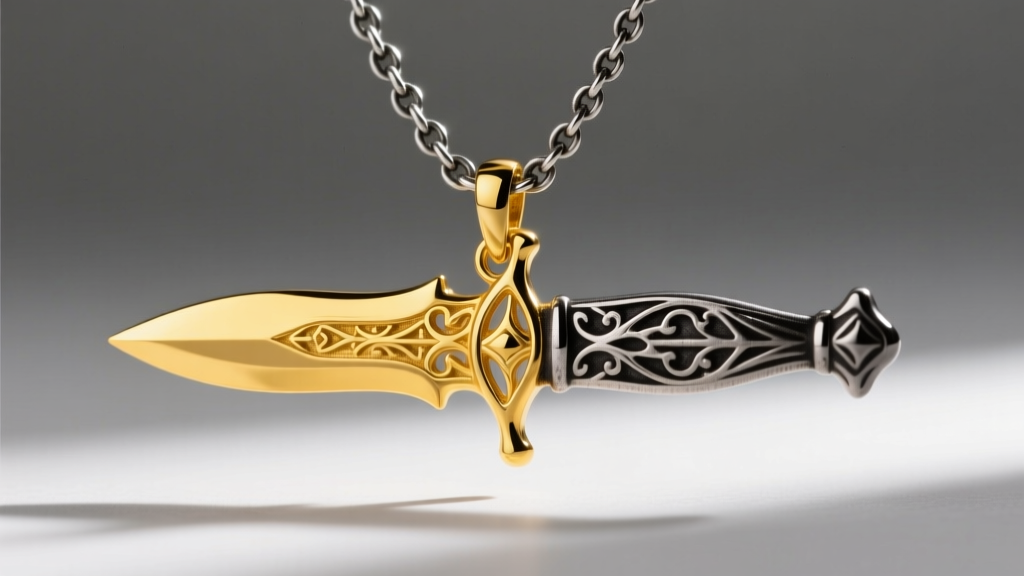
The 7.5% copper content in the alloy provides the necessary tensile strength to support the massive weight of the chain links, which can easily exceed 150 grams for a 22-inch Cuban link style. However, this copper content also means the chain is highly susceptible to acidic sweat. Collectors with highly acidic body chemistry may notice the polished high-points of the chain developing a warm, yellowish-brass hue over time as the silver atoms at the surface react and wear away, exposing the copper-rich matrix beneath.
The Patina Philosophy
'A pristine Chrome Hearts piece is merely a canvas. The true value of the silver lies in how it records the wearer's environment, developing a localized patina that maps out friction points and oxidation gradients over years of continuous wear.' — Luxury Jewelry Archivist, 2026.
22K Gold Accents: Purity vs. Durability
While the chains are predominantly silver, the brand’s signature hardware—such as the 22k gold dagger charms, cross pendants, and floral accents—introduces a completely different metallurgical profile. Chrome Hearts utilizes 22-karat gold for these accents, an alloy consisting of 91.6% pure gold and 8.4% secondary metals (typically a mix of silver and copper for a warm, rich hue).
From a materials science perspective, 22k gold is remarkably soft. On the Vickers Hardness (HV) scale, 22k gold sits at approximately 90-100 HV. By comparison, the 18k gold used by brands like Cartier or Rolex sits closer to 125-140 HV, and 14k gold reaches upwards of 160 HV. This means the 22k gold accents on a Chrome Hearts necklace chain are highly prone to micro-scratches, denting, and surface deformation. Rather than viewing this as a defect, the secondary market embraces this 'worn-in' softness, as the matte, scratched texture of aged 22k gold contrasts beautifully against the dark, oxidized silver chain.
Leather Integration: Degradation and Tensile Limits
Several iconic Chrome Hearts necklace chains incorporate braided black leather, either as a core wrapped in silver wire or as alternating links. Leather is an organic, collagen-based material that behaves entirely differently from metal alloys. The primary enemy of leather-integrated chains is sebum and lactic acid from human sweat.
Over time, the acidic nature of sweat breaks down the lipid barriers in the leather, causing the collagen fibers to become brittle and eventually snap under the immense tensile load of the heavy silver clasps. If you are purchasing a vintage leather-and-silver chain in the 2026 resale market, always inspect the leather near the silver end-caps. Micro-fracturing in these high-stress zones is a common failure point that requires professional re-coring by a leather artisan.
Material Comparison Chart
To understand how a Chrome Hearts necklace chain stacks up against other luxury market staples, review the material properties below:
| Material Component | Composition / Purity | Hardness (Vickers) | Primary Vulnerability | Long-Term Aging Profile |
|---|---|---|---|---|
| CH Signature Silver | 92.5% Ag, 7.5% Cu | ~65-75 HV | Sulfur tarnish, copper bleed | Darkens in crevices, high-points polish to a mirror shine |
| CH Gold Accents | 91.6% Au (22K) | ~90-100 HV | Micro-scratching, denting | Develops a soft, matte, 'buttery' luster |
| Standard 18K Gold | 75.0% Au, 25% Alloy | ~125-140 HV | Clasp spring fatigue | Retains structural rigidity, minor surface scuffs |
| Rhodium-Plated Silver | 92.5% Ag + Rhodium | ~130 HV (Surface) | Plating wear-off | Flakes or rubs off, revealing yellowing silver beneath |
Weight, Gauge, and Tensile Strength
The physical heft of a Chrome Hearts necklace chain is a major part of its appeal and a key metric used by authenticators. Utilizing XRF (X-ray Fluorescence) scanners, luxury resellers can verify the exact elemental makeup without damaging the piece, but the physical weight is the first line of defense against counterfeits.
- Medium Cuban Link (5mm width, 20 inches): Typically weighs between 65g and 85g. The tensile strength is more than sufficient to hold heavy pendants like the CH Plus or Large Dagger.
- Heavy Cuban Link (8mm width, 22 inches): Can weigh upwards of 140g to 180g. The sheer mass of the silver requires a robust, custom-cast lobster clasp or a proprietary toggle mechanism to prevent accidental unclasping.
- Paperclip / Keeper Chains: These elongated link designs distribute weight differently, often weighing between 40g and 60g, making them ideal for layering without causing cervical strain.
Maintenance and Patina Development
Caring for a Chrome Hearts necklace chain requires a departure from standard jewelry maintenance. The goal is never to restore the piece to a factory-new state, as stripping the oxidation destroys the contrast of the hand-carved motifs and significantly lowers the item's archival value.
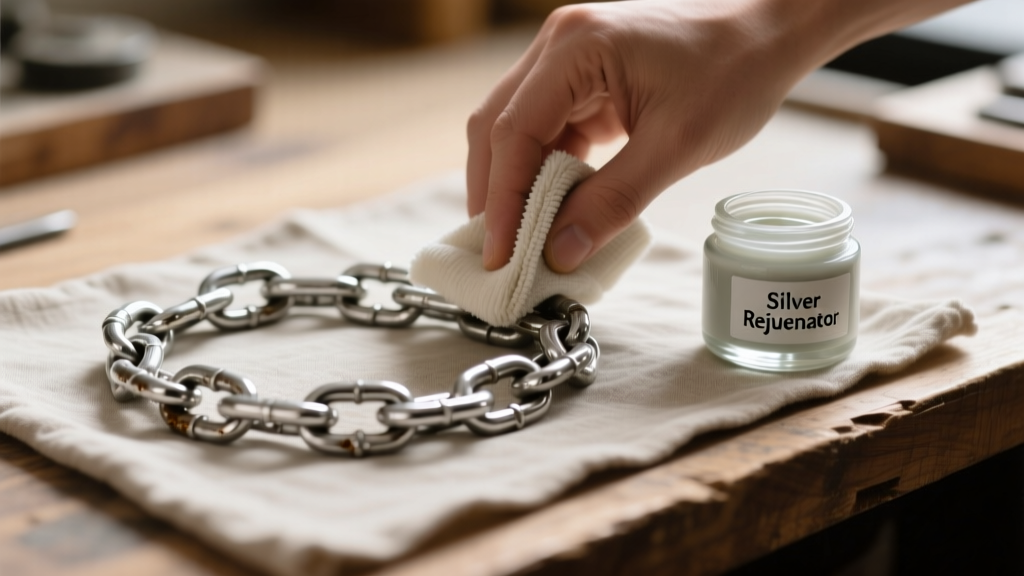
Actionable Care Protocol
- Avoid Silver Dip Solutions: Never submerge a Chrome Hearts chain in liquid silver cleaners (like Tarn-X). These thiourea-based chemicals will strip the intentional liver-of-sulfur oxidation from the deep crevices, leaving the piece looking flat, gray, and lifeless.
- Targeted Polishing: Use a dry, untreated microfiber cloth or a very mild polishing cloth (like a Sunshine Cloth) only on the high-friction areas of the links. Avoid pressing the cloth into the engraved grooves.
- Ultrasonic Warning: Do not use ultrasonic cleaners, especially on chains featuring 22k gold accents or semi-precious stone inlays. The high-frequency cavitation can loosen the solder joints connecting the heavy links and fracture porous stones like turquoise or onyx.
- Leather Conditioning: For leather-integrated chains, apply a minuscule amount of specialized leather conditioner (like Bickmore Bick 4) to the braided sections once a year to replenish lipids and prevent collagen snapping.
Conclusion
A Chrome Hearts necklace chain is far more than a status symbol; it is a masterclass in intentional material aging. By utilizing sand-cast .925 sterling silver, high-purity 22k gold accents, and organic leather, the brand creates jewelry that acts as a living record of its wearer. Understanding the specific metallurgical properties, Vickers hardness limitations, and proper maintenance protocols ensures that these heavy-gauge chains will survive not just as streetwear staples, but as enduring horological-grade artifacts in the luxury secondary market.


